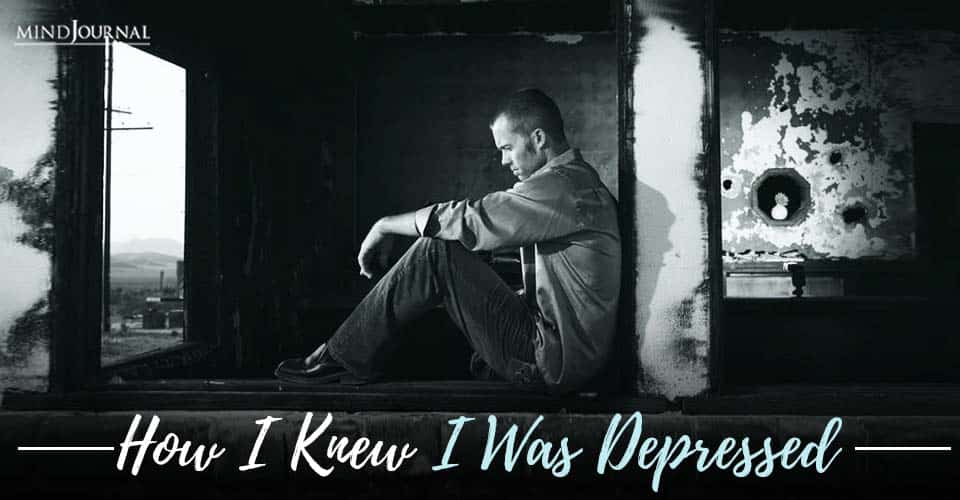
How I Knew I Was Depressed

Author : The Good Men Project

How I knew I was depressed.
For Norbert Brown, it was when he was asked a question he couldn’t answer.


It was a Sunday evening in the middle of summer, about seven or eight years ago. The air was hot and sticky—it was the kind of humidity we get on Cape Cod that soaks into every piece of paper until it’s completely limp when you pick it up. Notes and binders were spread out and wilting all over the kitchen table in front of me. I had too much to do, and I was way behind.  I looked at it all, baffled just trying to figure out what to attack first.

Then my 10-year-old son and teenage daughter said they were going for a swim. I didn’t have time to go in the pool, but I thought that maybe if I cooled off I could be more productive. Or at least maybe I could think straight. So I said I’d join them.


My son was pretty chatty as a child. He had—still has—a mind that trips and jumps and leaps from topic to topic, idea to idea, and sometimes, as a result, he is shockingly insightful and completely hilarious in the same minute. My daughter’s voice is expressive—musical, even—and her laughter has been a consistent delight to me since the day she was born. So this break—this time away from my troubles, in the company of two of my favorite people—should have been refreshing, relaxing and invigorating.

But I didn’t feel a thing. My mind might have been racing with the things back on the kitchen table, the deadlines sliding by me, the executives who were expecting me to produce work I clearly wasn’t getting done. But it wasn’t—instead, my head was full of industrial noise; it was the droning soundtrack of Eraserhead in there.

I squatted in the shallow end, my head just above water. My mind was not a blank, but nothing going on in there was any earthly good to anyone. My kids chatted and laughed and played, and it was like they were a million miles away. No single sound made sense, no single thought could take hold. It was nothing but noise until my son’s voice penetrated with these words:


Read Should A Man Tell His Family and Friends That He Is Suffering From Mental Illness?

“Dad, do you even know how to have fun anymore?”

There was no cynicism or irony in his tone. He wasn’t complaining or being judgmental: he was asking a sincere question. I was his dad, I’d been fun at one time, and I wasn’t fun anymore. He was just wondering if I’d noticed and if I knew why. It was a question I couldn’t evade, from a person who deserved an answer.

And the answer was: No, I did not know how to have fun anymore. And at the same moment, I knew that was the answer, I recognized its corollary: I USED to know how to have fun. Something had changed.

Read Jim Carrey Opens Up About His Battle With Depression In Eye-Opening Interview

I’d spent the 90s climbing the ladder in a company that was growing so fast we couldn’t keep up. I felt like I owned a piece of that growth—I was an inside guy—I had a seat at the table when the major decisions were made, the big secrets discussed.

depression isn't always dark rooms and crying

Then, we were acquired. Business got soft, and we were heavily leveraged. Cuts had to be made, and I was one of the cuts. It’s a pretty common story, and at the time I felt like I was weathering it well. I had skills. I had experience. I did a year of consulting (with my former employer as my biggest client) and then an offer for a new job in a new city just appeared one day on my doorstep.


It felt a lot like fate.

Which may be why I couldn’t make sense of my own failure at my new job. I knew my stuff—knew how to make decisions and make things happen. Except, things weren’t happening. Not the right things, and not fast enough. Choices baffled me. All of a sudden I couldn’t read people—couldn’t manage staff and REALLY couldn’t manage my managers.

Simple organizational tasks overwhelmed me: I, who had lived for years with a File-O-Fax in my hand before smoothly transitioning to a Palm Pilot, couldn’t keep an accurate calendar. I couldn’t face MAKING a to-do list, let alone trying to actually cross things off it. Taking usable notes in a meeting was impossible. I arrived at my office in the morning with no plan for what I’d do all day and left without really being sure what I’d done.

My son’s question forced me to recognize all the things that had changed—not just that I couldn’t have fun, but that I couldn’t organize my work or express my ideas persuasively. Something HAD changed, something was wrong, and I had to fix it.

Which is how I discovered I was depressed.

Read Frequent Anger and Irritability Could Signal Depression, Research Reveals

It turns out, not everybody’s depression looks the same.

I didn’t feel sad. I didn’t sleep too much or too little. I was generally not that irritable, and I hadn’t lost interest in my family or other things I cared about. But, I was depressed.


For me, the most striking symptoms of depression were cognitive. I couldn’t concentrate, couldn’t keep track of details—not even the important ones. I couldn’t make decisions or draw conclusions. I’d always considered myself a pretty smart guy, and the scariest thing about the changes I’d gone through was that all of a sudden I felt like I was really, genuinely stupid.

But that question—“Dad, do you even know how to have fun anymore?”—gave me something to cling to. Because it suggested that I USED to know how to have fun, just like I USED to be smart. So maybe if all that could change, it could also change back. So I went to the doctor. And I got better.
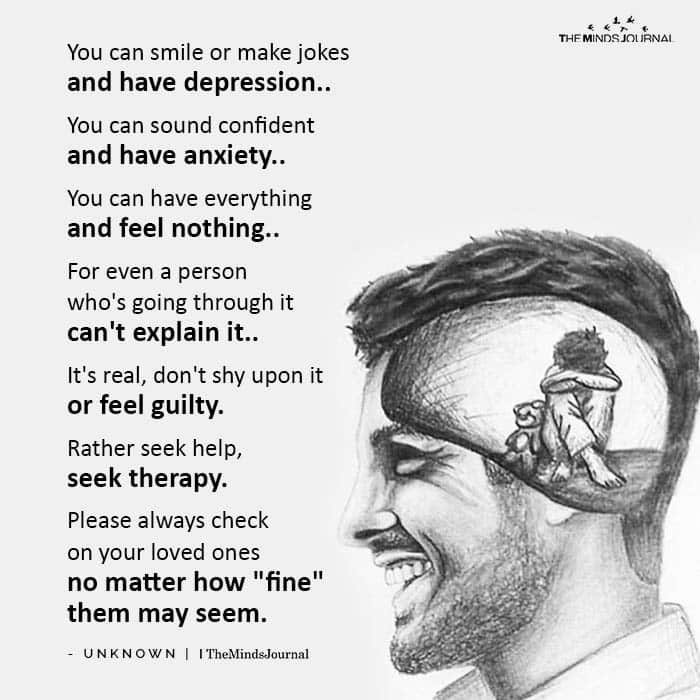
depression

By getting better, I don’t mean that all my troubles went away. I still don’t know if I failed at my job because I was depressed or if I was depressed because I failed at my job—it’s a chicken-and-egg thing. But I parted company from that employer on cordial (if not friendly) terms, and we’ve both moved on happily. I had some therapy and included an anti-depressant as part of my daily routine for a while. I’ve been managing without either for some time now, getting through the ups and downs of everyday life, making my lists and getting things done.

But the legacy of that evening swim and my little boy’s question is profound. I learned that life doesn’t always move in a straight line and that you have to listen for important clues. I learned to notice when things aren’t right, and that things that aren’t right can be fixed.

I discovered that the pain and confusion that was plaguing me at the time was taking something away from my son, and my wife and my other two kids.


And I learned that one of the most important things I could do for the people I care about is to take care of myself.

Are you depressed?


Originally appeared on TheGoodMenProject.com
Written by Norbert Brown
Printed with permission from author
How I Knew I Was Depressed
how i knew i was depressed pin


Published On:

Last updated on:

The Good Men Project

The Good Men Project is the only large scale, open and inclusive conversation about the changing roles of men in the 21st century. Join the conversation at goodmenproject.com

Disclaimer: The informational content on The Minds Journal have been created and reviewed by qualified mental health professionals. They are intended solely for educational and self-awareness purposes and should not be used as a substitute for professional medical advice, diagnosis, or treatment. If you are experiencing emotional distress or have concerns about your mental health, please seek help from a licensed mental health professional or healthcare provider.

Leave a Comment

Today's Horoscope

Daily Horoscope 17 March 2026: Prediction for Zodiac Signs

Daily Horoscope 17 March, 2026: Prediction for Each Zodiac Sign

Today carries a calm, thoughtful kind of energy that may not be obvious at first.

Latest Quizzes

Free Vase Personality Test: 3 Options; Choose A Vase

Vase Personality Test: Your First Pick Reveals Your Main Character Trait

Take a moment, look closely, and pick an object that represents you.

Latest Quotes

Apology And Change: Why True Remorse Erases The Past

Apology And Change: Why True Remorse Erases The Past

If you offer a sincere apology and change your behavior, I'll never bring up our past issues again. But without it, you can't ask me to forget—the "past" is just "haven't changed."

Readers Blog

Caption This Image and Selected Wisepicks – 15 March 2026

Caption This Image and Selected Wisepicks – 15 March 2026

Ready to unleash your inner wordsmith? ✨??☺️ Now’s your chance to show off your wit, charm, or sheer genius in just one line! Whether it’s laugh-out-loud funny or surprisingly deep, we want to hear it.Submit your funniest, wittiest, or most thought-provoking caption in the comments. We’ll pick 15+ winners to be featured on our website…

Latest Articles

How I knew I was depressed.
For Norbert Brown, it was when he was asked a question he couldn’t answer.


It was a Sunday evening in the middle of summer, about seven or eight years ago. The air was hot and sticky—it was the kind of humidity we get on Cape Cod that soaks into every piece of paper until it’s completely limp when you pick it up. Notes and binders were spread out and wilting all over the kitchen table in front of me. I had too much to do, and I was way behind.  I looked at it all, baffled just trying to figure out what to attack first.

Then my 10-year-old son and teenage daughter said they were going for a swim. I didn’t have time to go in the pool, but I thought that maybe if I cooled off I could be more productive. Or at least maybe I could think straight. So I said I’d join them.


My son was pretty chatty as a child. He had—still has—a mind that trips and jumps and leaps from topic to topic, idea to idea, and sometimes, as a result, he is shockingly insightful and completely hilarious in the same minute. My daughter’s voice is expressive—musical, even—and her laughter has been a consistent delight to me since the day she was born. So this break—this time away from my troubles, in the company of two of my favorite people—should have been refreshing, relaxing and invigorating.

But I didn’t feel a thing. My mind might have been racing with the things back on the kitchen table, the deadlines sliding by me, the executives who were expecting me to produce work I clearly wasn’t getting done. But it wasn’t—instead, my head was full of industrial noise; it was the droning soundtrack of Eraserhead in there.

I squatted in the shallow end, my head just above water. My mind was not a blank, but nothing going on in there was any earthly good to anyone. My kids chatted and laughed and played, and it was like they were a million miles away. No single sound made sense, no single thought could take hold. It was nothing but noise until my son’s voice penetrated with these words:


Read Should A Man Tell His Family and Friends That He Is Suffering From Mental Illness?

“Dad, do you even know how to have fun anymore?”

There was no cynicism or irony in his tone. He wasn’t complaining or being judgmental: he was asking a sincere question. I was his dad, I’d been fun at one time, and I wasn’t fun anymore. He was just wondering if I’d noticed and if I knew why. It was a question I couldn’t evade, from a person who deserved an answer.

And the answer was: No, I did not know how to have fun anymore. And at the same moment, I knew that was the answer, I recognized its corollary: I USED to know how to have fun. Something had changed.

Read Jim Carrey Opens Up About His Battle With Depression In Eye-Opening Interview

I’d spent the 90s climbing the ladder in a company that was growing so fast we couldn’t keep up. I felt like I owned a piece of that growth—I was an inside guy—I had a seat at the table when the major decisions were made, the big secrets discussed.

depression isn't always dark rooms and crying

Then, we were acquired. Business got soft, and we were heavily leveraged. Cuts had to be made, and I was one of the cuts. It’s a pretty common story, and at the time I felt like I was weathering it well. I had skills. I had experience. I did a year of consulting (with my former employer as my biggest client) and then an offer for a new job in a new city just appeared one day on my doorstep.


It felt a lot like fate.

Which may be why I couldn’t make sense of my own failure at my new job. I knew my stuff—knew how to make decisions and make things happen. Except, things weren’t happening. Not the right things, and not fast enough. Choices baffled me. All of a sudden I couldn’t read people—couldn’t manage staff and REALLY couldn’t manage my managers.

Simple organizational tasks overwhelmed me: I, who had lived for years with a File-O-Fax in my hand before smoothly transitioning to a Palm Pilot, couldn’t keep an accurate calendar. I couldn’t face MAKING a to-do list, let alone trying to actually cross things off it. Taking usable notes in a meeting was impossible. I arrived at my office in the morning with no plan for what I’d do all day and left without really being sure what I’d done.

My son’s question forced me to recognize all the things that had changed—not just that I couldn’t have fun, but that I couldn’t organize my work or express my ideas persuasively. Something HAD changed, something was wrong, and I had to fix it.

Which is how I discovered I was depressed.

Read Frequent Anger and Irritability Could Signal Depression, Research Reveals

It turns out, not everybody’s depression looks the same.

I didn’t feel sad. I didn’t sleep too much or too little. I was generally not that irritable, and I hadn’t lost interest in my family or other things I cared about. But, I was depressed.


For me, the most striking symptoms of depression were cognitive. I couldn’t concentrate, couldn’t keep track of details—not even the important ones. I couldn’t make decisions or draw conclusions. I’d always considered myself a pretty smart guy, and the scariest thing about the changes I’d gone through was that all of a sudden I felt like I was really, genuinely stupid.

But that question—“Dad, do you even know how to have fun anymore?”—gave me something to cling to. Because it suggested that I USED to know how to have fun, just like I USED to be smart. So maybe if all that could change, it could also change back. So I went to the doctor. And I got better.

depression

By getting better, I don’t mean that all my troubles went away. I still don’t know if I failed at my job because I was depressed or if I was depressed because I failed at my job—it’s a chicken-and-egg thing. But I parted company from that employer on cordial (if not friendly) terms, and we’ve both moved on happily. I had some therapy and included an anti-depressant as part of my daily routine for a while. I’ve been managing without either for some time now, getting through the ups and downs of everyday life, making my lists and getting things done.

But the legacy of that evening swim and my little boy’s question is profound. I learned that life doesn’t always move in a straight line and that you have to listen for important clues. I learned to notice when things aren’t right, and that things that aren’t right can be fixed.

I discovered that the pain and confusion that was plaguing me at the time was taking something away from my son, and my wife and my other two kids.


And I learned that one of the most important things I could do for the people I care about is to take care of myself.

Are you depressed?


Originally appeared on TheGoodMenProject.com
Written by Norbert Brown
Printed with permission from author
How I Knew I Was Depressed
how i knew i was depressed pin


Published On:

Last updated on:

The Good Men Project

The Good Men Project is the only large scale, open and inclusive conversation about the changing roles of men in the 21st century. Join the conversation at goodmenproject.com

Leave a Comment

    Leave a Comment