Apology And Change: Why True Remorse Erases The Past

Author : Rebecca Baker

Apology And Change: Why True Remorse Erases The Past

Apology and Change: The Real Test of Relationship Accountability

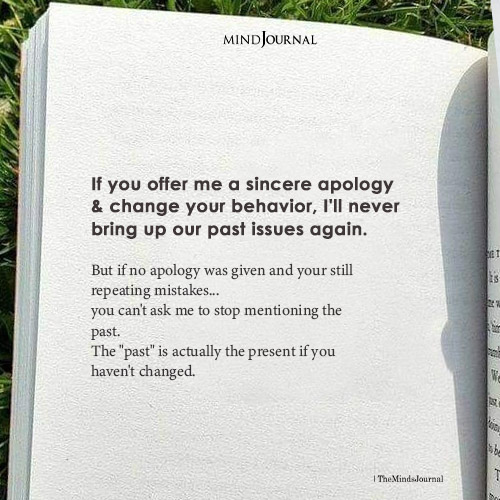
If you offer me a sincere apology
& change your behavior, I’ll never
bring up our past issues again.

But if no apology was given and your still
repeating mistakes …
you can’t ask me to stop mentioning the
past.

The “past” is actually the
haven’t changed.

If you offer me a sincere apology and change your behavior, I’ll never bring up our past issues again. But if no apology was given and you’re still repeating mistakes… you can’t ask me to stop mentioning the past. The “past” is actually the “haven’t changed.”

This hits hard because it’s truth wrapped in pain. Relationships thrive on trust, but breaches—like broken promises or thoughtless words—linger without repair. A hollow “sorry” or none at all? It signals dismissal. True healing demands apology and change: owning the hurt, then proving it through actions.

Psychologists emphasize this duo in conflict resolution. A sincere apology validates emotions, reducing resentment. But words alone fade; behavior change rebuilds safety. Research on restorative justice shows couples who pair remorse with habits—like better listening or reliability—report 70% higher satisfaction read more.

Apology and Change: Spotting Genuine Remorse vs. Empty Words

Imagine snapping during stress, then yelling, “Move on!” Without apology and change, that’s gaslighting—making your pain the problem. Genuine remorse looks like: “I hurt you by raising my voice; I’m sorry. I’ll pause next time and walk away if heated.” Then, they do it.

Signs of fakes? Defensiveness (“But you…”), excuses, or relapse. No apology? It screams emotional immaturity. You’re not “stuck”; they’re stagnant. Relationship accountability means facing mirrors, not pointing fingers.

Why does this matter? Unresolved hurts compound, eroding intimacy. Trauma-informed therapy highlights how repeated offenses trigger fight-or-flight, blocking vulnerability. But apology and change rewires that—fostering forgiveness through consistency.

To demand it healthily: State needs clearly. “I need a full apology and to see effort, or trust stays broken.” Boundaries aren’t punishment; they’re self-respect. If they balk? It reveals their investment level.

For givers, reflect: Are you excusing cycles out of fear? Emotional growth demands reciprocity. Healthy bonds evolve; toxic ones loop.

In love, the past isn’t baggage—it’s a teacher. Offer apology and change, and it dissolves. Repeat mistakes? It lives as “present.” Choose partners who evolve with you, turning scars into strength. That’s real moving on from past wounds.

Read More: How Do You Want to Be Loved? The Art of Noticing Reveals True Intimacy

Published On:

Last updated on:

Disclaimer: The informational content on The Minds Journal have been created and reviewed by qualified mental health professionals. They are intended solely for educational and self-awareness purposes and should not be used as a substitute for professional medical advice, diagnosis, or treatment. If you are experiencing emotional distress or have concerns about your mental health, please seek help from a licensed mental health professional or healthcare provider.

Leave a Comment

Today's Horoscope

Daily Horoscope 29 April 2026: Prediction for Zodiac Signs

Daily Horoscope 29 April, 2026: Prediction For Each Zodiac Sign

The energy today feels softer than usual.

Latest Quizzes

What Is My Core Wound Quiz? 10 Signs That Expose It!

What You Notice First in Someone Isn’t Random—Take This Quiz to Reveal Your Core Wound

What you notice first in others may quietly mirror your own needs that go unseen and unmet. Take this simple quiz to help you uncover the core wounds hidden beneath that actually shape you.

Latest Quotes

Human Psychology Facts: How These Cognitive Biases Quietly Shape Your Life

Human Psychology Facts: How These Cognitive Biases Quietly Shape Your Life

Human psychology facts show how your brain quietly edits reality. From the Pratfall Effect to the Halo Effect, these cognitive biases influence who you like, what you notice, and how confident you feel.

Readers Blog

Caption This Image and Selected Wisepicks – 26 April 2026

Caption This Image and Selected Wisepicks – 26 April 2026

Ready to unleash your inner wordsmith? ✨??☺️ Now’s your chance to show off your wit, charm, or sheer genius in just one line! Whether it’s laugh-out-loud funny or surprisingly deep, we want to hear it.Submit your funniest, wittiest, or most thought-provoking caption in the comments. We’ll pick 15+ winners to be featured on our website…

Latest Articles

Apology And Change: Why True Remorse Erases The Past

Apology and Change: The Real Test of Relationship Accountability

If you offer me a sincere apology
& change your behavior, I’ll never
bring up our past issues again.

But if no apology was given and your still
repeating mistakes …
you can’t ask me to stop mentioning the
past.

The “past” is actually the
haven’t changed.

If you offer me a sincere apology and change your behavior, I’ll never bring up our past issues again. But if no apology was given and you’re still repeating mistakes… you can’t ask me to stop mentioning the past. The “past” is actually the “haven’t changed.”

This hits hard because it’s truth wrapped in pain. Relationships thrive on trust, but breaches—like broken promises or thoughtless words—linger without repair. A hollow “sorry” or none at all? It signals dismissal. True healing demands apology and change: owning the hurt, then proving it through actions.

Psychologists emphasize this duo in conflict resolution. A sincere apology validates emotions, reducing resentment. But words alone fade; behavior change rebuilds safety. Research on restorative justice shows couples who pair remorse with habits—like better listening or reliability—report 70% higher satisfaction read more.

Apology and Change: Spotting Genuine Remorse vs. Empty Words

Imagine snapping during stress, then yelling, “Move on!” Without apology and change, that’s gaslighting—making your pain the problem. Genuine remorse looks like: “I hurt you by raising my voice; I’m sorry. I’ll pause next time and walk away if heated.” Then, they do it.

Signs of fakes? Defensiveness (“But you…”), excuses, or relapse. No apology? It screams emotional immaturity. You’re not “stuck”; they’re stagnant. Relationship accountability means facing mirrors, not pointing fingers.

Why does this matter? Unresolved hurts compound, eroding intimacy. Trauma-informed therapy highlights how repeated offenses trigger fight-or-flight, blocking vulnerability. But apology and change rewires that—fostering forgiveness through consistency.

To demand it healthily: State needs clearly. “I need a full apology and to see effort, or trust stays broken.” Boundaries aren’t punishment; they’re self-respect. If they balk? It reveals their investment level.

For givers, reflect: Are you excusing cycles out of fear? Emotional growth demands reciprocity. Healthy bonds evolve; toxic ones loop.

In love, the past isn’t baggage—it’s a teacher. Offer apology and change, and it dissolves. Repeat mistakes? It lives as “present.” Choose partners who evolve with you, turning scars into strength. That’s real moving on from past wounds.

Read More: How Do You Want to Be Loved? The Art of Noticing Reveals True Intimacy

Published On:

Last updated on:

Rebecca Baker

Leave a Comment

    Leave a Comment