4 Ways to Let Go of the “Worst Case Scenario” Mindset

Author : Dr. Ilene S. Cohen

Life is unpredictable, and with everything that is going on, you must be thinking about preparing for the worst case scenario more than you would like. Although it’s important to be prepared for anything, make sure you eliminate negative thinking today!


Hi there!

I hope you’re doing well. It’s hard to believe that we’re halfway through a year that has completely redefined our lives.


And if you’re someone who is struggling with anxiety, I’m sure this period of time has brought about a few too many “worse case scenario” thoughts.

Think about it: How often does a sudden negative thought increase into a worst case scenario? How often does a thought turn into an absolute catastrophe in your mind? For instance, a dry cough turns into bronchitis. A flight to see a friend turns into the idea of your plane crashing. A canceled date turns into you dying alone. A global pandemic turns into an almost guarantee in your mind, that you and those you love will be affected by the virus.

It’s normal to have negative thoughts, no matter how extreme they might be at times. It’s part of our evolution to constantly scan our environment, looking for problems to fix. The problem is not so much that we have negative thoughts, rather, the issues arise when we believe our thoughts are true, and when they turn into a worst case scenario that makes us feel even more anxious.


Think about an article in a tabloid about the latest celebrity. Most of us know it’s an exaggeration or fabrication. We don’t believe that the article is totally true, and we don’t change our lives around those articles. The negative thoughts in our minds are just like those tabloid stories. The problem is that if we don’t step back to gain a more truthful perspective, we may let worst case scenarios run our lives.

Below are techniques you can practice before letting negative thinking turn into worst case scenarios:

4 Ways to Let Go of the “Worst Case Scenario” Mindset

Mindset Info

1. Notice your thoughts.

Pay attention to when your thoughts slip from realistic anxieties into unusual or unlikely scenarios. Notice the patterns without judgment. We tend to judge ourselves when our thinking becomes catastrophic, so notice if you’re judging yourself being that this amplifies your anxiety.

Related: How Rigid Thinking And Rumination Undermines Your Health And Life

2. Remember what you actually do have control over.

You can’t control everything, but consider the realistic options available to you at the moment. If you’re scared of flying, research the statistics and learn about flying. Remind yourself that this practice has existed for over a century and that, statistically, you’re safer in a plane than in your car.
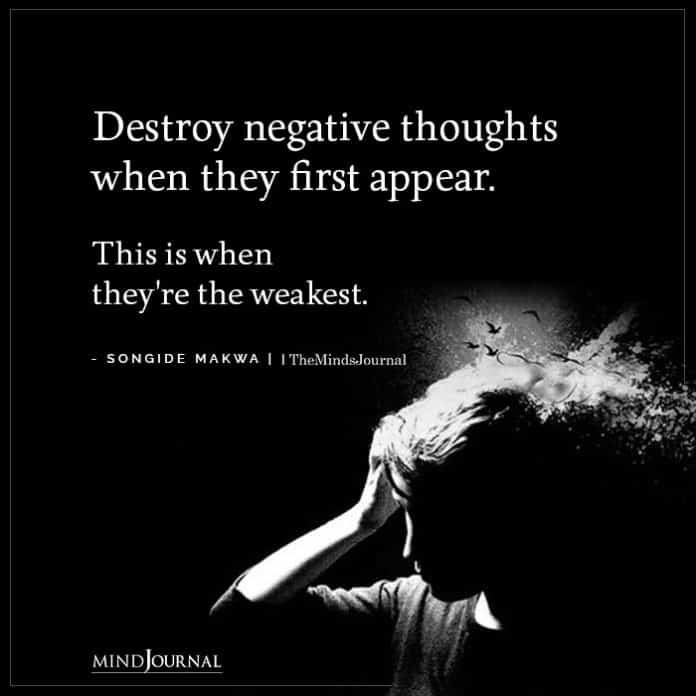
Give Up The Worst-Case Scenario Mindset

3. Do what scares you.

The single most effective way to overcome your fears is to face them. Famous psychologist Carl Jung observed that that which you resist persists.


For example, if you have a fear of flying, try your best to book a flight. If you are scared to face a serious issue in your marriage, face your partner. Because if there is a serious problem, then at least you’ll know what to work on, instead of worrying, ruminating and feeling stuck.

Read Mindfulness And Emotional Intelligence

4. Practice strategies once a negative thought pops up.

Thankfully there are strategies we can practice to calm our anxiety and tame our negative thoughts which I list below.

  • Label your thoughts. Instead of saying, “I’m stupid,” say, “I’m having the thought that I’m stupid.” Instead of saying, “I’m going to fail this test,” say “I’m having the thought that I’m going to fail this test.” The difference may seem small; however, it can help you gain the perspective that you are not your thoughts.
  • Thank your mind. If you’re having anxious thoughts such as, “I hope this plane doesn’t crash,” say, “Thank you, mind, for trying to keep me safe. But there’s nothing you really need to do right now. I’ve got it covered.”
  • Let them float away. This one involves imagery. Imagine placing each negative thought in your mind on a leaf, and watch it float down a stream. When you have another thought, as you will, put it on another leaf and watch it float on by.
  • Sing your thoughts. Try singing your thoughts to the tune of the alphabet song or Row, Row, Row Your Boat. Your thoughts will certainly sound absurd this way, which is the whole point.
  • Say them in a funny voice. Try saying your thoughts in a funny voice, maybe imitating a cartoon character.
  • Name your stories. Often, our thoughts are repetitive and involve the same stories. When a thought like, “You’re going to embarrass yourself” comes up, say, “Oh, here’s my I’m an embarrassing loser story,” and then just let it go.
  • Do it anyway. Perhaps the most important tip is to remember that you can have a thought and perform any kind of behavior at the same time. If it’s something you care about, it’s worth it to let the thoughts simply be. You don’t have to do anything about them. Remember, you can function even when you’re anxious.
  • I’ll cross that bridge when I get to it. When the what-ifs are bombarding you with tales of future disaster, it’s helpful to know that you don’t need to solve anything right now. When you recognize that you’re worried about a future event, think to yourself, “I’ll cross that bridge when I get to it.”

Related: 6 Signs To Tell If There’s A Negative Energy In Your Space And 6 Ways To Clear It


Written By Ilene Strauss Cohen
Originally Appeared On Doctor Ilene

Being aware and careful about your future is a smart thing to do, but if you are constantly feeding yourself negative thoughts, and making yourself anxious, then that’s a big problem. If you give in to the worst-case scenario mindset all the time, your anxiety will never leave you, and you will feel miserable and scared all the time. Now, is that really a way to live life?

Give Up WorstCase Scenario Mindset for Good pin
Mindset Pin


Published On:

Last updated on:

Dr. Ilene S. Cohen

"Dr. Ilene S. Cohen, Ph.D. is a psychotherapist, professor, and blogger. She is also the author of the popular self-help guide, When It’s Never About You, as well as co-author (with Rabbi Aryeh Weinstein) of It’s Within You. She’s a regular contributor to Psychology Today, and her work has appeared in Psych Central and Tiny Buddha, along with many other online publications. After graduating from the University of Tampa with a B.A. in Psychology, Dr. Ilene obtained her Master’s and Ph.D. degrees in Marriage and Family Therapy from Nova Southeastern University. Both her books and her practice are fueled by her passion for helping people achieve their goals, build a strong sense of self, and lead meaningful lives. She is also guided by a passion for service and lends her time to multiple charitable causes around the world. Dr. Ilene resides in Miami, Florida with her husband and two young daughters."

Disclaimer: The informational content on The Minds Journal have been created and reviewed by qualified mental health professionals. They are intended solely for educational and self-awareness purposes and should not be used as a substitute for professional medical advice, diagnosis, or treatment. If you are experiencing emotional distress or have concerns about your mental health, please seek help from a licensed mental health professional or healthcare provider.

Leave a Comment

Today's Horoscope

Weekly Horoscope PART one

Weekly Horoscope 15 March to 21 March 2026

Read your zodiac sign’s prediction to understand the energy surrounding you and how to make the most of the days ahead!

Latest Quizzes

Interesting Finger Personality Test: 4 Finger Lines

Finger Personality Test: Join Your Fingers And Reveal A Hidden Personality Secret!

Look closely at your finger lines. Which pattern do you see? This personality test might surprise you!

Latest Quotes

How Men Show Love Through Actions (Male Psychology in Relationships)

How Men Show Love Through Actions (Male Psychology in Relationships)

Male psychology in relationships shows that men express love through presence, protection, and peace more than poetry. Decode his actions so you can see how deeply he actually cares.

Readers Blog

Caption This Image and Selected Wisepicks – 8 March 2026

Caption This Image and Selected Wisepicks – 8 March 2026

Provide a creative, relevant caption for the picture below and get selected and featured with your name and caption.  Selected Wisepicks We have selected 11 comments as Wisepicks from our Facebook, Facebook Group and Instagram as on 15 March 2026 Lou Angelique Heruela Listen to your inner child,not the angry voices in your mind. Bloom…

Latest Articles

Life is unpredictable, and with everything that is going on, you must be thinking about preparing for the worst case scenario more than you would like. Although it’s important to be prepared for anything, make sure you eliminate negative thinking today!


Hi there!

I hope you’re doing well. It’s hard to believe that we’re halfway through a year that has completely redefined our lives.


And if you’re someone who is struggling with anxiety, I’m sure this period of time has brought about a few too many “worse case scenario” thoughts.

Think about it: How often does a sudden negative thought increase into a worst case scenario? How often does a thought turn into an absolute catastrophe in your mind? For instance, a dry cough turns into bronchitis. A flight to see a friend turns into the idea of your plane crashing. A canceled date turns into you dying alone. A global pandemic turns into an almost guarantee in your mind, that you and those you love will be affected by the virus.

It’s normal to have negative thoughts, no matter how extreme they might be at times. It’s part of our evolution to constantly scan our environment, looking for problems to fix. The problem is not so much that we have negative thoughts, rather, the issues arise when we believe our thoughts are true, and when they turn into a worst case scenario that makes us feel even more anxious.


Think about an article in a tabloid about the latest celebrity. Most of us know it’s an exaggeration or fabrication. We don’t believe that the article is totally true, and we don’t change our lives around those articles. The negative thoughts in our minds are just like those tabloid stories. The problem is that if we don’t step back to gain a more truthful perspective, we may let worst case scenarios run our lives.

Below are techniques you can practice before letting negative thinking turn into worst case scenarios:

4 Ways to Let Go of the “Worst Case Scenario” Mindset

Mindset Info

1. Notice your thoughts.

Pay attention to when your thoughts slip from realistic anxieties into unusual or unlikely scenarios. Notice the patterns without judgment. We tend to judge ourselves when our thinking becomes catastrophic, so notice if you’re judging yourself being that this amplifies your anxiety.

Related: How Rigid Thinking And Rumination Undermines Your Health And Life

2. Remember what you actually do have control over.

You can’t control everything, but consider the realistic options available to you at the moment. If you’re scared of flying, research the statistics and learn about flying. Remind yourself that this practice has existed for over a century and that, statistically, you’re safer in a plane than in your car.

Give Up The Worst-Case Scenario Mindset

3. Do what scares you.

The single most effective way to overcome your fears is to face them. Famous psychologist Carl Jung observed that that which you resist persists.


For example, if you have a fear of flying, try your best to book a flight. If you are scared to face a serious issue in your marriage, face your partner. Because if there is a serious problem, then at least you’ll know what to work on, instead of worrying, ruminating and feeling stuck.

Read Mindfulness And Emotional Intelligence

4. Practice strategies once a negative thought pops up.

Thankfully there are strategies we can practice to calm our anxiety and tame our negative thoughts which I list below.

  • Label your thoughts. Instead of saying, “I’m stupid,” say, “I’m having the thought that I’m stupid.” Instead of saying, “I’m going to fail this test,” say “I’m having the thought that I’m going to fail this test.” The difference may seem small; however, it can help you gain the perspective that you are not your thoughts.
  • Thank your mind. If you’re having anxious thoughts such as, “I hope this plane doesn’t crash,” say, “Thank you, mind, for trying to keep me safe. But there’s nothing you really need to do right now. I’ve got it covered.”
  • Let them float away. This one involves imagery. Imagine placing each negative thought in your mind on a leaf, and watch it float down a stream. When you have another thought, as you will, put it on another leaf and watch it float on by.
  • Sing your thoughts. Try singing your thoughts to the tune of the alphabet song or Row, Row, Row Your Boat. Your thoughts will certainly sound absurd this way, which is the whole point.
  • Say them in a funny voice. Try saying your thoughts in a funny voice, maybe imitating a cartoon character.
  • Name your stories. Often, our thoughts are repetitive and involve the same stories. When a thought like, “You’re going to embarrass yourself” comes up, say, “Oh, here’s my I’m an embarrassing loser story,” and then just let it go.
  • Do it anyway. Perhaps the most important tip is to remember that you can have a thought and perform any kind of behavior at the same time. If it’s something you care about, it’s worth it to let the thoughts simply be. You don’t have to do anything about them. Remember, you can function even when you’re anxious.
  • I’ll cross that bridge when I get to it. When the what-ifs are bombarding you with tales of future disaster, it’s helpful to know that you don’t need to solve anything right now. When you recognize that you’re worried about a future event, think to yourself, “I’ll cross that bridge when I get to it.”

Related: 6 Signs To Tell If There’s A Negative Energy In Your Space And 6 Ways To Clear It


Written By Ilene Strauss Cohen
Originally Appeared On Doctor Ilene

Being aware and careful about your future is a smart thing to do, but if you are constantly feeding yourself negative thoughts, and making yourself anxious, then that’s a big problem. If you give in to the worst-case scenario mindset all the time, your anxiety will never leave you, and you will feel miserable and scared all the time. Now, is that really a way to live life?

Give Up WorstCase Scenario Mindset for Good pin
Mindset Pin


Published On:

Last updated on:

Dr. Ilene S. Cohen

"Dr. Ilene S. Cohen, Ph.D. is a psychotherapist, professor, and blogger. She is also the author of the popular self-help guide, When It’s Never About You, as well as co-author (with Rabbi Aryeh Weinstein) of It’s Within You. She’s a regular contributor to Psychology Today, and her work has appeared in Psych Central and Tiny Buddha, along with many other online publications. After graduating from the University of Tampa with a B.A. in Psychology, Dr. Ilene obtained her Master’s and Ph.D. degrees in Marriage and Family Therapy from Nova Southeastern University. Both her books and her practice are fueled by her passion for helping people achieve their goals, build a strong sense of self, and lead meaningful lives. She is also guided by a passion for service and lends her time to multiple charitable causes around the world. Dr. Ilene resides in Miami, Florida with her husband and two young daughters."

Leave a Comment

    Leave a Comment