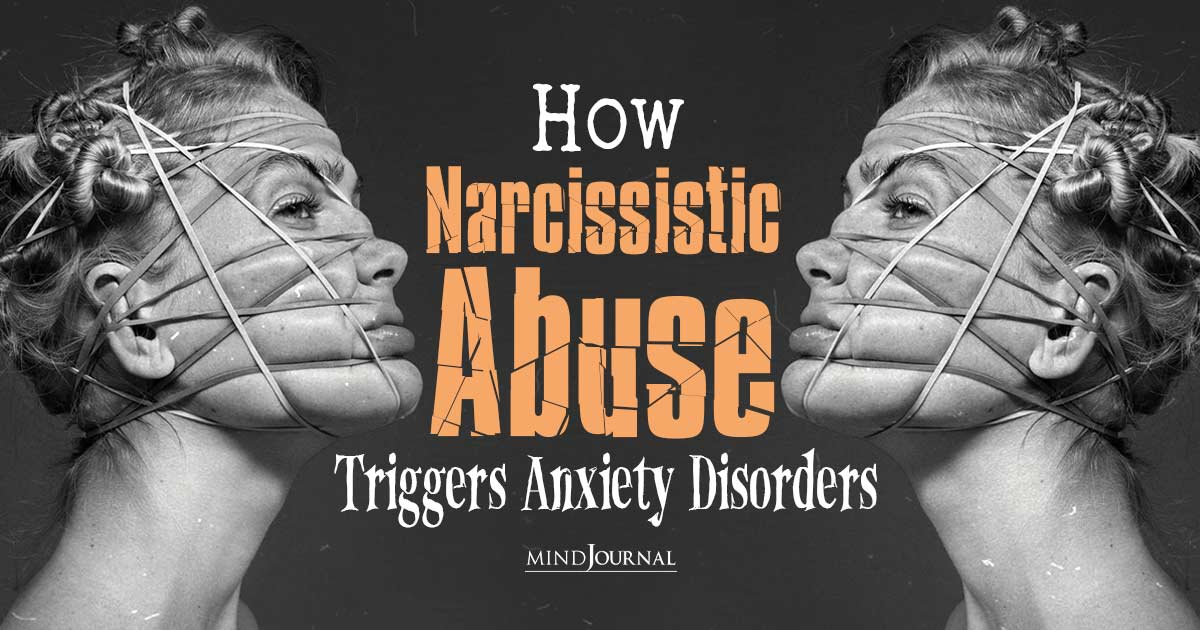
10 Anxiety Disorders That Could Be Caused Due To Being Exposed To Narcissistic Abuse

Author : iheartintelligence

Being exposed to narcissistic abuse can lead to many anxiety disorders. Victims of narcissistic abuse tend to feel the after-effects of anxiety due to narcissistic abuse they go through for years to come, in the form of anxious and fearful thoughts. Let’s find out more about the anxiety disorders caused due to narcissistic abuse 

Anxiety disorders can be a result of prolonged exposure to narcissistic abuse. People who believe in the good nature of others, are highly sensitive or emotionally intelligent, are the most common targets for narcissistic abuse.

Residing where any kind of emotional or mental abuse takes place is going to affect your health. Not only that, but the way you see yourself, and how much worth you believe you have, will suffer greatly.

When you are constantly told that you are the problem and that your rational and completely normal ways of responding to their abuse are contributing to the issue, what else could possibly be expected to happen? 

Your mind begins to sever – rationale and fear are intertwined, and the body reacts in several different ways, all displayed through types of anxiety disorders.

It’s unhealthy to surround yourself with these types of people or to stay in a relationship with them. But for some people, the abuse comes from a family member or parent, and escaping is only an option when you can leave their home.

For those individuals, some disorders might have developed as a teenager, and continue to impact their adult relationships today.

The Mayo Clinic has compiled a list of several types of anxiety disorders and describes the most common conditions as follows.

Related: What I Learned From Living With A Narcissist 

10 Anxiety Disorders That Could Be Caused By Being Exposed To Narcissistic Abuse

1. Agoraphobia 

Pronounced as (ag-uh-ruh-FOE-be-uh) is a type of anxiety disorder in which you fear and often avoid places or situations that might cause you to panic and make you feel trapped, helpless, or embarrassed.

2. Anxiety disorder 

Anxiety disorder due to a medical condition includes symptoms of intense anxiety or panic that are directly caused by a physical health problem.

3. Generalized anxiety disorder 

It includes persistent and excessive anxiety and worries about activities or events — even ordinary, routine issues.

The worry is out of proportion to the actual circumstance, is difficult to control, and affects how you feel physically. It often occurs along with other anxiety disorders or depression.

How you feel when you are exposed to narcissistic abuse

4. Panic disorder 

This disorder involves repeated episodes of sudden feelings of intense anxiety and fear or terror that reach a peak within minutes (panic attacks).

You may have feelings of impending doom, shortness of breath, chest pain, or a rapid, fluttering, or pounding heart (heart palpitations). These panic attacks may lead to worrying about them happening again or avoiding situations in which they’ve occurred.

5. Selective mutism 

It is a consistent failure of children to speak in certain situations, such as school, even when they can speak in other situations, such as at home with close family members. This can interfere with school, work, and social functioning. 

Related: How I Tried To Fix The Narcissist And It Almost Killed Me

6. Separation anxiety disorder

It is a childhood disorder characterized by anxiety that’s excessive for the child’s developmental level and related to separation from parents or others who have parental roles.

7. Social anxiety disorder

It is also known as social phobia and involves high levels of anxiety, fear, and avoidance of social situations due to feelings of embarrassment, self-consciousness, and concern about being judged or viewed negatively by others.

8. Specific phobias

Specific phobias are characterized by major anxiety when you’re exposed to a specific object or situation and a desire to avoid it. Phobias provoke panic attacks in some people.

9. Substance-induced anxiety disorder 

This disorder is characterized by symptoms of intense anxiety or panic that are a direct result of abusing drugs, taking medications, being exposed to a toxic substance, or withdrawal from drugs.

10. Other anxiety disorders

Other specified anxiety disorders and unspecified anxiety disorders are terms for anxiety or phobias that don’t meet the exact criteria for any other anxiety disorders but are significant enough to be distressing and disruptive.

Those toxic people who willfully abuse others get a kick out of telling their victims that they are somehow socially, emotionally, and intellectually substandard.

You’ll notice that whenever these people are caught or confronted about their behavior, they will always resort to playing the victim. In extreme cases, they even try to make it seem as though you are the abuser.

Related: “Of Course Method”: A Defensive Technique that Neutralizes Narcissistic Abuse

People who feel like they have become trapped in the poisonous whirlwind of narcissistic abuse tend to know something is just not right.

The irrational and maddening claims the narcissist makes never fully sit well with them. However, unless they are educated about these toxic personalities and abusers, they will continue to find themselves in the endless cycle.

Why is that? Because narcissists target those who are prone to behaving like actual human beings; compassionate, empathic, and believe in the good nature of humankind.

And because these people are the ones who are more likely to be the victim of narcissistic abuse, they are also the ones who are prone to suffer from mental and physical health issues.

According to a study by Muhammad Gadit from Memorial University of Newfoundland, “Verbal abuse can cause significant psychological problems in later years and brain damage, including anxiety, depression, anger-hostility, and dissociation.”

Doctor Douglas Fields reports on Psychology Today, “When [an] environment is hostile or socially unhealthy, development of the brain is affected, and often it is impaired. Early childhood sexual abuse, physical abuse, or even witnessing domestic violence, have been shown to cause abnormal physical changes in the brain of children, with lasting effects that predispose the child to developing psychological disorders.”

Anxiety disorders due to narcissistic abuse are unpleasant to live with. They can take over your life at a moment’s notice, and they don’t make sense to those who don’t have them.

To be honest, they don’t make much sense to those who have them either. That’s why this information is important.

It’s important to know that if you suffer from any of the above-mentioned anxiety disorders, and have been a victim of narcissistic abuse, you can take your life back.


Originally appeared on I Heart Intelligence
Written By Raven Fon
Unraveling The Link: 10 Anxiety Disorders That Could Be Caused Due To Being Exposed To Narcissistic Abuse
Anxiety Disorders Caused By Being Exposed To Narcissistic Abuse Pin
exposed to narcissistic abuse

Published On:

Last updated on:

iheartintelligence

The main goal of I Heart Intelligence is to share interesting stories, amazing facts, and fun, intelligent, and inspiring content. The authors here at I Heart Intelligence choose to present information without bias to let the readers think harder and come to their own conclusions. The owners of the site don’t always personally agree with everything published here, but do think that these subjects are worth exploration, critical thought, discussion, and debate.

Disclaimer: The informational content on The Minds Journal have been created and reviewed by qualified mental health professionals. They are intended solely for educational and self-awareness purposes and should not be used as a substitute for professional medical advice, diagnosis, or treatment. If you are experiencing emotional distress or have concerns about your mental health, please seek help from a licensed mental health professional or healthcare provider.

Leave a Comment

Today's Horoscope

Free Daily Horoscope 26 March For 12 Zodiac Signs

Daily Horoscope 26 March, 2026: Prediction For Each Zodiac Sign

Today is less about dramatic changes and more about small emotional shifts that can create long-term impact. Check your free horoscope for more insights!

Latest Quizzes

Image Personality Test: Which Woman Reveals Your True Self?

Which Woman Are You? A Personality Test That Reveals Your True Inner Nature

This personality test reveals your true self based on the woman you choose. Simple, fun, and surprisingly accurate!

Latest Quotes

Manipulative Tactics in Relationships: Gaslighting, Love Bombing, and Emotional Control

Manipulative Tactics in Relationships: Gaslighting, Love Bombing, and Emotional Control

Manipulative tactics in relationships often start subtly—gaslighting, love bombing, guilt trips, or mixed signals. Once you recognize these emotional manipulation patterns, you can protect your mental health and step away from toxic dynamics.

Readers Blog

Caption This Image and Selected Wisepicks – 22 March 2026

Caption This Image and Selected Wisepicks – 22 March 2026

Ready to unleash your inner wordsmith? ✨??☺️ Now’s your chance to show off your wit, charm, or sheer genius in just one line! Whether it’s laugh-out-loud funny or surprisingly deep, we want to hear it.Submit your funniest, wittiest, or most thought-provoking caption in the comments. We’ll pick 15+ winners to be featured on our website…

Latest Articles

Being exposed to narcissistic abuse can lead to many anxiety disorders. Victims of narcissistic abuse tend to feel the after-effects of anxiety due to narcissistic abuse they go through for years to come, in the form of anxious and fearful thoughts. Let’s find out more about the anxiety disorders caused due to narcissistic abuse 

Anxiety disorders can be a result of prolonged exposure to narcissistic abuse. People who believe in the good nature of others, are highly sensitive or emotionally intelligent, are the most common targets for narcissistic abuse.

Residing where any kind of emotional or mental abuse takes place is going to affect your health. Not only that, but the way you see yourself, and how much worth you believe you have, will suffer greatly.

When you are constantly told that you are the problem and that your rational and completely normal ways of responding to their abuse are contributing to the issue, what else could possibly be expected to happen? 

Your mind begins to sever – rationale and fear are intertwined, and the body reacts in several different ways, all displayed through types of anxiety disorders.

It’s unhealthy to surround yourself with these types of people or to stay in a relationship with them. But for some people, the abuse comes from a family member or parent, and escaping is only an option when you can leave their home.

For those individuals, some disorders might have developed as a teenager, and continue to impact their adult relationships today.

The Mayo Clinic has compiled a list of several types of anxiety disorders and describes the most common conditions as follows.

Related: What I Learned From Living With A Narcissist 

10 Anxiety Disorders That Could Be Caused By Being Exposed To Narcissistic Abuse

1. Agoraphobia 

Pronounced as (ag-uh-ruh-FOE-be-uh) is a type of anxiety disorder in which you fear and often avoid places or situations that might cause you to panic and make you feel trapped, helpless, or embarrassed.

2. Anxiety disorder 

Anxiety disorder due to a medical condition includes symptoms of intense anxiety or panic that are directly caused by a physical health problem.

3. Generalized anxiety disorder 

It includes persistent and excessive anxiety and worries about activities or events — even ordinary, routine issues.

The worry is out of proportion to the actual circumstance, is difficult to control, and affects how you feel physically. It often occurs along with other anxiety disorders or depression.

How you feel when you are exposed to narcissistic abuse

4. Panic disorder 

This disorder involves repeated episodes of sudden feelings of intense anxiety and fear or terror that reach a peak within minutes (panic attacks).

You may have feelings of impending doom, shortness of breath, chest pain, or a rapid, fluttering, or pounding heart (heart palpitations). These panic attacks may lead to worrying about them happening again or avoiding situations in which they’ve occurred.

5. Selective mutism 

It is a consistent failure of children to speak in certain situations, such as school, even when they can speak in other situations, such as at home with close family members. This can interfere with school, work, and social functioning. 

Related: How I Tried To Fix The Narcissist And It Almost Killed Me

6. Separation anxiety disorder

It is a childhood disorder characterized by anxiety that’s excessive for the child’s developmental level and related to separation from parents or others who have parental roles.

7. Social anxiety disorder

It is also known as social phobia and involves high levels of anxiety, fear, and avoidance of social situations due to feelings of embarrassment, self-consciousness, and concern about being judged or viewed negatively by others.

8. Specific phobias

Specific phobias are characterized by major anxiety when you’re exposed to a specific object or situation and a desire to avoid it. Phobias provoke panic attacks in some people.

9. Substance-induced anxiety disorder 

This disorder is characterized by symptoms of intense anxiety or panic that are a direct result of abusing drugs, taking medications, being exposed to a toxic substance, or withdrawal from drugs.

10. Other anxiety disorders

Other specified anxiety disorders and unspecified anxiety disorders are terms for anxiety or phobias that don’t meet the exact criteria for any other anxiety disorders but are significant enough to be distressing and disruptive.

Those toxic people who willfully abuse others get a kick out of telling their victims that they are somehow socially, emotionally, and intellectually substandard.

You’ll notice that whenever these people are caught or confronted about their behavior, they will always resort to playing the victim. In extreme cases, they even try to make it seem as though you are the abuser.

Related: “Of Course Method”: A Defensive Technique that Neutralizes Narcissistic Abuse

People who feel like they have become trapped in the poisonous whirlwind of narcissistic abuse tend to know something is just not right.

The irrational and maddening claims the narcissist makes never fully sit well with them. However, unless they are educated about these toxic personalities and abusers, they will continue to find themselves in the endless cycle.

Why is that? Because narcissists target those who are prone to behaving like actual human beings; compassionate, empathic, and believe in the good nature of humankind.

And because these people are the ones who are more likely to be the victim of narcissistic abuse, they are also the ones who are prone to suffer from mental and physical health issues.

According to a study by Muhammad Gadit from Memorial University of Newfoundland, “Verbal abuse can cause significant psychological problems in later years and brain damage, including anxiety, depression, anger-hostility, and dissociation.”

Doctor Douglas Fields reports on Psychology Today, “When [an] environment is hostile or socially unhealthy, development of the brain is affected, and often it is impaired. Early childhood sexual abuse, physical abuse, or even witnessing domestic violence, have been shown to cause abnormal physical changes in the brain of children, with lasting effects that predispose the child to developing psychological disorders.”

Anxiety disorders due to narcissistic abuse are unpleasant to live with. They can take over your life at a moment’s notice, and they don’t make sense to those who don’t have them.

To be honest, they don’t make much sense to those who have them either. That’s why this information is important.

It’s important to know that if you suffer from any of the above-mentioned anxiety disorders, and have been a victim of narcissistic abuse, you can take your life back.


Originally appeared on I Heart Intelligence
Written By Raven Fon
Unraveling The Link: 10 Anxiety Disorders That Could Be Caused Due To Being Exposed To Narcissistic Abuse
Anxiety Disorders Caused By Being Exposed To Narcissistic Abuse Pin
exposed to narcissistic abuse

Published On:

Last updated on:

iheartintelligence

The main goal of I Heart Intelligence is to share interesting stories, amazing facts, and fun, intelligent, and inspiring content. The authors here at I Heart Intelligence choose to present information without bias to let the readers think harder and come to their own conclusions. The owners of the site don’t always personally agree with everything published here, but do think that these subjects are worth exploration, critical thought, discussion, and debate.

Leave a Comment

    Leave a Comment