How To Use Your Emotional Triggers For Personal Growth

Author : Dr Nicole LePera

We all go through situations where our emotions were triggered at some point in our lives. But, our reactions to our emotional triggers are often excessive. Do your emotional triggers make you react negatively every time something undesirable or difficult happens? Are you tired of feeling like this?

Triggers make us human. They happen to us at work, in relationships, and in interactions with complete strangers.

A trigger is an unhealed emotional wound. The level of emotions you experience gives you insight into how long the trigger has gone suppressed.

It’s not that triggers are bad, they actually give us an opportunity to observe and reflect which enables us to heal. If this sounds simple, it’s because it is. At the same time, it’s so difficult to practice because we are having a subconscious reaction during an emotional trigger.

Our reaction is literally below our awareness, which is why if another person is involved it can leave them feeling completely confused.

In healing triggers, we change the way we perceive the world around us and our interactions with the people in it. If we can identify triggers and separate ourselves from emotional reactions, we gain insight.

How To Identify Triggers

1. Set an intention to see them.

In the morning in bed or (even better) during meditation set an intention to see and learn from your triggers. Say to yourself, “I want to be able to see my emotional triggers today so that I can become a better version of myself.”

Setting an intention begins to wire to the pathways of the brain to objectively view what you previously just reacted to.

Read 5 Ways To Spot Emotional Triggers and How To Deal With Them

2. Get a journal or notebook.

Writing is incredibly powerful because our busy minds cannot always see and log patterns. Using a journal to write down the times you were triggered, how you felt, and how you reacted will give you valuable data.

As you write and read past reactions you’ll learn so much about things you couldn’t see before. Let’s say that someone makes a comment to you at work. You feel your blood boil and it throws your energy off for hours afterward. Taking 3-5 minutes to write down what happened as well as the thoughts and feelings you’re having each time something like this happens will help you for the next step.

3. Find the “why”.

We think other people are triggering us, but they’re just holding mirrors up to our triggers. For every emotional reaction, there is a root underlying cause. Usually, this comes from childhood or a past emotionally powerful moment. The more you observe instead of reacting the more insight you will receive. When you can understand why you react emotionally in different situations, you open yourself to choice in how you react.

Now that you have set an intention to identify and learn from your triggers, you’ll need to know how to get through them when they come up.

Emotions change the chemistry of both the brain and the body, so understand that this is a process that takes a lot of work. At the beginning of this practice you will feel completely overwhelmed, but each time you do this you have an emotional breakthrough.
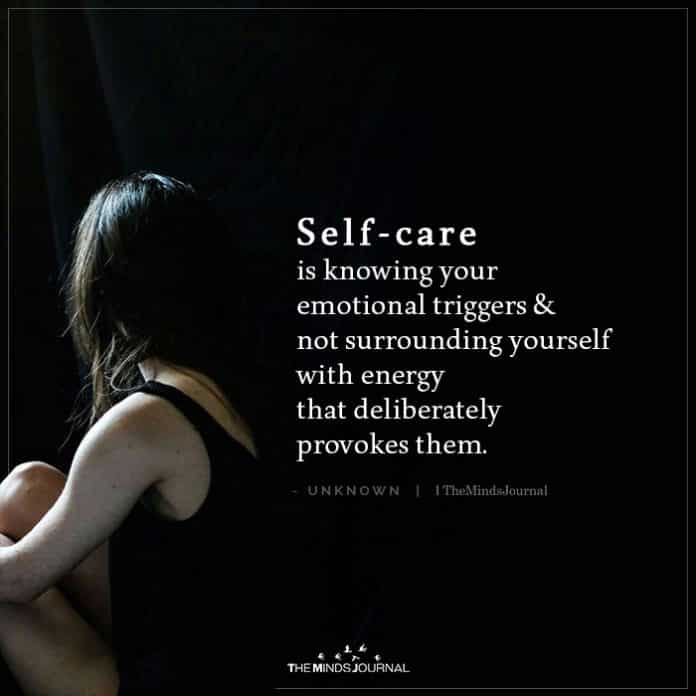
Triggers

Here’s How To Use Triggers For Growth:

1. Feel the emotion as energy.

Relabel what you are feeling as energy. Allow the energy to go through you. Try not to label it or react to it. Just acknowledge and breathe.

2. Practice observation.

emotional triggers

We have been in a subconscious habit of reacting to our triggers. In the beginning, observing the trigger will feel almost impossible. Use your journal to write down what your feeling even if it doesn’t make sense.

Every time you observe your reaction acknowledge how difficult this was and assign a positive emotion to the experience. As you practice the pathways of the brain will change and you’ll be less inclined to go into habitual reaction.

3. Lock in your progress.

Use this affirmation as often as needed. Breathe and say this while connecting to the emotion of gratitude “I am grateful for this emotion and what it can teach me.”

Linking any thoughts with emotion helps to actually change you. It’s what manifestation is all about. Thoughts and feelings together are very powerful.

4. Be mindful of your new relationship to emotions.

With some presence and practice, you will begin to see how your ideas around emotions are shifting. You become lighter and more willing to have a different emotional experience.

Each time this is practiced you become more aware of your own behaviors, habits, and thoughts. Self-awareness will be your reward.

Read Healing Your Emotional Triggers: 5 Ways to Be Less Reactive

5. Release.

Allow yourself to process and move forward. Do not push yourself to observe and learn if you’re having a natural resistance to it. Be patient and use your intuition to let you know when to release.


Written by Nicole LePera
Originally Appeared In The Holistic Psychologist

Emotional triggers can sometimes be tough to deal with, but once you know what they are, you will be able to work on them. The key to inculcating positivity in your life is knowing how to handle your triggers and not letting them control you all the time. 

If you want to know more about how you can use your triggers for personal growth, then check this video out below:

How Emotional Triggers For Personal Growth Pin
How To Use Your Emotional Triggers For Personal Growth pin
How To Use Your Emotional Triggers pin

Published On:

Last updated on:

Dr Nicole LePera

Dr. LePera views mental and physical struggles from a whole person perspective and works to identify the underlying physical and emotional causes. She understands that balance is an integral part of wellness and empowers individuals to heal themselves, supporting them on their wellness journeys. Dr. LePera founded the Mindful Healing Center in Center City Philadelphia. She recently expanded her work online creating a platform for teaching these often overlooked components of mental wellness to individuals and practitioners around the world.

Disclaimer: The informational content on The Minds Journal have been created and reviewed by qualified mental health professionals. They are intended solely for educational and self-awareness purposes and should not be used as a substitute for professional medical advice, diagnosis, or treatment. If you are experiencing emotional distress or have concerns about your mental health, please seek help from a licensed mental health professional or healthcare provider.

Leave a Comment

Today's Horoscope

Daily Horoscope 3 April 2026: Prediction for Zodiac Signs

Daily Horoscope 3 April, 2026: Prediction For Each Zodiac Sign

You may find yourself noticing patterns, emotions, or even small wins you overlooked before.

Latest Quizzes

What Kind Of Karma Do You Have? 3 Markings Reveal Truths

3 Types of Karma Exist — Which One Were You Born With? Look for These Palm Signs

Spot an M, Y, or X on your palm? This hidden sign reveals your karma type!

Latest Quotes

Real Signs Your Body Is Actually in Good Health: How to Know You’re Truly Well

Real Signs Your Body Is Actually in Good Health: How to Know You’re Truly Well

Real signs your body is healthy don’t always show up on lab reports. From good sleep and clear skin to regular digestion and a stable mood, your body is constantly sending quiet signals of wellness.

Readers Blog

Caption This Image and Selected Wisepicks – 29 March 2026

Caption This Image and Selected Wisepicks – 29 March 2026

Ready to unleash your inner wordsmith? ✨??☺️ Now’s your chance to show off your wit, charm, or sheer genius in just one line! Whether it’s laugh-out-loud funny or surprisingly deep, we want to hear it.Submit your funniest, wittiest, or most thought-provoking caption in the comments. We’ll pick 15+ winners to be featured on our website…

Latest Articles

We all go through situations where our emotions were triggered at some point in our lives. But, our reactions to our emotional triggers are often excessive. Do your emotional triggers make you react negatively every time something undesirable or difficult happens? Are you tired of feeling like this?

Triggers make us human. They happen to us at work, in relationships, and in interactions with complete strangers.

A trigger is an unhealed emotional wound. The level of emotions you experience gives you insight into how long the trigger has gone suppressed.

It’s not that triggers are bad, they actually give us an opportunity to observe and reflect which enables us to heal. If this sounds simple, it’s because it is. At the same time, it’s so difficult to practice because we are having a subconscious reaction during an emotional trigger.

Our reaction is literally below our awareness, which is why if another person is involved it can leave them feeling completely confused.

In healing triggers, we change the way we perceive the world around us and our interactions with the people in it. If we can identify triggers and separate ourselves from emotional reactions, we gain insight.

How To Identify Triggers

1. Set an intention to see them.

In the morning in bed or (even better) during meditation set an intention to see and learn from your triggers. Say to yourself, “I want to be able to see my emotional triggers today so that I can become a better version of myself.”

Setting an intention begins to wire to the pathways of the brain to objectively view what you previously just reacted to.

Read 5 Ways To Spot Emotional Triggers and How To Deal With Them

2. Get a journal or notebook.

Writing is incredibly powerful because our busy minds cannot always see and log patterns. Using a journal to write down the times you were triggered, how you felt, and how you reacted will give you valuable data.

As you write and read past reactions you’ll learn so much about things you couldn’t see before. Let’s say that someone makes a comment to you at work. You feel your blood boil and it throws your energy off for hours afterward. Taking 3-5 minutes to write down what happened as well as the thoughts and feelings you’re having each time something like this happens will help you for the next step.

3. Find the “why”.

We think other people are triggering us, but they’re just holding mirrors up to our triggers. For every emotional reaction, there is a root underlying cause. Usually, this comes from childhood or a past emotionally powerful moment. The more you observe instead of reacting the more insight you will receive. When you can understand why you react emotionally in different situations, you open yourself to choice in how you react.

Now that you have set an intention to identify and learn from your triggers, you’ll need to know how to get through them when they come up.

Emotions change the chemistry of both the brain and the body, so understand that this is a process that takes a lot of work. At the beginning of this practice you will feel completely overwhelmed, but each time you do this you have an emotional breakthrough.

Triggers

Here’s How To Use Triggers For Growth:

1. Feel the emotion as energy.

Relabel what you are feeling as energy. Allow the energy to go through you. Try not to label it or react to it. Just acknowledge and breathe.

2. Practice observation.

emotional triggers

We have been in a subconscious habit of reacting to our triggers. In the beginning, observing the trigger will feel almost impossible. Use your journal to write down what your feeling even if it doesn’t make sense.

Every time you observe your reaction acknowledge how difficult this was and assign a positive emotion to the experience. As you practice the pathways of the brain will change and you’ll be less inclined to go into habitual reaction.

3. Lock in your progress.

Use this affirmation as often as needed. Breathe and say this while connecting to the emotion of gratitude “I am grateful for this emotion and what it can teach me.”

Linking any thoughts with emotion helps to actually change you. It’s what manifestation is all about. Thoughts and feelings together are very powerful.

4. Be mindful of your new relationship to emotions.

With some presence and practice, you will begin to see how your ideas around emotions are shifting. You become lighter and more willing to have a different emotional experience.

Each time this is practiced you become more aware of your own behaviors, habits, and thoughts. Self-awareness will be your reward.

Read Healing Your Emotional Triggers: 5 Ways to Be Less Reactive

5. Release.

Allow yourself to process and move forward. Do not push yourself to observe and learn if you’re having a natural resistance to it. Be patient and use your intuition to let you know when to release.


Written by Nicole LePera
Originally Appeared In The Holistic Psychologist

Emotional triggers can sometimes be tough to deal with, but once you know what they are, you will be able to work on them. The key to inculcating positivity in your life is knowing how to handle your triggers and not letting them control you all the time. 

If you want to know more about how you can use your triggers for personal growth, then check this video out below:


How Emotional Triggers For Personal Growth Pin
How To Use Your Emotional Triggers For Personal Growth pin
How To Use Your Emotional Triggers pin

Published On:

Last updated on:

Dr Nicole LePera

Dr. LePera views mental and physical struggles from a whole person perspective and works to identify the underlying physical and emotional causes. She understands that balance is an integral part of wellness and empowers individuals to heal themselves, supporting them on their wellness journeys. Dr. LePera founded the Mindful Healing Center in Center City Philadelphia. She recently expanded her work online creating a platform for teaching these often overlooked components of mental wellness to individuals and practitioners around the world.

Leave a Comment

    Leave a Comment