9 Paths That Lead To Perfectly Hidden Depression

Author : Dr. Margaret R Rutherford

How did you learn to hide pain? Maybe you took your pain, or any sign of vulnerability or sadness, and hid it behind a camouflaged persona of happiness and productivity that shielded the real you from the eyes of the world. Maybe you pushed yourself relentlessly to build a life that looks perfect from the outside. 


Maybe you’re aware of this destructive adaptation. And maybe, you’re not — until you stop and you allow yourself to notice there’s no one who really knows you because you don’t allow them in. If this sounds like you, perhaps you’re experiencing what I call perfectly hidden depression.

You’re Not Alone…

I wish you could read the personal emails I’ve received; there are thousands from the United States, but also from all over the world: Malaysia, South Africa, India, France, Brazil, Ireland, Australia…


They’ve been written by doctors, advertising executives, teachers, chefs, people from all walks of life. The one thing they have in common? They’ve read or listened to my posts and podcasts on perfectly hidden depression. And their response, “I’m hiding. And doing it very well.”

Perhaps one of those emails has come from you…or perhaps you’ve thought of writing but haven’t yet. Perhaps you were relieved to find yourself relating to the concept of perfectly hidden depression because you’d searched in the past for answers but couldn’t find them because you didn’t meet the standardized criteria for depression. 

Related: 13 Habits of People With Concealed Depression


9 Common Pathways To Destructive Perfectionism

But how did your hiding begin? There are nine common pathways that set the stage for this kind of adaptation, where you coped by creating a perfect-looking persona. 

1) You were sexually or physically abused.

The damage from being the target of sexual manipulation or violence can silence you, particularly if you were told to shut up and keep the dark secret of your family. Whether or not your abuse was secret from others besides your abuser, your life was out of your control.

You weren’t safe as a child (or perhaps you’re not safe even as an adult). Staying in control has become vital to your way of life, and you’ve remained silent and absorbed shame that didn’t belong to you. 

2) You were a child of alcoholics or addicts.

You learned to be hyper-vigilant and kept your feelings completely to yourself because it was far from safe to communicate them to the ones who were supposed to nurture and protect you. You may have devoted yourself to school or athletic activities, a job — anything to keep you away from home.

You might have done whatever you could to become invisible to your parents to protect yourself from their toxicity, never making waves to attract their attention. Now as an adult you remain cautious, looking as if you’re doing ‘fine” but waiting for others to disappoint. 

3) You were emotionally abused.

You were told you weren’t going to amount to anything, or that you were too sensitive, a whiner, a bother, unwanted, perhaps even unloved. Those words can be etched in your mind for quite a long time; you’re left obsessed with proving that parent, teacher, or coach wrong.


So you create a perfect, very successful life, and you avoid admitting vulnerability like the plague.

Related: Why Successful, Confident People Still Feel Inferior Or Incapable

4) You took a pseudo-adult role in your family as a child.

It was your job to take care of all the others in your family. Perhaps one or both of your parents suffered mental or physical illness or was someone who couldn’t act like an adult. Maybe you were the eldest child, or maybe you were simply the one most innately responsible.

You took care of your brothers and sisters, making sure they were fed, did their homework, and were asleep at a decent hour. You made sure a parent took their medication, or you picked them up from the bar at night. You became someone who made sure necessary tasks were accomplished, cleaning the house and doing the grocery shopping…and you were good at it.

You began hiding how lonely and in need of comfort you were. You had to be okay — so you were okay. 

Perfectly hidden depression

5) You are the “star” of your family.

You were highly praised for your successes, “You never disappoint me.” You’re labeled the smart one, the athletic one, the accomplished one. “He can do anything he sets his mind to.” You felt as if you could never fail or falter. The pressure of your childhood was immense; that pressure may have been cultural as well. It was your job to “do better” in life or to make your family proud.

Or perhaps because of racism, sexism, or other ethnic issues, you literally wouldn’t have gotten the chances you did if not for truly being better, smarter, more hard-working. You keep the thumb in your back, pushing and prodding yourself constantly. Vulnerability, struggle, not hitting the mark — all of that is unacceptable. And actually — can seem quite foreign to you. 


Related: 10 Signs You’re A Perfectionist and How To Overcome

6) You are male.

You were taught that it’s unmanly to admit any kind of vulnerability. Your male role models had lived that way, or maybe you grew up in a highly gender-stereotyped environment or culture, where men and women had different rules or expectations.

You put up a huge front of stoicism because to do otherwise would be mocked as weak, and thus you hid the normal human range of emotions, pretending to always be strong, capable, and in charge.
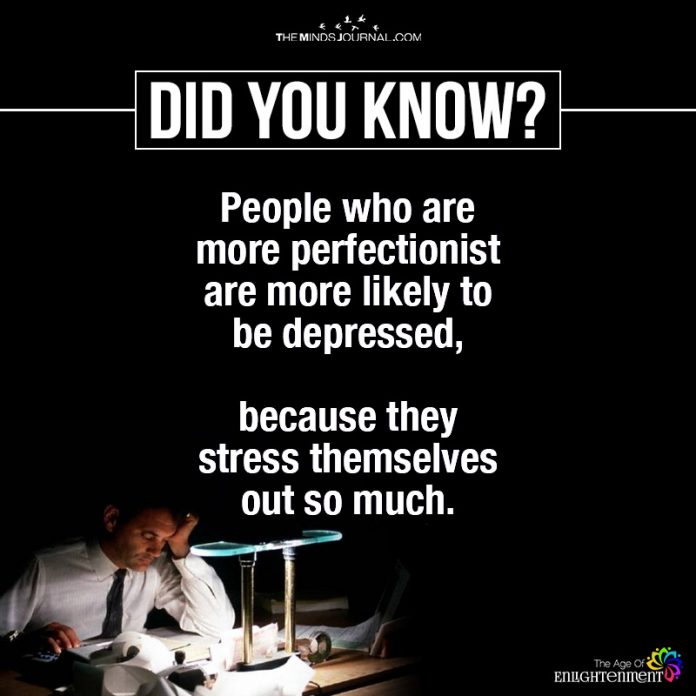
perfectly hidden depression

7) You weren’t allowed to express painful emotion. 

Things happened, even painful things like death, divorce, or disappointment, but no one talked about the pain of those losses. You were hushed for crying, punished for showing anger, sent to your room if you looked upset, “Don’t come down until you get yourself together.” “Don’t air your dirty laundry in public.”

You were never comforted or supported for feeling hurt, lost, or confused. So you hushed and stopped asking for comfort; there was none there. You stuck whatever hurt you had far away, and became an expert at denying its presence. 


8) You felt (or feel) responsible for a parent’s happiness or fulfillment.

Your parent said things like, “I don’t know what I’d do without you.” “There’s no one who understands me as you do.” You feel as if it’s your job to emotional prop up that parent, so you have to be ever-constant, ever-caring.

This undo responsibility is called enmeshment. No child truly has the power to bring fulfillment or contentment to a parent. But you can be manipulated into believing that that is your job. How can you ever leave if it’s your job to make a parent happy? So you may stay locked into that role, either hiding your own struggles or over-sharing them, because the boundaries between you and your parent are quite vague.

Your life can become a tangle of hidden secrets. If you do move to another city or take a job that keeps you busy, you walk around feeling an odd sense of guilt — simply because you grew up.

Related: Escaping The Matrix of Depression: The Hidden Antidote That Will Set You Free

9) The culture of the family was influential.

There’s a vast amount of difference between countries and cultures in what is stressed or allowed emotionally. Whether your ethnicity is Scottish, Chinese, Hispanic, or South African, it’s possible that your response to painful emotions was shaped by cultural influences.

You mimicked how the adults around you behaved; that is what children do in order to remain safe.


We all hurt; it’s part of being a human being. You don’t have to hide.

Check out Dr. Margaret Rutherford’s best-selling book, Perfectly Hidden Depression on Amazon.


Written By Dr. Margaret Rutherford 
Originally Appeared On Dr. Margaret Rutherford 
paths that lead to perfectly hidden depression pinex
paths that lead to perfectly hidden depression pin

Published On:

Last updated on:

Dr. Margaret R Rutherford

Dr. Margaret Rutherford, a clinical psychologist, has practiced for twenty-six years in Fayetteville, Arkansas. Earning the 2009 Arkansas Private Practitioner of the Year award for her volunteer work at a local free health clinic, she began blogging and podcasting in 2012 to destigmatize mental illness and educate the public about therapy and treatment. With her compassionate and common-sense style, her work can be found at https://DrMargaretRutherford.com, as well as HuffPost, Psych Central, Psychology Today, The Mighty, The Gottman Blog and others. She hosts a weekly podcast, The SelfWork Podcast with Dr. Margaret Rutherford. And her new book, Perfectly Hidden Depression: How to Break Free from the Perfectionism that Masks Your Depression, is published by New Harbinger and available at Amazon, Barnes, and Noble or your local bookstore.

Disclaimer: The informational content on The Minds Journal have been created and reviewed by qualified mental health professionals. They are intended solely for educational and self-awareness purposes and should not be used as a substitute for professional medical advice, diagnosis, or treatment. If you are experiencing emotional distress or have concerns about your mental health, please seek help from a licensed mental health professional or healthcare provider.

Leave a Comment

Today's Horoscope

Free Daily Horoscope 26 March For 12 Zodiac Signs

Daily Horoscope 26 March, 2026: Prediction For Each Zodiac Sign

Today is less about dramatic changes and more about small emotional shifts that can create long-term impact. Check your free horoscope for more insights!

Latest Quizzes

Image Personality Test: Which Woman Reveals Your True Self?

Which Woman Are You? A Personality Test That Reveals Your True Inner Nature

This personality test reveals your true self based on the woman you choose. Simple, fun, and surprisingly accurate!

Latest Quotes

Manipulative Tactics in Relationships: Gaslighting, Love Bombing, and Emotional Control

Manipulative Tactics in Relationships: Gaslighting, Love Bombing, and Emotional Control

Manipulative tactics in relationships often start subtly—gaslighting, love bombing, guilt trips, or mixed signals. Once you recognize these emotional manipulation patterns, you can protect your mental health and step away from toxic dynamics.

Readers Blog

Caption This Image and Selected Wisepicks – 22 March 2026

Caption This Image and Selected Wisepicks – 22 March 2026

Ready to unleash your inner wordsmith? ✨??☺️ Now’s your chance to show off your wit, charm, or sheer genius in just one line! Whether it’s laugh-out-loud funny or surprisingly deep, we want to hear it.Submit your funniest, wittiest, or most thought-provoking caption in the comments. We’ll pick 15+ winners to be featured on our website…

Latest Articles

How did you learn to hide pain? Maybe you took your pain, or any sign of vulnerability or sadness, and hid it behind a camouflaged persona of happiness and productivity that shielded the real you from the eyes of the world. Maybe you pushed yourself relentlessly to build a life that looks perfect from the outside. 


Maybe you’re aware of this destructive adaptation. And maybe, you’re not — until you stop and you allow yourself to notice there’s no one who really knows you because you don’t allow them in. If this sounds like you, perhaps you’re experiencing what I call perfectly hidden depression.

You’re Not Alone…

I wish you could read the personal emails I’ve received; there are thousands from the United States, but also from all over the world: Malaysia, South Africa, India, France, Brazil, Ireland, Australia…


They’ve been written by doctors, advertising executives, teachers, chefs, people from all walks of life. The one thing they have in common? They’ve read or listened to my posts and podcasts on perfectly hidden depression. And their response, “I’m hiding. And doing it very well.”

Perhaps one of those emails has come from you…or perhaps you’ve thought of writing but haven’t yet. Perhaps you were relieved to find yourself relating to the concept of perfectly hidden depression because you’d searched in the past for answers but couldn’t find them because you didn’t meet the standardized criteria for depression. 

Related: 13 Habits of People With Concealed Depression


9 Common Pathways To Destructive Perfectionism

But how did your hiding begin? There are nine common pathways that set the stage for this kind of adaptation, where you coped by creating a perfect-looking persona. 

1) You were sexually or physically abused.

The damage from being the target of sexual manipulation or violence can silence you, particularly if you were told to shut up and keep the dark secret of your family. Whether or not your abuse was secret from others besides your abuser, your life was out of your control.

You weren’t safe as a child (or perhaps you’re not safe even as an adult). Staying in control has become vital to your way of life, and you’ve remained silent and absorbed shame that didn’t belong to you. 

2) You were a child of alcoholics or addicts.

You learned to be hyper-vigilant and kept your feelings completely to yourself because it was far from safe to communicate them to the ones who were supposed to nurture and protect you. You may have devoted yourself to school or athletic activities, a job — anything to keep you away from home.

You might have done whatever you could to become invisible to your parents to protect yourself from their toxicity, never making waves to attract their attention. Now as an adult you remain cautious, looking as if you’re doing ‘fine” but waiting for others to disappoint. 

3) You were emotionally abused.

You were told you weren’t going to amount to anything, or that you were too sensitive, a whiner, a bother, unwanted, perhaps even unloved. Those words can be etched in your mind for quite a long time; you’re left obsessed with proving that parent, teacher, or coach wrong.


So you create a perfect, very successful life, and you avoid admitting vulnerability like the plague.

Related: Why Successful, Confident People Still Feel Inferior Or Incapable

4) You took a pseudo-adult role in your family as a child.

It was your job to take care of all the others in your family. Perhaps one or both of your parents suffered mental or physical illness or was someone who couldn’t act like an adult. Maybe you were the eldest child, or maybe you were simply the one most innately responsible.

You took care of your brothers and sisters, making sure they were fed, did their homework, and were asleep at a decent hour. You made sure a parent took their medication, or you picked them up from the bar at night. You became someone who made sure necessary tasks were accomplished, cleaning the house and doing the grocery shopping…and you were good at it.

You began hiding how lonely and in need of comfort you were. You had to be okay — so you were okay. 

Perfectly hidden depression

5) You are the “star” of your family.

You were highly praised for your successes, “You never disappoint me.” You’re labeled the smart one, the athletic one, the accomplished one. “He can do anything he sets his mind to.” You felt as if you could never fail or falter. The pressure of your childhood was immense; that pressure may have been cultural as well. It was your job to “do better” in life or to make your family proud.

Or perhaps because of racism, sexism, or other ethnic issues, you literally wouldn’t have gotten the chances you did if not for truly being better, smarter, more hard-working. You keep the thumb in your back, pushing and prodding yourself constantly. Vulnerability, struggle, not hitting the mark — all of that is unacceptable. And actually — can seem quite foreign to you. 


Related: 10 Signs You’re A Perfectionist and How To Overcome

6) You are male.

You were taught that it’s unmanly to admit any kind of vulnerability. Your male role models had lived that way, or maybe you grew up in a highly gender-stereotyped environment or culture, where men and women had different rules or expectations.

You put up a huge front of stoicism because to do otherwise would be mocked as weak, and thus you hid the normal human range of emotions, pretending to always be strong, capable, and in charge.

perfectly hidden depression

7) You weren’t allowed to express painful emotion. 

Things happened, even painful things like death, divorce, or disappointment, but no one talked about the pain of those losses. You were hushed for crying, punished for showing anger, sent to your room if you looked upset, “Don’t come down until you get yourself together.” “Don’t air your dirty laundry in public.”

You were never comforted or supported for feeling hurt, lost, or confused. So you hushed and stopped asking for comfort; there was none there. You stuck whatever hurt you had far away, and became an expert at denying its presence. 


8) You felt (or feel) responsible for a parent’s happiness or fulfillment.

Your parent said things like, “I don’t know what I’d do without you.” “There’s no one who understands me as you do.” You feel as if it’s your job to emotional prop up that parent, so you have to be ever-constant, ever-caring.

This undo responsibility is called enmeshment. No child truly has the power to bring fulfillment or contentment to a parent. But you can be manipulated into believing that that is your job. How can you ever leave if it’s your job to make a parent happy? So you may stay locked into that role, either hiding your own struggles or over-sharing them, because the boundaries between you and your parent are quite vague.

Your life can become a tangle of hidden secrets. If you do move to another city or take a job that keeps you busy, you walk around feeling an odd sense of guilt — simply because you grew up.

Related: Escaping The Matrix of Depression: The Hidden Antidote That Will Set You Free

9) The culture of the family was influential.

There’s a vast amount of difference between countries and cultures in what is stressed or allowed emotionally. Whether your ethnicity is Scottish, Chinese, Hispanic, or South African, it’s possible that your response to painful emotions was shaped by cultural influences.

You mimicked how the adults around you behaved; that is what children do in order to remain safe.


We all hurt; it’s part of being a human being. You don’t have to hide.

Check out Dr. Margaret Rutherford’s best-selling book, Perfectly Hidden Depression on Amazon.


Written By Dr. Margaret Rutherford 
Originally Appeared On Dr. Margaret Rutherford 
paths that lead to perfectly hidden depression pinex
paths that lead to perfectly hidden depression pin

Published On:

Last updated on:

Dr. Margaret R Rutherford

Dr. Margaret Rutherford, a clinical psychologist, has practiced for twenty-six years in Fayetteville, Arkansas. Earning the 2009 Arkansas Private Practitioner of the Year award for her volunteer work at a local free health clinic, she began blogging and podcasting in 2012 to destigmatize mental illness and educate the public about therapy and treatment. With her compassionate and common-sense style, her work can be found at https://DrMargaretRutherford.com, as well as HuffPost, Psych Central, Psychology Today, The Mighty, The Gottman Blog and others. She hosts a weekly podcast, The SelfWork Podcast with Dr. Margaret Rutherford. And her new book, Perfectly Hidden Depression: How to Break Free from the Perfectionism that Masks Your Depression, is published by New Harbinger and available at Amazon, Barnes, and Noble or your local bookstore.

Leave a Comment

    Leave a Comment