Interpersonal Attraction: The 7 Languages Of Attraction

Author : Roni Beth Tower

Do you deny your own beauty?
Attraction can grow as a relationship progresses.

KEY POINTS:

People sometimes form beliefs about their attractiveness early in life and behave according to their expectations in adulthood.
Attraction can be understood through seven lenses that describe human experience, from the cellular to the societal.
The more complete and authentic a relationship, the more a person's beauty can be expressed and appreciated.

I recently watched the 1996 film, “The Mirror Has Two Faces.” The story highlights both the damage is done to us when we grow up believing that we are not attractive — or, worse, that the people we most want to love us find us unappealing. These experiences can cut off the capacity for our perception and experience of beauty to grow as a relationship deepens.

Barbra Streisand directs and stars in this movie about an English professor in her mid-30s who is adored by her students but unable to sustain a romantic relationship. After her newlywed sister secretly submits her sibling’s profile to an online dating service, a mathematics professor looking for non-sexual companionship pursues her, in part because he supposedly does not find her physically attractive.

The viewer watches as their pleasure in being with each other grows, along with their caring, confiding, and companionship, passion building beneath the radar. Their involvement transforms both of the professors, allowing them to become more complete in themselves and with each other.

What is happening here?

Studies of “interpersonal attraction” date back to the early days of social psychology. More recently, studies from neuroscience through anthropology have appeared (some background and references). Here is a brief summary of interpersonal attraction as seen through the seven languages or lenses I like to apply when considering our experiences.

7 Languages Of Attraction

1. Cellular Level Attraction

At the cellular level, attraction is associated with the pheromones olfactory receptors take in when we anticipate sexual connections, the dopamine excreted when we experience pleasure, or the energy we feel pulling us towards another, whether because we feel a profound similarity or a mysterious difference that begs for exploration. An increase in these pleasures increases attraction.

Related: 8 Psychology-Based Signs Someone Secretly Has A Crush On You

2. Organ Level Attraction

At the organ level, the eyes react quickly, picking up visual cues that reflect realities outside of conscious awareness as well as those carved by complex interactions between nature and nurture. The brain tells us that a relationship with the person might offer a pathway to a goal (whether status, reproduction, sexual release, companionship, partnership, caring or anything else a person may be wanting at a particular time in their life).

Similarly, the heart can react to interaction, offering information. As Pascal said, “The heart has its reasons that reason does not know….We know the truth not only by reason but also by the heart.” The heart can tell us what we are experiencing through its beating.

Dilated Pupils Show Your Attraction To Someone

3. Biological Attraction

At the level of biological systems, breathing (our respiratory system) is essential to our functioning. The saying, “He took my breath away” reflects a very real reaction centered in heart-lung coordination, just like our circulatory or neurological arousal systems shift as we react to our attraction. (See Helen Fisher’s book Why We Love.)

4. Psychological Attraction

Moving up the pyramid to the language (and studies) of psychology, the attraction has roots in our feelings, those emotions that propel us towards or away from an experience and color it with evaluations of pain, pleasure, or curiosity. These impulses influence beliefs (conscious or unconscious) we hold about potential outcomes of behavior.

These schemata combine with our temperamental inclinations to approach or avoid something new and our life history of how we have modified our biological tendencies to explore or protect ourselves. Repeated contact leads to familiarity, which can increase or decrease our desires for more contact, depending on its emotional match with images of how relationships play out.

5. Attraction At Social-Psychological

On the social-psychological level, these sets of expectations circle back to reinforce a desire to move closer or become more distant. The strong tendency we have to “regulate distance,” keeping it at a familiar (safe) level, was captured by a series of wood sculptures, “Shaky Relationships,” sold in the gift shop of the Freud Museum in Hampstead, England. Of course, people can learn through interactions, and so we can learn to modify those scripts, as Streisand and Jeff Bridges discover in the film.

Defining “attraction” moves towards definitions of “beauty.”

As we move up the language pyramid, defining “attraction” moves towards definitions of “beauty.” The cultures in which we are embedded define (to a large extent) both what is desirable and what is beautiful, as explored in the chapters of Mate Selection Across Cultures. For example, our social and temporal surroundings influence our notions of “beauty,” ranging from body shape to expectations of fertility.

Related: 9 Psychological Tricks To Make Someone Like You Instantly

6. Attraction At Cultural Level

Evolutionary psychologists like David Buss and anthropologists like Helen Fisher focus on the cultural implications of our biology as an essential component of attraction. Not only does mating lead to the perpetuation of the species, but it can also be a way for a culture to care for its aging members.
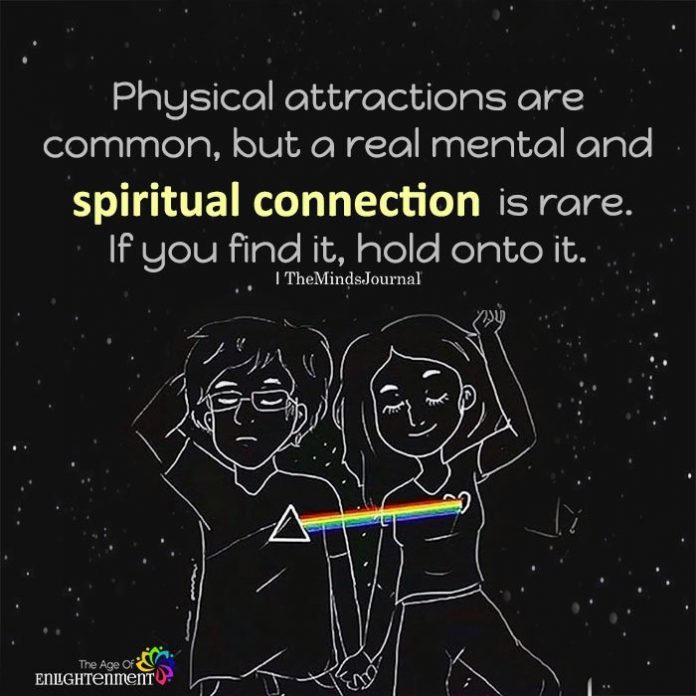
Physical Attractions Are Common

7. Spiritual Attraction

Finally, the attraction between two people can be seen, for some, from a spiritual perspective, as transcendent forces put them together into a full union, perhaps of “soul mates.” From this perspective, fixed definitions and perceptions melt into deeper levels of appreciation as the nooks and crannies of the relationship expand.

Once passion, friendship, and caregiving systems are engaged, what once may have been seen as flaws can become beauty marks. The attraction continues to expand, limited only by time. The depth of love that goes beyond the perceived “imperfections” can bring healing and liberation, wholeness, and a sense of transcendence (the universal) that allows one to feel held, respected, free to continue to grow and explore.

Related: 35 Interesting Paradoxes On Human Behavior That Are True

In the movie, honesty and exposure led both characters to transform, no longer limited by a childhood belief that “I am neither pretty nor desirable” or an adult belief that “My sexuality has a life of its own and leads only to disaster.” Love and admiration bring appreciation and attraction, a deeper knowing with recognition of the light within that can shine through when we develop a capacity for loving, the love for another, and the ability to see the reflection of that love in another’s eyes or touch.

Copyright 2021 Roni Beth Tower

References:

Buss, D. (2016). The Evolution of Desire: Strategies of Human Mating. (4th Ed.) Basic Books.
Fisher, H. (2004) Why We Love: The Nature and Chemistry of Love. New York: Henry Holt & Co.
Hamon, E. E. & Ingoldsby, B. B. (Eds.) Mate Selection Across Cultures. (2001) Thousand Oaks, CA: Sage Publications.

Written by:Roni Beth Tower
Originally appeared on: Psychology Today 
Republished with permission
interpersonal attraction languages pinop
interpersonal attraction languages pin

Published On:

Last updated on:

Roni Beth Tower

Roni Beth Tower is an author and retired research, clinical, and academic psychologist whose memoir, Miracle at Midlife: A Transatlantic Romance, won a 2017 IPPY Gold Medal award. Her blog, “Life, Refracted” is at, and her writings about Paris. Find photos and more on her website.

Disclaimer: The informational content on The Minds Journal have been created and reviewed by qualified mental health professionals. They are intended solely for educational and self-awareness purposes and should not be used as a substitute for professional medical advice, diagnosis, or treatment. If you are experiencing emotional distress or have concerns about your mental health, please seek help from a licensed mental health professional or healthcare provider.

Leave a Comment

Today's Horoscope

Free Daily Horoscope 26 March For 12 Zodiac Signs

Daily Horoscope 26 March, 2026: Prediction For Each Zodiac Sign

Today is less about dramatic changes and more about small emotional shifts that can create long-term impact. Check your free horoscope for more insights!

Latest Quizzes

Image Personality Test: Which Woman Reveals Your True Self?

Which Woman Are You? A Personality Test That Reveals Your True Inner Nature

This personality test reveals your true self based on the woman you choose. Simple, fun, and surprisingly accurate!

Latest Quotes

Manipulative Tactics in Relationships: Gaslighting, Love Bombing, and Emotional Control

Manipulative Tactics in Relationships: Gaslighting, Love Bombing, and Emotional Control

Manipulative tactics in relationships often start subtly—gaslighting, love bombing, guilt trips, or mixed signals. Once you recognize these emotional manipulation patterns, you can protect your mental health and step away from toxic dynamics.

Readers Blog

Caption This Image and Selected Wisepicks – 22 March 2026

Caption This Image and Selected Wisepicks – 22 March 2026

Ready to unleash your inner wordsmith? ✨??☺️ Now’s your chance to show off your wit, charm, or sheer genius in just one line! Whether it’s laugh-out-loud funny or surprisingly deep, we want to hear it.Submit your funniest, wittiest, or most thought-provoking caption in the comments. We’ll pick 15+ winners to be featured on our website…

Latest Articles

Do you deny your own beauty?
Attraction can grow as a relationship progresses.

KEY POINTS:

People sometimes form beliefs about their attractiveness early in life and behave according to their expectations in adulthood.
Attraction can be understood through seven lenses that describe human experience, from the cellular to the societal.
The more complete and authentic a relationship, the more a person's beauty can be expressed and appreciated.

I recently watched the 1996 film, “The Mirror Has Two Faces.” The story highlights both the damage is done to us when we grow up believing that we are not attractive — or, worse, that the people we most want to love us find us unappealing. These experiences can cut off the capacity for our perception and experience of beauty to grow as a relationship deepens.

Barbra Streisand directs and stars in this movie about an English professor in her mid-30s who is adored by her students but unable to sustain a romantic relationship. After her newlywed sister secretly submits her sibling’s profile to an online dating service, a mathematics professor looking for non-sexual companionship pursues her, in part because he supposedly does not find her physically attractive.

The viewer watches as their pleasure in being with each other grows, along with their caring, confiding, and companionship, passion building beneath the radar. Their involvement transforms both of the professors, allowing them to become more complete in themselves and with each other.

What is happening here?

Studies of “interpersonal attraction” date back to the early days of social psychology. More recently, studies from neuroscience through anthropology have appeared (some background and references). Here is a brief summary of interpersonal attraction as seen through the seven languages or lenses I like to apply when considering our experiences.

7 Languages Of Attraction

1. Cellular Level Attraction

At the cellular level, attraction is associated with the pheromones olfactory receptors take in when we anticipate sexual connections, the dopamine excreted when we experience pleasure, or the energy we feel pulling us towards another, whether because we feel a profound similarity or a mysterious difference that begs for exploration. An increase in these pleasures increases attraction.

Related: 8 Psychology-Based Signs Someone Secretly Has A Crush On You

2. Organ Level Attraction

At the organ level, the eyes react quickly, picking up visual cues that reflect realities outside of conscious awareness as well as those carved by complex interactions between nature and nurture. The brain tells us that a relationship with the person might offer a pathway to a goal (whether status, reproduction, sexual release, companionship, partnership, caring or anything else a person may be wanting at a particular time in their life).

Similarly, the heart can react to interaction, offering information. As Pascal said, “The heart has its reasons that reason does not know….We know the truth not only by reason but also by the heart.” The heart can tell us what we are experiencing through its beating.

Dilated Pupils Show Your Attraction To Someone

3. Biological Attraction

At the level of biological systems, breathing (our respiratory system) is essential to our functioning. The saying, “He took my breath away” reflects a very real reaction centered in heart-lung coordination, just like our circulatory or neurological arousal systems shift as we react to our attraction. (See Helen Fisher’s book Why We Love.)

4. Psychological Attraction

Moving up the pyramid to the language (and studies) of psychology, the attraction has roots in our feelings, those emotions that propel us towards or away from an experience and color it with evaluations of pain, pleasure, or curiosity. These impulses influence beliefs (conscious or unconscious) we hold about potential outcomes of behavior.

These schemata combine with our temperamental inclinations to approach or avoid something new and our life history of how we have modified our biological tendencies to explore or protect ourselves. Repeated contact leads to familiarity, which can increase or decrease our desires for more contact, depending on its emotional match with images of how relationships play out.

5. Attraction At Social-Psychological

On the social-psychological level, these sets of expectations circle back to reinforce a desire to move closer or become more distant. The strong tendency we have to “regulate distance,” keeping it at a familiar (safe) level, was captured by a series of wood sculptures, “Shaky Relationships,” sold in the gift shop of the Freud Museum in Hampstead, England. Of course, people can learn through interactions, and so we can learn to modify those scripts, as Streisand and Jeff Bridges discover in the film.

Defining “attraction” moves towards definitions of “beauty.”

As we move up the language pyramid, defining “attraction” moves towards definitions of “beauty.” The cultures in which we are embedded define (to a large extent) both what is desirable and what is beautiful, as explored in the chapters of Mate Selection Across Cultures. For example, our social and temporal surroundings influence our notions of “beauty,” ranging from body shape to expectations of fertility.

Related: 9 Psychological Tricks To Make Someone Like You Instantly

6. Attraction At Cultural Level

Evolutionary psychologists like David Buss and anthropologists like Helen Fisher focus on the cultural implications of our biology as an essential component of attraction. Not only does mating lead to the perpetuation of the species, but it can also be a way for a culture to care for its aging members.

Physical Attractions Are Common

7. Spiritual Attraction

Finally, the attraction between two people can be seen, for some, from a spiritual perspective, as transcendent forces put them together into a full union, perhaps of “soul mates.” From this perspective, fixed definitions and perceptions melt into deeper levels of appreciation as the nooks and crannies of the relationship expand.

Once passion, friendship, and caregiving systems are engaged, what once may have been seen as flaws can become beauty marks. The attraction continues to expand, limited only by time. The depth of love that goes beyond the perceived “imperfections” can bring healing and liberation, wholeness, and a sense of transcendence (the universal) that allows one to feel held, respected, free to continue to grow and explore.

Related: 35 Interesting Paradoxes On Human Behavior That Are True

In the movie, honesty and exposure led both characters to transform, no longer limited by a childhood belief that “I am neither pretty nor desirable” or an adult belief that “My sexuality has a life of its own and leads only to disaster.” Love and admiration bring appreciation and attraction, a deeper knowing with recognition of the light within that can shine through when we develop a capacity for loving, the love for another, and the ability to see the reflection of that love in another’s eyes or touch.

Copyright 2021 Roni Beth Tower

References:

Buss, D. (2016). The Evolution of Desire: Strategies of Human Mating. (4th Ed.) Basic Books.
Fisher, H. (2004) Why We Love: The Nature and Chemistry of Love. New York: Henry Holt & Co.
Hamon, E. E. & Ingoldsby, B. B. (Eds.) Mate Selection Across Cultures. (2001) Thousand Oaks, CA: Sage Publications.

Written by:Roni Beth Tower
Originally appeared on: Psychology Today 
Republished with permission
interpersonal attraction languages pinop
interpersonal attraction languages pin

Published On:

Last updated on:

Roni Beth Tower

Roni Beth Tower is an author and retired research, clinical, and academic psychologist whose memoir, Miracle at Midlife: A Transatlantic Romance, won a 2017 IPPY Gold Medal award. Her blog, “Life, Refracted” is at, and her writings about Paris. Find photos and more on her website.

Leave a Comment

    Leave a Comment