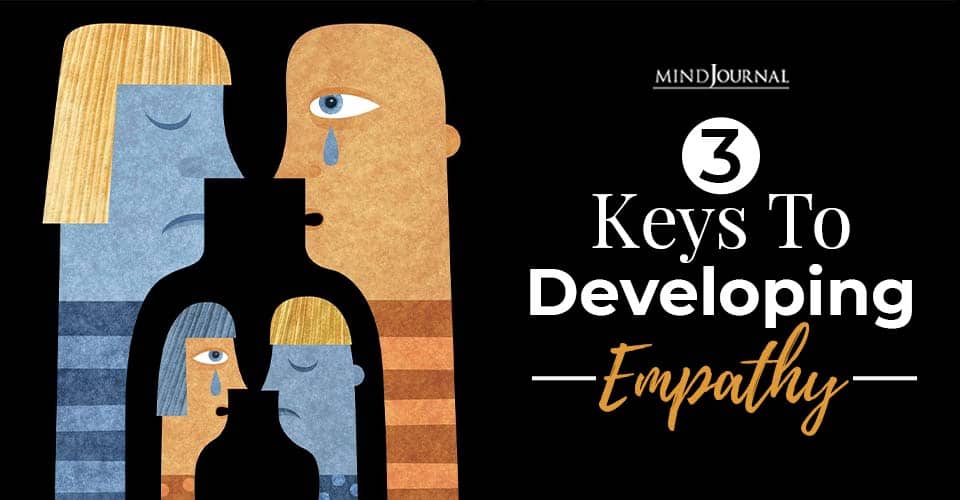
3 Keys To Developing Empathy: How To Be The Best Listener Ever

Author : Saba May

Empathy is an amazing virtue to have, but unfortunately not everyone has it. However, the best way to instill empathy in yourself, and be a good listener for someone, you need to know about the three keys to developing empathy.


1. The Emotional Thermostat: Why Every Experience is Relative to the Experiencer

Everyone has an emotional thermostat that is set based on one’s age, genetics, socio-cultural environment, and personal experience. This is a fundamental principle to understand in order to cultivate true empathy. Have you ever noticed that a certain situation may stress someone to emotional exhaustion, while someone else under the same duress wouldn’t bat an eye?

We all have the ability to withstand stress, but the boiling point is different for everyone. A 12-year old may feel intense grief when their crush does not reciprocate their sentiments, and the intensity of that grief may be comparable to an adult experiencing a permanent loss.


The implication is this: it is not the objective situation that determines the effect on the individual: it is the relative perception of the situation that matters. 

Our emotional lives are completely unique to us; with no emotional response being more or less correct to. the situation at hand. It is absolutely relative.

Related: 10 Signs You Have Above Average Empathy


2. Listen to the facts, respond to the emotions

“Why don’t you just stop smoking?”
“Why don’t you just do X?”
“Can’t you just call them?”

We all want to help others solve their problems, especially when we are listening ardently to their woes. The solution seems so simple! So glaringly obvious!

Alas, we hardly know what is best for ourselves, let alone someone else. Even if we have that omniscient superpower, giving advice to someone who is venting is not what they need at that moment. Counterintuitively, they do not need to hear a solution. They just need to be heard.

And in order to make that person feel heard, and in order to actually hear them—we have to listen to how they are perceiving the situation, and how it is making them feel. Forget the objective facts. Forget the details of what they are relaying to you. Listen and respond to their emotions. Feel how it would feel to be in that situation, and mirror it to them in your words. That is what it means to empathize.

For example, someone may say “I’ve tried to quit smoking 7 times, and this program is not working for me. I tried for 3 months and almost successfully quit, but I had a beer the other day and couldn’t stop myself from having a cigarette.” Instead of immediately saying, “Well have you tried the 12-step program?” or offering some other well-meaning suggestion, use an empathetic statement.

Imagine how they are feeling: defeated, helpless, frustrated, angry at themselves. Now relay that to them. “You must be feeling so defeated. I can’t imagine how frustrating that would be. I can understand that you’re probably angry with yourself even though you worked so hard.


Validating someone’s emotions, even negative ones, does considerably more good than offering logic. Because logic stems from the mind, whereas emotions stem from the heart. And empathy is listening and responding with the heart.

empathy

3. Build confidence

Now, once you have mirrored their emotions, and you have validated them and they feel heard, you can steer the conversation in a positive direction. You obviously don’t want to leave it at “you must feel so helpless”. 

So, you can shine light where they can’t see it right now. Someone in despair or distress is likely to be bringing up reinforcing thoughts as to why their life sucks, and it can easily culminate into a bleak and inaccurate view of themselves. Here, it’s best to think of their qualities rather than their accomplishments. For example, instead of saying “you were almost able to quit smoking“, you can say “it takes so much courage to keep trying. You are so brave.”

You don’t have to search long to find an admirable quality. The fact that they have the courage to be vulnerable and discuss their difficulties in the first place—that is true strength.

Check out Saba May’s website, Metta Human for more such informative articles.


Written By Saba May  
Originally Appeared In Metta Human
Developing Empathy pin


Published On:

Last updated on:

Saba May

Saba May is the primary author and the editor-in-chief at Metta Human. She is a scientist and writer with degrees in biological sciences, and psychology, neuroscience, and behavior. Through her studies and her personal experiences, she has come to believe that we can harness the power of the mind to elevate ourselves and humanity.

Disclaimer: The informational content on The Minds Journal have been created and reviewed by qualified mental health professionals. They are intended solely for educational and self-awareness purposes and should not be used as a substitute for professional medical advice, diagnosis, or treatment. If you are experiencing emotional distress or have concerns about your mental health, please seek help from a licensed mental health professional or healthcare provider.

Leave a Comment

Today's Horoscope

Daily Horoscope 17 March 2026: Prediction for Zodiac Signs

Daily Horoscope 17 March, 2026: Prediction for Each Zodiac Sign

Today carries a calm, thoughtful kind of energy that may not be obvious at first.

Latest Quizzes

Interesting Finger Personality Test: 4 Finger Lines

Finger Personality Test: Join Your Fingers And Reveal A Hidden Personality Secret!

Look closely at your finger lines. Which pattern do you see? This personality test might surprise you!

Latest Quotes

Secure Attachment: The Steady Foundation of Healthy Love

Secure Attachment: The Steady Foundation of Healthy Love

Secure attachment feels like missing someone without panic, trusting without constant reassurance. Explore why this steady love fosters emotional security and true intimacy.

Readers Blog

Caption This Image and Selected Wisepicks – 15 March 2026

Caption This Image and Selected Wisepicks – 15 March 2026

Ready to unleash your inner wordsmith? ✨??☺️ Now’s your chance to show off your wit, charm, or sheer genius in just one line! Whether it’s laugh-out-loud funny or surprisingly deep, we want to hear it.Submit your funniest, wittiest, or most thought-provoking caption in the comments. We’ll pick 15+ winners to be featured on our website…

Latest Articles

Empathy is an amazing virtue to have, but unfortunately not everyone has it. However, the best way to instill empathy in yourself, and be a good listener for someone, you need to know about the three keys to developing empathy.


1. The Emotional Thermostat: Why Every Experience is Relative to the Experiencer

Everyone has an emotional thermostat that is set based on one’s age, genetics, socio-cultural environment, and personal experience. This is a fundamental principle to understand in order to cultivate true empathy. Have you ever noticed that a certain situation may stress someone to emotional exhaustion, while someone else under the same duress wouldn’t bat an eye?

We all have the ability to withstand stress, but the boiling point is different for everyone. A 12-year old may feel intense grief when their crush does not reciprocate their sentiments, and the intensity of that grief may be comparable to an adult experiencing a permanent loss.


The implication is this: it is not the objective situation that determines the effect on the individual: it is the relative perception of the situation that matters. 

Our emotional lives are completely unique to us; with no emotional response being more or less correct to. the situation at hand. It is absolutely relative.

Related: 10 Signs You Have Above Average Empathy


2. Listen to the facts, respond to the emotions

“Why don’t you just stop smoking?”
“Why don’t you just do X?”
“Can’t you just call them?”

We all want to help others solve their problems, especially when we are listening ardently to their woes. The solution seems so simple! So glaringly obvious!

Alas, we hardly know what is best for ourselves, let alone someone else. Even if we have that omniscient superpower, giving advice to someone who is venting is not what they need at that moment. Counterintuitively, they do not need to hear a solution. They just need to be heard.

And in order to make that person feel heard, and in order to actually hear them—we have to listen to how they are perceiving the situation, and how it is making them feel. Forget the objective facts. Forget the details of what they are relaying to you. Listen and respond to their emotions. Feel how it would feel to be in that situation, and mirror it to them in your words. That is what it means to empathize.

For example, someone may say “I’ve tried to quit smoking 7 times, and this program is not working for me. I tried for 3 months and almost successfully quit, but I had a beer the other day and couldn’t stop myself from having a cigarette.” Instead of immediately saying, “Well have you tried the 12-step program?” or offering some other well-meaning suggestion, use an empathetic statement.

Imagine how they are feeling: defeated, helpless, frustrated, angry at themselves. Now relay that to them. “You must be feeling so defeated. I can’t imagine how frustrating that would be. I can understand that you’re probably angry with yourself even though you worked so hard.


Validating someone’s emotions, even negative ones, does considerably more good than offering logic. Because logic stems from the mind, whereas emotions stem from the heart. And empathy is listening and responding with the heart.

empathy

3. Build confidence

Now, once you have mirrored their emotions, and you have validated them and they feel heard, you can steer the conversation in a positive direction. You obviously don’t want to leave it at “you must feel so helpless”. 

So, you can shine light where they can’t see it right now. Someone in despair or distress is likely to be bringing up reinforcing thoughts as to why their life sucks, and it can easily culminate into a bleak and inaccurate view of themselves. Here, it’s best to think of their qualities rather than their accomplishments. For example, instead of saying “you were almost able to quit smoking“, you can say “it takes so much courage to keep trying. You are so brave.”

You don’t have to search long to find an admirable quality. The fact that they have the courage to be vulnerable and discuss their difficulties in the first place—that is true strength.

Check out Saba May’s website, Metta Human for more such informative articles.


Written By Saba May  
Originally Appeared In Metta Human
Developing Empathy pin


Published On:

Last updated on:

Saba May

Saba May is the primary author and the editor-in-chief at Metta Human. She is a scientist and writer with degrees in biological sciences, and psychology, neuroscience, and behavior. Through her studies and her personal experiences, she has come to believe that we can harness the power of the mind to elevate ourselves and humanity.

Leave a Comment

    Leave a Comment