5 Topics You Should Avoid Around Children (Your Child Hears More Than You Think!)

Author : Jane Harper

5 Topics to Avoid with Kids: Communication Tips for Parents

Your child absorbs far more than you realise. Even when you believe theyโ€™re busy playing or watching TV, theyโ€™re listening, theyโ€™re learning. As parents committed to active parenting, we need to pay attention not just to what we say to our children, but also to what we say around them.

That raises an important question: Are there certain topics that simply shouldnโ€™t be discussed in front of children? Understanding that balance is really important. That is why communication tips for parents matter so much.

We all know that children learn by copying adults. So in this article, weโ€™ll tell you how to become a better parent by avoiding these 5 topics for your childโ€™s betterment and emotional safety. 

5 Topics that You Should Definitely Avoid in Front of Your Child (With Practical Communication Tips for Parents)

Here are 5 topics to avoid in front of your children for active parenting:

1. Fighting or Blaming Each Other

When you fight or blame your partner in front of your child, you teach them that conflict means shouting, fear, or emotional pain. Your child doesnโ€™t understand context; they only feel unsafe.

Consequently, your child, too, shall learn to use swear words, which they pick up quite easily when they hear you fighting or blaming. One of the most useful communication tips for parents is to have calm conversations to foster active parenting. When you resolve disagreements respectfully, you show your child how healthy communication works.

Related: The Power of Secure Attachment in Parent-Child Relationships

2. Speaking Negatively About Relatives

When you say something bad about relatives, your child feels confused. They love their family and donโ€™t know how to process conflicting emotions. Over time, negative talk teaches your child to judge others harshly or easily develop resentment towards them. They may also worry that you could speak the same way about them someday.

You can inculcate positive parenting techniques and try to keep adult conflicts private. When you use respectful language, your child learns empathy and emotional balance.
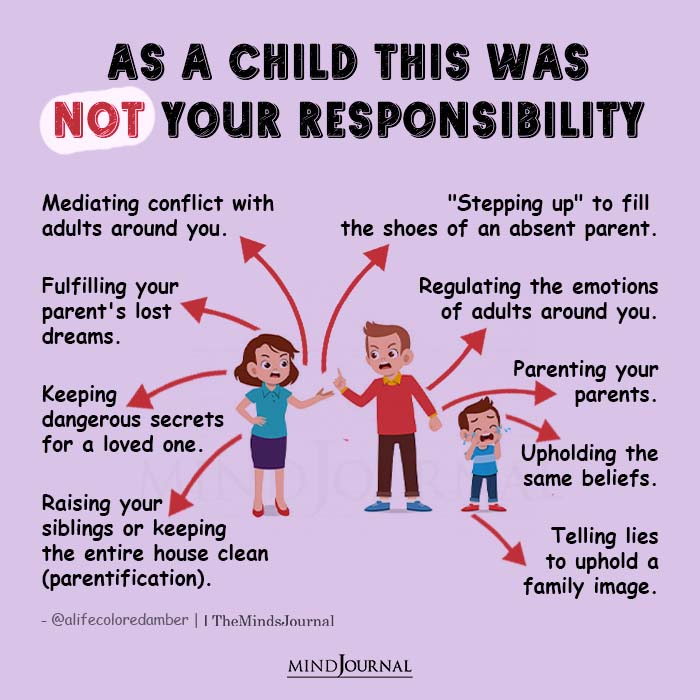
3. Explicit Talk

When you engage in sexual behaviour or explicit talk around your child, you expose them to ideas they are not ready to understand. Even if you think they โ€œwonโ€™t notice,โ€ they do.

Todayโ€™s children already face early exposure through the media. So as a responsible parent, it is important to set clear boundaries at home.
However, it’s very important for your child to see healthy affection. Hugging, holding hands, or kissing affectionately teaches them about love and security.

Related: How To Support Your Child Emotionally: 5 Daily Questions That Make A Big Difference

4. Financial Stress and Adult Money Problems

When your child overhears financial worries, they often assume the worst. They may fear losing their home or believe they are a burden. Anxiety grows when explanations feel scary or unclear.

Instead, reassure them calmly. One of the best advice for new parents is to use simple phrases like โ€œWeโ€™re making smart choices with money, which makes you a supportive parent.

5. Comparisons: โ€œWhy Canโ€™t You Be Like _?โ€

When you compare your child to others, you hurt their sense of identity. They hear, โ€œIโ€™m not good enough,โ€ even if you meant to motivate them. As a result, your child may stop trying altogether.

Celebrate your childโ€™s individuality instead. Positive parenting techniques like encouraging your child support their emotional development and help them grow into confident adults.

Healthy communication tips for parents.
Tips for good communication with children

Final Thoughts: Communication Tips for Parents

Your child copies how you speak, react, and handle stress. They learn emotional habits long before they can explain them. If you are wondering how to become a better parent, then one of the best and easiest communication tips for parents is to simply filter your words before you speak.

Often, it isn’t about avoiding a topic but changing the way you’re talking about things so that your child doesn’t have a space to misinterpret. This kind of active parenting involves mindful conversations that help your child feel more supported and cared for. This awareness supports emotional safety and confidence in children.

As parents, what you behave like today becomes your childโ€™s inner voice tomorrow. Remember, you donโ€™t need to hide reality; you need to filter it so that your child only learns whatโ€™s important and healthy for them. Your child will face these topics one day, but not before theyโ€™re ready.


Frequently Asked Questions (FAQโ€™s)

How to avoid a fight in front of your child?

To avoid a fight in front of your child, pause the conversation when emotions run high and agree to talk later in private. Remain composed and use polite language. Active parenting in daily family life and emotional development are supported by modelling healthy communication, which teaches children how to manage conflict in a safe manner.

How should parents communicate with their children?

Parents should communicate with their children in a way that is calm, clear, and age-appropriate. Listening without interrupting, validating their feelings, and choosing words carefully helps build trust. Open and honest communication makes children feel safe, understood, and more confident sharing their thoughts and concerns.

How to become a better parent?

To become a better parent, focus on being patient, present, and supportive. Listen to your child, set clear and fair rules, and lead by example. Spend quality time together and respond calmly during challenges. Growth in parenting comes from learning, adapting, and building a strong, trusting connection with your child.


active parenting

Published On:

Last updated on:

Disclaimer: The informational content on The Minds Journal have been created and reviewed by qualified mental health professionals. They are intended solely for educational and self-awareness purposes and should not be used as a substitute for professional medical advice, diagnosis, or treatment. If you are experiencing emotional distress or have concerns about your mental health, please seek help from a licensed mental health professional or healthcare provider.

Leave a Comment

Today's Horoscope

Daily Horoscope 24 April, 2026

Daily Horoscope 24 April, 2026: Prediction For Each Zodiac Sign

Letโ€™s see what today looks like for you based on your zodiac horoscope for 24th April!

Latest Quizzes

Optical Illusion Personality Test: Are You Romantic or Creative?

Optical Illusion Personality Test: Are You More of a Romantic or Creative?

Itโ€™s quick, itโ€™s fun, and you might be surprised by what your mind reveals.

Latest Quotes

Human Psychology Facts: How These Cognitive Biases Quietly Shape Your Life

Human Psychology Facts: How These Cognitive Biases Quietly Shape Your Life

Human psychology facts show how your brain quietly edits reality. From the Pratfall Effect to the Halo Effect, these cognitive biases influence who you like, what you notice, and how confident you feel.

Readers Blog

Caption This Image and Selected Wisepicks โ€“ 19 April 2026

Caption This Image and Selected Wisepicks โ€“ 19 April 2026

Ready to unleash your inner wordsmith? โœจ??โ˜บ๏ธ Nowโ€™s your chance to show off your wit, charm, or sheer genius in just one line! Whether itโ€™s laugh-out-loud funny or surprisingly deep, we want to hear it.Submit your funniest, wittiest, or most thought-provoking caption in the comments. Weโ€™ll pick 15+ winners to be featured on our website…

Latest Articles

5 Topics to Avoid with Kids: Communication Tips for Parents

Your child absorbs far more than you realise. Even when you believe theyโ€™re busy playing or watching TV, theyโ€™re listening, theyโ€™re learning. As parents committed to active parenting, we need to pay attention not just to what we say to our children, but also to what we say around them.

That raises an important question: Are there certain topics that simply shouldnโ€™t be discussed in front of children? Understanding that balance is really important. That is why communication tips for parents matter so much.

We all know that children learn by copying adults. So in this article, weโ€™ll tell you how to become a better parent by avoiding these 5 topics for your childโ€™s betterment and emotional safety. 

5 Topics that You Should Definitely Avoid in Front of Your Child (With Practical Communication Tips for Parents)

Here are 5 topics to avoid in front of your children for active parenting:

1. Fighting or Blaming Each Other

When you fight or blame your partner in front of your child, you teach them that conflict means shouting, fear, or emotional pain. Your child doesnโ€™t understand context; they only feel unsafe.

Consequently, your child, too, shall learn to use swear words, which they pick up quite easily when they hear you fighting or blaming. One of the most useful communication tips for parents is to have calm conversations to foster active parenting. When you resolve disagreements respectfully, you show your child how healthy communication works.

Related: The Power of Secure Attachment in Parent-Child Relationships

2. Speaking Negatively About Relatives

When you say something bad about relatives, your child feels confused. They love their family and donโ€™t know how to process conflicting emotions. Over time, negative talk teaches your child to judge others harshly or easily develop resentment towards them. They may also worry that you could speak the same way about them someday.

You can inculcate positive parenting techniques and try to keep adult conflicts private. When you use respectful language, your child learns empathy and emotional balance.

3. Explicit Talk

When you engage in sexual behaviour or explicit talk around your child, you expose them to ideas they are not ready to understand. Even if you think they โ€œwonโ€™t notice,โ€ they do.

Todayโ€™s children already face early exposure through the media. So as a responsible parent, it is important to set clear boundaries at home.
However, it’s very important for your child to see healthy affection. Hugging, holding hands, or kissing affectionately teaches them about love and security.

Related: How To Support Your Child Emotionally: 5 Daily Questions That Make A Big Difference

4. Financial Stress and Adult Money Problems

When your child overhears financial worries, they often assume the worst. They may fear losing their home or believe they are a burden. Anxiety grows when explanations feel scary or unclear.

Instead, reassure them calmly. One of the best advice for new parents is to use simple phrases like โ€œWeโ€™re making smart choices with money, which makes you a supportive parent.

5. Comparisons: โ€œWhy Canโ€™t You Be Like _?โ€

When you compare your child to others, you hurt their sense of identity. They hear, โ€œIโ€™m not good enough,โ€ even if you meant to motivate them. As a result, your child may stop trying altogether.

Celebrate your childโ€™s individuality instead. Positive parenting techniques like encouraging your child support their emotional development and help them grow into confident adults.

Healthy communication tips for parents.
Tips for good communication with children

Final Thoughts: Communication Tips for Parents

Your child copies how you speak, react, and handle stress. They learn emotional habits long before they can explain them. If you are wondering how to become a better parent, then one of the best and easiest communication tips for parents is to simply filter your words before you speak.

Often, it isn’t about avoiding a topic but changing the way you’re talking about things so that your child doesn’t have a space to misinterpret. This kind of active parenting involves mindful conversations that help your child feel more supported and cared for. This awareness supports emotional safety and confidence in children.

As parents, what you behave like today becomes your childโ€™s inner voice tomorrow. Remember, you donโ€™t need to hide reality; you need to filter it so that your child only learns whatโ€™s important and healthy for them. Your child will face these topics one day, but not before theyโ€™re ready.


Frequently Asked Questions (FAQโ€™s)

How to avoid a fight in front of your child?

To avoid a fight in front of your child, pause the conversation when emotions run high and agree to talk later in private. Remain composed and use polite language. Active parenting in daily family life and emotional development are supported by modelling healthy communication, which teaches children how to manage conflict in a safe manner.

How should parents communicate with their children?

Parents should communicate with their children in a way that is calm, clear, and age-appropriate. Listening without interrupting, validating their feelings, and choosing words carefully helps build trust. Open and honest communication makes children feel safe, understood, and more confident sharing their thoughts and concerns.

How to become a better parent?

To become a better parent, focus on being patient, present, and supportive. Listen to your child, set clear and fair rules, and lead by example. Spend quality time together and respond calmly during challenges. Growth in parenting comes from learning, adapting, and building a strong, trusting connection with your child.


active parenting

Published On:

Last updated on:

Jane Harper

Leave a Comment

    Leave a Comment