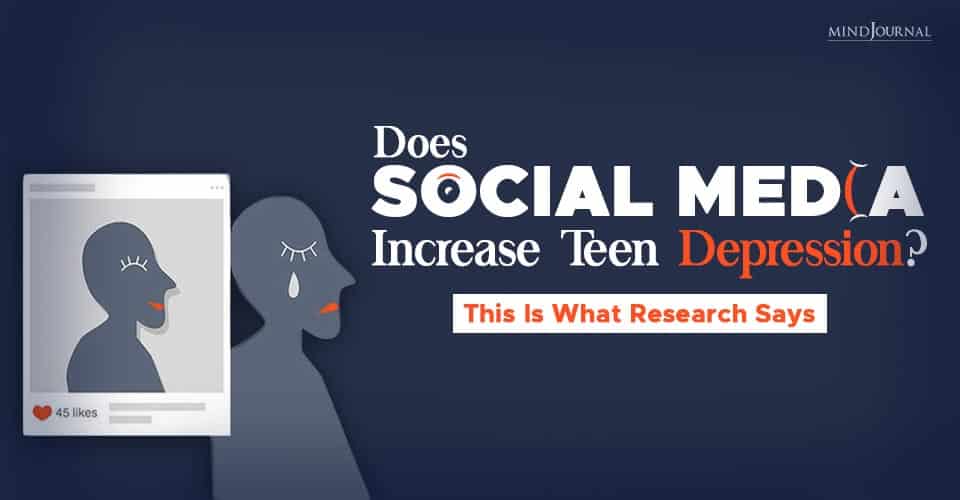
Does Social Media Increase Teen Depression? This Is What Research Says

Author : Michael Ungar

Recent research suggests video games are not harmful but social media may be. Research is helping to sort out which online activities may be harmful to teens and which are not. It’s a “good news, bad news” story.

Research On Social Media Usage By Teens

A group of researchers in Montreal studied the online activity and screen use patterns of almost 4,000 adolescents over a four-year period starting in Grade 7. Their research showed that, on average, as teenagers’ use of social media increased in a given year, so too did their reported symptoms of depression that year. That’s the bad news.

The good news is that being online playing video games didn’t have the same negative association. (There were few advantages also, but on the whole, gamers showed less risk for increased levels of depression).

There are a few details you should know before you take your teen’s phone away or ban them from Instagram.

First, teenagers, regardless of their level of social media activity, generally tend to report more depression as they get older.

In the Montreal study, depression was associated with spending more hours on social media. Having no social media in a child’s life, however, didn’t mean their risk for depression was reduced to zero.

Why teen brain likes social media ‘likes’.

Second, the study is helpful because it suggests that not all active screen time impacts children in the same way. In a previous blog post, I argued, based on the available evidence, that children who spend lots of time passively in front of a screen (watching television or Youtube videos) were more likely to suffer mental health problems than if they were actively engaged online.

This new study indicates that active engagement is still far better than passively watching a screen, but if that active engagement involves what is called “upward social comparison” (constantly comparing one’s self to others), then the time on screen is more likely to cause harm.

As the theory goes, once one starts feeling like one doesn’t measure up to their peers, a downward spiral begins that reinforces negative thoughts and feelings.

Related: What To Do If You Are Depressed: A 15-Step Guide

To be clear, comparing our own paltry lives to the Kardashians is unlikely to do much harm. Social comparisons only become toxic when we compare ourselves to others in a reference group that we feel has characteristics that are reasonably attainable.

In other words, I may find it fun to watch famous people driving million-dollar vehicles, but what is likely to bother me most is if a peer has new shoes and I don’t. While we can quibble over the materialism of young people, the fact is that all those picture-perfect selfies at the mall (fake smiles included) are making teens feel excluded and may be contributing to depression.

Are there solutions?

Here Are A Few Tips To Limit Your Teen’s Social Media Usage:

1. Encourage young people to engage in active screen time.

While I wouldn’t promote video games too enthusiastically, encouraging kids to develop a social life online may be the best of the bad options they have.

2. Educate kids about the dangers of social media.

Have a frank conversation about the false advertising so many people put up as part of their web presence. Are they really that happy? Are they really that popular?

3. Set some boundaries.

Turn a child’s phone off at night. We adults could model that strategy! Leave phones outside the bedroom.

Related: 4 Tips To Support Someone Who Is Struggling With Their Mental Health

4. Offer young people time out from their online lives

by distracting them with other kinds of activities—sports, arts, or just hanging out with friends face-to-face.

With the recent spike in rates of mental health disorders among our teens, this new study contributes another piece to the puzzle as we become more and more reliant on screen time. I’m confident we will find a balance, just as we did centuries ago when the Industrial Revolution chained us to factory labor. The digital revolution is still emerging. We need to think about its short- and long-term consequences.

Please share this article with anyone who you may think will find it valuable and helpful.

References
Boers, E., Afzali, M. H., Newton, N. & Conrod, P. (2019). Association of screen time and depression in adolescence. JAMA Pediatrics. Doi: 10.1001/jamapediatrics.2019.1759.

Written by: Michael Ungar, Ph.D
Originally appeared on: Psychology Today
Republished with permission

does social media increase teen depression pin

Published On:

Last updated on:

Michael Ungar

Michael Ungar, Ph.D. is the founder and Director of the Resilience Research Centre at Dalhousie University. His ground-breaking work as a family therapist and resilience researcher is recognized around the world. He lives in Halifax, Canada.

Disclaimer: The informational content on The Minds Journal have been created and reviewed by qualified mental health professionals. They are intended solely for educational and self-awareness purposes and should not be used as a substitute for professional medical advice, diagnosis, or treatment. If you are experiencing emotional distress or have concerns about your mental health, please seek help from a licensed mental health professional or healthcare provider.

Leave a Comment

Today's Horoscope

Weekly Horoscope 5 April to 11 April 2026

Weekly Horoscope 5 April to 11 April 2026

Something shifts, something becomes clear, and something you ignored refuses to stay hidden. Read more about your zodiac sign and pay attention to what feels different.

Latest Quizzes

Can You Find The Easter Eggs? 10 Hidden Eggs: Look Carefully

No One Can Complete This Easter Egg Hunt Without Missing One—Can You? Take This Quiz Now!

There are 10 hidden eggs in this picture. You have 15 seconds. Can you complete this Easter Egg Hunt without missing one?

Latest Quotes

Real Signs Your Body Is Actually in Good Health: How to Know You’re Truly Well

Real Signs Your Body Is Actually in Good Health: How to Know You’re Truly Well

Real signs your body is healthy don’t always show up on lab reports. From good sleep and clear skin to regular digestion and a stable mood, your body is constantly sending quiet signals of wellness.

Readers Blog

Caption This Image and Selected Wisepicks – 5 April 2026

Caption This Image and Selected Wisepicks – 5 April 2026

Ready to unleash your inner wordsmith? ✨??☺️ Now’s your chance to show off your wit, charm, or sheer genius in just one line! Whether it’s laugh-out-loud funny or surprisingly deep, we want to hear it.Submit your funniest, wittiest, or most thought-provoking caption in the comments. We’ll pick 15+ winners to be featured on our website…

Latest Articles

Recent research suggests video games are not harmful but social media may be. Research is helping to sort out which online activities may be harmful to teens and which are not. It’s a “good news, bad news” story.

Research On Social Media Usage By Teens

A group of researchers in Montreal studied the online activity and screen use patterns of almost 4,000 adolescents over a four-year period starting in Grade 7. Their research showed that, on average, as teenagers’ use of social media increased in a given year, so too did their reported symptoms of depression that year. That’s the bad news.

The good news is that being online playing video games didn’t have the same negative association. (There were few advantages also, but on the whole, gamers showed less risk for increased levels of depression).

There are a few details you should know before you take your teen’s phone away or ban them from Instagram.

First, teenagers, regardless of their level of social media activity, generally tend to report more depression as they get older.

In the Montreal study, depression was associated with spending more hours on social media. Having no social media in a child’s life, however, didn’t mean their risk for depression was reduced to zero.

Why teen brain likes social media ‘likes’.

Second, the study is helpful because it suggests that not all active screen time impacts children in the same way. In a previous blog post, I argued, based on the available evidence, that children who spend lots of time passively in front of a screen (watching television or Youtube videos) were more likely to suffer mental health problems than if they were actively engaged online.

This new study indicates that active engagement is still far better than passively watching a screen, but if that active engagement involves what is called “upward social comparison” (constantly comparing one’s self to others), then the time on screen is more likely to cause harm.

As the theory goes, once one starts feeling like one doesn’t measure up to their peers, a downward spiral begins that reinforces negative thoughts and feelings.

Related: What To Do If You Are Depressed: A 15-Step Guide

To be clear, comparing our own paltry lives to the Kardashians is unlikely to do much harm. Social comparisons only become toxic when we compare ourselves to others in a reference group that we feel has characteristics that are reasonably attainable.

In other words, I may find it fun to watch famous people driving million-dollar vehicles, but what is likely to bother me most is if a peer has new shoes and I don’t. While we can quibble over the materialism of young people, the fact is that all those picture-perfect selfies at the mall (fake smiles included) are making teens feel excluded and may be contributing to depression.

Are there solutions?

Here Are A Few Tips To Limit Your Teen’s Social Media Usage:

1. Encourage young people to engage in active screen time.

While I wouldn’t promote video games too enthusiastically, encouraging kids to develop a social life online may be the best of the bad options they have.

2. Educate kids about the dangers of social media.

Have a frank conversation about the false advertising so many people put up as part of their web presence. Are they really that happy? Are they really that popular?

3. Set some boundaries.

Turn a child’s phone off at night. We adults could model that strategy! Leave phones outside the bedroom.

Related: 4 Tips To Support Someone Who Is Struggling With Their Mental Health

4. Offer young people time out from their online lives

by distracting them with other kinds of activities—sports, arts, or just hanging out with friends face-to-face.

With the recent spike in rates of mental health disorders among our teens, this new study contributes another piece to the puzzle as we become more and more reliant on screen time. I’m confident we will find a balance, just as we did centuries ago when the Industrial Revolution chained us to factory labor. The digital revolution is still emerging. We need to think about its short- and long-term consequences.

Please share this article with anyone who you may think will find it valuable and helpful.

References
Boers, E., Afzali, M. H., Newton, N. & Conrod, P. (2019). Association of screen time and depression in adolescence. JAMA Pediatrics. Doi: 10.1001/jamapediatrics.2019.1759.

Written by: Michael Ungar, Ph.D
Originally appeared on: Psychology Today
Republished with permission

does social media increase teen depression pin

Published On:

Last updated on:

Michael Ungar

Michael Ungar, Ph.D. is the founder and Director of the Resilience Research Centre at Dalhousie University. His ground-breaking work as a family therapist and resilience researcher is recognized around the world. He lives in Halifax, Canada.

Leave a Comment

    Leave a Comment