Schizophrenia Optical Illusion: 4 Illusions That Can Predict This Illness

Author : Alexandra Hall

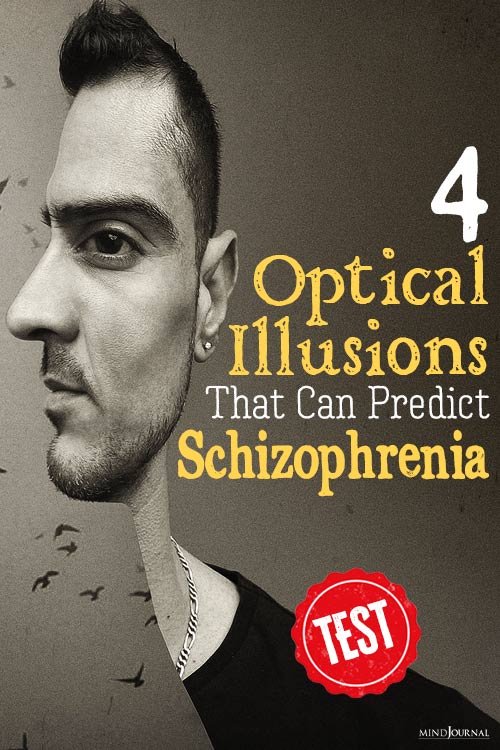
I bet you would have never thought of or even heard of how optical illusions can potentially predict Schizophrenia. Some of the most common symptoms of schizophrenia are delusions, hallucinations, and mental confusion. But what if I told you that schizophrenic patients tend to have a better and stronger grip on reality than people who donโ€™t suffer from this? Maybe these schizophrenia optical illusion tests might help prove my point.

When it comes to optical illusions, schizophrenic patients somehow tend to be receptive to them but those same illusions might seem baffling to non-schizophrenic patients. It has been known for many years now that people afflicted with schizophrenia tend to have fundamental changes in their perception. And, recent studies are of the opinion that these changes can be detected through something as simple as optical illusions.

So, ready to know more about how optical illusion detects schizophrenia, and what visual illusions teach us about schizophrenia? Let us find out this answer through this schizophrenia optical illusion test!

Related: What Secretly Makes You Weird? Find Out With This Optical Illusion Test

Schizophrenia Optical Illusion Test: 4 Optical Illusions That Can Predict Schizophrenia

1. Hollow Mask Illusion

schizophrenia optical illusion

This is one of the most famous optical illusions that can detect schizophrenia.

How does it work?

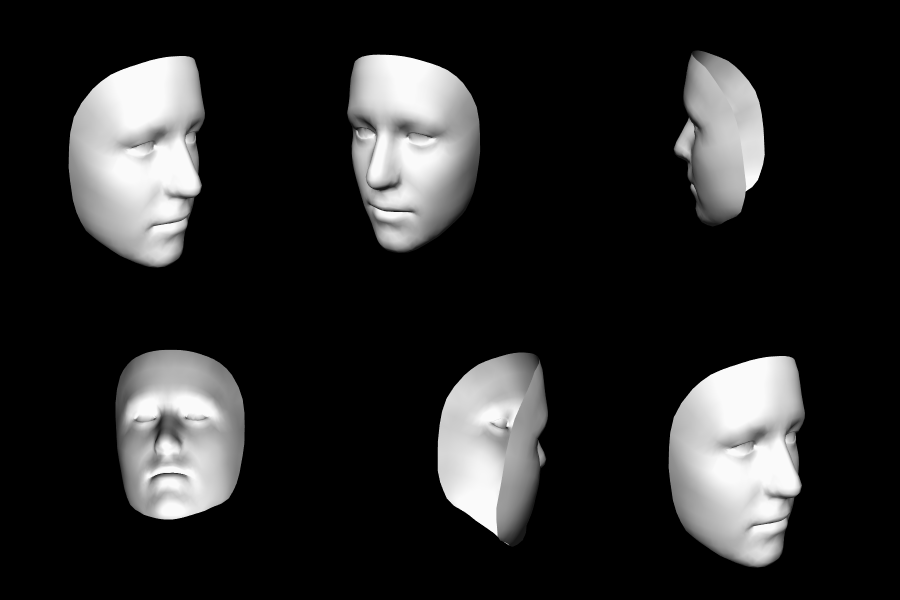
In this illusion, you are presented with a concave mask, however, most people tend to see it as a convex mask rather than a concave one. In other words, they see it exactly as it looks like instead of seeing a hollow mask. A face that has a concave shape doesnโ€™t make a lot of sense, does it? This is the reason why most people tend to see the mask as a convex one, instead of a hollow one.

Interestingly, the Hollow Mask Illusion can be regarded as one of the best schizophrenia tests out there. Because when you show this to a schizophrenic patient, they will see the hollow mask as a hollow mask only.

How is it different for people with schizophrenia?
Hollow Mask Illusion GIF

Studies have shown the difference between how non-schizophrenic and schizophrenic people perceive this illusion and this is what they observed. 16 people without schizophrenia perceived 99% of the hollow masks as convex masks, whereas 13 schizophrenic patients regarded the hollow mask as convex for only 6% of the time.

This study also suggested that people with schizophrenia have differences in brain connectivity, which is why they tend to see images mostly in a bottom-up manner, whereas non-patients see images in a top-down way.

2. Mรผller-Lyer and Ponzo Illusion

schizophrenia optical illusion

How does it work?

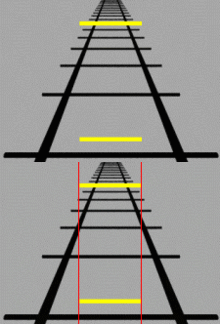
In the first half of the image, which line do you think is the longest? Generally, the line in the center appears the longest for most people out there, and the third line is shorter.

While your perception and your eyes will tell you that the middle line is the longest line, in reality, both the lines are of the same length and this is clearly evident in the second image.

How is it different for people with schizophrenia?
Muller Lyer and Ponzo Illusions GIF

This is one of those optical illusions towards which schizophrenic patients are potentially more receptive than other ones. Studies have shown that patients who have not had schizophrenia for a very long time tend to be less receptive to this illusion, compared to people who are not schizophrenic.

On the other hand, people who have been suffering from schizophrenia for a long time are more receptive to this illusion compared to everyone else. This study basically observed that they are quite bad at understanding the lengths of the lines in the illusion, where all the lines are of the same length actually.

Related: Are You Left-Brained or Right-Brained? Optical Illusion Test

3. Chubb Illusion

schizophrenia optical illusion

The Chubb Optical Illusion is all about testing your perception of contrast, especially if you are able to see something in lower contrast if it is on a high contrast background.

How does it work?

Look at the image given above, and try to figure out how many small circles around the edge of the large circle is in tandem with the small circle within the larger circle. Generally, the most common answer would be that the small circle at 10:30 oโ€™clock matches the small central circle the most.

How is it different for people with schizophrenia?

However, studies show that schizophrenic people calculate the circle at 6 oโ€™clock as the most similar circle in the optical illusion. Interestingly, their answer is actually the correct one. The high-contrast circle which is in the bottom is identical to the inner circle.

They are able to come up with the correct answer because schizophrenic people tend to perceive images in a more bottom-up way and rely less on context. That is why almost all the time they are able to see optical illusions just like the way they really are.

4. Three-Flash Illusion

How does it work?

There are many schizophrenia optical illusion tests that take place in time as well, instead of space and the Three Flash Illusion is one of them. In this optical illusion, people generally perceive two flashes of light (which are shown extremely quickly, one after the other) as three flashes.

How is it different for people with schizophrenia?

However, according to a study done in 2008, schizophrenic patients tend to see only two flashes of light only, instead of three. If the interval between the flashes of light is between 90 milliseconds to 110 milliseconds, schizophrenic people are able to correctly assess it.

On the other hand, when the light flashes happen between 130 milliseconds to 310 milliseconds apart, schizophrenic people tend to see three flashes instead of two.

Related: What Kind Of Genius You Are? Find Out With This Optical Illusion Test

So, the bottom line is that both schizophrenic and non-schizophrenic people are receptive to this optical illusion, but for the former, it occurs on a much larger scale. One of the potential reasons behind this might be that some parts of time perception are expanded in the case of schizophrenic patients.

Which one of these schizophrenia optical illusions did you like the most? Let us know your thoughts in the comments section down below!

Disclaimer: This article is for informational purposes only and is not intended as a substitute for professional mental health advice, diagnosis, or treatment. While we strive for accuracy, we do not guarantee the completeness or reliability of the information provided. Readers should always seek guidance from a qualified mental health professional for any concerns regarding their mental well-being.
Optical Illusions Can Predict Schizophrenia

Published On:

Last updated on:

Alexandra Hall

Iโ€™m Alexandra Hall, a journalism grad whoโ€™s endlessly curious about the inner workings of the human heart and mind. I write about relationships, psychology, spirituality, mental health, and books, weaving insight with empathy. If itโ€™s raw, real, and thought-provoking, itโ€™s probably on my radar.

Disclaimer: The informational content on The Minds Journal have been created and reviewed by qualified mental health professionals. They are intended solely for educational and self-awareness purposes and should not be used as a substitute for professional medical advice, diagnosis, or treatment. If you are experiencing emotional distress or have concerns about your mental health, please seek help from a licensed mental health professional or healthcare provider.

Leave a Comment

Today's Horoscope

Daily Horoscope 20 March, 2026: Free Predictions

Daily Horoscope 20 March, 2026: Prediction For Each Zodiac Sign

Let's start the day with a little nugget of guidance from the stars!

Latest Quizzes

Free Vase Personality Test: 3 Options; Choose A Vase

Vase Personality Test: Your First Pick Reveals Your Main Character Trait

Take a moment, look closely, and pick an object that represents you.

Latest Quotes

Functional Freeze: Why You Zone Out After Doing โ€œJust Fineโ€ All Day

Functional Freeze: Why You Zone Out After Doing โ€œJust Fineโ€ All Day

If you zone out in a towel, in your parked car, or on your phone at night, itโ€™s not laziness. Functional freeze is your nervous systemโ€™s trauma response, not a character flaw.

Readers Blog

Caption This Image and Selected Wisepicks โ€“ 15 March 2026

Caption This Image and Selected Wisepicks โ€“ 15 March 2026

Ready to unleash your inner wordsmith? โœจ??โ˜บ๏ธ Nowโ€™s your chance to show off your wit, charm, or sheer genius in just one line! Whether itโ€™s laugh-out-loud funny or surprisingly deep, we want to hear it.Submit your funniest, wittiest, or most thought-provoking caption in the comments. Weโ€™ll pick 15+ winners to be featured on our website…

Latest Articles

I bet you would have never thought of or even heard of how optical illusions can potentially predict Schizophrenia. Some of the most common symptoms of schizophrenia are delusions, hallucinations, and mental confusion. But what if I told you that schizophrenic patients tend to have a better and stronger grip on reality than people who donโ€™t suffer from this? Maybe these schizophrenia optical illusion tests might help prove my point.

When it comes to optical illusions, schizophrenic patients somehow tend to be receptive to them but those same illusions might seem baffling to non-schizophrenic patients. It has been known for many years now that people afflicted with schizophrenia tend to have fundamental changes in their perception. And, recent studies are of the opinion that these changes can be detected through something as simple as optical illusions.

So, ready to know more about how optical illusion detects schizophrenia, and what visual illusions teach us about schizophrenia? Let us find out this answer through this schizophrenia optical illusion test!

Related: What Secretly Makes You Weird? Find Out With This Optical Illusion Test

Schizophrenia Optical Illusion Test: 4 Optical Illusions That Can Predict Schizophrenia

1. Hollow Mask Illusion

schizophrenia optical illusion

This is one of the most famous optical illusions that can detect schizophrenia.

How does it work?

In this illusion, you are presented with a concave mask, however, most people tend to see it as a convex mask rather than a concave one. In other words, they see it exactly as it looks like instead of seeing a hollow mask. A face that has a concave shape doesnโ€™t make a lot of sense, does it? This is the reason why most people tend to see the mask as a convex one, instead of a hollow one.

Interestingly, the Hollow Mask Illusion can be regarded as one of the best schizophrenia tests out there. Because when you show this to a schizophrenic patient, they will see the hollow mask as a hollow mask only.

How is it different for people with schizophrenia?

Hollow Mask Illusion GIF

Studies have shown the difference between how non-schizophrenic and schizophrenic people perceive this illusion and this is what they observed. 16 people without schizophrenia perceived 99% of the hollow masks as convex masks, whereas 13 schizophrenic patients regarded the hollow mask as convex for only 6% of the time.

This study also suggested that people with schizophrenia have differences in brain connectivity, which is why they tend to see images mostly in a bottom-up manner, whereas non-patients see images in a top-down way.

2. Mรผller-Lyer and Ponzo Illusion

schizophrenia optical illusion

How does it work?

In the first half of the image, which line do you think is the longest? Generally, the line in the center appears the longest for most people out there, and the third line is shorter.

While your perception and your eyes will tell you that the middle line is the longest line, in reality, both the lines are of the same length and this is clearly evident in the second image.

How is it different for people with schizophrenia?

Muller Lyer and Ponzo Illusions GIF

This is one of those optical illusions towards which schizophrenic patients are potentially more receptive than other ones. Studies have shown that patients who have not had schizophrenia for a very long time tend to be less receptive to this illusion, compared to people who are not schizophrenic.

On the other hand, people who have been suffering from schizophrenia for a long time are more receptive to this illusion compared to everyone else. This study basically observed that they are quite bad at understanding the lengths of the lines in the illusion, where all the lines are of the same length actually.

Related: Are You Left-Brained or Right-Brained? Optical Illusion Test

3. Chubb Illusion

schizophrenia optical illusion

The Chubb Optical Illusion is all about testing your perception of contrast, especially if you are able to see something in lower contrast if it is on a high contrast background.

How does it work?

Look at the image given above, and try to figure out how many small circles around the edge of the large circle is in tandem with the small circle within the larger circle. Generally, the most common answer would be that the small circle at 10:30 oโ€™clock matches the small central circle the most.

How is it different for people with schizophrenia?

However, studies show that schizophrenic people calculate the circle at 6 oโ€™clock as the most similar circle in the optical illusion. Interestingly, their answer is actually the correct one. The high-contrast circle which is in the bottom is identical to the inner circle.

They are able to come up with the correct answer because schizophrenic people tend to perceive images in a more bottom-up way and rely less on context. That is why almost all the time they are able to see optical illusions just like the way they really are.

4. Three-Flash Illusion

How does it work?

There are many schizophrenia optical illusion tests that take place in time as well, instead of space and the Three Flash Illusion is one of them. In this optical illusion, people generally perceive two flashes of light (which are shown extremely quickly, one after the other) as three flashes.

How is it different for people with schizophrenia?

However, according to a study done in 2008, schizophrenic patients tend to see only two flashes of light only, instead of three. If the interval between the flashes of light is between 90 milliseconds to 110 milliseconds, schizophrenic people are able to correctly assess it.

On the other hand, when the light flashes happen between 130 milliseconds to 310 milliseconds apart, schizophrenic people tend to see three flashes instead of two.

Related: What Kind Of Genius You Are? Find Out With This Optical Illusion Test

So, the bottom line is that both schizophrenic and non-schizophrenic people are receptive to this optical illusion, but for the former, it occurs on a much larger scale. One of the potential reasons behind this might be that some parts of time perception are expanded in the case of schizophrenic patients.

Which one of these schizophrenia optical illusions did you like the most? Let us know your thoughts in the comments section down below!

Disclaimer: This article is for informational purposes only and is not intended as a substitute for professional mental health advice, diagnosis, or treatment. While we strive for accuracy, we do not guarantee the completeness or reliability of the information provided. Readers should always seek guidance from a qualified mental health professional for any concerns regarding their mental well-being.


Optical Illusions Can Predict Schizophrenia

Published On:

Last updated on:

Alexandra Hall

Iโ€™m Alexandra Hall, a journalism grad whoโ€™s endlessly curious about the inner workings of the human heart and mind. I write about relationships, psychology, spirituality, mental health, and books, weaving insight with empathy. If itโ€™s raw, real, and thought-provoking, itโ€™s probably on my radar.

Leave a Comment

    Leave a Comment