Functional Freeze: Why You Zone Out After Doing “Just Fine” All Day

Author : Evelyn Walker

Functional Freeze: Why You Zone Out After Doing “Just Fine” All Day

Functional Freeze: When Your Nervous System Is Still in Survival Mode

My therapist once explained that the reason
you zone out in a towel after a shower, sit in
your car long after parking, or mindlessly
scroll at night isn’t because you’re lazy or
unmotivated.

It’s because your nervous system is stuck in a functional
freeze state. You can still work. You can still show up.
You can still get things done. But it takes every ounce of
your energy. That’s why you feel chronically exhausted.
Why do you space out so easily? Why can you be social and
“fine all day – and then ignore every message once you get
home.

This isn’t a personality flaw. It’s
surviving for too long.

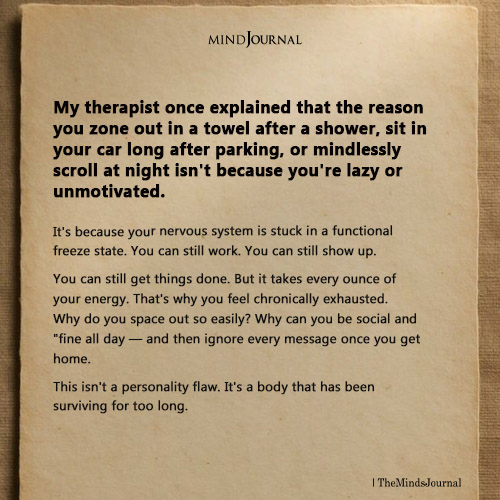
My therapist once explained that the reason you zone out in a towel after a shower, sit in your car long after parking, or mindlessly scroll at night isn’t because you’re lazy or unmotivated. It’s because your nervous system may be stuck in a functional freeze state. In this state, you can still work, show up, and get things done, but it takes everything you have, leaving you chronically exhausted.

Functional freeze is a kind of survival reaction. It is a defense mechanism that is part of the same series of responses – fight flight freeze – which the body initiates upon perceiving danger. Rather than completely shutting down, your system gets into a sort of half-paralysis state: you may still appear “functional” externally, but internally you feel numb foggy detached and drained. Studies on the autonomic nervous system and trauma indicate that continuous stress may lead the body to adopt defensive states such as freezing and dissociation which serve as coping mechanisms for the body to manage overwhelm. It is neither a conscious decision nor a moral shortcoming; rather, it is your body’s way of trying to ensure your safety.

Functional Freeze and Nervous System Overload

A functional freeze leaves your nervous system stuck in survival mode long after the threat has disappeared. Clinicians liken it to a capable faade supported by an internal shutdown: you are able to follow your schedule, engage in email correspondence, and be present in public with a smile on your face, whereas on the inside you experience a sense of detachment, lack of energy, and a feeling of unfamiliarity with the life you lead. Research on trauma-related dissociation and autonomic dysregulation has demonstrated that chronic stress and PTSD are associated with patterns of emotional numbing, reduced emotional responsiveness, and changes in level of arousal, all of which stem from the way that the sympathetic and parasympathetic nervous systems react to each other over time.

That’s why you can be social and “fine” all day, then ignore every message once you get home. Your system has been running on emergency power. By evening, there is no bandwidth left for more engagement, so you drop into scrolling, zoning out, or staring into space. Research on freezing responses shows that these immobilization states involve shifts in autonomic activity, including changes in heart rate and defensive neural circuits that prioritize survival over connection. What looks like procrastination is often your body hitting an invisible brake.

This isn’t a personality flaw. It’s surviving for too long. Trauma and chronic stress can rewire your baseline, making functional freeze feel like your “normal.” Over time, that can erode your sense of self, your motivation, and your ability to feel joy.

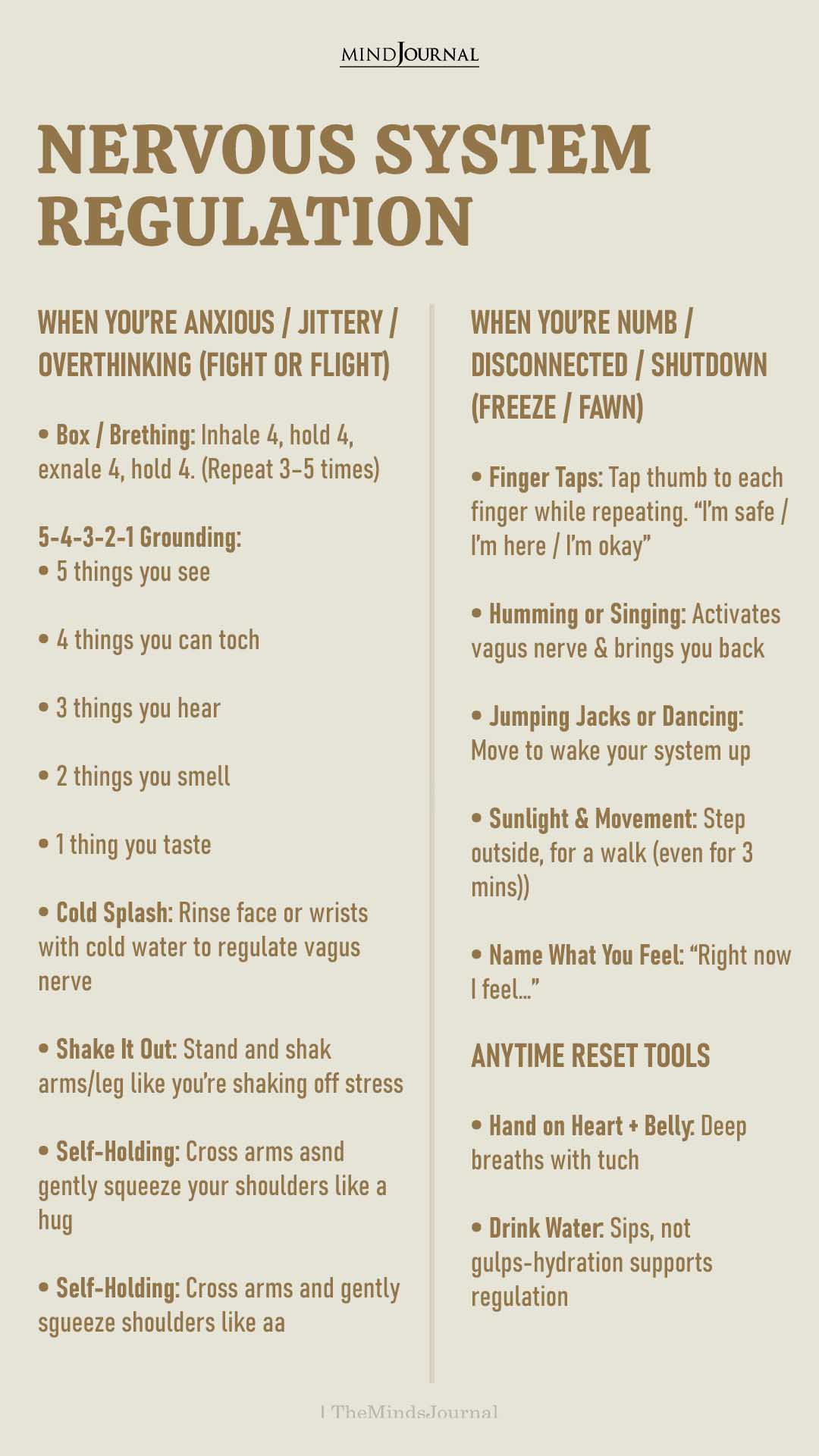
The hopeful part? Nervous system states are not permanent. Trauma-informed approaches focus on helping people move gradually out of freeze into more regulated states using grounding, gentle movement, breathwork, and safe connection. If you recognize yourself here, you’re not broken—you’re adaptive. With support, you can teach your body that it’s safe enough to thaw, feel, and live again read more.

Real healing begins with identifying what is happening: instead of saying “I am lazy”, say “My nervous system is in a state of functional freeze and it is trying to protect me.” After that, brief moments of rest, kindness, and seeking therapy can gradually restore you to your true self.

Read More: What Is Trauma? 7 Types, Signs And How To Heal

Published On:

Last updated on:

Disclaimer: The informational content on The Minds Journal have been created and reviewed by qualified mental health professionals. They are intended solely for educational and self-awareness purposes and should not be used as a substitute for professional medical advice, diagnosis, or treatment. If you are experiencing emotional distress or have concerns about your mental health, please seek help from a licensed mental health professional or healthcare provider.

Leave a Comment

Today's Horoscope

Daily Horoscope 28 April, 2026

Daily Horoscope 28 April, 2026: Prediction For Each Zodiac Sign

Let's find out what 28th April has in store for your zodiac!

Latest Quizzes

What Is My Core Wound Quiz? 10 Signs That Expose It!

What You Notice First in Someone Isn’t Random—Take This Quiz to Reveal Your Core Wound

What you notice first in others may quietly mirror your own needs that go unseen and unmet. Take this simple quiz to help you uncover the core wounds hidden beneath that actually shape you.

Latest Quotes

Human Psychology Facts: How These Cognitive Biases Quietly Shape Your Life

Human Psychology Facts: How These Cognitive Biases Quietly Shape Your Life

Human psychology facts show how your brain quietly edits reality. From the Pratfall Effect to the Halo Effect, these cognitive biases influence who you like, what you notice, and how confident you feel.

Readers Blog

Caption This Image and Selected Wisepicks – 26 April 2026

Caption This Image and Selected Wisepicks – 26 April 2026

Ready to unleash your inner wordsmith? ✨??☺️ Now’s your chance to show off your wit, charm, or sheer genius in just one line! Whether it’s laugh-out-loud funny or surprisingly deep, we want to hear it.Submit your funniest, wittiest, or most thought-provoking caption in the comments. We’ll pick 15+ winners to be featured on our website…

Latest Articles

Functional Freeze: Why You Zone Out After Doing “Just Fine” All Day

Functional Freeze: When Your Nervous System Is Still in Survival Mode

My therapist once explained that the reason
you zone out in a towel after a shower, sit in
your car long after parking, or mindlessly
scroll at night isn’t because you’re lazy or
unmotivated.

It’s because your nervous system is stuck in a functional
freeze state. You can still work. You can still show up.
You can still get things done. But it takes every ounce of
your energy. That’s why you feel chronically exhausted.
Why do you space out so easily? Why can you be social and
“fine all day – and then ignore every message once you get
home.

This isn’t a personality flaw. It’s
surviving for too long.

My therapist once explained that the reason you zone out in a towel after a shower, sit in your car long after parking, or mindlessly scroll at night isn’t because you’re lazy or unmotivated. It’s because your nervous system may be stuck in a functional freeze state. In this state, you can still work, show up, and get things done, but it takes everything you have, leaving you chronically exhausted.

Functional freeze is a kind of survival reaction. It is a defense mechanism that is part of the same series of responses – fight flight freeze – which the body initiates upon perceiving danger. Rather than completely shutting down, your system gets into a sort of half-paralysis state: you may still appear “functional” externally, but internally you feel numb foggy detached and drained. Studies on the autonomic nervous system and trauma indicate that continuous stress may lead the body to adopt defensive states such as freezing and dissociation which serve as coping mechanisms for the body to manage overwhelm. It is neither a conscious decision nor a moral shortcoming; rather, it is your body’s way of trying to ensure your safety.

Functional Freeze and Nervous System Overload

A functional freeze leaves your nervous system stuck in survival mode long after the threat has disappeared. Clinicians liken it to a capable faade supported by an internal shutdown: you are able to follow your schedule, engage in email correspondence, and be present in public with a smile on your face, whereas on the inside you experience a sense of detachment, lack of energy, and a feeling of unfamiliarity with the life you lead. Research on trauma-related dissociation and autonomic dysregulation has demonstrated that chronic stress and PTSD are associated with patterns of emotional numbing, reduced emotional responsiveness, and changes in level of arousal, all of which stem from the way that the sympathetic and parasympathetic nervous systems react to each other over time.

That’s why you can be social and “fine” all day, then ignore every message once you get home. Your system has been running on emergency power. By evening, there is no bandwidth left for more engagement, so you drop into scrolling, zoning out, or staring into space. Research on freezing responses shows that these immobilization states involve shifts in autonomic activity, including changes in heart rate and defensive neural circuits that prioritize survival over connection. What looks like procrastination is often your body hitting an invisible brake.

This isn’t a personality flaw. It’s surviving for too long. Trauma and chronic stress can rewire your baseline, making functional freeze feel like your “normal.” Over time, that can erode your sense of self, your motivation, and your ability to feel joy.

The hopeful part? Nervous system states are not permanent. Trauma-informed approaches focus on helping people move gradually out of freeze into more regulated states using grounding, gentle movement, breathwork, and safe connection. If you recognize yourself here, you’re not broken—you’re adaptive. With support, you can teach your body that it’s safe enough to thaw, feel, and live again read more.

Real healing begins with identifying what is happening: instead of saying “I am lazy”, say “My nervous system is in a state of functional freeze and it is trying to protect me.” After that, brief moments of rest, kindness, and seeking therapy can gradually restore you to your true self.

Read More: What Is Trauma? 7 Types, Signs And How To Heal

Published On:

Last updated on:

Evelyn Walker

Leave a Comment

    Leave a Comment