
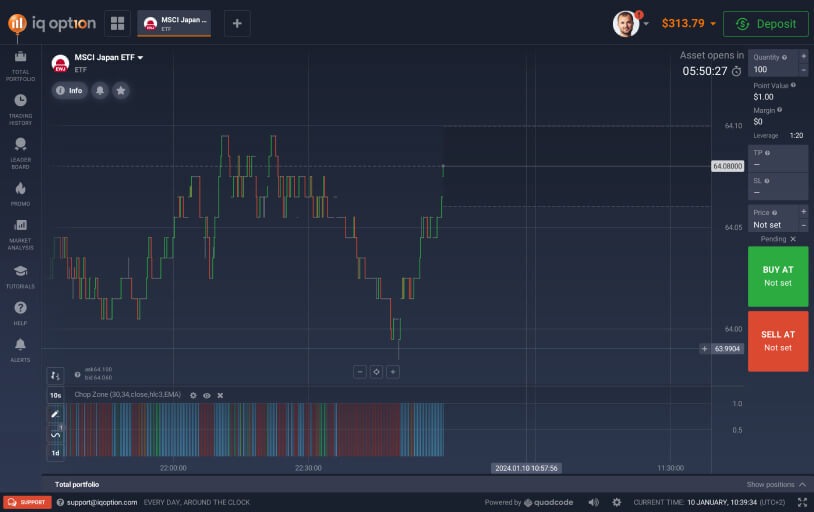
Understanding Trading: A Beginner’s Guide to Financial Markets

Author : Charlotte Smith

Understanding Trading: A Beginner’s Guide to Financial Markets

Trading is the process of buying and selling financial assets such as stocks, currencies, commodities, or cryptocurrencies with the goal of making a profit. Unlike long-term investing, trading often focuses on short-term price movements. Today, trading has become accessible to ordinary people through online platforms and global exchanges like the New York Stock Exchange, NASDAQ, and regional markets such as the Pakistan Stock Exchange.

How Trading Works

At its core, trading is based on price changes. Traders attempt to buy an asset at a lower price and sell it at a higher price. Prices move due to supply and demand, economic news, company performance, global events, and investor psychology.

For example, if a company reports strong profits, its stock price may rise because more people want to buy it. Traders who bought earlier can sell at a profit. On the other hand, bad news can cause prices to fall, leading to losses.

Major Types of Trading

1. Day Trading

Day trading involves opening and closing trades within the same day.
Traders try to profit from small price movements using technical charts and indicators.

Advantages:

  • Fast results
  • Many opportunities daily

Disadvantages:

  • High stress and risk
  • Requires constant monitoring

2. Swing Trading

Swing traders hold assets for several days or weeks to capture medium-term trends. They combine technical analysis with basic market news.

This style is popular among part-time traders because it does not require watching the market all day.

3. Position Trading

Position trading is closer to investing. Traders hold assets for months or even years based on long-term trends and economic outlook.

Famous investors like Warren Buffett follow this philosophy, focusing on strong businesses rather than short-term price movements.

Markets Where Trading Happens

There are several major trading markets:

Stock Market – Buying and selling shares of companies.
Forex Market – Trading currencies like USD, EUR, or PKR. This is the largest financial market in the world.
Crypto Market – Trading digital assets such as Bitcoin and Ethereum.
Commodities Market – Includes gold, oil, wheat, and other physical goods.

Each market has its own risks, volatility level, and trading hours.

Skills Needed to Become a Successful Trader

✔ Market Knowledge

A trader must understand how markets react to news, interest rates, inflation, and global events.

✔ Technical Analysis

This involves studying charts, price patterns, support/resistance levels, and indicators like moving averages or RSI.

✔ Risk Management

Professional traders never risk all their capital on one trade. Many follow the rule of risking only 1–2% of their account per trade.

✔ Emotional Control

Fear and greed destroy more trading accounts than lack of knowledge. Successful traders follow discipline instead of emotions.

​Read More: How To Practice Emotional Control: 6 Science-Backed Tips

Common Mistakes Beginners Make

Overtrading: Taking too many trades without a clear strategy.
Revenge Trading: Trying to recover losses quickly by making risky trades.
Ignoring Stop Loss: Not setting a limit to control potential losses.
Following Tips Blindly: Many beginners lose money by copying others instead of learning themselves.

Is Trading Risky?

Yes, trading carries significant risk. While profits can be attractive, losses are equally possible. Statistics show that many beginners lose money in their first year because they underestimate risk and overestimate quick profits.

However, trading can become profitable with proper education, practice, and patience. Many professionals treat trading like a business, not gambling.

Tips for Beginners

  • Start with a demo account before investing real money
  • Focus on learning, not earning, in the beginning
  • Use small capital while practicing
  • Follow one strategy consistently
  • Keep a trading journal to track mistakes and improvements

Conclusion

Trading offers exciting opportunities to grow wealth, but it is not a shortcut to instant riches. It requires knowledge, discipline, and emotional strength. Whether you choose day trading, swing trading, or long-term positions, success depends on continuous learning and careful risk management.

Published On:

Last updated on:

Disclaimer: The informational content on The Minds Journal have been created and reviewed by qualified mental health professionals. They are intended solely for educational and self-awareness purposes and should not be used as a substitute for professional medical advice, diagnosis, or treatment. If you are experiencing emotional distress or have concerns about your mental health, please seek help from a licensed mental health professional or healthcare provider.

Leave a Comment

Today's Horoscope

Daily Horoscope 28 April, 2026

Daily Horoscope 28 April, 2026: Prediction For Each Zodiac Sign

Let's find out what 28th April has in store for your zodiac!

Latest Quizzes

What Is My Core Wound Quiz? 10 Signs That Expose It!

What You Notice First in Someone Isn’t Random—Take This Quiz to Reveal Your Core Wound

What you notice first in others may quietly mirror your own needs that go unseen and unmet. Take this simple quiz to help you uncover the core wounds hidden beneath that actually shape you.

Latest Quotes

Human Psychology Facts: How These Cognitive Biases Quietly Shape Your Life

Human Psychology Facts: How These Cognitive Biases Quietly Shape Your Life

Human psychology facts show how your brain quietly edits reality. From the Pratfall Effect to the Halo Effect, these cognitive biases influence who you like, what you notice, and how confident you feel.

Readers Blog

Caption This Image and Selected Wisepicks – 26 April 2026

Caption This Image and Selected Wisepicks – 26 April 2026

Ready to unleash your inner wordsmith? ✨??☺️ Now’s your chance to show off your wit, charm, or sheer genius in just one line! Whether it’s laugh-out-loud funny or surprisingly deep, we want to hear it.Submit your funniest, wittiest, or most thought-provoking caption in the comments. We’ll pick 15+ winners to be featured on our website…

Latest Articles

Understanding Trading: A Beginner’s Guide to Financial Markets

Trading is the process of buying and selling financial assets such as stocks, currencies, commodities, or cryptocurrencies with the goal of making a profit. Unlike long-term investing, trading often focuses on short-term price movements. Today, trading has become accessible to ordinary people through online platforms and global exchanges like the New York Stock Exchange, NASDAQ, and regional markets such as the Pakistan Stock Exchange.

How Trading Works

At its core, trading is based on price changes. Traders attempt to buy an asset at a lower price and sell it at a higher price. Prices move due to supply and demand, economic news, company performance, global events, and investor psychology.

For example, if a company reports strong profits, its stock price may rise because more people want to buy it. Traders who bought earlier can sell at a profit. On the other hand, bad news can cause prices to fall, leading to losses.

Major Types of Trading

1. Day Trading

Day trading involves opening and closing trades within the same day.
Traders try to profit from small price movements using technical charts and indicators.

Advantages:

  • Fast results
  • Many opportunities daily

Disadvantages:

  • High stress and risk
  • Requires constant monitoring

2. Swing Trading

Swing traders hold assets for several days or weeks to capture medium-term trends. They combine technical analysis with basic market news.

This style is popular among part-time traders because it does not require watching the market all day.

3. Position Trading

Position trading is closer to investing. Traders hold assets for months or even years based on long-term trends and economic outlook.

Famous investors like Warren Buffett follow this philosophy, focusing on strong businesses rather than short-term price movements.

Markets Where Trading Happens

There are several major trading markets:

Stock Market – Buying and selling shares of companies.
Forex Market – Trading currencies like USD, EUR, or PKR. This is the largest financial market in the world.
Crypto Market – Trading digital assets such as Bitcoin and Ethereum.
Commodities Market – Includes gold, oil, wheat, and other physical goods.

Each market has its own risks, volatility level, and trading hours.

Skills Needed to Become a Successful Trader

✔ Market Knowledge

A trader must understand how markets react to news, interest rates, inflation, and global events.

✔ Technical Analysis

This involves studying charts, price patterns, support/resistance levels, and indicators like moving averages or RSI.

✔ Risk Management

Professional traders never risk all their capital on one trade. Many follow the rule of risking only 1–2% of their account per trade.

✔ Emotional Control

Fear and greed destroy more trading accounts than lack of knowledge. Successful traders follow discipline instead of emotions.

​Read More: How To Practice Emotional Control: 6 Science-Backed Tips

Common Mistakes Beginners Make

Overtrading: Taking too many trades without a clear strategy.
Revenge Trading: Trying to recover losses quickly by making risky trades.
Ignoring Stop Loss: Not setting a limit to control potential losses.
Following Tips Blindly: Many beginners lose money by copying others instead of learning themselves.

Is Trading Risky?

Yes, trading carries significant risk. While profits can be attractive, losses are equally possible. Statistics show that many beginners lose money in their first year because they underestimate risk and overestimate quick profits.

However, trading can become profitable with proper education, practice, and patience. Many professionals treat trading like a business, not gambling.

Tips for Beginners

  • Start with a demo account before investing real money
  • Focus on learning, not earning, in the beginning
  • Use small capital while practicing
  • Follow one strategy consistently
  • Keep a trading journal to track mistakes and improvements

Conclusion

Trading offers exciting opportunities to grow wealth, but it is not a shortcut to instant riches. It requires knowledge, discipline, and emotional strength. Whether you choose day trading, swing trading, or long-term positions, success depends on continuous learning and careful risk management.

Published On:

Last updated on:

Charlotte Smith

Leave a Comment

    Leave a Comment