Secure Attachment: The Steady Foundation of Healthy Love

Author : Ashley Clark

Secure Attachment: The Steady Foundation of Healthy Love

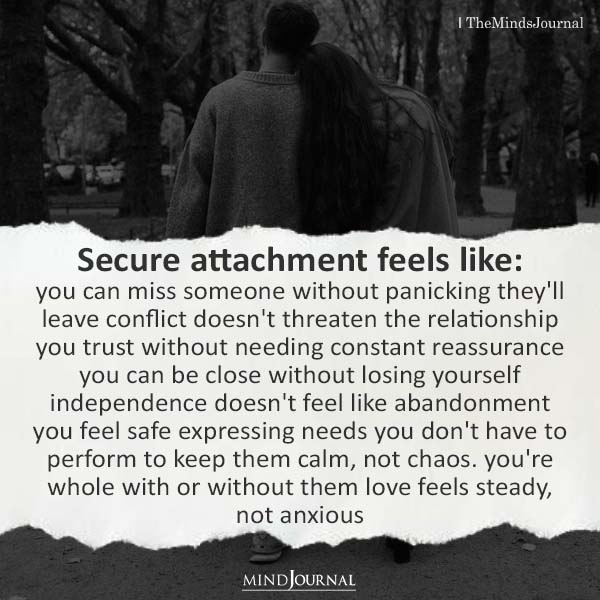
Secure attachment feels like:
you can miss someone without panicking they’ll
leave conflict doesn’t threaten the relationship
you trust without needing constant reassurance
you can be close without losing yourself
independence doesn’t feel like abandonment
you feel safe expressing needs you don’t have to
perform to keep them calm, not chaos. you’re
whole with or without them love feels steady,
not anxious

Secure Attachment: Feel the Calm of Steady, Healthy Love

Secure attachment feels like: you can miss someone without panicking they’ll leave. Conflict doesn’t threaten the relationship. You trust without needing constant reassurance. You can be close without losing yourself. Independence doesn’t feel like abandonment. You feel safe expressing needs. You don’t have to perform to keep them calm—not chaos. You’re whole with or without them. Love feels steady, not anxious.

This isn’t fairy-tale fluff—it’s the gold standard of emotional security. In a sea of anxious texts and avoidant walls, secure attachment shines as the quiet anchor. Pioneered by John Bowlby, it’s one of four styles, but the healthiest: 50-60% of adults embody it, per research. It stems from early caregiving—consistent, responsive parents teaching “the world is safe, people stay.”

Secure Attachment in Action: Signs of Trust and Steady Love

Imagine arguing without dread. You voice frustrations, they listen, you repair—bond stronger. No silent treatments or score-keeping. Or traveling solo: excitement bubbles, not abandonment fears. They cheer your growth, knowing space strengthens ties.

Secure attachment thrives on balance. You’re interdependent—close, yet autonomous. Express a need like “I need quiet tonight,” and they respect it without offense. No walking on eggshells; authenticity rules. This trust cascades: less jealousy, more generosity. Partners feel like teammates, not tests.

Why does it matter? Insecure styles (anxious, avoidant, disorganized) fuel 40% of therapy visits. Anxious ones chase reassurance; avoidants flee intimacy. Secure folks? They soothe each other, modeling calm for kids. fMRI studies show their brains light up with oxytocin during conflict—repair hormones flowing freely read more.

Building it? Therapy like EFT rewires patterns. Practice: Name emotions without blame (“I feel scared when…”). Celebrate independence. Self-secure first—journal triggers, build solo joy. Date secures: those comfy with vulnerability, not games.

Real talk: No one’s 100% secure daily. Stress tests us. But secure attachment rebounds fast—forgiving flaws, choosing connection. It feels like home: steady love where you’re enough. Chaos addicts might call it boring; truth? It’s freedom.

Root relationships here. You’re whole alone, amplified together. That’s emotional security—love without the ledge.

Read More: How Do You Want to Be Loved? The Art of Noticing Reveals True Intimacy

Published On:

Last updated on:

Disclaimer: The informational content on The Minds Journal have been created and reviewed by qualified mental health professionals. They are intended solely for educational and self-awareness purposes and should not be used as a substitute for professional medical advice, diagnosis, or treatment. If you are experiencing emotional distress or have concerns about your mental health, please seek help from a licensed mental health professional or healthcare provider.

Leave a Comment

Today's Horoscope

Daily Horoscope 29 April 2026: Prediction for Zodiac Signs

Daily Horoscope 29 April, 2026: Prediction For Each Zodiac Sign

The energy today feels softer than usual.

Latest Quizzes

What Is My Core Wound Quiz? 10 Signs That Expose It!

What You Notice First in Someone Isn’t Random—Take This Quiz to Reveal Your Core Wound

What you notice first in others may quietly mirror your own needs that go unseen and unmet. Take this simple quiz to help you uncover the core wounds hidden beneath that actually shape you.

Latest Quotes

Human Psychology Facts: How These Cognitive Biases Quietly Shape Your Life

Human Psychology Facts: How These Cognitive Biases Quietly Shape Your Life

Human psychology facts show how your brain quietly edits reality. From the Pratfall Effect to the Halo Effect, these cognitive biases influence who you like, what you notice, and how confident you feel.

Readers Blog

Caption This Image and Selected Wisepicks – 26 April 2026

Caption This Image and Selected Wisepicks – 26 April 2026

Ready to unleash your inner wordsmith? ✨??☺️ Now’s your chance to show off your wit, charm, or sheer genius in just one line! Whether it’s laugh-out-loud funny or surprisingly deep, we want to hear it.Submit your funniest, wittiest, or most thought-provoking caption in the comments. We’ll pick 15+ winners to be featured on our website…

Latest Articles

Secure Attachment: The Steady Foundation of Healthy Love

Secure attachment feels like:
you can miss someone without panicking they’ll
leave conflict doesn’t threaten the relationship
you trust without needing constant reassurance
you can be close without losing yourself
independence doesn’t feel like abandonment
you feel safe expressing needs you don’t have to
perform to keep them calm, not chaos. you’re
whole with or without them love feels steady,
not anxious

Secure Attachment: Feel the Calm of Steady, Healthy Love

Secure attachment feels like: you can miss someone without panicking they’ll leave. Conflict doesn’t threaten the relationship. You trust without needing constant reassurance. You can be close without losing yourself. Independence doesn’t feel like abandonment. You feel safe expressing needs. You don’t have to perform to keep them calm—not chaos. You’re whole with or without them. Love feels steady, not anxious.

This isn’t fairy-tale fluff—it’s the gold standard of emotional security. In a sea of anxious texts and avoidant walls, secure attachment shines as the quiet anchor. Pioneered by John Bowlby, it’s one of four styles, but the healthiest: 50-60% of adults embody it, per research. It stems from early caregiving—consistent, responsive parents teaching “the world is safe, people stay.”

Secure Attachment in Action: Signs of Trust and Steady Love

Imagine arguing without dread. You voice frustrations, they listen, you repair—bond stronger. No silent treatments or score-keeping. Or traveling solo: excitement bubbles, not abandonment fears. They cheer your growth, knowing space strengthens ties.

Secure attachment thrives on balance. You’re interdependent—close, yet autonomous. Express a need like “I need quiet tonight,” and they respect it without offense. No walking on eggshells; authenticity rules. This trust cascades: less jealousy, more generosity. Partners feel like teammates, not tests.

Why does it matter? Insecure styles (anxious, avoidant, disorganized) fuel 40% of therapy visits. Anxious ones chase reassurance; avoidants flee intimacy. Secure folks? They soothe each other, modeling calm for kids. fMRI studies show their brains light up with oxytocin during conflict—repair hormones flowing freely read more.

Building it? Therapy like EFT rewires patterns. Practice: Name emotions without blame (“I feel scared when…”). Celebrate independence. Self-secure first—journal triggers, build solo joy. Date secures: those comfy with vulnerability, not games.

Real talk: No one’s 100% secure daily. Stress tests us. But secure attachment rebounds fast—forgiving flaws, choosing connection. It feels like home: steady love where you’re enough. Chaos addicts might call it boring; truth? It’s freedom.

Root relationships here. You’re whole alone, amplified together. That’s emotional security—love without the ledge.

Read More: How Do You Want to Be Loved? The Art of Noticing Reveals True Intimacy

Published On:

Last updated on:

Ashley Clark

Leave a Comment

    Leave a Comment