Sad People Make Others Happy: Altruism Born From Feeling Worthless

Author : Ashley Clark

Sad People Make Others Happy: Altruism Born From Feeling Worthless

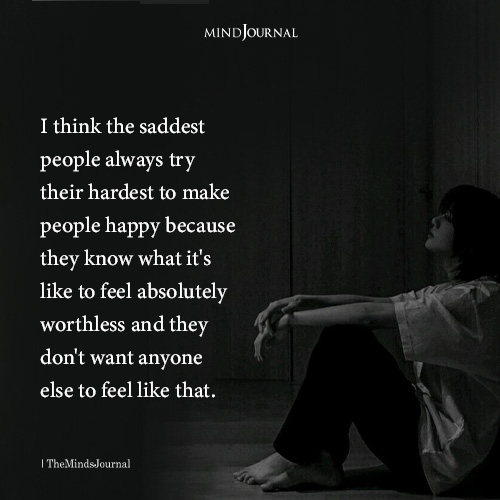
I think the saddest people always try their hardest to make people happy because they know what it’s like to feel absolutely worthless and they don’t want anyone else to feel like that.

How Sad People Make Others Happy Because They Know Worthlessness

Most of the time, the saddest people, with the greatest amount of work and sincerity, are the ones who make others happy. Sad people make others happy because they are the ones who somehow remember feeling totally worthless, invisible, and lonely. They have a deep fixation on the experience of emptiness, and they silently promise that no one around them will ever have that feeling if they can prevent it.

People pleaser patterns most likely originate from such situations. Sad people make others happy as they become the friend who checks in, the partner who over, gives, the listener who will always hold the space. Their empathy is incredibly profound, but so is the implicit understanding that their worth is derived from relieving other people’s pain. The more they calm others, the more they desire to quiet the voice of their own insignificance.

Psychologically, this reflects what researchers call “altruism born of suffering”—when personal pain fuels a powerful drive to help others. Studies show that people who have experienced trauma or intense emotional distress sometimes become more caring, giving, and prosocial as a way to create meaning from their suffering and protect others from similar hurt read more. Sad people make others happy, in part, to rewrite the script they lived through.

When a person who has felt like a nobody before asks, “Are you okay?” it is hardly just a polite question, right? Those who have suffered at a deep level can better appreciate the misery of secret battles, so to them it is normal to bring cheer to others. The manner of their showing carelike dropping a line, sending a considerate text, sharing a laugh around a slight jokeall are just such comes from a deep place of having been there wishing that someone would have done that for them. That is wonderful, but, at the same time, if they do not get such love back, it is also self, targeting.

Read More: Suffered Trauma? 7 Keys To Unlocking Post-Traumatic Growth

Eventually, the trauma of not having their own needs met while continuously focusing on the needs of others without allowing themselves to heal deepens the feelings of fatigue and the desires for revenge. Depressed people cheer others up at the cost of their own happiness, but very often, they hide it even from themselves. Recovery is reaching the stage where you realize that your value goes beyond how much you do for other peopleit also includes the very fact of your being, your feeling, and the right to be given support.

Published On:

Last updated on:

Disclaimer: The informational content on The Minds Journal have been created and reviewed by qualified mental health professionals. They are intended solely for educational and self-awareness purposes and should not be used as a substitute for professional medical advice, diagnosis, or treatment. If you are experiencing emotional distress or have concerns about your mental health, please seek help from a licensed mental health professional or healthcare provider.

Leave a Comment

Today's Horoscope

Daily Horoscope 29 April 2026: Prediction for Zodiac Signs

Daily Horoscope 29 April, 2026: Prediction For Each Zodiac Sign

The energy today feels softer than usual.

Latest Quizzes

What Is My Core Wound Quiz? 10 Signs That Expose It!

What You Notice First in Someone Isn’t Random—Take This Quiz to Reveal Your Core Wound

What you notice first in others may quietly mirror your own needs that go unseen and unmet. Take this simple quiz to help you uncover the core wounds hidden beneath that actually shape you.

Latest Quotes

Human Psychology Facts: How These Cognitive Biases Quietly Shape Your Life

Human Psychology Facts: How These Cognitive Biases Quietly Shape Your Life

Human psychology facts show how your brain quietly edits reality. From the Pratfall Effect to the Halo Effect, these cognitive biases influence who you like, what you notice, and how confident you feel.

Readers Blog

Caption This Image and Selected Wisepicks – 26 April 2026

Caption This Image and Selected Wisepicks – 26 April 2026

Ready to unleash your inner wordsmith? ✨??☺️ Now’s your chance to show off your wit, charm, or sheer genius in just one line! Whether it’s laugh-out-loud funny or surprisingly deep, we want to hear it.Submit your funniest, wittiest, or most thought-provoking caption in the comments. We’ll pick 15+ winners to be featured on our website…

Latest Articles

Sad People Make Others Happy: Altruism Born From Feeling Worthless

I think the saddest people always try their hardest to make people happy because they know what it’s like to feel absolutely worthless and they don’t want anyone else to feel like that.

How Sad People Make Others Happy Because They Know Worthlessness

Most of the time, the saddest people, with the greatest amount of work and sincerity, are the ones who make others happy. Sad people make others happy because they are the ones who somehow remember feeling totally worthless, invisible, and lonely. They have a deep fixation on the experience of emptiness, and they silently promise that no one around them will ever have that feeling if they can prevent it.

People pleaser patterns most likely originate from such situations. Sad people make others happy as they become the friend who checks in, the partner who over, gives, the listener who will always hold the space. Their empathy is incredibly profound, but so is the implicit understanding that their worth is derived from relieving other people’s pain. The more they calm others, the more they desire to quiet the voice of their own insignificance.

Psychologically, this reflects what researchers call “altruism born of suffering”—when personal pain fuels a powerful drive to help others. Studies show that people who have experienced trauma or intense emotional distress sometimes become more caring, giving, and prosocial as a way to create meaning from their suffering and protect others from similar hurt read more. Sad people make others happy, in part, to rewrite the script they lived through.

When a person who has felt like a nobody before asks, “Are you okay?” it is hardly just a polite question, right? Those who have suffered at a deep level can better appreciate the misery of secret battles, so to them it is normal to bring cheer to others. The manner of their showing carelike dropping a line, sending a considerate text, sharing a laugh around a slight jokeall are just such comes from a deep place of having been there wishing that someone would have done that for them. That is wonderful, but, at the same time, if they do not get such love back, it is also self, targeting.

Read More: Suffered Trauma? 7 Keys To Unlocking Post-Traumatic Growth

Eventually, the trauma of not having their own needs met while continuously focusing on the needs of others without allowing themselves to heal deepens the feelings of fatigue and the desires for revenge. Depressed people cheer others up at the cost of their own happiness, but very often, they hide it even from themselves. Recovery is reaching the stage where you realize that your value goes beyond how much you do for other peopleit also includes the very fact of your being, your feeling, and the right to be given support.
Published On:

Last updated on:

Ashley Clark

Leave a Comment

    Leave a Comment