
How Can You Plan For An Unpredictable Future?

Author : Michelle McQuaid

How can you plan for a future that is uncertain and unpredictable?
An interview with Margaret Heffernan.


How much time, energy, and effort do you spend planning for what lies ahead for your team or organization? Given the dawning realization in most workplaces following the global pandemic that unpredictable and continual change is really the only certainty your business plans can be guaranteed, it’s worth asking if all your efforts at planning are worth the paper they are written on.

“Forecasting experts have found that if you’re very, very open-minded and consult a broad range of information sources, then probably the furthest out you can reliably plan is about 400 days,” explained Margaret Heffernan, author of Uncharted: How To Map The Future when we interviewed her recently.


You create a good future.

“If, however, like the rest of us, you’re not quite that rigorous and you don’t regularly review your forecasts, then it’s more likely that your horizon for accurate forecasting is about 150 days.”

This means your best-laid plans for future are valid for about five months at best. 

“A significant downside to being addicted to predicting the future is that the plans and forecasts begin to take on a false sense of value,” said Margaret. “Those who are addicted to prediction and to planning make themselves very rigid, so when things don’t go according to plan, all they can experience is a sense of loss.”


So,

How Can You Plan For The Future More Intelligently?

Margaret suggests that understanding the difference between complicated and complex systems is the key to plan for future. Every organization has both complicated and complex systems operating within it:

  • complicated system

complicated system is generally a linear system in which patterns of cause and effect repeat in predictable ways and can be streamlined to create efficiency. An example of a complicated system would be the baggage checking-in process at the airport. There are lots of moving components and people involved in getting a bag to its destination, but it’s easy to see the whole system and the process is largely the same every day with few unforeseen situations likely to arise. This means it can be optimized for efficiency. 

Read Choose a Rune: Your Choice Will Reveal What The Future Holds For You

  • complex system

complex system is not linear and has lots of different factors interacting with each other. This can make it difficult to see the whole system at once because thousands of factors can be creating multiple reactions. It also means that things can change quickly, making planning challenging. In a complex system, flexibility is more valuable than expertise and efficiency, as the most recent thing that happened may not happen again.

To plan for future more effectively for the complicated and complex systems in your workplace, Margaret recommends the following:


Take stock of your complicated and complex systems. 

Look at the systems and processes within your workplace and identify which ones are complicated and suited for the management of efficiencies and which ones are complex and require artistic flexibility. This will help you plan for the future more intelligently.

How are you encouraging people to understand the difference and equipping them with the capabilities to navigate both? 

For example, a “just in time” approach is appropriate for a complicated system and is geared towards optimum efficiency. Whereas a “just in case” approach focuses on understanding what could happen that would have a huge impact, and ensuring contingencies are in place to make the business more resilient. 
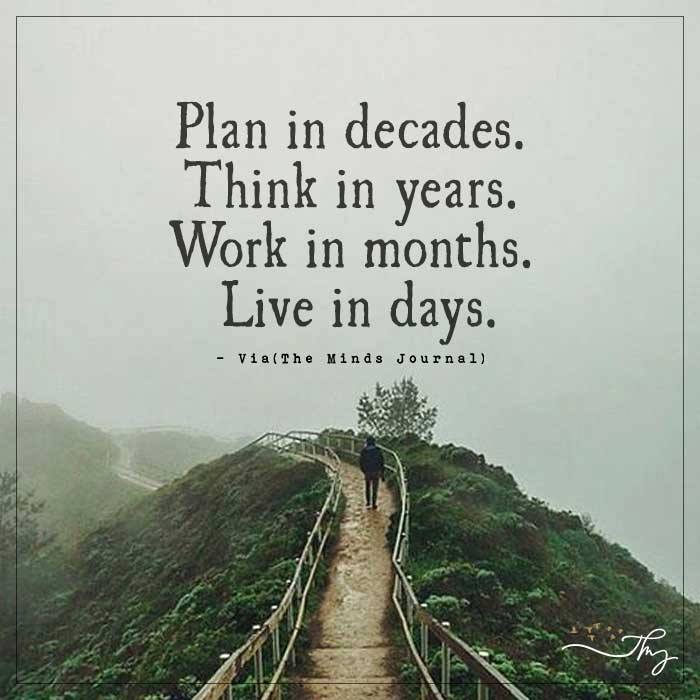
plan in decades, think in years

Read The Door You Pick Can Tell Your Future- QUIZ

Let go of your addiction to prediction. 

While there is benefit in planning, it’s important to remember that plans are not reality. If you can be flexible and divert from the plan when required, you will have a more intuitive, creative, and imaginative response to the situation. 

Try asking yourself, “What is the real story? How does it unfold? Where could it get me?” to take a more curious approach to opportunities and challenges, rather than trying to get your plan “back on track.”

Encourage the skills of curiosity and creativity. 

Rather than trying to “manage” a complex system, take a more “artistic” approach. 


For example, artists regularly work with the uncertainty of what the outcome of a project will be. They spend lots of time absorbing the world around them, observing people, and letting ideas coalesce. They understand at the start that they don’t know how it’s going to unfold, but they begin anyway.

plan for

Can you let go of your fear of uncertainty and give yourself permission to pursue a far richer array of future possibilities? Could you prioritize exploration and experimentation to uncover creative solutions to complex challenges? Could you invite, empower, and trust people to help you find new solutions? Do you have the resilience of an artist to plan for future?

Read 7 Strategies For Smarter Decision-Making, According to Science

What is your plan for the future? How are you planning for the uncertainty of the year ahead?
Leave a comment below.

(You can hear the full interview on the Making Positive Psychology Work podcast here.)


Written by: Michelle McQuaid 
Originally appeared on: Psychology Today 
Republished with permission 
plan for an unpredictable future pin


Published On:

Last updated on:

Michelle McQuaid

Dr. Michelle McQuaid is a best-selling author, workplace wellbeing teacher and playful change activator. With more than a decade of senior leadership experience in large organizations around the world, she’s passionate about translating cutting-edge research from positive psychology and neuroscience, into practical strategies for health, happiness, and business success. An honorary fellow at the University of Melbourne’s Graduate School of Education, she blogs for Psychology Today, hosts the top-rated weekly podcast Making Positive Psychology Work, and her work has been featured in Forbes, the Harvard Business Review, the Wall Street Journal, Boss Magazine, The Age and more. She holds a Masters in Applied Positive Psychology from the University of Pennsylvania and has completed a PhD in Appreciative Inquiry under the supervision of David Cooperrider. Michelle lives to help people discover their strengths, move beyond their fears, and finally discover what it truly takes to flourish with confidence.

Disclaimer: The informational content on The Minds Journal have been created and reviewed by qualified mental health professionals. They are intended solely for educational and self-awareness purposes and should not be used as a substitute for professional medical advice, diagnosis, or treatment. If you are experiencing emotional distress or have concerns about your mental health, please seek help from a licensed mental health professional or healthcare provider.

Leave a Comment

Today's Horoscope

Your Daily Horoscope For 4 April, 2026: Free Predictions

Daily Horoscope 4 April, 2026: Prediction For Each Zodiac Sign

Look at your daily prediction and see what the stars have in store for your love life and your future!

Latest Quizzes

How Many Circles Do You See? A Simple Test of Thinking Style

How Many Circles Do You See? Your Answer Might Reveal Narcissistic Traits! 

Take a closer look at this simple image and discover what your circle count reveals about your thinking style, perception, and attention in this fun and engaging visual test.

Latest Quotes

Real Signs Your Body Is Actually in Good Health: How to Know You’re Truly Well

Real Signs Your Body Is Actually in Good Health: How to Know You’re Truly Well

Real signs your body is healthy don’t always show up on lab reports. From good sleep and clear skin to regular digestion and a stable mood, your body is constantly sending quiet signals of wellness.

Readers Blog

Caption This Image and Selected Wisepicks – 5 April 2026

Caption This Image and Selected Wisepicks – 5 April 2026

Ready to unleash your inner wordsmith? ✨??☺️ Now’s your chance to show off your wit, charm, or sheer genius in just one line! Whether it’s laugh-out-loud funny or surprisingly deep, we want to hear it.Submit your funniest, wittiest, or most thought-provoking caption in the comments. We’ll pick 15+ winners to be featured on our website…

Latest Articles

How can you plan for a future that is uncertain and unpredictable?
An interview with Margaret Heffernan.


How much time, energy, and effort do you spend planning for what lies ahead for your team or organization? Given the dawning realization in most workplaces following the global pandemic that unpredictable and continual change is really the only certainty your business plans can be guaranteed, it’s worth asking if all your efforts at planning are worth the paper they are written on.

“Forecasting experts have found that if you’re very, very open-minded and consult a broad range of information sources, then probably the furthest out you can reliably plan is about 400 days,” explained Margaret Heffernan, author of Uncharted: How To Map The Future when we interviewed her recently.


You create a good future.

“If, however, like the rest of us, you’re not quite that rigorous and you don’t regularly review your forecasts, then it’s more likely that your horizon for accurate forecasting is about 150 days.”

This means your best-laid plans for future are valid for about five months at best. 

“A significant downside to being addicted to predicting the future is that the plans and forecasts begin to take on a false sense of value,” said Margaret. “Those who are addicted to prediction and to planning make themselves very rigid, so when things don’t go according to plan, all they can experience is a sense of loss.”


So,

How Can You Plan For The Future More Intelligently?

Margaret suggests that understanding the difference between complicated and complex systems is the key to plan for future. Every organization has both complicated and complex systems operating within it:

  • complicated system

complicated system is generally a linear system in which patterns of cause and effect repeat in predictable ways and can be streamlined to create efficiency. An example of a complicated system would be the baggage checking-in process at the airport. There are lots of moving components and people involved in getting a bag to its destination, but it’s easy to see the whole system and the process is largely the same every day with few unforeseen situations likely to arise. This means it can be optimized for efficiency. 

Read Choose a Rune: Your Choice Will Reveal What The Future Holds For You

  • complex system

complex system is not linear and has lots of different factors interacting with each other. This can make it difficult to see the whole system at once because thousands of factors can be creating multiple reactions. It also means that things can change quickly, making planning challenging. In a complex system, flexibility is more valuable than expertise and efficiency, as the most recent thing that happened may not happen again.

To plan for future more effectively for the complicated and complex systems in your workplace, Margaret recommends the following:


Take stock of your complicated and complex systems. 

Look at the systems and processes within your workplace and identify which ones are complicated and suited for the management of efficiencies and which ones are complex and require artistic flexibility. This will help you plan for the future more intelligently.

How are you encouraging people to understand the difference and equipping them with the capabilities to navigate both? 

For example, a “just in time” approach is appropriate for a complicated system and is geared towards optimum efficiency. Whereas a “just in case” approach focuses on understanding what could happen that would have a huge impact, and ensuring contingencies are in place to make the business more resilient. 

plan in decades, think in years

Read The Door You Pick Can Tell Your Future- QUIZ

Let go of your addiction to prediction. 

While there is benefit in planning, it’s important to remember that plans are not reality. If you can be flexible and divert from the plan when required, you will have a more intuitive, creative, and imaginative response to the situation. 

Try asking yourself, “What is the real story? How does it unfold? Where could it get me?” to take a more curious approach to opportunities and challenges, rather than trying to get your plan “back on track.”

Encourage the skills of curiosity and creativity. 

Rather than trying to “manage” a complex system, take a more “artistic” approach. 


For example, artists regularly work with the uncertainty of what the outcome of a project will be. They spend lots of time absorbing the world around them, observing people, and letting ideas coalesce. They understand at the start that they don’t know how it’s going to unfold, but they begin anyway.

plan for

Can you let go of your fear of uncertainty and give yourself permission to pursue a far richer array of future possibilities? Could you prioritize exploration and experimentation to uncover creative solutions to complex challenges? Could you invite, empower, and trust people to help you find new solutions? Do you have the resilience of an artist to plan for future?

Read 7 Strategies For Smarter Decision-Making, According to Science

What is your plan for the future? How are you planning for the uncertainty of the year ahead?
Leave a comment below.

(You can hear the full interview on the Making Positive Psychology Work podcast here.)


Written by: Michelle McQuaid 
Originally appeared on: Psychology Today 
Republished with permission 
plan for an unpredictable future pin


Published On:

Last updated on:

Michelle McQuaid

Dr. Michelle McQuaid is a best-selling author, workplace wellbeing teacher and playful change activator. With more than a decade of senior leadership experience in large organizations around the world, she’s passionate about translating cutting-edge research from positive psychology and neuroscience, into practical strategies for health, happiness, and business success. An honorary fellow at the University of Melbourne’s Graduate School of Education, she blogs for Psychology Today, hosts the top-rated weekly podcast Making Positive Psychology Work, and her work has been featured in Forbes, the Harvard Business Review, the Wall Street Journal, Boss Magazine, The Age and more. She holds a Masters in Applied Positive Psychology from the University of Pennsylvania and has completed a PhD in Appreciative Inquiry under the supervision of David Cooperrider. Michelle lives to help people discover their strengths, move beyond their fears, and finally discover what it truly takes to flourish with confidence.

Leave a Comment

    Leave a Comment