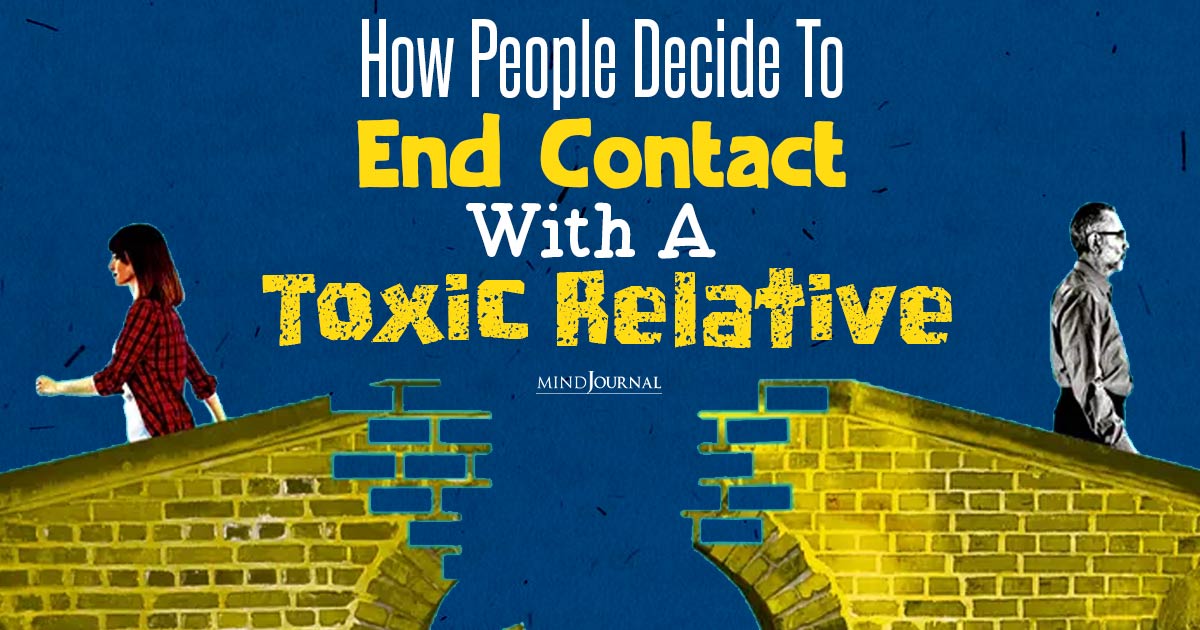
How People Choose To Go No Contact With A Family Member

Author : Fern Schumer Chapman

Going no contact with a family member is probably one of the hardest things you will ever have to do in your life. However, sometimes the most important steps are the hardest to take. When you choose no contact, you are choosing to prioritize your emotional and mental well-being. This post is going to talk about how going no contact with family is done and what are the important steps to take.

Key Points:

  • Family members may choose no contact due to abuse, neglect, mental illness, or drug and alcohol use.
  • When choosing no contact, it may be necessary to take certain measures for protection.
  • Relatives may press a child to leave an abusive partner, but insist the estranged repair rifts in the family.

No contact with a family member means cutting off the relationship, neither offering nor allowing any communication or interaction whatsoever. It is a decisive step taken to end physical, psychological, or emotional suffering at the hands of an abusive sibling or other family member. As a tactic to protect oneself from continual hurt, it is generally the last resort.

Marcy Steuben, 43, of Pittsburgh, has terminated relationships with all three of her siblings. One brother is an alcoholic, her half‐brother is in prison, and her adoptive brother is violent.

“If I did something unacceptable,” she says, “I would expect to be cut off and would do the same in return. My parents are estranged from them, too. All the estrangements were caused by a fundamental unwillingness by myself and my parents to allow people to use and abuse us.”

Most people who choose no contact feel they have no choice; they have exhausted all other options. Here are a few comments from a survey I conducted:

  • My brother had a serious drug problem that ruined our family. He could not be trusted, and he refused treatment. He drained the family emotionally and financially, so I had to cut him out of my life.
  • She is a narcissist who has bipolar disorder. My therapist recommended I go “no contact” for my own well-being. At first, I had a lot of trouble going no contact. I wished I had a sister. Not anymore.
  • I can’t take it anymore. She’s part of many broken, twisted memories that I want to forget. I mourn the idea of a close family and sibling, but I’m happier without her. I did this for my own sanity.

Related: How Adults Can Get the Distance They Need from Toxic Families

Why it’s necessary to choose no contact

In an article for the CPTSD Foundation, Shirley Davis identifies reasons to choose no contact and the pros and cons of that decision.

Many choose to terminate a relationship with a family member for a variety of reasons, including:

  • Lifelong abuse or neglect
  • Continued dysfunction
  • Betrayal
  • Mental illness
  • Lack of respect
  • Drug or alcohol abuse
  • Religious differences
  • Political differences
  • Moral disagreements
  • Criminal behavior
  • Reckless or dangerous behavior
  • Narcissistic behaviour
  • Refusal to acknowledge and or apologize for unacceptable behaviour
  • Lack of reciprocity in the relationship
  • Disrespect toward a spouse
  • Intrusive, overbearing, and undermining behaviour
  • Playing favorites with adult siblings
  • Ignoring boundaries
  • Financial disputes
  • Criticizing, belittling, or ridiculing behaviours
  • A lack of skills to resolve conflicts

When considering no contact, it may be valuable to weigh the pros and cons of the situation.
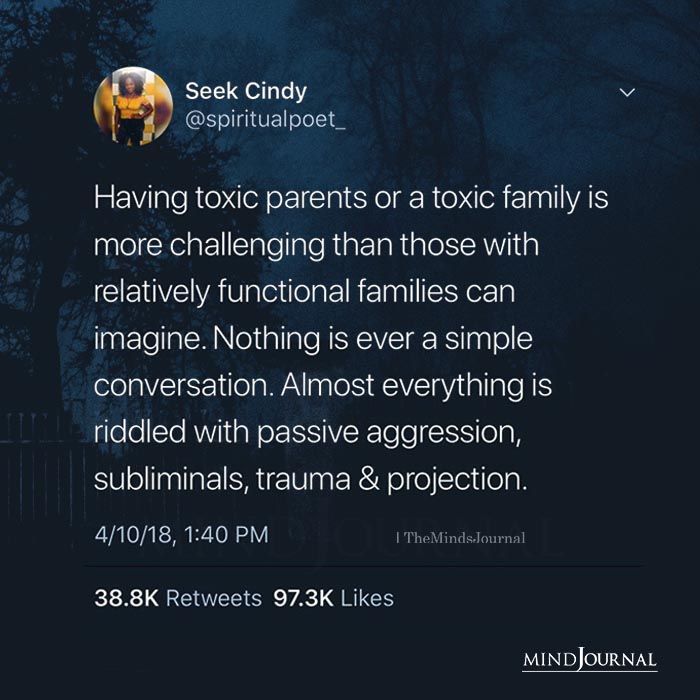
Why you should go no contact with a family member

How people choose to go no contact with a family member

Davis’s list of pros:

  • Peace
  • Stability
  • Freedom
  • You can finally heal
  • You respect yourself more and feel you are living authentically
  • Your self-esteem and self-confidence improve
  • You feel a sense of self-control, self-reliance, and agency

Davis’s list of cons:

  • Grieving the sibling as well as the sibling you wish you had
  • Feelings of guilt
  • Feelings of remorse
  • Backlash in the family
  • Retaliation from the estranged
  • Loneliness
  • Depression
  • Anxiety

It’s likely that relatives and friends will try to persuade and pressure family members to maintain relations.

Expect to hear some of the following enabling statements:

  • “It’s just how she is.”
  • “He’s getting old.”
  • “Can’t you just hang in there?”
  • “It’s not like you have to live in the same house as them.”
  • “Nobody’s perfect.”
  • “You’re too sensitive.”
  • “He didn’t mean it that way.”
  • “You only have one mother, father, brother, sister.”
  • “Can’t you take a joke?”
  • “You need to learn to let things go.”
  • “There are two sides to every story.”
  • “Why can’t we all just get along?”
  • “You shouldn’t have made him angry.”
  • “Be the bigger person.”

Related: 10 Tips To Deal With Toxic Family Members Without Losing Your Mind

How to maintain no contact with a relative

After making the difficult choice of no contact, a family member might consider these steps to act on the decision:

  • Block your estranged relative from all social media accounts and block the social media accounts of anyone who’s in this person’s inner circle.
  • Block the person’s cell phone number.
  • Beware of well-intentioned family members who may share personal information. Set boundaries, insisting that you aren’t comfortable with this discussion.
  • Add security and two-step authentication on online accounts or apps, to secure all accounts.
  • Let a trusted person know about the cut-off for support or have someone who can step in, if necessary.
  • Feel the uncomfortable feelings—anger, sadness, and guilt of cutting off—and acknowledge those feelings to work through them.
  • Note how you feel and whether you live more comfortably without the difficult relative in your life.
  • Focus on yourself; prioritize your own personal well-being above all else.

Choosing no contact doesn’t have to be forever. After time has passed, someone who has chosen to cut off may feel steadier and may even choose to reach out again.
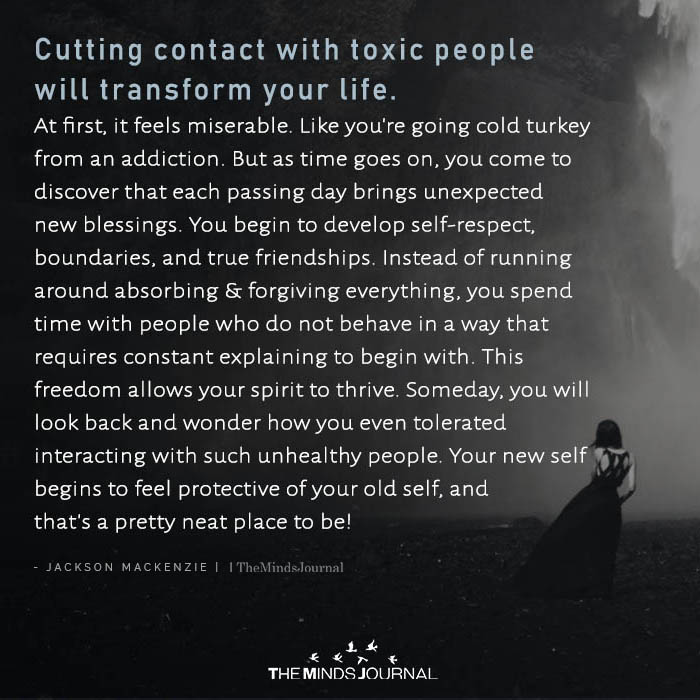
No contact with a family member

It’s also important to know that maintaining distance can be more difficult than establishing the cut-off in the first place. Families who might support ending an abusive relationship with a spouse or partner often pressure their own estranged members to repair rifts within the family, even if the relationship has been abusive.

And be aware that, whenever the holidays roll around or a relative gets married or dies, the estranged are forced to re-evaluate the decision to have no contact.

Fern Schumer Chapman is the author of several books, including Brothers, Sisters, Strangers and The Sibling Estrangement Journal. She offers one-on-one coaching sessions to those struggling with sibling estrangement issues. Contact her at [email protected].

References:

Davis, Shirley, (Jan 30, 2023) CPTSDfoundation.org, Family Estrangement: Going No Contact

Rainne, S. (July 21, 2020) https://www.supportiv.com/healing/go-no-contact-nc-without-guilt NC: How To Go No Contact Without Guilt

Written By Fern Schumer Chapman
Originally Appeared On Psychology Today
choose no contact

Published On:

Last updated on:

Fern Schumer Chapman

Critically acclaimed writer Fern Schumer Chapman has written several award-winning books. Her memoir, Motherland — a Barnes & Noble Discover Great New Writers selection, a finalist for the National Jewish Book Award, and a BookSense76 pick — is a popular choice for book clubs. Two of her other books, Is It Night or Day? and Like Finding My Twin, are used in middle school classrooms. In 2004, the Illinois Association of Teachers of English (IATE) named Chapman the “Illinois Author of the Year.” Twice, Oprah Winfrey shows have featured her books. As a journalist and reporter, her work has appeared in many publications including the Chicago Tribune, Forbes, The Washington Post, U.S. News & World Report, Fortune, USA Today, and The Wall Street Journal.

Disclaimer: The informational content on The Minds Journal have been created and reviewed by qualified mental health professionals. They are intended solely for educational and self-awareness purposes and should not be used as a substitute for professional medical advice, diagnosis, or treatment. If you are experiencing emotional distress or have concerns about your mental health, please seek help from a licensed mental health professional or healthcare provider.

Leave a Comment

Today's Horoscope

Weekly Horoscope PART one

Weekly Horoscope 15 March to 21 March 2026

Read your zodiac sign’s prediction to understand the energy surrounding you and how to make the most of the days ahead!

Latest Quizzes

Interesting Finger Personality Test: 4 Finger Lines

Finger Personality Test: Join Your Fingers And Reveal A Hidden Personality Secret!

Look closely at your finger lines. Which pattern do you see? This personality test might surprise you!

Latest Quotes

How Men Show Love Through Actions (Male Psychology in Relationships)

How Men Show Love Through Actions (Male Psychology in Relationships)

Male psychology in relationships shows that men express love through presence, protection, and peace more than poetry. Decode his actions so you can see how deeply he actually cares.

Readers Blog

Caption This Image and Selected Wisepicks – 15 March 2026

Caption This Image and Selected Wisepicks – 15 March 2026

Ready to unleash your inner wordsmith? ✨??☺️ Now’s your chance to show off your wit, charm, or sheer genius in just one line! Whether it’s laugh-out-loud funny or surprisingly deep, we want to hear it.Submit your funniest, wittiest, or most thought-provoking caption in the comments. We’ll pick 15+ winners to be featured on our website…

Latest Articles

Going no contact with a family member is probably one of the hardest things you will ever have to do in your life. However, sometimes the most important steps are the hardest to take. When you choose no contact, you are choosing to prioritize your emotional and mental well-being. This post is going to talk about how going no contact with family is done and what are the important steps to take.

Key Points:

  • Family members may choose no contact due to abuse, neglect, mental illness, or drug and alcohol use.
  • When choosing no contact, it may be necessary to take certain measures for protection.
  • Relatives may press a child to leave an abusive partner, but insist the estranged repair rifts in the family.

No contact with a family member means cutting off the relationship, neither offering nor allowing any communication or interaction whatsoever. It is a decisive step taken to end physical, psychological, or emotional suffering at the hands of an abusive sibling or other family member. As a tactic to protect oneself from continual hurt, it is generally the last resort.

Marcy Steuben, 43, of Pittsburgh, has terminated relationships with all three of her siblings. One brother is an alcoholic, her half‐brother is in prison, and her adoptive brother is violent.

“If I did something unacceptable,” she says, “I would expect to be cut off and would do the same in return. My parents are estranged from them, too. All the estrangements were caused by a fundamental unwillingness by myself and my parents to allow people to use and abuse us.”

Most people who choose no contact feel they have no choice; they have exhausted all other options. Here are a few comments from a survey I conducted:

  • My brother had a serious drug problem that ruined our family. He could not be trusted, and he refused treatment. He drained the family emotionally and financially, so I had to cut him out of my life.
  • She is a narcissist who has bipolar disorder. My therapist recommended I go “no contact” for my own well-being. At first, I had a lot of trouble going no contact. I wished I had a sister. Not anymore.
  • I can’t take it anymore. She’s part of many broken, twisted memories that I want to forget. I mourn the idea of a close family and sibling, but I’m happier without her. I did this for my own sanity.

Related: How Adults Can Get the Distance They Need from Toxic Families

Why it’s necessary to choose no contact

In an article for the CPTSD Foundation, Shirley Davis identifies reasons to choose no contact and the pros and cons of that decision.

Many choose to terminate a relationship with a family member for a variety of reasons, including:

  • Lifelong abuse or neglect
  • Continued dysfunction
  • Betrayal
  • Mental illness
  • Lack of respect
  • Drug or alcohol abuse
  • Religious differences
  • Political differences
  • Moral disagreements
  • Criminal behavior
  • Reckless or dangerous behavior
  • Narcissistic behaviour
  • Refusal to acknowledge and or apologize for unacceptable behaviour
  • Lack of reciprocity in the relationship
  • Disrespect toward a spouse
  • Intrusive, overbearing, and undermining behaviour
  • Playing favorites with adult siblings
  • Ignoring boundaries
  • Financial disputes
  • Criticizing, belittling, or ridiculing behaviours
  • A lack of skills to resolve conflicts

When considering no contact, it may be valuable to weigh the pros and cons of the situation.

Why you should go no contact with a family member

How people choose to go no contact with a family member

Davis’s list of pros:

  • Peace
  • Stability
  • Freedom
  • You can finally heal
  • You respect yourself more and feel you are living authentically
  • Your self-esteem and self-confidence improve
  • You feel a sense of self-control, self-reliance, and agency

Davis’s list of cons:

  • Grieving the sibling as well as the sibling you wish you had
  • Feelings of guilt
  • Feelings of remorse
  • Backlash in the family
  • Retaliation from the estranged
  • Loneliness
  • Depression
  • Anxiety

It’s likely that relatives and friends will try to persuade and pressure family members to maintain relations.

Expect to hear some of the following enabling statements:

  • “It’s just how she is.”
  • “He’s getting old.”
  • “Can’t you just hang in there?”
  • “It’s not like you have to live in the same house as them.”
  • “Nobody’s perfect.”
  • “You’re too sensitive.”
  • “He didn’t mean it that way.”
  • “You only have one mother, father, brother, sister.”
  • “Can’t you take a joke?”
  • “You need to learn to let things go.”
  • “There are two sides to every story.”
  • “Why can’t we all just get along?”
  • “You shouldn’t have made him angry.”
  • “Be the bigger person.”

Related: 10 Tips To Deal With Toxic Family Members Without Losing Your Mind

How to maintain no contact with a relative

After making the difficult choice of no contact, a family member might consider these steps to act on the decision:

  • Block your estranged relative from all social media accounts and block the social media accounts of anyone who’s in this person’s inner circle.
  • Block the person’s cell phone number.
  • Beware of well-intentioned family members who may share personal information. Set boundaries, insisting that you aren’t comfortable with this discussion.
  • Add security and two-step authentication on online accounts or apps, to secure all accounts.
  • Let a trusted person know about the cut-off for support or have someone who can step in, if necessary.
  • Feel the uncomfortable feelings—anger, sadness, and guilt of cutting off—and acknowledge those feelings to work through them.
  • Note how you feel and whether you live more comfortably without the difficult relative in your life.
  • Focus on yourself; prioritize your own personal well-being above all else.

Choosing no contact doesn’t have to be forever. After time has passed, someone who has chosen to cut off may feel steadier and may even choose to reach out again.

No contact with a family member

It’s also important to know that maintaining distance can be more difficult than establishing the cut-off in the first place. Families who might support ending an abusive relationship with a spouse or partner often pressure their own estranged members to repair rifts within the family, even if the relationship has been abusive.

And be aware that, whenever the holidays roll around or a relative gets married or dies, the estranged are forced to re-evaluate the decision to have no contact.

Fern Schumer Chapman is the author of several books, including Brothers, Sisters, Strangers and The Sibling Estrangement Journal. She offers one-on-one coaching sessions to those struggling with sibling estrangement issues. Contact her at [email protected].

References:

Davis, Shirley, (Jan 30, 2023) CPTSDfoundation.org, Family Estrangement: Going No Contact

Rainne, S. (July 21, 2020) https://www.supportiv.com/healing/go-no-contact-nc-without-guilt NC: How To Go No Contact Without Guilt

Written By Fern Schumer Chapman
Originally Appeared On Psychology Today
choose no contact

Published On:

Last updated on:

Fern Schumer Chapman

Critically acclaimed writer Fern Schumer Chapman has written several award-winning books. Her memoir, Motherland — a Barnes & Noble Discover Great New Writers selection, a finalist for the National Jewish Book Award, and a BookSense76 pick — is a popular choice for book clubs. Two of her other books, Is It Night or Day? and Like Finding My Twin, are used in middle school classrooms. In 2004, the Illinois Association of Teachers of English (IATE) named Chapman the “Illinois Author of the Year.” Twice, Oprah Winfrey shows have featured her books. As a journalist and reporter, her work has appeared in many publications including the Chicago Tribune, Forbes, The Washington Post, U.S. News & World Report, Fortune, USA Today, and The Wall Street Journal.

Leave a Comment

    Leave a Comment