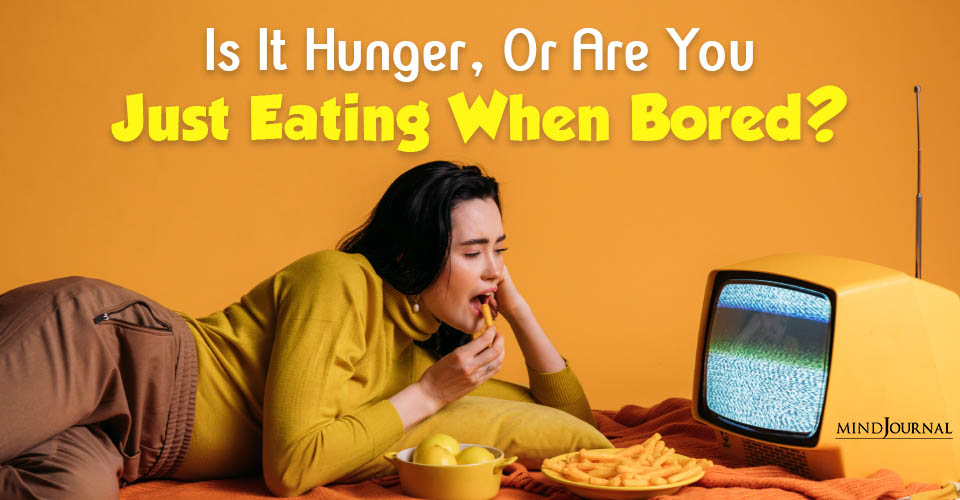
Is It Hunger, or Are You Just Eating When Bored?

Author : Andrea Wachter

Eating When Bored? Here’s What’s Really Going On

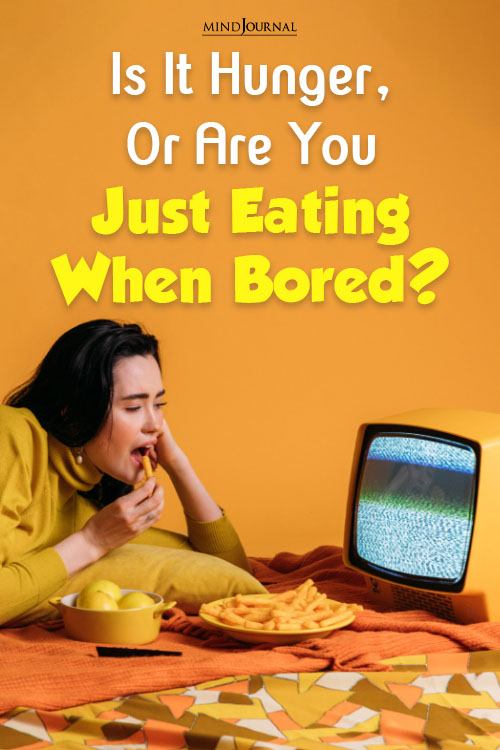
Eating when bored isn’t really about hunger, it’s more about trying to fill a gap you can’t quite name. If you have been wondering how to stop eating when bored, it usually starts with understanding emotional eating patterns.

Those random snack runs or mindless bites often point to something deeper than food. The good news is, there are simple ways to stop snacking when bored once you recognize what’s actually going on.

It’s less about control and more about learning how to deal with boredom without food in a way that actually feels satisfying.

If you find yourself wandering to the kitchen when there’s a blank space of time in your day, or mindlessly eating while you scroll on your phone, you’re not alone. 

Boredom-induced eating is one of the most common topics I get asked about in my “Getting Over Overeating” course.

I’ve definitely been there myself. Any time I had a free moment, I immediately turned to food. I know how frustrating that cycle can be and how easily boredom can become a signal to check out with food.

Related: 8 Mental Health Benefits Of Boredom, According To Studies

Eating When Bored? Boredom as a Messenger

Most of us tend to think of boredom as a core emotion, like sadness, fear, or anger, but it doesn’t always fit neatly into that bucket.

Boredom is more of a felt sense of understimulation, often mixed with thoughts about our current situation. It’s pointing to a hunger for something satisfying or interesting.

Often when we feel bored, we’ve decided that the current moment isn’t meeting our need for meaning, connection, stimulation, or aliveness. The problem arises when we misinterpret this signal.

We try to satisfy a need for stimulation or meaning with food, which is why eating rarely provides the relief we’re actually looking for. It’s a mismatch of needs.

When we eat out of sheer boredom, we rarely walk away feeling fulfilled. There’s usually no pleasurable sense of arrival or satisfaction.

In contrast, when we consciously choose to enjoy a favorite meal, snack, or dessert, it usually hits the spot because we’re present with the food and meeting our need for nourishment and pleasure.

The difference is whether we’re trying to numb a feeling or truly enjoy and experience a moment.

Eating when bored

Getting to the Root

Boredom often points to something deeper. Underlying it, there can be a range of emotions, like loneliness, fear, anger, or sadness. You might be hungry for connection.

You might crave creative expression, intellectual stimulation, or a sense of purpose and meaning.

Boredom-fueled eating can also have restriction at its roots. Very often, restrictive thoughts and behaviors lead to overeating. I call this the diet/riot cycle.

When we’re overly strict with ourselves, a part of us eventually pushes back. We crave release, and for many, the kitchen becomes the most accessible place to try to find it.

Unchecked thoughts can also fuel boredom. We may think we’re not doing enough or that the moment should be zippier than it is. Sometimes, that realization can lead us to get creative about how we spend our time.

Other times, simply being present and allowing ourselves and the moment to be enough is what’s needed.

Letting go of judging ourselves or the moment as insufficient also paves the way for inner guidance, which tends to come from a quiet, kind mind rather than a harsh, critical one.

When we learn to address our deeply rooted needs rather than just the surface impulse to eat, the urge to eat when we’re not hungry often begins to soften.

By tuning inside, we strengthen our intuition, which nudges us toward what will truly nourish us, whether that’s rest, connection, a creative outlet, or the space to simply feel what we’re feeling.

Related: The Boredom Paradox: 5 Steps To Take When Bored

Reconnecting With “Spirit Fillers”

If you’re looking to break the cycle of boredom-fueled eating, consider creating a list of Spirit Fillers. These can remind you of ways to reconnect with yourself and life in a more conscious, authentic way.

When you identify the need that’s asking for attention, you can choose a Spirit Filler that actually satisfies you. It’s like being a detective for your inner life by learning to care for yourself in ways that leave you feeling truly nourished.

Of course, your Spirit Filler list will be unique to you, but here are a few ideas that might spark some of your own:

  • Turn on an inspiring podcast, a favorite playlist, or a soothing meditation.
  • Dive into a hobby, start an art project, or revisit a creative activity you used to enjoy.
  • Move your body in a way that feels good to you.
  • Do something physically comforting, like a foot bath or a warm shower.
  • Step outside for some fresh air.
  • Reach out to someone you feel safe with, or connect with yourself through journaling, meditation, or compassionate contemplation.

The goal isn’t to have a perfect list, but to have a few options you can turn to that spark your interest or curiosity or simply help you shift your focus and energy.

The Power of Doing Nothing

Sometimes, doing nothing is doing something. Sarah, one of my students, recently shared a breakthrough regarding her long-time habit of boredom-induced eating.

On a day off from work, she finished a satisfying breakfast and suddenly felt a powerful urge to binge. She realized she was bored and didn’t know what to do with herself.

She looked at her Spirit Filler list, but nothing sounded good to her. All she could think about was food.

Instead of turning to the kitchen, Sarah tried something new. She sat down in a chair and gave herself permission to be bored. She took some slow, deep breaths and allowed the moment to be exactly what it was, without trying to fix or numb it.

After a few minutes, an idea popped up. She felt like organizing a drawer she’d been thinking about tackling for months. As she started on her project, she felt like playing music.

A few songs and an organized drawer later, she felt like taking a walk. By the time she got back home, her body was ready for lunch.

By allowing herself to do “nothing,” Sarah paved the way for clarity. Even if she’d simply sat in her chair for a while, that would have been fine too. She was learning to be good company for herself.

A Practice in Patience

Developing intuition and the ability to be good company for ourselves takes practice. Sometimes our internal guidance is clouded by emotions that need compassion, care, or expression.

Other times, it’s an overactive mind that calls for soothing, wisdom, and redirection.

It’s important to remember that not all non-hunger eating needs deep inquiry. Food can simply be a source of comfort and pleasure.

The goal is awareness, understanding what we’re truly longing for, and tending to our emotions with the same compassion we’d offer someone we care about, rather than reacting on autopilot.

When we turn to food as the main solution for boredom, we lose the chance to learn about what we’re actually seeking and needing. If you struggle with boredom eating, be patient with yourself.

You aren’t just trying to change a behavior pattern. You’re learning to cultivate a deeper relationship with yourself.

Related: 7 Surprising Facts About Boredom: Learn The Science Of Ennui

As you respond to your internal needs with curiosity and compassion, rather than judgment and habitual reactions, you’ll find that you have more options, whether that’s actively doing something or simply allowing the moment to be enough.

Instead of treating boredom as a problem to be solved or squelched, you can use it as a signal to pause, tune inside, and discover what you’re truly hungering for.


Written by Andrea Wachter
Originally Appeared on Andrea Wachter
how to stop eating when bored

Published On:

Last updated on:

Disclaimer: The informational content on The Minds Journal have been created and reviewed by qualified mental health professionals. They are intended solely for educational and self-awareness purposes and should not be used as a substitute for professional medical advice, diagnosis, or treatment. If you are experiencing emotional distress or have concerns about your mental health, please seek help from a licensed mental health professional or healthcare provider.

Leave a Comment

Today's Horoscope

Daily Horoscope 29 April 2026: Prediction for Zodiac Signs

Daily Horoscope 29 April, 2026: Prediction For Each Zodiac Sign

The energy today feels softer than usual.

Latest Quizzes

What Is My Core Wound Quiz? 10 Signs That Expose It!

What You Notice First in Someone Isn’t Random—Take This Quiz to Reveal Your Core Wound

What you notice first in others may quietly mirror your own needs that go unseen and unmet. Take this simple quiz to help you uncover the core wounds hidden beneath that actually shape you.

Latest Quotes

Human Psychology Facts: How These Cognitive Biases Quietly Shape Your Life

Human Psychology Facts: How These Cognitive Biases Quietly Shape Your Life

Human psychology facts show how your brain quietly edits reality. From the Pratfall Effect to the Halo Effect, these cognitive biases influence who you like, what you notice, and how confident you feel.

Readers Blog

Caption This Image and Selected Wisepicks – 26 April 2026

Caption This Image and Selected Wisepicks – 26 April 2026

Ready to unleash your inner wordsmith? ✨??☺️ Now’s your chance to show off your wit, charm, or sheer genius in just one line! Whether it’s laugh-out-loud funny or surprisingly deep, we want to hear it.Submit your funniest, wittiest, or most thought-provoking caption in the comments. We’ll pick 15+ winners to be featured on our website…

Latest Articles

Eating When Bored? Here’s What’s Really Going On

Eating when bored isn’t really about hunger, it’s more about trying to fill a gap you can’t quite name. If you have been wondering how to stop eating when bored, it usually starts with understanding emotional eating patterns.

Those random snack runs or mindless bites often point to something deeper than food. The good news is, there are simple ways to stop snacking when bored once you recognize what’s actually going on.

It’s less about control and more about learning how to deal with boredom without food in a way that actually feels satisfying.

If you find yourself wandering to the kitchen when there’s a blank space of time in your day, or mindlessly eating while you scroll on your phone, you’re not alone. 

Boredom-induced eating is one of the most common topics I get asked about in my “Getting Over Overeating” course.

I’ve definitely been there myself. Any time I had a free moment, I immediately turned to food. I know how frustrating that cycle can be and how easily boredom can become a signal to check out with food.

Related: 8 Mental Health Benefits Of Boredom, According To Studies

Eating When Bored? Boredom as a Messenger

Most of us tend to think of boredom as a core emotion, like sadness, fear, or anger, but it doesn’t always fit neatly into that bucket.

Boredom is more of a felt sense of understimulation, often mixed with thoughts about our current situation. It’s pointing to a hunger for something satisfying or interesting.

Often when we feel bored, we’ve decided that the current moment isn’t meeting our need for meaning, connection, stimulation, or aliveness. The problem arises when we misinterpret this signal.

We try to satisfy a need for stimulation or meaning with food, which is why eating rarely provides the relief we’re actually looking for. It’s a mismatch of needs.

When we eat out of sheer boredom, we rarely walk away feeling fulfilled. There’s usually no pleasurable sense of arrival or satisfaction.

In contrast, when we consciously choose to enjoy a favorite meal, snack, or dessert, it usually hits the spot because we’re present with the food and meeting our need for nourishment and pleasure.

The difference is whether we’re trying to numb a feeling or truly enjoy and experience a moment.

Eating when bored

Getting to the Root

Boredom often points to something deeper. Underlying it, there can be a range of emotions, like loneliness, fear, anger, or sadness. You might be hungry for connection.

You might crave creative expression, intellectual stimulation, or a sense of purpose and meaning.

Boredom-fueled eating can also have restriction at its roots. Very often, restrictive thoughts and behaviors lead to overeating. I call this the diet/riot cycle.

When we’re overly strict with ourselves, a part of us eventually pushes back. We crave release, and for many, the kitchen becomes the most accessible place to try to find it.

Unchecked thoughts can also fuel boredom. We may think we’re not doing enough or that the moment should be zippier than it is. Sometimes, that realization can lead us to get creative about how we spend our time.

Other times, simply being present and allowing ourselves and the moment to be enough is what’s needed.

Letting go of judging ourselves or the moment as insufficient also paves the way for inner guidance, which tends to come from a quiet, kind mind rather than a harsh, critical one.

When we learn to address our deeply rooted needs rather than just the surface impulse to eat, the urge to eat when we’re not hungry often begins to soften.

By tuning inside, we strengthen our intuition, which nudges us toward what will truly nourish us, whether that’s rest, connection, a creative outlet, or the space to simply feel what we’re feeling.

Related: The Boredom Paradox: 5 Steps To Take When Bored

Reconnecting With “Spirit Fillers”

If you’re looking to break the cycle of boredom-fueled eating, consider creating a list of Spirit Fillers. These can remind you of ways to reconnect with yourself and life in a more conscious, authentic way.

When you identify the need that’s asking for attention, you can choose a Spirit Filler that actually satisfies you. It’s like being a detective for your inner life by learning to care for yourself in ways that leave you feeling truly nourished.

Of course, your Spirit Filler list will be unique to you, but here are a few ideas that might spark some of your own:

  • Turn on an inspiring podcast, a favorite playlist, or a soothing meditation.
  • Dive into a hobby, start an art project, or revisit a creative activity you used to enjoy.
  • Move your body in a way that feels good to you.
  • Do something physically comforting, like a foot bath or a warm shower.
  • Step outside for some fresh air.
  • Reach out to someone you feel safe with, or connect with yourself through journaling, meditation, or compassionate contemplation.

The goal isn’t to have a perfect list, but to have a few options you can turn to that spark your interest or curiosity or simply help you shift your focus and energy.

The Power of Doing Nothing

Sometimes, doing nothing is doing something. Sarah, one of my students, recently shared a breakthrough regarding her long-time habit of boredom-induced eating.

On a day off from work, she finished a satisfying breakfast and suddenly felt a powerful urge to binge. She realized she was bored and didn’t know what to do with herself.

She looked at her Spirit Filler list, but nothing sounded good to her. All she could think about was food.

Instead of turning to the kitchen, Sarah tried something new. She sat down in a chair and gave herself permission to be bored. She took some slow, deep breaths and allowed the moment to be exactly what it was, without trying to fix or numb it.

After a few minutes, an idea popped up. She felt like organizing a drawer she’d been thinking about tackling for months. As she started on her project, she felt like playing music.

A few songs and an organized drawer later, she felt like taking a walk. By the time she got back home, her body was ready for lunch.

By allowing herself to do “nothing,” Sarah paved the way for clarity. Even if she’d simply sat in her chair for a while, that would have been fine too. She was learning to be good company for herself.

A Practice in Patience

Developing intuition and the ability to be good company for ourselves takes practice. Sometimes our internal guidance is clouded by emotions that need compassion, care, or expression.

Other times, it’s an overactive mind that calls for soothing, wisdom, and redirection.

It’s important to remember that not all non-hunger eating needs deep inquiry. Food can simply be a source of comfort and pleasure.

The goal is awareness, understanding what we’re truly longing for, and tending to our emotions with the same compassion we’d offer someone we care about, rather than reacting on autopilot.

When we turn to food as the main solution for boredom, we lose the chance to learn about what we’re actually seeking and needing. If you struggle with boredom eating, be patient with yourself.

You aren’t just trying to change a behavior pattern. You’re learning to cultivate a deeper relationship with yourself.

Related: 7 Surprising Facts About Boredom: Learn The Science Of Ennui

As you respond to your internal needs with curiosity and compassion, rather than judgment and habitual reactions, you’ll find that you have more options, whether that’s actively doing something or simply allowing the moment to be enough.

Instead of treating boredom as a problem to be solved or squelched, you can use it as a signal to pause, tune inside, and discover what you’re truly hungering for.


Written by Andrea Wachter
Originally Appeared on Andrea Wachter
how to stop eating when bored

Published On:

Last updated on:

Andrea Wachter

Leave a Comment

    Leave a Comment