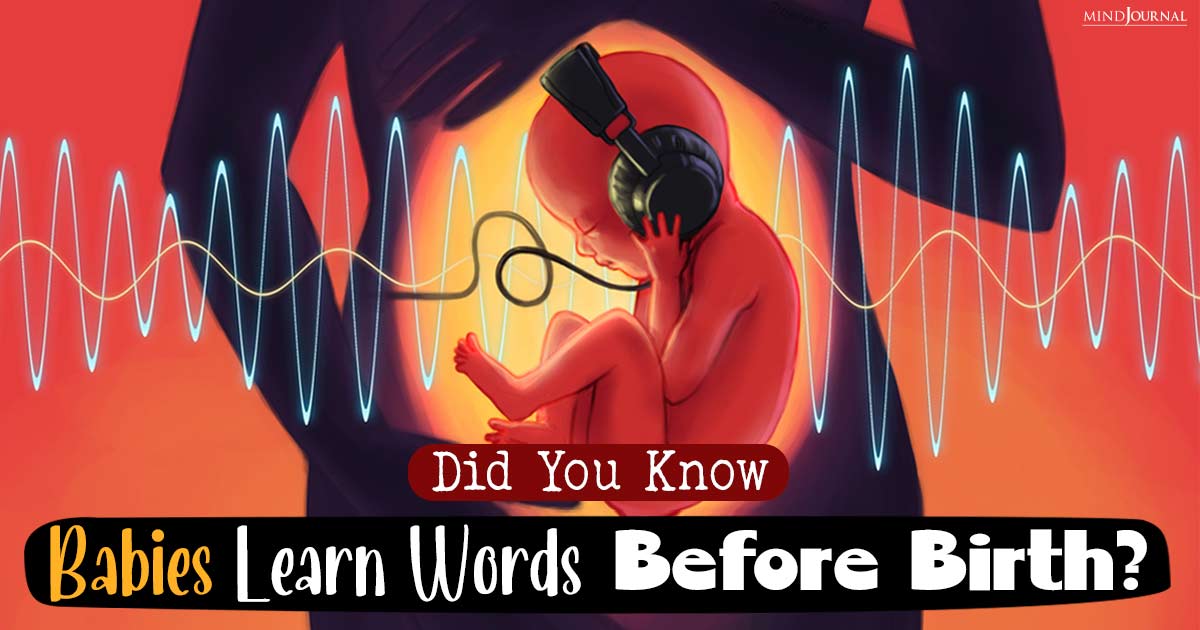
Did You Know Babies Learn Words Before Birth? Studies Reveal Language Lessons In The Womb!

Author :

Did you know that language learning begins even before we take our very first breath? That’s right, babies learn words before birth, according to groundbreaking studies.

According To Studies Babies Learn Words Before Birth: Did You Know? 

It’s as if the womb becomes a secret laboratory for language acquisition, where tiny learners tune into the rhythmic symphony of speech and soak up the melodic cadence of their mother’s voice.

Babies Learn Words Before Birth

Scientists have discovered that language lessons start in the womb, as early as the third trimester of pregnancy, a fetus can distinguish between different sounds, including those of various languages.

Related: Pregnancy: The Most Sensitive Stage After Marriage

It’s as if these tiny beings are already stretching their linguistic muscles, preparing for the linguistic gymnastics they’ll soon perform.

So how do researchers unravel the mysterious realm of fetal learning in the womb? They employ the remarkable power of technology, combining ultrasound imaging with brainwave analysis to peer into this clandestine world.

By observing the fetus’s responses to different auditory stimuli, they can gauge its level of engagement and even track the development of its auditory system.

One of the most captivating findings is that babies in the womb exhibit a preference for their mother’s voice. They bask in the familiarity of her intonation, recognizing the unique melody that will guide them in their first steps into the realm of language.

It’s as if the maternal voice acts as a soothing lullaby, establishing a foundation of familiarity and comfort that will accompany them throughout their linguistic journey.

Related: How To Keep Your Relationship Alive After The Baby Arrives

But it doesn’t stop there. Studies have also revealed that the unborn child is remarkably perceptive when it comes to the rhythm and melody of language

They can discern the subtle nuances that distinguish one language from another, showing a sensitivity to the patterns and cadences that will shape their own linguistic repertoire.

In this secret classroom of the womb, they are already becoming keen listeners and observers, ready to immerse themselves in the world of words.

The implications of these findings that babies start learning language in the womb
highlight the incredible plasticity and adaptability of the human brain, even before birth.

They challenge our preconceptions about the limits of learning, reminding us that the journey of knowledge starts long before we enter the world.

And perhaps most importantly, they underscore the crucial role of parents in nurturing their child’s linguistic development, starting from those precious moments in the womb.

So next time you marvel at the magic of language, remember that its seeds are sown even before the first cries of a newborn fill the air.

Related: The Difference Between Baby Blues And Postpartum Depression

Like babies learn words before birth, what else do you think the human brain is capable of doing? Share your thoughts in the comments below!

babies learn words before birth

Published On:

Last updated on:

Disclaimer: The informational content on The Minds Journal have been created and reviewed by qualified mental health professionals. They are intended solely for educational and self-awareness purposes and should not be used as a substitute for professional medical advice, diagnosis, or treatment. If you are experiencing emotional distress or have concerns about your mental health, please seek help from a licensed mental health professional or healthcare provider.

Leave a Comment

Today's Horoscope

Daily Horoscope 24 April, 2026

Daily Horoscope 24 April, 2026: Prediction For Each Zodiac Sign

Let’s see what today looks like for you based on your zodiac horoscope for 24th April!

Latest Quizzes

Optical Illusion Personality Test: Are You Romantic or Creative?

Optical Illusion Personality Test: Are You More of a Romantic or Creative?

It’s quick, it’s fun, and you might be surprised by what your mind reveals.

Latest Quotes

Human Psychology Facts: How These Cognitive Biases Quietly Shape Your Life

Human Psychology Facts: How These Cognitive Biases Quietly Shape Your Life

Human psychology facts show how your brain quietly edits reality. From the Pratfall Effect to the Halo Effect, these cognitive biases influence who you like, what you notice, and how confident you feel.

Readers Blog

Caption This Image and Selected Wisepicks – 19 April 2026

Caption This Image and Selected Wisepicks – 19 April 2026

Ready to unleash your inner wordsmith? ✨??☺️ Now’s your chance to show off your wit, charm, or sheer genius in just one line! Whether it’s laugh-out-loud funny or surprisingly deep, we want to hear it.Submit your funniest, wittiest, or most thought-provoking caption in the comments. We’ll pick 15+ winners to be featured on our website…

Latest Articles

Did you know that language learning begins even before we take our very first breath? That’s right, babies learn words before birth, according to groundbreaking studies.

According To Studies Babies Learn Words Before Birth: Did You Know? 

It’s as if the womb becomes a secret laboratory for language acquisition, where tiny learners tune into the rhythmic symphony of speech and soak up the melodic cadence of their mother’s voice.

Babies Learn Words Before Birth

Scientists have discovered that language lessons start in the womb, as early as the third trimester of pregnancy, a fetus can distinguish between different sounds, including those of various languages.

Related: Pregnancy: The Most Sensitive Stage After Marriage

It’s as if these tiny beings are already stretching their linguistic muscles, preparing for the linguistic gymnastics they’ll soon perform.

So how do researchers unravel the mysterious realm of fetal learning in the womb? They employ the remarkable power of technology, combining ultrasound imaging with brainwave analysis to peer into this clandestine world.

By observing the fetus’s responses to different auditory stimuli, they can gauge its level of engagement and even track the development of its auditory system.

One of the most captivating findings is that babies in the womb exhibit a preference for their mother’s voice. They bask in the familiarity of her intonation, recognizing the unique melody that will guide them in their first steps into the realm of language.

It’s as if the maternal voice acts as a soothing lullaby, establishing a foundation of familiarity and comfort that will accompany them throughout their linguistic journey.

Related: How To Keep Your Relationship Alive After The Baby Arrives

But it doesn’t stop there. Studies have also revealed that the unborn child is remarkably perceptive when it comes to the rhythm and melody of language

They can discern the subtle nuances that distinguish one language from another, showing a sensitivity to the patterns and cadences that will shape their own linguistic repertoire.

In this secret classroom of the womb, they are already becoming keen listeners and observers, ready to immerse themselves in the world of words.

The implications of these findings that babies start learning language in the womb
highlight the incredible plasticity and adaptability of the human brain, even before birth.

They challenge our preconceptions about the limits of learning, reminding us that the journey of knowledge starts long before we enter the world.

And perhaps most importantly, they underscore the crucial role of parents in nurturing their child’s linguistic development, starting from those precious moments in the womb.

So next time you marvel at the magic of language, remember that its seeds are sown even before the first cries of a newborn fill the air.

Related: The Difference Between Baby Blues And Postpartum Depression

Like babies learn words before birth, what else do you think the human brain is capable of doing? Share your thoughts in the comments below!

babies learn words before birth

Published On:

Last updated on:

Leave a Comment

    Leave a Comment