The Power Of Art Therapy For Anxiety Management : 6 Techniques That Bring Relief

Author : Theo Harrison

Feeling overwhelmed by anxiety? Ever considered expressing yourself through art? Let’s explore how painting, drawing, and sculpting can ease your mind and soothe your soul. Welcome to the calming world of art therapy for anxiety relief.

Have you ever felt overwhelmed by the persistent grip of anxiety? The racing thoughts, the pounding heart, the suffocating feeling of unease? If so, you’re not alone. Anxiety affects millions of people worldwide, and finding effective ways to manage it can be a daunting task. 

However, there is a remarkable approach that harnesses the power of creativity to alleviate anxiety: art therapy. 

Today, we will delve into the depths of art therapy for anxiety, exploring how it can help and providing you with practical art therapy exercises to embark on your very own artistic journey towards tranquility and self-discovery.

Understanding Art Therapy for Anxiety

Art therapy is a form of expressive therapy that utilizes the creative process to improve mental and emotional well-being. This powerful therapeutic approach acknowledges that art has the ability to tap into the deepest recesses of our minds and emotions, transcending the limitations of words alone. 

Through art, we can communicate, explore, and process our thoughts and feelings, even when they seem too complex or overwhelming to articulate verbally.

art therapy for anxiety

“The focus is on the process of creating and (associated) experiencing, aiming for facilitating the expression of memories, feelings and emotions, improvement of self-reflection and the development and practice of new coping skills,” explains a 2018 study.

This form of psychotherapy utilizes art as its “primary mode of expression and communication.” It is not necessary for you to have any creative or artistic skills OR experience to consult an art therapist. 

Related: 15 Art Therapy Exercises to Banish Anxiety and Channel Your Emotions

The primary focus of the therapist is not on aesthetic or diagnostic assessment, rather to enable you to to transform and grow personally by using artistic materials in a convenient  and safe space.

According to researchers, “art therapists can utilize many different art materials as media (i.e., visual art, painting, drawing, music, dance, drama, and writing),” during therapy. However, traditionally, drawings and paintings have been “recognized as the most useful part of therapeutic processes” by psychiatrists and psychologists.

Further studies have revealed that art therapy is “effective in reducing anxiety symptoms, improving quality of life and aspects of emotion regulation.

How Does Art Therapy Help Anxiety

Ever wondered how something as simple as doodling, sculpting or painting could calm your anxious mind? Wondering how does art therapy help anxiety? Let’s uncover the transformative power art therapy in soothing anxiety –

1. Encourages Self-Expression and Emotional Release

Art therapy for anxiety offers a safe and non-judgmental space for individuals to express their innermost thoughts and emotions. When struggling with anxiety, it can often feel like a jumble of tangled wires within our minds. 

Engaging in art-making provides an outlet to untangle those wires by visually representing our inner landscapes. As we create, we release pent-up emotions, allowing them to flow onto the canvas or paper, providing relief and a sense of catharsis.

2. Shifts Focus and Enhances Mindfulness

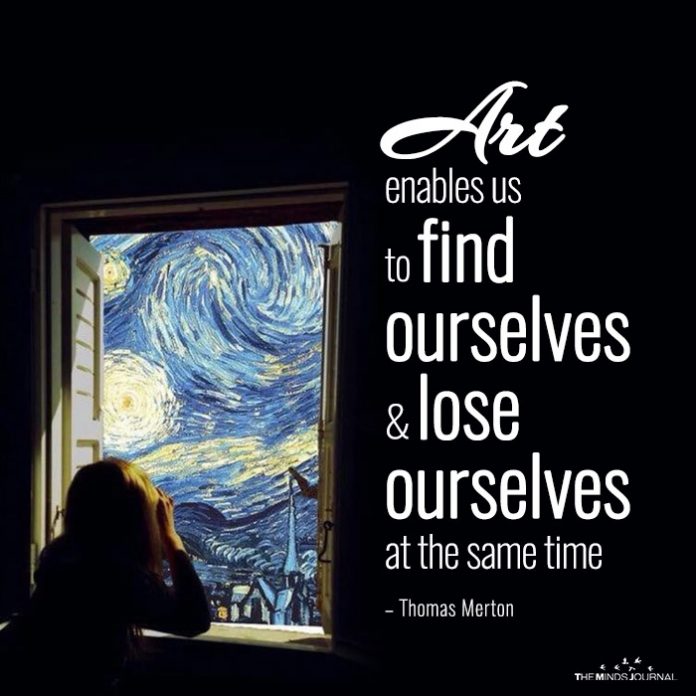
Engaging in art-making redirects our attention away from anxious thoughts and redirects it towards the creative process. It encourages us to be fully present in the moment, fostering a state of mindfulness. 
art therapy for anxiety

As we immerse ourselves in the act of creating, we become attuned to the sensations of the brush strokes, the colors blending, and the shapes taking form. This absorption in the present moment helps to quiet the anxious mind, providing a temporary respite from worry and rumination. This is the answer to how does art therapy help anxiety.

3. Promotes Self-Exploration and Insight

Art therapy invites us to delve into the depths of our subconscious, uncovering hidden thoughts, beliefs, and emotions that may contribute to our anxiety. The creative process acts as a mirror, reflecting our innermost selves back to us. 

Through art-making, we gain insight into our fears, triggers, and patterns, empowering us to make positive changes in our lives. It opens up a dialogue with our inner selves, allowing us to develop a deeper understanding of our anxiety and its underlying causes.

Now that we know how does art therapy help anxiety, let us take a look at some helpful exercises that will help you reap the benefits of art therapy for anxiety.

Related: An Insanely Impactful Art Therapy Technique To Relieve Stress

Art Therapy Exercises for Anxiety

Ever thought that picking up a paintbrush or sculpting clay could ease your troubled mind? Here are some beneficial art therapy exercises designed to soothe anxiety and promote your emotional well-being –

1. Scribble Therapy

Grab a blank sheet of paper and a pen or marker. Close your eyes, take a deep breath, and let your pen touch the paper. Allow your hand to move freely, scribbling without any predetermined shape or form. 

art therapy for anxiety

Embrace the spontaneity and let the lines flow. As you scribble, observe the sensations in your body and notice any emotions that arise. Afterward, take a moment to reflect on your creation. 

What shapes or forms do you see? How does it make you feel? Embrace the process of transforming chaos into something meaningful. This is the simplest way to use art therapy for anxiety.

2. Collage of Calm

Collect a variety of magazines, newspapers, or old photographs. Flip through the pages and cut out images, colors, and words that resonate with a sense of calmness and tranquility. 

Arrange these cutouts on a blank canvas or paper, creating a collage that reflects the peacefulness you desire. Allow yourself to get lost in the process, focusing on the visual elements that bring a sense of serenity. 

Display your collage in a place where you can regularly gaze upon it, allowing it to serve as a reminder of the calm you seek.

3. Emotion Mapping

Take a large sheet of paper and colored markers or paints. Close your eyes, take a few deep breaths, and tune into your emotions. Identify and select a color that represents your anxiety. Begin drawing lines, shapes, and patterns using this color, allowing your hand to move intuitively. 

As you feel ready, gradually introduce other colors that represent different emotions you are experiencing. Observe how these colors interact and blend on the paper, forming a unique visual representation of your emotional landscape. Reflect on the artwork, noticing any insights or revelations that arise.

4. Mandala Creation

Mandalas are intricate geometric patterns that hold deep spiritual and symbolic significance. Creating a mandala can be a calming and meditative process that helps to center the mind and promote relaxation. Begin by drawing a circle on a piece of paper or using a pre-made mandala template. 

Related: 21 Different Art Therapy Exercises For Different Emotions

art therapy for anxiety

Then, using colored pencils, markers, or paints, fill in the mandala with patterns, shapes, and colors that resonate with a sense of tranquility. Allow yourself to get lost in the rhythmic motions of creating, focusing on the repetitive nature of the patterns. 

As you work your way towards the center of the mandala, feel a sense of inner calm and harmony washing over you as you utilize art therapy for anxiety to boost your mental health.

5. Nature-Inspired Art

Connecting with nature has a soothing effect on our minds and bodies. Take a walk in a natural setting that resonates with you, such as a park, garden, or beach. As you observe the beauty around you, pay attention to the colors, textures, and shapes present in the environment. Collect natural objects that catch your eye, such as leaves, flowers, or stones. 

Once back in your creative space, use these natural elements to create an art piece. Arrange the leaves and flowers on a canvas, create a collage with various textures, or sketch the intricate details of a pebble. Let the process of engaging with nature and translating it into art bring a sense of calm and grounding.

6. Guided Visualization and Painting

This exercise combines the power of visualization and painting to promote relaxation and release anxiety. Find a quiet and comfortable space where you can sit or lie down. Close your eyes and take a few deep breaths, allowing your body and mind to relax. 

Visualize a serene and peaceful scene, such as a meadow, a beach, or a mountaintop. Imagine yourself being fully present in this environment, feeling the warmth of the sun, the gentle breeze, and the sounds of nature. When you feel ready, open your eyes and translate your visualization onto paper or canvas using paints, pastels, or any other artistic medium of your choice. 

Let your brushstrokes and colors capture the essence of the tranquil scene you envisioned. Throughout the process, stay connected to the feelings of peace and serenity that the visualization evoked.

art therapy for anxiety

By incorporating these art therapy exercises into your routine, you can expand your artistic repertoire and continue to unlock the transformative power of art in managing anxiety.

Remember, these art therapy exercises are not about creating a masterpiece; rather, they are about embracing the process and allowing the act of creation to bring you closer to a state of calm and inner peace. Explore, experiment, and let your creativity guide you on your journey towards anxiety relief.

Takeaway

Art therapy for anxiety is a powerful and transformative approach that taps into the wellspring of creativity within us all. Through self-expression, mindfulness, and self-exploration, we can use art as a tool to navigate the labyrinthine paths of anxiety and find solace along the way. So, pick up a paintbrush, grab a sketchbook, or simply doodle on a notepad. 

Embrace the therapeutic power of art and embark on a journey towards inner peace, one brushstroke at a time. Remember, within the realm of art and creativity, you have the ability to unlock a world of healing and self-discovery. 

Let art therapy be your guiding light on the path to freedom from anxiety.

Related: Why Art Therapy For Kids Is More Than Just Arts & Crafts


Frequently Asked Questions (FAQs):

What is the best exercise for anxiety?

The best exercise for anxiety varies for each individual, but activities like creating art, yoga, walking, or swimming often help calm the mind.

What are 3 benefits of art therapy? 

Art therapy offers numerous benefits, including stress relief, increased self-awareness, and improved emotional expression.

Does art therapy actually work? 

Yes, art therapy has been found to be effective in reducing anxiety symptoms and promoting overall mental well-being.

art therapy exercises

Published On:

Last updated on:

Theo Harrison

Hey there! I am just someone trying to find my way through life. I am a reader, writer, traveler, fighter, philosopher, artist and all around nice guy. I am outdoor person but heavily into technology, science, psychology, spiritualism, Buddhism, martial arts and horror films. I believe in positive action more than positive thinking.

Disclaimer: The informational content on The Minds Journal have been created and reviewed by qualified mental health professionals. They are intended solely for educational and self-awareness purposes and should not be used as a substitute for professional medical advice, diagnosis, or treatment. If you are experiencing emotional distress or have concerns about your mental health, please seek help from a licensed mental health professional or healthcare provider.

Leave a Comment

Today's Horoscope

Weekly Horoscope PART one

Weekly Horoscope 15 March to 21 March 2026

Read your zodiac sign’s prediction to understand the energy surrounding you and how to make the most of the days ahead!

Latest Quizzes

Interesting Finger Personality Test: 4 Finger Lines

Finger Personality Test: Join Your Fingers And Reveal A Hidden Personality Secret!

Look closely at your finger lines. Which pattern do you see? This personality test might surprise you!

Latest Quotes

How Men Show Love Through Actions (Male Psychology in Relationships)

How Men Show Love Through Actions (Male Psychology in Relationships)

Male psychology in relationships shows that men express love through presence, protection, and peace more than poetry. Decode his actions so you can see how deeply he actually cares.

Readers Blog

Caption This Image and Selected Wisepicks – 8 March 2026

Caption This Image and Selected Wisepicks – 8 March 2026

Provide a creative, relevant caption for the picture below and get selected and featured with your name and caption.  Selected Wisepicks We have selected 11 comments as Wisepicks from our Facebook, Facebook Group and Instagram as on 15 March 2026 Lou Angelique Heruela Listen to your inner child,not the angry voices in your mind. Bloom…

Latest Articles

Feeling overwhelmed by anxiety? Ever considered expressing yourself through art? Let’s explore how painting, drawing, and sculpting can ease your mind and soothe your soul. Welcome to the calming world of art therapy for anxiety relief.

Have you ever felt overwhelmed by the persistent grip of anxiety? The racing thoughts, the pounding heart, the suffocating feeling of unease? If so, you’re not alone. Anxiety affects millions of people worldwide, and finding effective ways to manage it can be a daunting task. 

However, there is a remarkable approach that harnesses the power of creativity to alleviate anxiety: art therapy. 

Today, we will delve into the depths of art therapy for anxiety, exploring how it can help and providing you with practical art therapy exercises to embark on your very own artistic journey towards tranquility and self-discovery.

Understanding Art Therapy for Anxiety

Art therapy is a form of expressive therapy that utilizes the creative process to improve mental and emotional well-being. This powerful therapeutic approach acknowledges that art has the ability to tap into the deepest recesses of our minds and emotions, transcending the limitations of words alone. 

Through art, we can communicate, explore, and process our thoughts and feelings, even when they seem too complex or overwhelming to articulate verbally.

art therapy for anxiety

“The focus is on the process of creating and (associated) experiencing, aiming for facilitating the expression of memories, feelings and emotions, improvement of self-reflection and the development and practice of new coping skills,” explains a 2018 study.

This form of psychotherapy utilizes art as its “primary mode of expression and communication.” It is not necessary for you to have any creative or artistic skills OR experience to consult an art therapist. 

Related: 15 Art Therapy Exercises to Banish Anxiety and Channel Your Emotions

The primary focus of the therapist is not on aesthetic or diagnostic assessment, rather to enable you to to transform and grow personally by using artistic materials in a convenient  and safe space.

According to researchers, “art therapists can utilize many different art materials as media (i.e., visual art, painting, drawing, music, dance, drama, and writing),” during therapy. However, traditionally, drawings and paintings have been “recognized as the most useful part of therapeutic processes” by psychiatrists and psychologists.

Further studies have revealed that art therapy is “effective in reducing anxiety symptoms, improving quality of life and aspects of emotion regulation.

How Does Art Therapy Help Anxiety

Ever wondered how something as simple as doodling, sculpting or painting could calm your anxious mind? Wondering how does art therapy help anxiety? Let’s uncover the transformative power art therapy in soothing anxiety –

1. Encourages Self-Expression and Emotional Release

Art therapy for anxiety offers a safe and non-judgmental space for individuals to express their innermost thoughts and emotions. When struggling with anxiety, it can often feel like a jumble of tangled wires within our minds. 

Engaging in art-making provides an outlet to untangle those wires by visually representing our inner landscapes. As we create, we release pent-up emotions, allowing them to flow onto the canvas or paper, providing relief and a sense of catharsis.

2. Shifts Focus and Enhances Mindfulness

Engaging in art-making redirects our attention away from anxious thoughts and redirects it towards the creative process. It encourages us to be fully present in the moment, fostering a state of mindfulness. 

art therapy for anxiety

As we immerse ourselves in the act of creating, we become attuned to the sensations of the brush strokes, the colors blending, and the shapes taking form. This absorption in the present moment helps to quiet the anxious mind, providing a temporary respite from worry and rumination. This is the answer to how does art therapy help anxiety.

3. Promotes Self-Exploration and Insight

Art therapy invites us to delve into the depths of our subconscious, uncovering hidden thoughts, beliefs, and emotions that may contribute to our anxiety. The creative process acts as a mirror, reflecting our innermost selves back to us. 

Through art-making, we gain insight into our fears, triggers, and patterns, empowering us to make positive changes in our lives. It opens up a dialogue with our inner selves, allowing us to develop a deeper understanding of our anxiety and its underlying causes.

Now that we know how does art therapy help anxiety, let us take a look at some helpful exercises that will help you reap the benefits of art therapy for anxiety.

Related: An Insanely Impactful Art Therapy Technique To Relieve Stress

Art Therapy Exercises for Anxiety

Ever thought that picking up a paintbrush or sculpting clay could ease your troubled mind? Here are some beneficial art therapy exercises designed to soothe anxiety and promote your emotional well-being –

1. Scribble Therapy

Grab a blank sheet of paper and a pen or marker. Close your eyes, take a deep breath, and let your pen touch the paper. Allow your hand to move freely, scribbling without any predetermined shape or form. 

art therapy for anxiety

Embrace the spontaneity and let the lines flow. As you scribble, observe the sensations in your body and notice any emotions that arise. Afterward, take a moment to reflect on your creation. 

What shapes or forms do you see? How does it make you feel? Embrace the process of transforming chaos into something meaningful. This is the simplest way to use art therapy for anxiety.

2. Collage of Calm

Collect a variety of magazines, newspapers, or old photographs. Flip through the pages and cut out images, colors, and words that resonate with a sense of calmness and tranquility. 

Arrange these cutouts on a blank canvas or paper, creating a collage that reflects the peacefulness you desire. Allow yourself to get lost in the process, focusing on the visual elements that bring a sense of serenity. 

Display your collage in a place where you can regularly gaze upon it, allowing it to serve as a reminder of the calm you seek.

3. Emotion Mapping

Take a large sheet of paper and colored markers or paints. Close your eyes, take a few deep breaths, and tune into your emotions. Identify and select a color that represents your anxiety. Begin drawing lines, shapes, and patterns using this color, allowing your hand to move intuitively. 

As you feel ready, gradually introduce other colors that represent different emotions you are experiencing. Observe how these colors interact and blend on the paper, forming a unique visual representation of your emotional landscape. Reflect on the artwork, noticing any insights or revelations that arise.

4. Mandala Creation

Mandalas are intricate geometric patterns that hold deep spiritual and symbolic significance. Creating a mandala can be a calming and meditative process that helps to center the mind and promote relaxation. Begin by drawing a circle on a piece of paper or using a pre-made mandala template. 

Related: 21 Different Art Therapy Exercises For Different Emotions

art therapy for anxiety

Then, using colored pencils, markers, or paints, fill in the mandala with patterns, shapes, and colors that resonate with a sense of tranquility. Allow yourself to get lost in the rhythmic motions of creating, focusing on the repetitive nature of the patterns. 

As you work your way towards the center of the mandala, feel a sense of inner calm and harmony washing over you as you utilize art therapy for anxiety to boost your mental health.

5. Nature-Inspired Art

Connecting with nature has a soothing effect on our minds and bodies. Take a walk in a natural setting that resonates with you, such as a park, garden, or beach. As you observe the beauty around you, pay attention to the colors, textures, and shapes present in the environment. Collect natural objects that catch your eye, such as leaves, flowers, or stones. 

Once back in your creative space, use these natural elements to create an art piece. Arrange the leaves and flowers on a canvas, create a collage with various textures, or sketch the intricate details of a pebble. Let the process of engaging with nature and translating it into art bring a sense of calm and grounding.

6. Guided Visualization and Painting

This exercise combines the power of visualization and painting to promote relaxation and release anxiety. Find a quiet and comfortable space where you can sit or lie down. Close your eyes and take a few deep breaths, allowing your body and mind to relax. 

Visualize a serene and peaceful scene, such as a meadow, a beach, or a mountaintop. Imagine yourself being fully present in this environment, feeling the warmth of the sun, the gentle breeze, and the sounds of nature. When you feel ready, open your eyes and translate your visualization onto paper or canvas using paints, pastels, or any other artistic medium of your choice. 

Let your brushstrokes and colors capture the essence of the tranquil scene you envisioned. Throughout the process, stay connected to the feelings of peace and serenity that the visualization evoked.

art therapy for anxiety

By incorporating these art therapy exercises into your routine, you can expand your artistic repertoire and continue to unlock the transformative power of art in managing anxiety.

Remember, these art therapy exercises are not about creating a masterpiece; rather, they are about embracing the process and allowing the act of creation to bring you closer to a state of calm and inner peace. Explore, experiment, and let your creativity guide you on your journey towards anxiety relief.

Takeaway

Art therapy for anxiety is a powerful and transformative approach that taps into the wellspring of creativity within us all. Through self-expression, mindfulness, and self-exploration, we can use art as a tool to navigate the labyrinthine paths of anxiety and find solace along the way. So, pick up a paintbrush, grab a sketchbook, or simply doodle on a notepad. 

Embrace the therapeutic power of art and embark on a journey towards inner peace, one brushstroke at a time. Remember, within the realm of art and creativity, you have the ability to unlock a world of healing and self-discovery. 

Let art therapy be your guiding light on the path to freedom from anxiety.

Related: Why Art Therapy For Kids Is More Than Just Arts & Crafts


Frequently Asked Questions (FAQs):

What is the best exercise for anxiety?

The best exercise for anxiety varies for each individual, but activities like creating art, yoga, walking, or swimming often help calm the mind.

What are 3 benefits of art therapy? 

Art therapy offers numerous benefits, including stress relief, increased self-awareness, and improved emotional expression.

Does art therapy actually work? 

Yes, art therapy has been found to be effective in reducing anxiety symptoms and promoting overall mental well-being.

art therapy exercises

Published On:

Last updated on:

Theo Harrison

Hey there! I am just someone trying to find my way through life. I am a reader, writer, traveler, fighter, philosopher, artist and all around nice guy. I am outdoor person but heavily into technology, science, psychology, spiritualism, Buddhism, martial arts and horror films. I believe in positive action more than positive thinking.

Leave a Comment

    Leave a Comment