

Why do I attract narcissists? It’s a question many people ask themselves after feeling stuck in toxic patterns of love or friendship.
You may wonder why you seem to attract narcissists over and over, or why you keep attracting narcissists even when you know the red flags.
The good news is, once you understand the hidden dynamics at play, you can finally break the cycle and learn how to stop attracting narcissists into your life.
One question I hear frequently from clients is, “Why do I always seem to attract narcissists into my life?” It’s a valid concern, and many individuals who face this pattern feel trapped in cycles of toxic relationships.
They often take proactive steps to educate themselves about narcissism—its risks and emotional toll—but even with that awareness, they may find themselves in relationships with people exhibiting narcissistic traits.
Whether the relationship is romantic or platonic, the same dynamics seem to resurface. So, why does this happen? And more importantly, how can you break the cycle?
Related: 5 Personality Traits That Attract Narcissists
Understanding the Dynamic
It’s essential to recognize that narcissism exists on a spectrum, and every individual might have, to some degree, the seeds of narcissism within themselves. Both Freud and Kohut viewed narcissism as a natural phase in early childhood development.
In this stage, children measure their sense of self against their caregivers, especially their mothers, as they construct their identity. Healthy development involves integrating these grandiose tendencies into a realistic view of oneself and the world.
Problems arise when unresolved aspects of this developmental stage linger into adulthood. Narcissism manifests when our sense of self-worth becomes overly dependent on external validation.
Instead of drawing meaning and fulfillment from within, we delegate this power to others, creating an imbalance that opens the door to toxic relationships.
The Attraction to Narcissists
When you allow a narcissist into your life, you may unknowingly enter a “labyrinth of mirrors.” The reflections are distorted, and neither party is entirely safe or blameless.
Here are some common patterns that contribute to attracting narcissists:
1. Over-Reliance.
If you depend on others to feel worthy or loved, you may unconsciously seek relationships that validate your need for external approval.
There’s often a hook that keeps you tied to a toxic person—a promise of something you falsely believe you need and you cannot give yourself, such as financial security, power, or general safety.
This dynamic often appeals to narcissists, who thrive on being needed and admired. Until you take responsibility for your sense of wholeness—whether through career, personal growth, or self-acceptance—you may continue to attract individuals who exploit this vulnerability.
Waiting for that promise to be fulfilled wastes your time, energy, and potential.
2. The “Rescuer” Mentality.
Many narcissists come from challenging or dysfunctional backgrounds, and may then use their past as a justification for their behavior.
If you take on the role of savior, believing you can “fix” them or provide the love they never received, your sense of purpose becomes tied to their healing.
This not only disempowers you but also creates a dynamic where your happiness depends on their progress—an inherently unstable foundation.
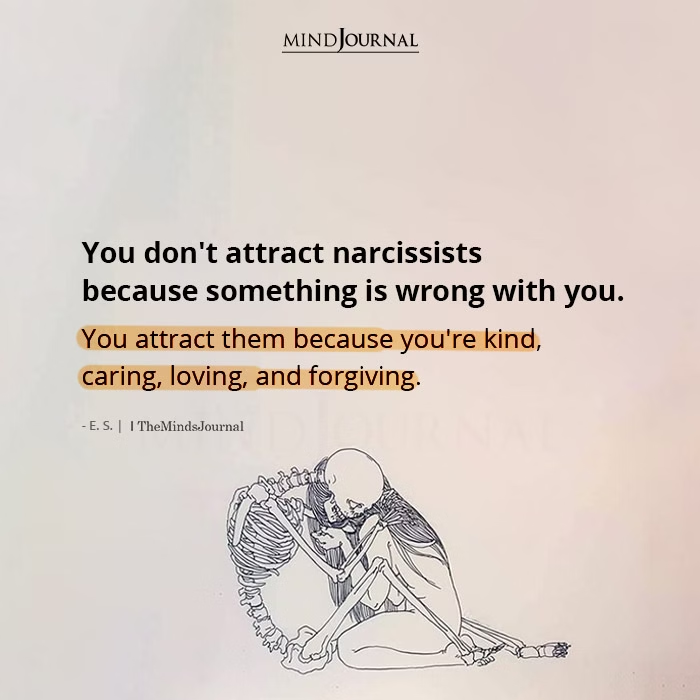
Breaking the Cycle
How do you stop attracting narcissists? The answer lies in cultivating strong boundaries and developing a robust sense of self.
1. Build Inner Wholeness.
Boundaries can exist only when you know who you are and what you need. It is not easy to know who you are and what makes you feel fulfilled and content. Take time to acknowledge both your strengths and shortcomings.
Trust in your ability to create a fulfilling life—whether that means pursuing your career, nurturing relationships, or embracing your unique talents. The more secure you are in yourself, the less likely you’ll be to seek validation from others.
2. Recognize the Red Flags.
Be mindful of behaviors that signal narcissistic tendencies, such as a lack of empathy, an excessive need for admiration, or manipulative patterns. Trust your intuition and don’t ignore early warning signs.
Many of my clients often feel a sense of repulsion or distrust in their bodies, but they tend to dismiss it over time. Learn to trust yourself more than you trust others.
3. Prioritize Self-Care and Independence.
Learn to derive your sense of worth from within, rather than relying on others to fill emotional gaps. Whether it’s through mindfulness, therapy, or self-reflection, developing independence is key to breaking free from toxic relationships.
4. Practice Assertive Boundaries.
Your life is yours, and no one else should dictate your sense of worth or happiness. If someone promises the world one day and takes it away the next, your well-being shouldn’t hinge on their behavior.
By establishing and enforcing boundaries, you protect your emotional health and prevent manipulative dynamics.
Related: 8 Major Reasons You’re Attracted to Narcissists and How to Break the Cycle
Some Theorists of Narcissistic Traits
Narcissism is a concept deeply rooted in psychological theory. From Freud’s view of narcissism as a normal stage of child development to later characterizations by Reich and Kohut, the phenomenon has been extensively studied.
While early theorists like Ernest Jones introduced terms like “the God complex” to describe narcissistic traits, Freud’s work emphasized the transition from self-centeredness to object love as a hallmark of healthy development.
Over time, the understanding of narcissism has evolved, but one truth remains constant: Narcissism is multifaceted, and we all encounter it both within ourselves and in others.
As long as we remain unaware of the narcissism within ourselves, we become more likely to attract others with stronger or subtler narcissistic traits into our lives.
Moving Forward
Narcissism, whether in ourselves or others, becomes less disruptive when we embrace self-awareness and cultivate healthy boundaries. Acknowledging our flaws and letting go of a victim mindset can help us move forward.
By taking ownership of your happiness and fulfillment, you reduce the likelihood of falling into the trap of toxic dynamics. And when you do encounter narcissistic individuals, you’ll be better equipped to protect your peace and maintain control over your life.
Remember, the key to breaking free from this pattern starts with you. You have the power to redefine your relationships and build connections that nourish and uplift you.
Written By Susi Ferrarello Ph.D.
Originally Appeared On Psychology Today


Leave a Comment