How To Be A Better Listener: 7 Ways To Listen

Author : Marcia Reynolds Psy.D.

Being a good listener is one of the best qualities to have, but sometimes it’s easier said than done. If you want to be a better listener, then know that there are ways to listen better.


Most of us are creatures of habit, listening to meet our needs or to pay attention to demonstrate we care whether we do or not. The next time you leave a conversation, ask yourself, “Did I get the outcome I desired?”. It’s possible you could have achieved more.

Before you meet or call someone, stop and ask yourself:


1. Why am I listening?

2. What do I want to happen?

3. What shift do I need to make to achieve the best outcome?


To make an informed choice, consider the following reasons for listening and the outcomes you might get depending on your mindset and emotions.

Related: The 5 Levels of Listening

Listening For Personal Need

Often the intention behind listening is to fulfill a personal need or to follow the rules you have been taught to show you care. When listening for information or perspective, you keep your distance. You stay in your head, maintaining isolation even when you say you want collaboration. The person feels little connection with you when you part.

You listen with the purpose…

1. To collect data. 

You listen for how to argue, defend, compare or refine your own point of view.

2. To give an answer or solve a problem. 

Once you have an answer, there is no further need to pay attention.


3. To obey the rules. 

You listen because it is the right thing to do, generally for the minimal amount of time you think it takes to demonstrate the competency. You listen because you should, not because you want to.

Listening To Connect

When you choose to be present and connect with someone, you listen beyond your analytical brain. You are fully awake in your heart and gut as well as in your open mind. The person feels heard, valued, and possibly transformed as a result.[1]

You listen with the purpose…

4. To connect with the person. 

When you desire to establish a connection, you go beyond paying attention to words. Connection starts with maintaining curiosity throughout the conversation, resisting the urge to know what is coming next while being at ease with not knowing. Feeling curious keeps you present.

Once you lose curiosity, you risk the conversation devolving into dueling monologues. Unfortunately, the better you know someone, the more likely you quit being curious enough to seek what could be new. Can you seek something special each time you say, “Hi, how are you?”
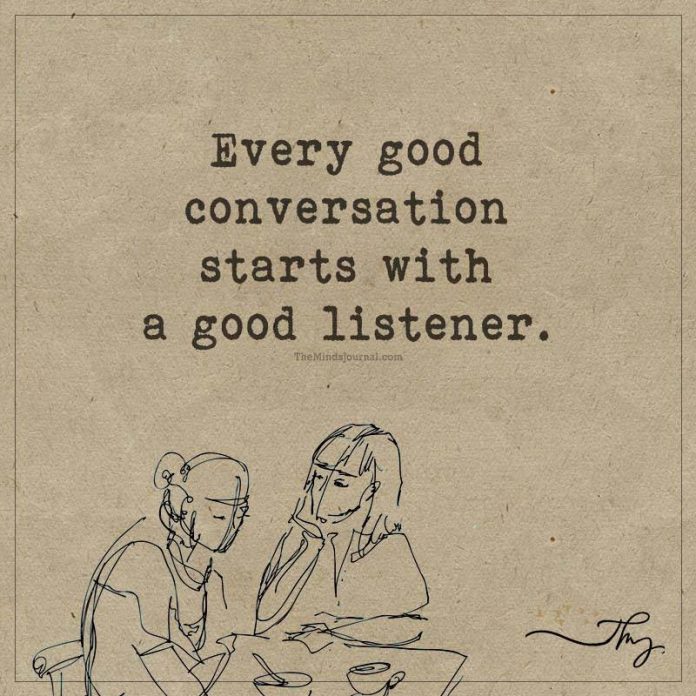
ways to listen

5. To let the person know you value them. 

There is no greater gift you can give than to be fully present with someone so he or she feels heard, understood, and valued. When you quiet your mind with curiosity and open your heart with gratitude, the person feels received wholly beyond words. 

Empathy happens when you value the essence of the person you are with. Be careful when your judgment sneaks in. You can feel passionately about your ideas without making others wrong. Value why the person sees the world differently from you. If you care enough to look deeply, you might feel valued in return.


Related: 3 Keys To Developing Empathy: How To Be The Best Listener Ever

6. To build the relationship. 

The next step is to open your gut as well as your heart so you can be vulnerable enough to allow a deep connection to happen. Philip Shepherd said in New Self, New World, “Ultimately, to be present in the world means making room for the world to be present in you.”[2]

Don’t listen for something; listen for the purpose of being with the person. Have you ever felt this connection after a wonderful moment with a dear friend? When you trust enough to open yourself to someone else, the magic of a relationship emerges.

7. To explore, learn, and grow together. 

As you increasingly ground yourself in being, the conversation can take you somewhere new and unexpected. Don’t anticipate or try to control it, just marvel where it goes. You share your ideas and then allow instead of resisting change when you hear theirs, adding to what you know instead of giving up.

You might lose your sense of time and space the more you engage. You may have had a conversation like this after experiencing a loss. You can consciously create this connection without trauma by accessing your love and courage.


Related: 44 Empathy Statements That Will Make You The Greatest Listener

Connecting with others this way is the same connection you sense when you view an awesome sunset, gaze across a beautiful canyon, or watch a burning star fall and disappear into the black of night. Letting go of what you know to grow shows strength; it is an active, not passive act. This is how we build community.

Alan Alda said, “Real listening is a willingness to let the other person change you.”[3]

What is your purpose for listening? Can you confidently open yourself to listen for a greater purpose? You will receive so much more than you expected when you do.

Read more about listening deeply in The Discomfort Zone: How Leaders Turn Difficult Conversations into Breakthroughs.

_____________


[1] Shari M. Geller and Stephen W. Porges, “Therapeutic Presence: Neurophysiological Mechanisms Mediating Feeling Safe in Therapeutic Relationships” Journal of Psychotherapy Integration, 2014, Vol. 24, No. 3, 178–192.
[2] Philip Shepherd. New Self, New World: Recovering Our Senses in the Twenty-first Century. Berkeley: North Atlantic Books, 2010, p. 85.
[3] Alan Alda, Never Have Your Dog Stuffed: And Other Things I've Learned. New York: Random House, 2005, p. 160.

Written By Marcia Reynolds 
Originally Appeared On Psychology Today 
ways to listen pinex
ways to listen pin


Published On:

Last updated on:

Marcia Reynolds Psy.D.

Dr. Reynolds is a pioneer in the coaching profession. She was one of the first members and the 5th global president of the International Coach Federation. She is also a past president of the Association for Coach Training Organizations. She is the Training Director for the Healthcare Coaching Institute in North Carolina and is also on faculty for coaching schools in Russia, China, the Philippines, and India. She is recognized by the Global Gurus as the #4 coach in the world. She has trained and coached leaders in 43 countries and has presented at the Harvard Kennedy School, Cornell University, Smith College, Almaty Management University in Kazakhstan, and The National Research University in Moscow. She became fascinated with emotional intelligence after reading Daniel Goleman’s book in 1996 and designed a training program that integrates emotional choice with leadership presence, communications effectiveness, and life satisfaction. She has since taught her programs for many agencies of the National Institutes of Health, multi-national corporations around the world, and for coaching schools in Europe and Asia.

Disclaimer: The informational content on The Minds Journal have been created and reviewed by qualified mental health professionals. They are intended solely for educational and self-awareness purposes and should not be used as a substitute for professional medical advice, diagnosis, or treatment. If you are experiencing emotional distress or have concerns about your mental health, please seek help from a licensed mental health professional or healthcare provider.

Leave a Comment

Today's Horoscope

Your Daily Horoscope For 4 April, 2026: Free Predictions

Daily Horoscope 4 April, 2026: Prediction For Each Zodiac Sign

Look at your daily prediction and see what the stars have in store for your love life and your future!

Latest Quizzes

How Many Circles Do You See? A Simple Test of Thinking Style

How Many Circles Do You See? Your Answer Might Reveal Narcissistic Traits! 

Take a closer look at this simple image and discover what your circle count reveals about your thinking style, perception, and attention in this fun and engaging visual test.

Latest Quotes

Real Signs Your Body Is Actually in Good Health: How to Know You’re Truly Well

Real Signs Your Body Is Actually in Good Health: How to Know You’re Truly Well

Real signs your body is healthy don’t always show up on lab reports. From good sleep and clear skin to regular digestion and a stable mood, your body is constantly sending quiet signals of wellness.

Readers Blog

Caption This Image and Selected Wisepicks – 5 April 2026

Caption This Image and Selected Wisepicks – 5 April 2026

Ready to unleash your inner wordsmith? ✨??☺️ Now’s your chance to show off your wit, charm, or sheer genius in just one line! Whether it’s laugh-out-loud funny or surprisingly deep, we want to hear it.Submit your funniest, wittiest, or most thought-provoking caption in the comments. We’ll pick 15+ winners to be featured on our website…

Latest Articles

Being a good listener is one of the best qualities to have, but sometimes it’s easier said than done. If you want to be a better listener, then know that there are ways to listen better.


Most of us are creatures of habit, listening to meet our needs or to pay attention to demonstrate we care whether we do or not. The next time you leave a conversation, ask yourself, “Did I get the outcome I desired?”. It’s possible you could have achieved more.

Before you meet or call someone, stop and ask yourself:


1. Why am I listening?

2. What do I want to happen?

3. What shift do I need to make to achieve the best outcome?


To make an informed choice, consider the following reasons for listening and the outcomes you might get depending on your mindset and emotions.

Related: The 5 Levels of Listening

Listening For Personal Need

Often the intention behind listening is to fulfill a personal need or to follow the rules you have been taught to show you care. When listening for information or perspective, you keep your distance. You stay in your head, maintaining isolation even when you say you want collaboration. The person feels little connection with you when you part.

You listen with the purpose…

1. To collect data. 

You listen for how to argue, defend, compare or refine your own point of view.

2. To give an answer or solve a problem. 

Once you have an answer, there is no further need to pay attention.


3. To obey the rules. 

You listen because it is the right thing to do, generally for the minimal amount of time you think it takes to demonstrate the competency. You listen because you should, not because you want to.

Listening To Connect

When you choose to be present and connect with someone, you listen beyond your analytical brain. You are fully awake in your heart and gut as well as in your open mind. The person feels heard, valued, and possibly transformed as a result.[1]

You listen with the purpose…

4. To connect with the person. 

When you desire to establish a connection, you go beyond paying attention to words. Connection starts with maintaining curiosity throughout the conversation, resisting the urge to know what is coming next while being at ease with not knowing. Feeling curious keeps you present.

Once you lose curiosity, you risk the conversation devolving into dueling monologues. Unfortunately, the better you know someone, the more likely you quit being curious enough to seek what could be new. Can you seek something special each time you say, “Hi, how are you?”

ways to listen

5. To let the person know you value them. 

There is no greater gift you can give than to be fully present with someone so he or she feels heard, understood, and valued. When you quiet your mind with curiosity and open your heart with gratitude, the person feels received wholly beyond words. 

Empathy happens when you value the essence of the person you are with. Be careful when your judgment sneaks in. You can feel passionately about your ideas without making others wrong. Value why the person sees the world differently from you. If you care enough to look deeply, you might feel valued in return.


Related: 3 Keys To Developing Empathy: How To Be The Best Listener Ever

6. To build the relationship. 

The next step is to open your gut as well as your heart so you can be vulnerable enough to allow a deep connection to happen. Philip Shepherd said in New Self, New World, “Ultimately, to be present in the world means making room for the world to be present in you.”[2]

Don’t listen for something; listen for the purpose of being with the person. Have you ever felt this connection after a wonderful moment with a dear friend? When you trust enough to open yourself to someone else, the magic of a relationship emerges.

7. To explore, learn, and grow together. 

As you increasingly ground yourself in being, the conversation can take you somewhere new and unexpected. Don’t anticipate or try to control it, just marvel where it goes. You share your ideas and then allow instead of resisting change when you hear theirs, adding to what you know instead of giving up.

You might lose your sense of time and space the more you engage. You may have had a conversation like this after experiencing a loss. You can consciously create this connection without trauma by accessing your love and courage.


Related: 44 Empathy Statements That Will Make You The Greatest Listener

Connecting with others this way is the same connection you sense when you view an awesome sunset, gaze across a beautiful canyon, or watch a burning star fall and disappear into the black of night. Letting go of what you know to grow shows strength; it is an active, not passive act. This is how we build community.

Alan Alda said, “Real listening is a willingness to let the other person change you.”[3]

What is your purpose for listening? Can you confidently open yourself to listen for a greater purpose? You will receive so much more than you expected when you do.

Read more about listening deeply in The Discomfort Zone: How Leaders Turn Difficult Conversations into Breakthroughs.

_____________


[1] Shari M. Geller and Stephen W. Porges, “Therapeutic Presence: Neurophysiological Mechanisms Mediating Feeling Safe in Therapeutic Relationships” Journal of Psychotherapy Integration, 2014, Vol. 24, No. 3, 178–192.
[2] Philip Shepherd. New Self, New World: Recovering Our Senses in the Twenty-first Century. Berkeley: North Atlantic Books, 2010, p. 85.
[3] Alan Alda, Never Have Your Dog Stuffed: And Other Things I've Learned. New York: Random House, 2005, p. 160.

Written By Marcia Reynolds 
Originally Appeared On Psychology Today 
ways to listen pinex
ways to listen pin


Published On:

Last updated on:

Marcia Reynolds Psy.D.

Dr. Reynolds is a pioneer in the coaching profession. She was one of the first members and the 5th global president of the International Coach Federation. She is also a past president of the Association for Coach Training Organizations. She is the Training Director for the Healthcare Coaching Institute in North Carolina and is also on faculty for coaching schools in Russia, China, the Philippines, and India. She is recognized by the Global Gurus as the #4 coach in the world. She has trained and coached leaders in 43 countries and has presented at the Harvard Kennedy School, Cornell University, Smith College, Almaty Management University in Kazakhstan, and The National Research University in Moscow. She became fascinated with emotional intelligence after reading Daniel Goleman’s book in 1996 and designed a training program that integrates emotional choice with leadership presence, communications effectiveness, and life satisfaction. She has since taught her programs for many agencies of the National Institutes of Health, multi-national corporations around the world, and for coaching schools in Europe and Asia.

Leave a Comment

    Leave a Comment