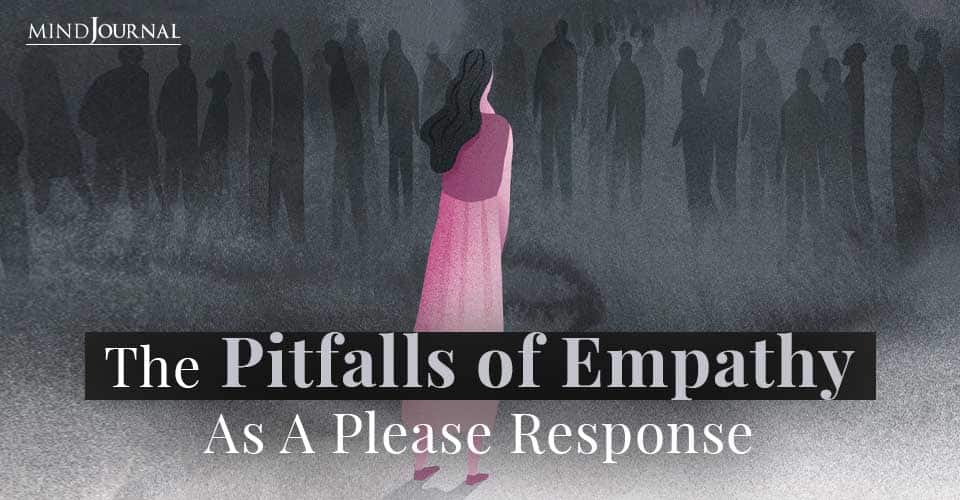
Fight, Flight, Freeze: The Pitfalls of Empathy as a Please Response

Author : Roland Bal

Even though being kind, and empathetic are beautiful values to have, donโ€™t you think that there are many pitfalls of empathy as well?

The โ€˜pleaseโ€™ or โ€˜fawnโ€™ response is an often overlooked survival mechanism to a traumatic situation, experience, or circumstance.

Nonetheless, the โ€˜pleaseโ€™ response is a prevalent one especially with complex trauma or CPTSD, and is acted out as a result of the high-stress situations that have often been drawn out.

As any survival response; like flight, fight or freeze, a please or fawn response is to manage a state of danger or potential danger.

The please response is the most thoughtful and complex response to deal with as it encompasses monitoring and feeling into other peopleโ€™s state of mind (often the aggressor) in order to anticipate a situation and respond by adapting and pleasing in order to evade confrontation or before a situation becomes aggravated.

It is also one of the most cumbersome and exhausting responses as it takes great resources to play through potential future scenarios.

Related: 10 Strategies To Protect Your Energy As An Empath

Fight, Flight, Freeze, and Fawn: The Difference between Empathy and the Fawn Response

A please response is not the same as empathy, and I think there is some confusion there. Healthy empathy is to be able to feel into other peopleโ€™s situations without losing your sense of self and the importance of your own needs. With a please or fawn response you have given up a sense of self, a sense of healthy identity, and have taken on responsibilities that arenโ€™t yours to carry. It is a survival response made in a time of need, but in the long run, you pay a hefty price for it.

Once emotional residue, related to your past, is contained, access to healthy empathy might be more readily available if your previous habitual response was a please response. Each survival response once contained, have their strengths to be harvested.

Surviving a Complex Trauma Situation by adapting to a Please Response

As mentioned briefly before; when you resort to a please response you take on responsibilities which arenโ€™t yours to bear.

Letโ€™s look at an example to clarify this behavior:

Clare grows up with a mother who has episodes of being suicidal and emotionally unstable. In her day to day goings, her mom is demanding, ambitious, and meticulously organized. In order to avoid confrontation and to assist the impossible neurotic episodes of her mom, Clare adopts the please response towards her. She anticipates her moods, tries to excel at school, and to meet her motherโ€™s demands.

The โ€˜choiceโ€™ to please and adapt to her momโ€™s needs and โ€˜forgetโ€™ her own, is not done at a fully conscious level. It is a choice forged out of the best possible survival option to deal with what is at hand. It is made out of absolute necessity.

Related: 15 Ways To Stay Grounded And Protected For An Empath

Be a little kind to the child in you!

How are you exhibiting your please response, and in which area of your life does it show? Relationship, with your children, your work or with friends? Leave your comments below.


Originally appeared on Rolandbal.com

Printed with Prior Permission

Empathy is always good thing to have, but sometimes it can also have its downsides. Just like practically everything else in this world, there are a lot of pitfalls when it comes to empathy. Always remember that just like it is important to be kind to the world, it is equally important to be kind to yourself.

If you want to know more about the pitfalls of empathy, then check this video out below:

Fight, Flight, Freeze The Pitfalls of Empathy Pin

Published On:

Last updated on:

Roland Bal

Roland Bal uses a cognitive and somatic (body) based psycho-therapeutic approach to effectively treat Complex Trauma and PTSD. His approach focuses on regulating, processing and containing; the processes of dissociation, the fight-flight-freeze-please responses and re-learning boundaries and vulnerability. Additionally, his website https://rolandbal.com/meditation-ptsd/ provides; e-books, trauma care guided meditations and online courses.

Disclaimer: The informational content on The Minds Journal have been created and reviewed by qualified mental health professionals. They are intended solely for educational and self-awareness purposes and should not be used as a substitute for professional medical advice, diagnosis, or treatment. If you are experiencing emotional distress or have concerns about your mental health, please seek help from a licensed mental health professional or healthcare provider.

Leave a Comment

Today's Horoscope

Daily Horoscope 3 April 2026: Prediction for Zodiac Signs

Daily Horoscope 3 April, 2026: Prediction For Each Zodiac Sign

You may find yourself noticing patterns, emotions, or even small wins you overlooked before.

Latest Quizzes

What Kind Of Karma Do You Have? 3 Markings Reveal Truths

3 Types of Karma Exist โ€” Which One Were You Born With? Look for These Palm Signs

Spot an M, Y, or X on your palm? This hidden sign reveals your karma type!

Latest Quotes

Real Signs Your Body Is Actually in Good Health: How to Know Youโ€™re Truly Well

Real Signs Your Body Is Actually in Good Health: How to Know Youโ€™re Truly Well

Real signs your body is healthy donโ€™t always show up on lab reports. From good sleep and clear skin to regular digestion and a stable mood, your body is constantly sending quiet signals of wellness.

Readers Blog

Caption This Image and Selected Wisepicks โ€“ 29 March 2026

Caption This Image and Selected Wisepicks โ€“ 29 March 2026

Ready to unleash your inner wordsmith? โœจ??โ˜บ๏ธ Nowโ€™s your chance to show off your wit, charm, or sheer genius in just one line! Whether itโ€™s laugh-out-loud funny or surprisingly deep, we want to hear it.Submit your funniest, wittiest, or most thought-provoking caption in the comments. Weโ€™ll pick 15+ winners to be featured on our website…

Latest Articles

Even though being kind, and empathetic are beautiful values to have, donโ€™t you think that there are many pitfalls of empathy as well?

The โ€˜pleaseโ€™ or โ€˜fawnโ€™ response is an often overlooked survival mechanism to a traumatic situation, experience, or circumstance.

Nonetheless, the โ€˜pleaseโ€™ response is a prevalent one especially with complex trauma or CPTSD, and is acted out as a result of the high-stress situations that have often been drawn out.

As any survival response; like flight, fight or freeze, a please or fawn response is to manage a state of danger or potential danger.

The please response is the most thoughtful and complex response to deal with as it encompasses monitoring and feeling into other peopleโ€™s state of mind (often the aggressor) in order to anticipate a situation and respond by adapting and pleasing in order to evade confrontation or before a situation becomes aggravated.

It is also one of the most cumbersome and exhausting responses as it takes great resources to play through potential future scenarios.

Related: 10 Strategies To Protect Your Energy As An Empath

Fight, Flight, Freeze, and Fawn: The Difference between Empathy and the Fawn Response

A please response is not the same as empathy, and I think there is some confusion there. Healthy empathy is to be able to feel into other peopleโ€™s situations without losing your sense of self and the importance of your own needs. With a please or fawn response you have given up a sense of self, a sense of healthy identity, and have taken on responsibilities that arenโ€™t yours to carry. It is a survival response made in a time of need, but in the long run, you pay a hefty price for it.

Once emotional residue, related to your past, is contained, access to healthy empathy might be more readily available if your previous habitual response was a please response. Each survival response once contained, have their strengths to be harvested.

Surviving a Complex Trauma Situation by adapting to a Please Response

As mentioned briefly before; when you resort to a please response you take on responsibilities which arenโ€™t yours to bear.

Letโ€™s look at an example to clarify this behavior:

Clare grows up with a mother who has episodes of being suicidal and emotionally unstable. In her day to day goings, her mom is demanding, ambitious, and meticulously organized. In order to avoid confrontation and to assist the impossible neurotic episodes of her mom, Clare adopts the please response towards her. She anticipates her moods, tries to excel at school, and to meet her motherโ€™s demands.

The โ€˜choiceโ€™ to please and adapt to her momโ€™s needs and โ€˜forgetโ€™ her own, is not done at a fully conscious level. It is a choice forged out of the best possible survival option to deal with what is at hand. It is made out of absolute necessity.

Related: 15 Ways To Stay Grounded And Protected For An Empath

Be a little kind to the child in you!

How are you exhibiting your please response, and in which area of your life does it show? Relationship, with your children, your work or with friends? Leave your comments below.


Originally appeared on Rolandbal.com

Printed with Prior Permission

Empathy is always good thing to have, but sometimes it can also have its downsides. Just like practically everything else in this world, there are a lot of pitfalls when it comes to empathy. Always remember that just like it is important to be kind to the world, it is equally important to be kind to yourself.

If you want to know more about the pitfalls of empathy, then check this video out below:

Fight, Flight, Freeze The Pitfalls of Empathy Pin

Published On:

Last updated on:

Roland Bal

Roland Bal uses a cognitive and somatic (body) based psycho-therapeutic approach to effectively treat Complex Trauma and PTSD. His approach focuses on regulating, processing and containing; the processes of dissociation, the fight-flight-freeze-please responses and re-learning boundaries and vulnerability. Additionally, his website https://rolandbal.com/meditation-ptsd/ provides; e-books, trauma care guided meditations and online courses.

Leave a Comment

    Leave a Comment