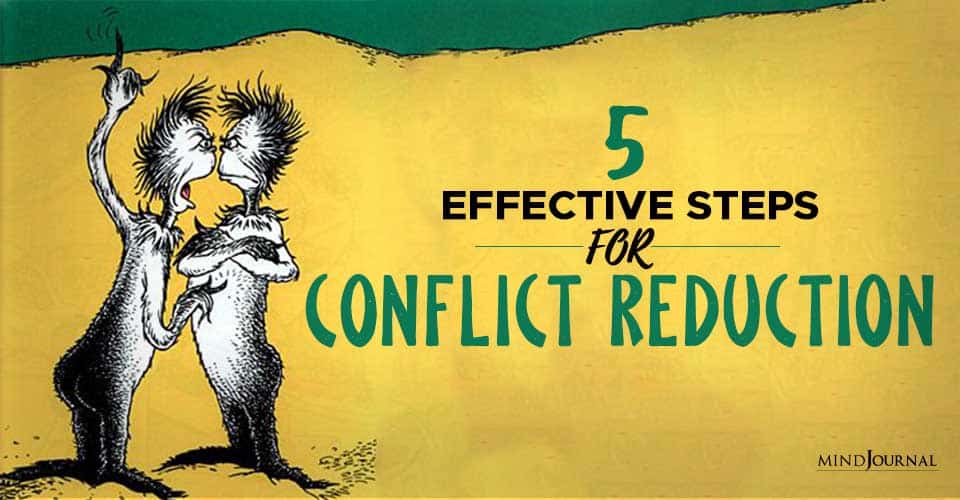
5 Effective Steps For Conflict Reduction

Author : Marcia Reynolds Psy.D.

Handling conflicts and navigating through them can be really tough and annoying sometimes, especially when both parties refuse to back down. However, it does not always have to be destructive and negative; peaceful conflict resolution is also possible.

Key Points:

  • How you enter a difficult conversation has a definite effect on whether or not the conflict becomes destructive or creative.
  • You might open people’s minds with the emotions you bring into the conversation and the way you listen to their views.
  • Remaining calm, curious, and respectful might open doors to finding a solution that fulfills the similarities you find in the outcomes you want.

Advice on how to handle conflicts online and in person is plentiful. Everyone experiences conflicts. The results can be highly destructive.

Conflicts can also be creative and strengthen relationships. How you enter the conversation has a definite effect on whether or not conflict is destructive or creative. Even if you have a history of conflict with a person or group, you can diffuse the possible conflict before it becomes unsolvable and possibly, permanently destructive.

Destructive conflict is usually based on both parties holding onto their opinions. Each person or group believes they are right. There is no willingness to explore other perspectives. The conversation becomes a competition of who will win by not giving in. There could even be threats or actual actions taken to end the relationship in the conversation. After the conversation ends, one or both parties might perform an act of vengeance, which might sabotage each other’s jobs or relationships.

The only way to resolve a conflict is for both parties to desire to find a collaborative solution, whether it’s a new idea or compromising a little to move forward (negotiation).

You might think others will never open their minds. However, you can create this possibility and keep conflicts from destructively erupting by setting a positive context when entering a difficult conversation. Taking these five steps will help.

Related: The 5 Faces Of Fundamental Human Conflict

5 Steps To Conflict Reduction

1. Express Appreciation For The Conflict Of Ideas. 

Enter the conversation with the hope of strengthening the relationship, not with the desire for your ideas to “win.” In competition, there is always a loser. Even the idea someone has that they might lose an argument generates impatience and anger.

Instead, share your hope that by looking at all sides of a situation, you can create a way forward that is new but appreciates everyone’s contribution. When the results of conflict are beneficial to all conflicting parties, the fear of losing diminishes.

2. Respect Other People’s Positions Even If You Don’t Agree. 

Before you share your opinion, respectfully listen to everyone’s ideas, appreciating their perspective as coming from an experience different from yours. Respect creates psychological safety. Creative conflict requires that everyone feels safe enough to not only share what they believe but to challenge each other’s ideas without emotions dangerously escalating.

When people feel they will be judged, they defend their position with defensiveness or silence. Open the conversation with feeling respect, receiving their views, and acknowledging what they share with summaries and “thank you” before asking if you can share your view now, too.

3. Recognize Emotions By Sharing What You Are Sensing With Compassionate Curiosity.

Emotions are physical, energetic, bodily events. Constructive conflict recognizes and addresses people’s feelings as well as their ideas as a part of reducing the conflict. Try to sense what others are feeling and share that you appreciate they are angry, frustrated, or cynical about the topic.

Accept their response even if they say you are wrong. If you are wrong, your guess could still help them better understand themselves and what they need in order to move into a creative space with you. At least they will feel you are listening and care enough to understand.

Related: There Are Two Views to Every Conflict and Both Are Valid

4. Acknowledge Similarities Of Desired Outcomes. 

Creativity equally values both similarities and differences. Look for the common ground—what do you both believe that is similar or what do you both hope for in the end that looks the same?

Make the similarities the starting point of finding a creative solution. Then frequently acknowledge what you both want as an end result. Hopefully, a way forward will emerge as you explore the differences in light of the similarities.

5. Embody The Emotions You Want To Maintain. 

Do you want to feel calm and curious? Remind yourself what you want to feel before you enter the conversation. Release your irritation or fear. Then during the interaction, notice if you start to tense up. Breathe, release the tension, and recall the words, “calm and curious.” Notice when you have the urge to interrupt or take on their aggressiveness or anger. Return to feeling respect. Recall the positive intention you had for the conversation in the first place. Restate your intention before you respond.

If you are calm, curious, and respectful to others, you are in a position to recognize the emotions driving their choices as well as observing your own. You will see opportunities to acknowledge their ideas and encourage exploration.

In our competitive culture, we have never learned the nature and benefits of creating a better solution or relationship through conflict. However, if we can enter conversations with the desire to find a way forward, the conversation could collaboratively create a solution that not only reduces the conflict but improves relationships and satisfaction for everyone involved.

Be the light in your conversation. They may step into it with you.

See more tips on having effective conversations at www.Covisioning.com


Written By Marcia Reynolds
Originally Appeared On Psychology Today
Effective Steps For Conflict Reduction PIN

Published On:

Last updated on:

Marcia Reynolds Psy.D.

Dr. Reynolds is a pioneer in the coaching profession. She was one of the first members and the 5th global president of the International Coach Federation. She is also a past president of the Association for Coach Training Organizations. She is the Training Director for the Healthcare Coaching Institute in North Carolina and is also on faculty for coaching schools in Russia, China, the Philippines, and India. She is recognized by the Global Gurus as the #4 coach in the world. She has trained and coached leaders in 43 countries and has presented at the Harvard Kennedy School, Cornell University, Smith College, Almaty Management University in Kazakhstan, and The National Research University in Moscow. She became fascinated with emotional intelligence after reading Daniel Goleman’s book in 1996 and designed a training program that integrates emotional choice with leadership presence, communications effectiveness, and life satisfaction. She has since taught her programs for many agencies of the National Institutes of Health, multi-national corporations around the world, and for coaching schools in Europe and Asia.

Disclaimer: The informational content on The Minds Journal have been created and reviewed by qualified mental health professionals. They are intended solely for educational and self-awareness purposes and should not be used as a substitute for professional medical advice, diagnosis, or treatment. If you are experiencing emotional distress or have concerns about your mental health, please seek help from a licensed mental health professional or healthcare provider.

Leave a Comment

Today's Horoscope

New Moon in Pisces: 12 Interesting Zodiac Rituals

New Moon in Pisces: 12 Zodiac Rituals To Manifest Your Next Chapter!

Curious to see how this New Moon in Pisces will be a deeply reflective period in your lunar cycle? Read on to know more!

Latest Quizzes

Free Vase Personality Test: 3 Options; Choose A Vase

Vase Personality Test: Your First Pick Reveals Your Main Character Trait

Take a moment, look closely, and pick an object that represents you.

Latest Quotes

Functional Freeze: Why You Zone Out After Doing “Just Fine” All Day

Functional Freeze: Why You Zone Out After Doing “Just Fine” All Day

If you zone out in a towel, in your parked car, or on your phone at night, it’s not laziness. Functional freeze is your nervous system’s trauma response, not a character flaw.

Readers Blog

Caption This Image and Selected Wisepicks – 15 March 2026

Caption This Image and Selected Wisepicks – 15 March 2026

Ready to unleash your inner wordsmith? ✨??☺️ Now’s your chance to show off your wit, charm, or sheer genius in just one line! Whether it’s laugh-out-loud funny or surprisingly deep, we want to hear it.Submit your funniest, wittiest, or most thought-provoking caption in the comments. We’ll pick 15+ winners to be featured on our website…

Latest Articles

Handling conflicts and navigating through them can be really tough and annoying sometimes, especially when both parties refuse to back down. However, it does not always have to be destructive and negative; peaceful conflict resolution is also possible.

Key Points:

  • How you enter a difficult conversation has a definite effect on whether or not the conflict becomes destructive or creative.
  • You might open people’s minds with the emotions you bring into the conversation and the way you listen to their views.
  • Remaining calm, curious, and respectful might open doors to finding a solution that fulfills the similarities you find in the outcomes you want.

Advice on how to handle conflicts online and in person is plentiful. Everyone experiences conflicts. The results can be highly destructive.

Conflicts can also be creative and strengthen relationships. How you enter the conversation has a definite effect on whether or not conflict is destructive or creative. Even if you have a history of conflict with a person or group, you can diffuse the possible conflict before it becomes unsolvable and possibly, permanently destructive.

Destructive conflict is usually based on both parties holding onto their opinions. Each person or group believes they are right. There is no willingness to explore other perspectives. The conversation becomes a competition of who will win by not giving in. There could even be threats or actual actions taken to end the relationship in the conversation. After the conversation ends, one or both parties might perform an act of vengeance, which might sabotage each other’s jobs or relationships.

The only way to resolve a conflict is for both parties to desire to find a collaborative solution, whether it’s a new idea or compromising a little to move forward (negotiation).

You might think others will never open their minds. However, you can create this possibility and keep conflicts from destructively erupting by setting a positive context when entering a difficult conversation. Taking these five steps will help.

Related: The 5 Faces Of Fundamental Human Conflict

5 Steps To Conflict Reduction

1. Express Appreciation For The Conflict Of Ideas. 

Enter the conversation with the hope of strengthening the relationship, not with the desire for your ideas to “win.” In competition, there is always a loser. Even the idea someone has that they might lose an argument generates impatience and anger.

Instead, share your hope that by looking at all sides of a situation, you can create a way forward that is new but appreciates everyone’s contribution. When the results of conflict are beneficial to all conflicting parties, the fear of losing diminishes.

2. Respect Other People’s Positions Even If You Don’t Agree. 

Before you share your opinion, respectfully listen to everyone’s ideas, appreciating their perspective as coming from an experience different from yours. Respect creates psychological safety. Creative conflict requires that everyone feels safe enough to not only share what they believe but to challenge each other’s ideas without emotions dangerously escalating.

When people feel they will be judged, they defend their position with defensiveness or silence. Open the conversation with feeling respect, receiving their views, and acknowledging what they share with summaries and “thank you” before asking if you can share your view now, too.

3. Recognize Emotions By Sharing What You Are Sensing With Compassionate Curiosity.

Emotions are physical, energetic, bodily events. Constructive conflict recognizes and addresses people’s feelings as well as their ideas as a part of reducing the conflict. Try to sense what others are feeling and share that you appreciate they are angry, frustrated, or cynical about the topic.

Accept their response even if they say you are wrong. If you are wrong, your guess could still help them better understand themselves and what they need in order to move into a creative space with you. At least they will feel you are listening and care enough to understand.

Related: There Are Two Views to Every Conflict and Both Are Valid

4. Acknowledge Similarities Of Desired Outcomes. 

Creativity equally values both similarities and differences. Look for the common ground—what do you both believe that is similar or what do you both hope for in the end that looks the same?

Make the similarities the starting point of finding a creative solution. Then frequently acknowledge what you both want as an end result. Hopefully, a way forward will emerge as you explore the differences in light of the similarities.

5. Embody The Emotions You Want To Maintain. 

Do you want to feel calm and curious? Remind yourself what you want to feel before you enter the conversation. Release your irritation or fear. Then during the interaction, notice if you start to tense up. Breathe, release the tension, and recall the words, “calm and curious.” Notice when you have the urge to interrupt or take on their aggressiveness or anger. Return to feeling respect. Recall the positive intention you had for the conversation in the first place. Restate your intention before you respond.

If you are calm, curious, and respectful to others, you are in a position to recognize the emotions driving their choices as well as observing your own. You will see opportunities to acknowledge their ideas and encourage exploration.

In our competitive culture, we have never learned the nature and benefits of creating a better solution or relationship through conflict. However, if we can enter conversations with the desire to find a way forward, the conversation could collaboratively create a solution that not only reduces the conflict but improves relationships and satisfaction for everyone involved.

Be the light in your conversation. They may step into it with you.

See more tips on having effective conversations at www.Covisioning.com


Written By Marcia Reynolds
Originally Appeared On Psychology Today
Effective Steps For Conflict Reduction PIN

Published On:

Last updated on:

Marcia Reynolds Psy.D.

Dr. Reynolds is a pioneer in the coaching profession. She was one of the first members and the 5th global president of the International Coach Federation. She is also a past president of the Association for Coach Training Organizations. She is the Training Director for the Healthcare Coaching Institute in North Carolina and is also on faculty for coaching schools in Russia, China, the Philippines, and India. She is recognized by the Global Gurus as the #4 coach in the world. She has trained and coached leaders in 43 countries and has presented at the Harvard Kennedy School, Cornell University, Smith College, Almaty Management University in Kazakhstan, and The National Research University in Moscow. She became fascinated with emotional intelligence after reading Daniel Goleman’s book in 1996 and designed a training program that integrates emotional choice with leadership presence, communications effectiveness, and life satisfaction. She has since taught her programs for many agencies of the National Institutes of Health, multi-national corporations around the world, and for coaching schools in Europe and Asia.

Leave a Comment

    Leave a Comment