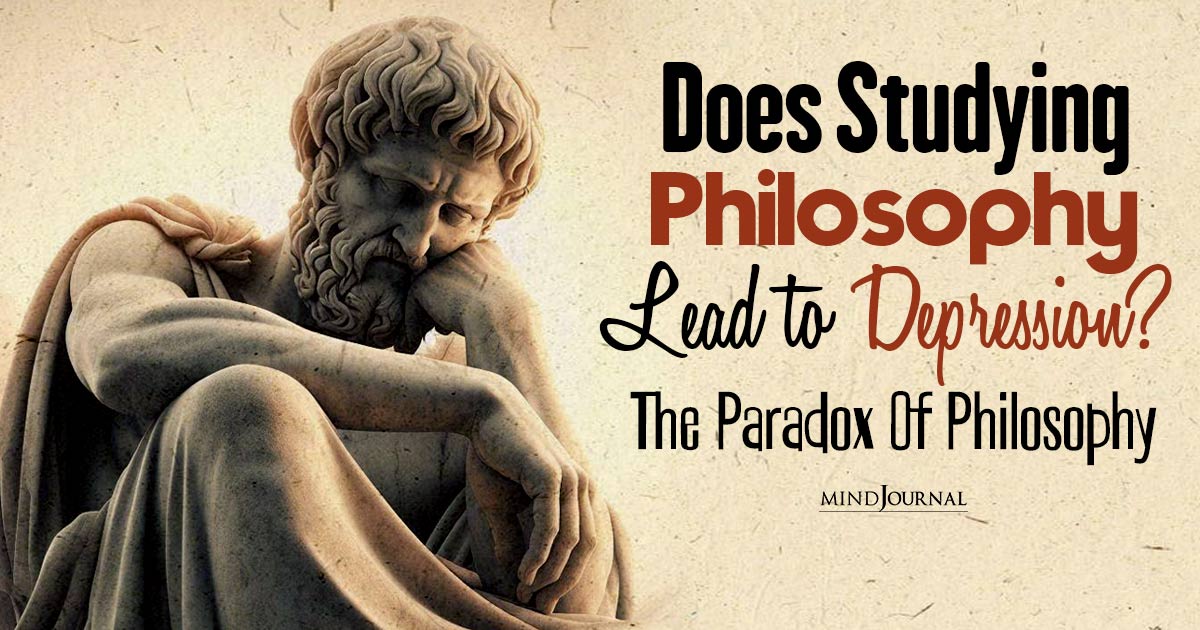
Philosophy And Depression: Does Studying Philosophy Make You Depressed?

Author : Theo Harrison

Ever thought about the purpose of life? Or maybe about the nature of reality? If so, you may be curious about the fascinating realm of philosophy. However, most people believe that philosophy and depression are closely related. 

So is it true that studying philosophy makes you depressed? Can being philosophical lead to a state of existential angst and melancholy? 

For centuries, this field of philosophical study has been a source of curiosity and reflection. Whether it’s the deep thoughts of ancient Greek philosophers or contemporary philosophical musings, philosophy has molded our beliefs & understanding of the world around us and how we fit into it.

So today let us find the answer to the age old question – Does studying philosophy make you depressed? 

The Pursuit of Truth and Meaning

Philosophy is fundamentally about seeking truth and meaning. It makes us question our assumptions, go against social conventions and think deeply about the most basic aspects of being human. 

philosophy and depression

Such deep thoughts are characteristically accompanied by periods of introspection and even self-doubt. This process of self-reflection can elicit a variety of emotions such as sadness, confusion, existential crisis and even a feeling that life is meaningless.

Related: Philosophy 101: 10 Philosophical Concepts To Help You Navigate Life’s Complexities

The Weight of Existential Questions

Existential questions constitute one of the main areas of philosophical inquiry. 

What is the meaning of life? 

Do we have a free will? 

Does our existence have any meaning or value? 

These are profound and intricate queries that can leave us feeling overwhelmed and vulnerable. Pondering over such questions may induce disillusionment or despair as we face the natural uncertainties of life.

Challenging Assumptions and Belief Systems

Philosophy stimulates critical thinking by challenging established beliefs & assumptions. As we engage in philosophical discussions, we come across numerous perspectives and ideas that might oppose our deeply held convictions. 

This clash of thoughts can be discomforting, leading to cognitive dissonance which can lead to confusion, uncertainty or even sadness & depression as well. This is why some people believe philosophy and depression are strongly associated.

So does studying philosophy make you depressed? Let’s find out more.

Examining the Nature of Reality

Philosophy also dives into questions about reality and knowledge. It may include inquiries on whether the external world actually exists, how far human perception reaches, and how reliable our senses are.

As we contemplate these profound concepts, we may doubt the very foundations of our understanding and experience feelings of uncertainty and disillusionment.

Related: The Eternalism Philosophy Of Time: Is Our Future Already Fixed?

The Paradox of Knowledge

In philosophy, we encounter the paradox of knowledge, which suggests that the more we learn and question, the more we realize how little we truly know. This is a paradox which can be both humbling & disconcerting since it challenges our ideas about certainty and expertise. 

The realization that knowledge is vast and elusive may evoke feelings of insignificance or frustration, leading to a sense of melancholy.

Emotional Vulnerability and Empathy

Philosophy students often study the works and thoughts of philosophers who have grappled with their individual existential challenges. These philosophical texts may be emotionally charged as they delve into themes such as suffering, mortality and the human experience. 

It is possible that we become more emotionally vulnerable when identifying with these experiences of the philosophers leading to depression.

philosophy and depression

So does studying philosophy cause depression? Not necessarily. While philosophy and depression may be related, there is no strong evidence against philosophy for depression. Let us explore some more aspects of this topic.

Coping with the Absurd

Existentialist thinkers like Albert Camus and Friedrich Nietzsche have deeply thought about how absurd human existence can be. They argue that life has no specific meaning and that one must create his or her own meaning in light of this existential vacuum. 

Though these ideas can be liberating they can also be bewildering. Our sense of purpose might be strongly challenged when we realize life could very well have no meaning at its core which leads to depression or nihilism.

Related: What Is Aesthetics In Philosophy? Exploring What Beauty Really Means

The Importance of Perspective and Balance

While studying philosophy may cause existential questions and feelings of melancholy, it must be remembered that philosophy can also equip one with tools for self-improvement and resilience. 

With the help of philosophical concepts and ideas, critical thinking abilities are developed, perspectives are widened, and a deeper understanding of human nature is gained. Striking a balance between introspection and maintaining a positive outlook on life is important as overthinking has adverse effects on our wellness.

Cultivating Meaning and Purpose

Instead of leading to depression, learning philosophy can provide the template for cultivating meaning and purpose in our lives. We can build our own personal philosophies that will lead us to a more rewarding existence. 

Philosophy encourages us to reflect on our values, embrace uncertainty, and find significance in the pursuit of knowledge and self-discovery. So there is no proof against philosophy for depression.

philosophy and depression

Takeaway 

While philosophy and depression may be related to some extent, studying philosophy does not necessarily lead to depression. Although philosophical inquiry may lead to moments of introspection and existential questioning, it is important to approach this discipline with a balanced mindset. 

Philosophy may open up our minds, make us grow personally and help us understand the world better. If we accept the uncertainties of life and foster personal philosophical perspectives, then we may make sense of our complex existence. 

So, let philosophy be a guiding light on your journey of self-discovery, rather than a source of despair. Always keep in mind that seeking wisdom and knowledge is a noble pursuit that brings lasting fulfillment to our lives.

Related: What Is Nihilism Philosophy: Unveiling the Philosophy of Life’s Pointlessness


Frequently Asked Questions (FAQs):

Do philosophers suffer from depression? 

Yes. It has been observed that some philosophers experience depressive symptoms due to existential questioning and the nature of their study.

What are the disadvantages of studying philosophy? 

Disadvantages of studying philosophy may include existential anxiety and potential disillusionment with societal norms.

Is philosophy good for your mental health? 

Studying philosophy may offer mental stimulation and insight. However, its challenging nature may also increase stress levels and lead to depressive symptoms.

studying philosophy make you depressed

Published On:

Last updated on:

Theo Harrison

Hey there! I am just someone trying to find my way through life. I am a reader, writer, traveler, fighter, philosopher, artist and all around nice guy. I am outdoor person but heavily into technology, science, psychology, spiritualism, Buddhism, martial arts and horror films. I believe in positive action more than positive thinking.

Disclaimer: The informational content on The Minds Journal have been created and reviewed by qualified mental health professionals. They are intended solely for educational and self-awareness purposes and should not be used as a substitute for professional medical advice, diagnosis, or treatment. If you are experiencing emotional distress or have concerns about your mental health, please seek help from a licensed mental health professional or healthcare provider.

Leave a Comment

Today's Horoscope

Free Daily Horoscope 26 March For 12 Zodiac Signs

Daily Horoscope 26 March, 2026: Prediction For Each Zodiac Sign

Today is less about dramatic changes and more about small emotional shifts that can create long-term impact. Check your free horoscope for more insights!

Latest Quizzes

Image Personality Test: Which Woman Reveals Your True Self?

Which Woman Are You? A Personality Test That Reveals Your True Inner Nature

This personality test reveals your true self based on the woman you choose. Simple, fun, and surprisingly accurate!

Latest Quotes

Manipulative Tactics in Relationships: Gaslighting, Love Bombing, and Emotional Control

Manipulative Tactics in Relationships: Gaslighting, Love Bombing, and Emotional Control

Manipulative tactics in relationships often start subtly—gaslighting, love bombing, guilt trips, or mixed signals. Once you recognize these emotional manipulation patterns, you can protect your mental health and step away from toxic dynamics.

Readers Blog

Caption This Image and Selected Wisepicks – 22 March 2026

Caption This Image and Selected Wisepicks – 22 March 2026

Ready to unleash your inner wordsmith? ✨??☺️ Now’s your chance to show off your wit, charm, or sheer genius in just one line! Whether it’s laugh-out-loud funny or surprisingly deep, we want to hear it.Submit your funniest, wittiest, or most thought-provoking caption in the comments. We’ll pick 15+ winners to be featured on our website…

Latest Articles

Ever thought about the purpose of life? Or maybe about the nature of reality? If so, you may be curious about the fascinating realm of philosophy. However, most people believe that philosophy and depression are closely related. 

So is it true that studying philosophy makes you depressed? Can being philosophical lead to a state of existential angst and melancholy? 

For centuries, this field of philosophical study has been a source of curiosity and reflection. Whether it’s the deep thoughts of ancient Greek philosophers or contemporary philosophical musings, philosophy has molded our beliefs & understanding of the world around us and how we fit into it.

So today let us find the answer to the age old question – Does studying philosophy make you depressed? 

The Pursuit of Truth and Meaning

Philosophy is fundamentally about seeking truth and meaning. It makes us question our assumptions, go against social conventions and think deeply about the most basic aspects of being human. 

philosophy and depression

Such deep thoughts are characteristically accompanied by periods of introspection and even self-doubt. This process of self-reflection can elicit a variety of emotions such as sadness, confusion, existential crisis and even a feeling that life is meaningless.

Related: Philosophy 101: 10 Philosophical Concepts To Help You Navigate Life’s Complexities

The Weight of Existential Questions

Existential questions constitute one of the main areas of philosophical inquiry. 

What is the meaning of life? 

Do we have a free will? 

Does our existence have any meaning or value? 

These are profound and intricate queries that can leave us feeling overwhelmed and vulnerable. Pondering over such questions may induce disillusionment or despair as we face the natural uncertainties of life.

Challenging Assumptions and Belief Systems

Philosophy stimulates critical thinking by challenging established beliefs & assumptions. As we engage in philosophical discussions, we come across numerous perspectives and ideas that might oppose our deeply held convictions. 

This clash of thoughts can be discomforting, leading to cognitive dissonance which can lead to confusion, uncertainty or even sadness & depression as well. This is why some people believe philosophy and depression are strongly associated.

So does studying philosophy make you depressed? Let’s find out more.

Examining the Nature of Reality

Philosophy also dives into questions about reality and knowledge. It may include inquiries on whether the external world actually exists, how far human perception reaches, and how reliable our senses are.

As we contemplate these profound concepts, we may doubt the very foundations of our understanding and experience feelings of uncertainty and disillusionment.

Related: The Eternalism Philosophy Of Time: Is Our Future Already Fixed?

The Paradox of Knowledge

In philosophy, we encounter the paradox of knowledge, which suggests that the more we learn and question, the more we realize how little we truly know. This is a paradox which can be both humbling & disconcerting since it challenges our ideas about certainty and expertise. 

The realization that knowledge is vast and elusive may evoke feelings of insignificance or frustration, leading to a sense of melancholy.

Emotional Vulnerability and Empathy

Philosophy students often study the works and thoughts of philosophers who have grappled with their individual existential challenges. These philosophical texts may be emotionally charged as they delve into themes such as suffering, mortality and the human experience. 

It is possible that we become more emotionally vulnerable when identifying with these experiences of the philosophers leading to depression.

philosophy and depression

So does studying philosophy cause depression? Not necessarily. While philosophy and depression may be related, there is no strong evidence against philosophy for depression. Let us explore some more aspects of this topic.

Coping with the Absurd

Existentialist thinkers like Albert Camus and Friedrich Nietzsche have deeply thought about how absurd human existence can be. They argue that life has no specific meaning and that one must create his or her own meaning in light of this existential vacuum. 

Though these ideas can be liberating they can also be bewildering. Our sense of purpose might be strongly challenged when we realize life could very well have no meaning at its core which leads to depression or nihilism.

Related: What Is Aesthetics In Philosophy? Exploring What Beauty Really Means

The Importance of Perspective and Balance

While studying philosophy may cause existential questions and feelings of melancholy, it must be remembered that philosophy can also equip one with tools for self-improvement and resilience. 

With the help of philosophical concepts and ideas, critical thinking abilities are developed, perspectives are widened, and a deeper understanding of human nature is gained. Striking a balance between introspection and maintaining a positive outlook on life is important as overthinking has adverse effects on our wellness.

Cultivating Meaning and Purpose

Instead of leading to depression, learning philosophy can provide the template for cultivating meaning and purpose in our lives. We can build our own personal philosophies that will lead us to a more rewarding existence. 

Philosophy encourages us to reflect on our values, embrace uncertainty, and find significance in the pursuit of knowledge and self-discovery. So there is no proof against philosophy for depression.

philosophy and depression

Takeaway 

While philosophy and depression may be related to some extent, studying philosophy does not necessarily lead to depression. Although philosophical inquiry may lead to moments of introspection and existential questioning, it is important to approach this discipline with a balanced mindset. 

Philosophy may open up our minds, make us grow personally and help us understand the world better. If we accept the uncertainties of life and foster personal philosophical perspectives, then we may make sense of our complex existence. 

So, let philosophy be a guiding light on your journey of self-discovery, rather than a source of despair. Always keep in mind that seeking wisdom and knowledge is a noble pursuit that brings lasting fulfillment to our lives.

Related: What Is Nihilism Philosophy: Unveiling the Philosophy of Life’s Pointlessness


Frequently Asked Questions (FAQs):

Do philosophers suffer from depression? 

Yes. It has been observed that some philosophers experience depressive symptoms due to existential questioning and the nature of their study.

What are the disadvantages of studying philosophy? 

Disadvantages of studying philosophy may include existential anxiety and potential disillusionment with societal norms.

Is philosophy good for your mental health? 

Studying philosophy may offer mental stimulation and insight. However, its challenging nature may also increase stress levels and lead to depressive symptoms.

studying philosophy make you depressed

Published On:

Last updated on:

Theo Harrison

Hey there! I am just someone trying to find my way through life. I am a reader, writer, traveler, fighter, philosopher, artist and all around nice guy. I am outdoor person but heavily into technology, science, psychology, spiritualism, Buddhism, martial arts and horror films. I believe in positive action more than positive thinking.

Leave a Comment

    Leave a Comment