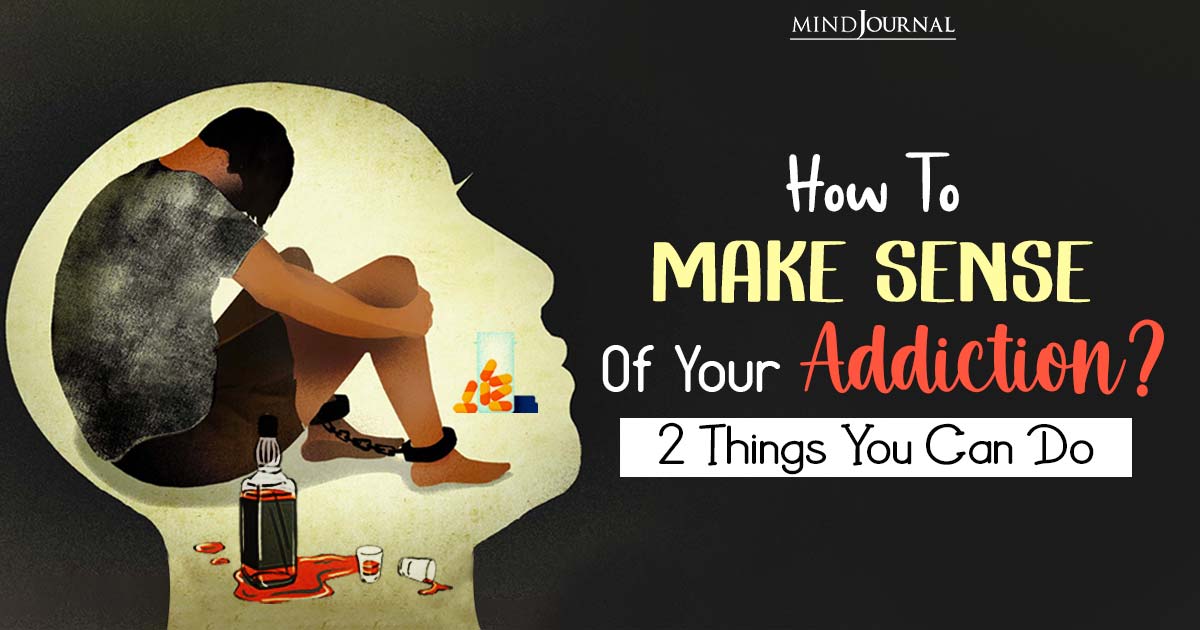
Does Substance Use Have A Purpose? How To Make Sense Of Your Addiction

Author : Jeanette Hu, AMFT

Making sense of addiction is probably one of the most helpful ways to beat substance use and abuse. But how can you achieve that goal? How to make sense of your addiction?

Key Points

  • Substance use is a behavior that serves a purpose, or at least initially did.
  • Substance use only becomes a problem when its harm increases and its benefits are lowered.
  • Making sense of one’s relationship with a substance is the first step to cultivating a different relationship with it.

Many people who come to me wanting to change their substance use behaviors carry a lot of shame and self-blame. They are told that there is something inherently wrong with them for developing a substance use problem.

If you have been haunted by the question, “What is wrong with me?” I feel your pain deeply. But what if I told you there is nothing wrong with you, and your desire for alcohol, cocaine, or whatever your substance of choice makes perfect sense?

Related: 4 Harmful Impacts Of Substance Abuse On Adolescent Mental Health

Substance Use Serves a Purpose

There are a few things that people often get wrong about addiction. People tend to believe that substance misuse is either a lack of self-control or an inherited disease. It’s neither. Substance use is a behavior that serves a purpose.

In fact, it often serves a purpose so well that at first, it makes other options seem inferior in comparison.

To help you get a sense of what I mean, I’d like to tell you about a girl who licks her paper cut. She was 4 when she got her first paper cut, and her grandma showed her how to lick the cut to lessen the pain.

“Your saliva will take the hurt away,” Grandma said. It worked, and to this day, in her 30s, she still puts her finger in her mouth every time she gets a paper cut.

The same girl, at 15, had her heart broken by a boy for the first time. That night, her best friend handed her a pack of beer and told her, “Drink this, and you will feel better.”

It worked, and that became the start of her decade-long love affair with alcohol. Alcohol had become her loyal lover, dissolving any unwanted feelings within minutes.

That girl is me, and it was only after I got into the study of human behavior did I see the similarity between licking my paper cut and drinking alcohol.

The two behaviors are both attempts to avoid pain, and the only difference is that licking my finger produced no long-term consequences over time, whereas drinking alcohol did.

How to make sense of your addiction

Substance Use Started as a Logical Choice

Substance use only becomes a problem when its harm increases and its benefits are lowered. As the cost-benefit scale tilts more toward the cost, the behavior draws more and more attention.

When people around you start to refer to your substance use as a “problem,” they see only the second half of the story—where you make “illogical” choices to let substance rule your life despite all the harm it caused.

They don’t see that, at first, the substance use likely had provided substantial benefits with minimal negative consequences.

In the case of my 15-year-old self, I traded away the unbearable heartbreak for a minor headache the following day—it was a good deal. When the initial experience is rewarding, it’s natural to repeat the behavior.

Related: 20 Things People Realize When They Quit Drinking Alcohol

Sober Curiosity: Uncover Your Story

If you are curious about changing your relationship with alcohol, I created this free 30-Day toolkit to help you cut down on drinking.

The answer to how our love affair started lies in our earliest experiences with what has become our substance of choice. The crucial question is what you liked about it the first time.

In other words, what were the initial benefits of using the substance? It may be challenging to identify all the initial benefits with an untrained eye at first, but the benefits were there. Otherwise, you would not have been drawn back to it.

If you are curious about changing your relationship with alcohol, I created this free 30-Day toolkit to help you cut down on drinking.”(Link to the toolkit: https://youcanhealwellness.com/toolkit/)&nbsp

References:

Horvath, A. T. (2004). Sex, drugs, gambling, and chocolate: A workbook for overcoming addictions. Impact.

Written By Jeanette Hu AMFT
Originally Appeared On Psychology Today
substance use

Published On:

Last updated on:

Jeanette Hu, AMFT

Born in the US and grew up in China, Jeanette moved to the US in her early twenties to pursue a career in Psychology. She knew she wanted to be a therapist since she was a teenager. Growing up in boarding school, she had to navigate the pain of abandonment, institutionalization, and complex attachment trauma at a young age. Jeanette has her share of struggles with addiction. For many years, alcohol was her secret remedy for soothing the unspoken pain within. What started off as a solution later became a problem. Today, Jeanette has been able to find peace and healing in her recovery. With deep empathy and compassion, she is committed to hearing the untold stories of many others who struggle with addiction and helping them to cultivate a new, healthy, and more mindful relationship with substances, and with themselves.

Disclaimer: The informational content on The Minds Journal have been created and reviewed by qualified mental health professionals. They are intended solely for educational and self-awareness purposes and should not be used as a substitute for professional medical advice, diagnosis, or treatment. If you are experiencing emotional distress or have concerns about your mental health, please seek help from a licensed mental health professional or healthcare provider.

Leave a Comment

Today's Horoscope

Daily Horoscope 25 March 2026: Prediction for Zodiac Signs

Daily Horoscope 25 March, 2026: Prediction For Each Zodiac Sign

Today, the message is simple: stop running on autopilot.

Latest Quizzes

Image Personality Test: Which Woman Reveals Your True Self?

Which Woman Are You? A Personality Test That Reveals Your True Inner Nature

This personality test reveals your true self based on the woman you choose. Simple, fun, and surprisingly accurate!

Latest Quotes

The Hardest Pill to Swallow: When You Meant Little to Those Who Meant Everything to You

The Hardest Pill to Swallow: When You Meant Little to Those Who Meant Everything to You

The hardest pill to swallow is realizing you meant so little in a one sided relationship. That heartbreak hurts, humbles, and ultimately teaches you to stop overgiving and start choosing yourself.

Readers Blog

Caption This Image and Selected Wisepicks – 22 March 2026

Caption This Image and Selected Wisepicks – 22 March 2026

Ready to unleash your inner wordsmith? ✨??☺️ Now’s your chance to show off your wit, charm, or sheer genius in just one line! Whether it’s laugh-out-loud funny or surprisingly deep, we want to hear it.Submit your funniest, wittiest, or most thought-provoking caption in the comments. We’ll pick 15+ winners to be featured on our website…

Latest Articles

Making sense of addiction is probably one of the most helpful ways to beat substance use and abuse. But how can you achieve that goal? How to make sense of your addiction?

Key Points

  • Substance use is a behavior that serves a purpose, or at least initially did.
  • Substance use only becomes a problem when its harm increases and its benefits are lowered.
  • Making sense of one’s relationship with a substance is the first step to cultivating a different relationship with it.

Many people who come to me wanting to change their substance use behaviors carry a lot of shame and self-blame. They are told that there is something inherently wrong with them for developing a substance use problem.

If you have been haunted by the question, “What is wrong with me?” I feel your pain deeply. But what if I told you there is nothing wrong with you, and your desire for alcohol, cocaine, or whatever your substance of choice makes perfect sense?

Related: 4 Harmful Impacts Of Substance Abuse On Adolescent Mental Health

Substance Use Serves a Purpose

There are a few things that people often get wrong about addiction. People tend to believe that substance misuse is either a lack of self-control or an inherited disease. It’s neither. Substance use is a behavior that serves a purpose.

In fact, it often serves a purpose so well that at first, it makes other options seem inferior in comparison.

To help you get a sense of what I mean, I’d like to tell you about a girl who licks her paper cut. She was 4 when she got her first paper cut, and her grandma showed her how to lick the cut to lessen the pain.

“Your saliva will take the hurt away,” Grandma said. It worked, and to this day, in her 30s, she still puts her finger in her mouth every time she gets a paper cut.

The same girl, at 15, had her heart broken by a boy for the first time. That night, her best friend handed her a pack of beer and told her, “Drink this, and you will feel better.”

It worked, and that became the start of her decade-long love affair with alcohol. Alcohol had become her loyal lover, dissolving any unwanted feelings within minutes.

That girl is me, and it was only after I got into the study of human behavior did I see the similarity between licking my paper cut and drinking alcohol.

The two behaviors are both attempts to avoid pain, and the only difference is that licking my finger produced no long-term consequences over time, whereas drinking alcohol did.

How to make sense of your addiction

Substance Use Started as a Logical Choice

Substance use only becomes a problem when its harm increases and its benefits are lowered. As the cost-benefit scale tilts more toward the cost, the behavior draws more and more attention.

When people around you start to refer to your substance use as a “problem,” they see only the second half of the story—where you make “illogical” choices to let substance rule your life despite all the harm it caused.

They don’t see that, at first, the substance use likely had provided substantial benefits with minimal negative consequences.

In the case of my 15-year-old self, I traded away the unbearable heartbreak for a minor headache the following day—it was a good deal. When the initial experience is rewarding, it’s natural to repeat the behavior.

Related: 20 Things People Realize When They Quit Drinking Alcohol

Sober Curiosity: Uncover Your Story

If you are curious about changing your relationship with alcohol, I created this free 30-Day toolkit to help you cut down on drinking.

The answer to how our love affair started lies in our earliest experiences with what has become our substance of choice. The crucial question is what you liked about it the first time.

In other words, what were the initial benefits of using the substance? It may be challenging to identify all the initial benefits with an untrained eye at first, but the benefits were there. Otherwise, you would not have been drawn back to it.

If you are curious about changing your relationship with alcohol, I created this free 30-Day toolkit to help you cut down on drinking.”(Link to the toolkit: https://youcanhealwellness.com/toolkit/)&nbsp

References:

Horvath, A. T. (2004). Sex, drugs, gambling, and chocolate: A workbook for overcoming addictions. Impact.

Written By Jeanette Hu AMFT
Originally Appeared On Psychology Today
substance use

Published On:

Last updated on:

Jeanette Hu, AMFT

Born in the US and grew up in China, Jeanette moved to the US in her early twenties to pursue a career in Psychology. She knew she wanted to be a therapist since she was a teenager. Growing up in boarding school, she had to navigate the pain of abandonment, institutionalization, and complex attachment trauma at a young age. Jeanette has her share of struggles with addiction. For many years, alcohol was her secret remedy for soothing the unspoken pain within. What started off as a solution later became a problem. Today, Jeanette has been able to find peace and healing in her recovery. With deep empathy and compassion, she is committed to hearing the untold stories of many others who struggle with addiction and helping them to cultivate a new, healthy, and more mindful relationship with substances, and with themselves.

Leave a Comment

    Leave a Comment