5 Major Relationship Red Flags That Trauma Survivors May Tend to Normalize

Author : Kaytlyn Gillis LCSW-BACS

For people with a traumatic past, getting into a new relationship and trusting someone again can be nothing short of scary and challenging. In order to ensure that you don’t get exploited or hurt again, look out for some major relationship red flags on your first date, or the first few initial dates you have with them.

Key Points

  • Due to a history of normalizing unhealthy behaviors, trauma survivors may struggle to identify red flags in potential dating partners.
  • Recognizing critical red flags can help prevent attachment to a potentially unhealthy partner.
  • Identifying red flags early, and stepping away, can help empower trauma survivors find the relationship they deserve.

As a therapist, I often talk to my patients about red flags—those gut feelings you have when you know something is off—and how to help them align with your self-identified deal breakers.

For trauma survivors, discussions of red flags are necessary for the healing process as they branch back out into dating. Many survivors may not know how to filter out unhealthy behaviors due to a history of normalizing or even denying the abuse they experienced.

Here are five things to look out for that trauma survivors may tend to normalize.

Related: 9 Warning Signs That Your New Flame Isn’t Worth Pursuing

5 major relationship red flags that trauma survivors may tend to normalize

1. Bashing their ex-partner/parent of their child.

I get it: Things happen; hearts are broken, and resentment builds. But if a new dating partner is speaking harshly about others on one of their first dates with you, this is a huge red flag.

It shows an enormous lack of respect toward others in their life and ultimately speaks to their integrity. There is an appropriate way and time to discuss concerns and issues with previous partners, so watch how this is done.

In my work with family trauma and domestic violence survivors, we discuss the best way to approach their traumatic history with a new partner, who will undoubtedly need to know about their past if the relationship moves further.

Mentioning a concern or issue is different from bashing a person maliciously. We practice using phrases such as “That’s a conversation for another day. Things did not end well, but I wish them the best,” or “I do not have a good history/relationship with my [ex/child’s mother, etc.]. Perhaps I can fill you in as we get to know each other more.”

Watch out for someone bent on bashing an ex-lover to the point of obsessing about them. At best, they are not over them and are therefore emotionally unavailable. There is a difference between a bad breakup and an unhealthy amount of anger and resentment. 

Remember: If they do it to others, they can do it to you.

major relationship red flags

2. “So let’s talk about you. What do you think of me?”

It’s important to mention that we all have varying comfort levels with communication. Maybe they are new to dating or struggle with social situations, so watch how it is done.

Do they appear anxious and talk to fill space? Do they stop and allow you to talk when you attempt to interject, or does it appear that they really are not interested in what you have to say?

Talking only about themselves and not about you usually shows that they are not capable of giving you the attention you deserve.

I once went on a date with someone who didn’t notice I had not ordered anything until the server brought the check. Of course, they asked me to split it.

Related: 5 Dating Deal-Breakers To Never Ignore

3. Making decisions without your consent.

Are they unwilling to compromise on decisions or hear your views? All relationships need compromise, and communication is essential to bridge the gap between different ideas and desires.

The same goes for sexual intimacy or staying at each other’s place. While there is no set timeline for intimacy or moving in together, pay attention to when you feel their request is one it seems they think you can’t decline: This is a violation of your boundaries. Any change of relationship status or progression should involve full and open communication of both parties.

4. Pay attention to their sense of entitlement.

Are they rude to the server and valet? Watching how a new date talks to wait staff is very telling. When a person is essentially being paid to do things for us, they can be an easy target for people who feel above other human beings.

If they are kind to you but rude to others, this is a red flag that their behavior is not genuine. Pay attention to how they treat servers, employees, coworkers, and especially animals.

Malcolm S. Forbes once said, “You can easily judge the character of a man by how he treats those who can do nothing for him.”
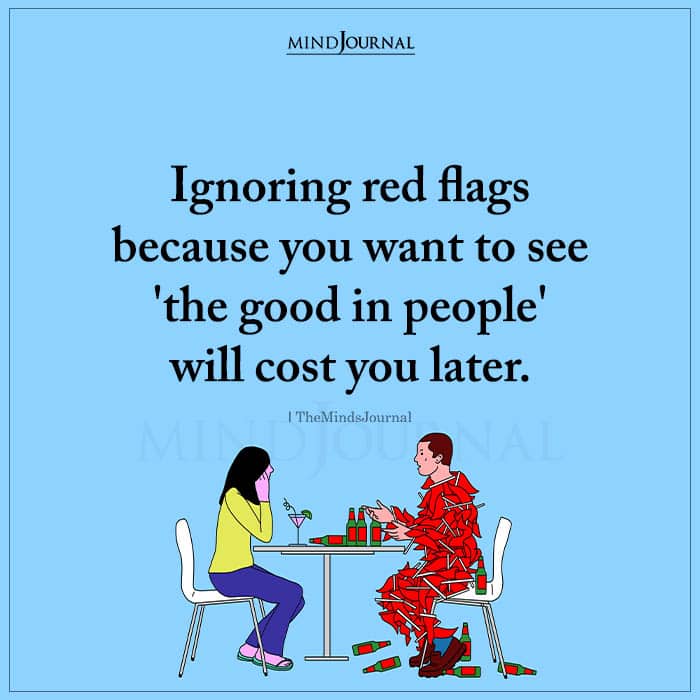
major relationship red flags

5. Feeling uncomfortable about or around them.

Trauma survivors, specifically those with a family origin of trauma, have learned a coping mechanism to ignore or even deny their reality. It was quite literally a means of survival.

They may have been taught from a young age that people who are supposed to love them would mistreat and hurt them, so this behavior is normalized in their adult dating relationships.

How do you feel when you are around this person? Anxious? On edge? Unseen? That will say a lot.

The opposite is also true: If you feel that they are perfect or too good to be true, they probably are. All of us have imperfections, and someone presenting themself as being perfect represents a red flag in itself.

Pay attention to the amount of time you spend trying to decipher untruths or lies. When you catch yourself saying, “That just does not make any sense,” trust that feeling.

Related: 6 Early Red Flags Of A Toxic Relationship

There are many ways dysfunctional and potentially abusive patterns can manifest in a budding relationship. Everyone can have a bad day. People can be misunderstood, especially if they are nervous, but look for patterns in how they treat you and others. Different interests or goals can be discussed and explored healthily, but maltreatment and abuse cannot be compromised.

It’s easier to get out of a potentially toxic relationship when it first begins.


Written By Kaytlyn Gillis  
Originally Appeared On Psychology Today  
Relationship Red Flags Trauma Survivors pin

Published On:

Last updated on:

Kaytlyn Gillis LCSW-BACS

Kaytee Gillis, LCSW-BACS, is a psychotherapist, advocate, and author with a passion for working with survivors of family trauma. She received her BA in psychology from Clark University, and her Master’s from Tulane. Her work focuses on assisting survivors of family and intimate partner abuse and assisting survivors with navigating the legal system to receive protection. Her recent book, Invisible Bruises: How a Better Understanding of the Patterns of Domestic Violence Can Help Survivors Navigate the Legal System, sheds light on the ways that the legal system can perpetuate the cycle of domestic violence by failing to recognize patterns that would otherwise hold perpetrators accountable and protect survivors. Gillis provides training on recognizing patterns of domestic violence, treating the aftermath of abuse, and helping survivors move forward.

Disclaimer: The informational content on The Minds Journal have been created and reviewed by qualified mental health professionals. They are intended solely for educational and self-awareness purposes and should not be used as a substitute for professional medical advice, diagnosis, or treatment. If you are experiencing emotional distress or have concerns about your mental health, please seek help from a licensed mental health professional or healthcare provider.

Leave a Comment

Today's Horoscope

Daily Horoscope 25 March 2026: Prediction for Zodiac Signs

Daily Horoscope 25 March, 2026: Prediction For Each Zodiac Sign

Today, the message is simple: stop running on autopilot.

Latest Quizzes

Image Personality Test: Which Woman Reveals Your True Self?

Which Woman Are You? A Personality Test That Reveals Your True Inner Nature

This personality test reveals your true self based on the woman you choose. Simple, fun, and surprisingly accurate!

Latest Quotes

Manipulative Tactics in Relationships: Gaslighting, Love Bombing, and Emotional Control

Manipulative Tactics in Relationships: Gaslighting, Love Bombing, and Emotional Control

Manipulative tactics in relationships often start subtly—gaslighting, love bombing, guilt trips, or mixed signals. Once you recognize these emotional manipulation patterns, you can protect your mental health and step away from toxic dynamics.

Readers Blog

Caption This Image and Selected Wisepicks – 22 March 2026

Caption This Image and Selected Wisepicks – 22 March 2026

Ready to unleash your inner wordsmith? ✨??☺️ Now’s your chance to show off your wit, charm, or sheer genius in just one line! Whether it’s laugh-out-loud funny or surprisingly deep, we want to hear it.Submit your funniest, wittiest, or most thought-provoking caption in the comments. We’ll pick 15+ winners to be featured on our website…

Latest Articles

For people with a traumatic past, getting into a new relationship and trusting someone again can be nothing short of scary and challenging. In order to ensure that you don’t get exploited or hurt again, look out for some major relationship red flags on your first date, or the first few initial dates you have with them.

Key Points

  • Due to a history of normalizing unhealthy behaviors, trauma survivors may struggle to identify red flags in potential dating partners.
  • Recognizing critical red flags can help prevent attachment to a potentially unhealthy partner.
  • Identifying red flags early, and stepping away, can help empower trauma survivors find the relationship they deserve.

As a therapist, I often talk to my patients about red flags—those gut feelings you have when you know something is off—and how to help them align with your self-identified deal breakers.

For trauma survivors, discussions of red flags are necessary for the healing process as they branch back out into dating. Many survivors may not know how to filter out unhealthy behaviors due to a history of normalizing or even denying the abuse they experienced.

Here are five things to look out for that trauma survivors may tend to normalize.

Related: 9 Warning Signs That Your New Flame Isn’t Worth Pursuing

5 major relationship red flags that trauma survivors may tend to normalize

1. Bashing their ex-partner/parent of their child.

I get it: Things happen; hearts are broken, and resentment builds. But if a new dating partner is speaking harshly about others on one of their first dates with you, this is a huge red flag.

It shows an enormous lack of respect toward others in their life and ultimately speaks to their integrity. There is an appropriate way and time to discuss concerns and issues with previous partners, so watch how this is done.

In my work with family trauma and domestic violence survivors, we discuss the best way to approach their traumatic history with a new partner, who will undoubtedly need to know about their past if the relationship moves further.

Mentioning a concern or issue is different from bashing a person maliciously. We practice using phrases such as “That’s a conversation for another day. Things did not end well, but I wish them the best,” or “I do not have a good history/relationship with my [ex/child’s mother, etc.]. Perhaps I can fill you in as we get to know each other more.”

Watch out for someone bent on bashing an ex-lover to the point of obsessing about them. At best, they are not over them and are therefore emotionally unavailable. There is a difference between a bad breakup and an unhealthy amount of anger and resentment. 

Remember: If they do it to others, they can do it to you.

major relationship red flags

2. “So let’s talk about you. What do you think of me?”

It’s important to mention that we all have varying comfort levels with communication. Maybe they are new to dating or struggle with social situations, so watch how it is done.

Do they appear anxious and talk to fill space? Do they stop and allow you to talk when you attempt to interject, or does it appear that they really are not interested in what you have to say?

Talking only about themselves and not about you usually shows that they are not capable of giving you the attention you deserve.

I once went on a date with someone who didn’t notice I had not ordered anything until the server brought the check. Of course, they asked me to split it.

Related: 5 Dating Deal-Breakers To Never Ignore

3. Making decisions without your consent.

Are they unwilling to compromise on decisions or hear your views? All relationships need compromise, and communication is essential to bridge the gap between different ideas and desires.

The same goes for sexual intimacy or staying at each other’s place. While there is no set timeline for intimacy or moving in together, pay attention to when you feel their request is one it seems they think you can’t decline: This is a violation of your boundaries. Any change of relationship status or progression should involve full and open communication of both parties.

4. Pay attention to their sense of entitlement.

Are they rude to the server and valet? Watching how a new date talks to wait staff is very telling. When a person is essentially being paid to do things for us, they can be an easy target for people who feel above other human beings.

If they are kind to you but rude to others, this is a red flag that their behavior is not genuine. Pay attention to how they treat servers, employees, coworkers, and especially animals.

Malcolm S. Forbes once said, “You can easily judge the character of a man by how he treats those who can do nothing for him.”

major relationship red flags

5. Feeling uncomfortable about or around them.

Trauma survivors, specifically those with a family origin of trauma, have learned a coping mechanism to ignore or even deny their reality. It was quite literally a means of survival.

They may have been taught from a young age that people who are supposed to love them would mistreat and hurt them, so this behavior is normalized in their adult dating relationships.

How do you feel when you are around this person? Anxious? On edge? Unseen? That will say a lot.

The opposite is also true: If you feel that they are perfect or too good to be true, they probably are. All of us have imperfections, and someone presenting themself as being perfect represents a red flag in itself.

Pay attention to the amount of time you spend trying to decipher untruths or lies. When you catch yourself saying, “That just does not make any sense,” trust that feeling.

Related: 6 Early Red Flags Of A Toxic Relationship

There are many ways dysfunctional and potentially abusive patterns can manifest in a budding relationship. Everyone can have a bad day. People can be misunderstood, especially if they are nervous, but look for patterns in how they treat you and others. Different interests or goals can be discussed and explored healthily, but maltreatment and abuse cannot be compromised.

It’s easier to get out of a potentially toxic relationship when it first begins.


Written By Kaytlyn Gillis  
Originally Appeared On Psychology Today  
Relationship Red Flags Trauma Survivors pin

Published On:

Last updated on:

Kaytlyn Gillis LCSW-BACS

Kaytee Gillis, LCSW-BACS, is a psychotherapist, advocate, and author with a passion for working with survivors of family trauma. She received her BA in psychology from Clark University, and her Master’s from Tulane. Her work focuses on assisting survivors of family and intimate partner abuse and assisting survivors with navigating the legal system to receive protection. Her recent book, Invisible Bruises: How a Better Understanding of the Patterns of Domestic Violence Can Help Survivors Navigate the Legal System, sheds light on the ways that the legal system can perpetuate the cycle of domestic violence by failing to recognize patterns that would otherwise hold perpetrators accountable and protect survivors. Gillis provides training on recognizing patterns of domestic violence, treating the aftermath of abuse, and helping survivors move forward.

Leave a Comment

    Leave a Comment