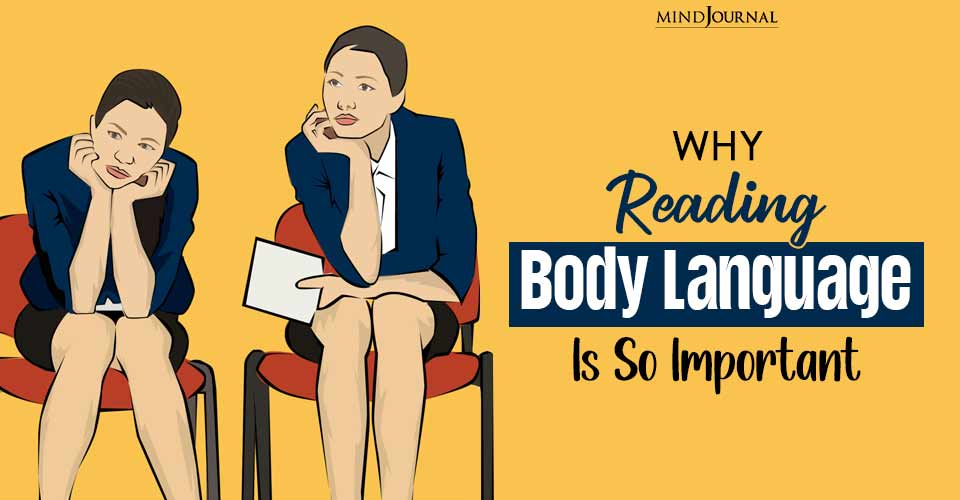
The Power of Perception: Why Reading Emotional Expressions is Vital

Author : Shahram Heshmat Ph.D.

Understanding emotional expressions and reading body language is crucial to understanding people and their thoughts and intentions. But how to read body language? Let’s find that out!

Key Points

  • Emotions are communicated in movements of the body and gaze.
  • People perceive intentions, feelings, and appraisals from expressive behavior.
  • Emotional expressions coordinate social interactions.

Expressive behavior is a core element of emotion that plays an important role in human social interactions (Keltner, 2019). Every day, we spend a significant amount of time observing the emotions of others, interpreting what these signals might mean, and deciding how to react.

We are endowed with the capacity to speak without talking. For example, when someone flips you the bird, you know exactly what that means.

Related: 10 Body Language Cues That Can Instantly Give You Away

Understanding Emotional Expressions

Emotional expressions include bodily posture, voice pitch, blushing, smiling, showing one’s teeth in anger, laughing, frowning, and crying—as well as things like the gaze aversion of shame and embarrassment, the chest expansion of pride, and the face touch of embarrassment.

Emotional expressions communicate information to others about our feelings, intentions, and attitudes. Individuals looking angry are likely to be perceived as dominant and those showing embarrassment as caring about others’ reactions.

When people lie, they tend to be careful (not waving arms or jabbing fingers) and unconsciously inhibit their motions. People concocting a story prepare a script that is tight and lacking in detail.

By contrast, people telling the truth have no script, tend to recall more irrelevant details, and may even make mistakes.

Our face is a window into our emotional states. Facial expressions are used by humans to convey various types of meaning in various contexts. Even without language, our faces say something about what type of person we are and how we feel.

For example, the expression of awe involves the widening of the eyes and a smile as well as a head movement up. A closed mouth often accompanies decision-making. Decision-making requires withdrawal and concentration (Ekman, 2003).

Understanding emotional expressions and body language

The Role of Context

Yet we do not perceive faces in a vacuum. Context is essential to correctly interpret facial expressions. Evidence has shown that people in fearful contexts, for example, tend to rate neutral faces as significantly more negative and arousing than neutral faces in both neutral and happy contexts (Calbi et al. 2017).

An individual vulnerable to social anxiety will also likely interpret ambiguous facial expressions as a sign of disapproval.

Emotional expressions make it possible for the emotion felt by one person to shape the behavior of others.

For example, expressions of distress can evoke sympathy in perceivers. The emotion of embarrassment triggers a positive emotional response.

Related: Your Body Doesn’t Lie. 40+ Signs And Cues To Strip Down Someone’s Personality

Psychologists have found that reddening cheeks soften others’ judgments of bad or clumsy behavior and help to strengthen social bonds rather than strain them. The blush is a signal of awareness and regret for the mistake they have made.

The inability to judge emotional expressions can result in miscommunication. Individuals who have difficulties in producing facial expressions (e.g., patients with Parkinson’s disease) say that their social interactions are made difficult.

Evidence shows that delinquent youths who get into trouble with the law may find it hard to interpret facial expressions of disgust or anger more often than their peers (Sato 2009).

Misrecognizing an expression may lead them to see a situation as more hostile than it is. Similarly, heavy drinking can affect the ability to recognize other people’s facial emotions.

Research shows that adopting facial expressions of emotion leads to corresponding feelings (Laird, 2007). “Fake it till you make it”—that is, feelings follow from managing our facial expressions, actions, gaze, and postures.
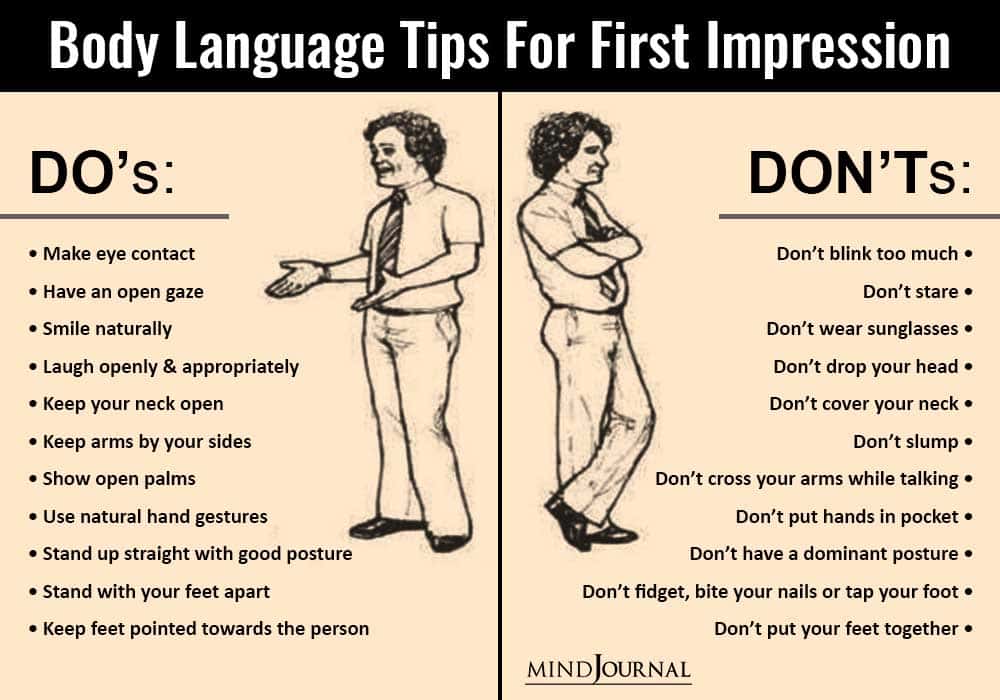
Understanding emotional expressions and decoding body language

An expression of pride produces determination. Projecting pride motivates people to try harder in problem-solving. We feel sad if we sit in a slumped posture or talk in a slow and low voice.

For anger management, Buddhism advises us that we should force ourselves to relax our faces, and soften our voices; our internal state will soon come to resemble our external state, and our anger will dissipate.

Related: Power-Packed Body Language Tips For Making A Killer First Impression

It’s reported that the late fashion designer Oscar de la Renta believed in beauty, not for beauty’s sake, but because he understood that elevating the outside could help elevate the inside.

References:

Calbi, M., Heimann, K., Barratt, D., Siri, F., Umiltà, M. A., & Gallese, V. (2017). How Context Influences Our Perception of Emotional Faces: A Behavioral Study on the Kuleshov Effect. Frontiers in psychology, 8, 1684.
Ekman, P. (2003). Darwin, deception, and facial expression. Ann. N. Y. Acad. Sci. 1000, 205–221.

Keltner, J. L. Tracy, D. Sauter, A. Cowen (2019), What basic emotion theory really says for the twenty-first century study of emotion. J. Nonverbal Behav. 43, 195–201.

Laird, J. D. (2007). Feelings: The perception of self. Oxford University Press.

Sato, W., Uono, S., Matsuura, N., & Toichi, M. (2009). Misrecognition of facial expressions in delinquents. Child and Adolescent Psychiatry and Mental Health, 3, 27.

Written By Shahram Heshmat
Originally Appeared On Psychology Today
understanding emotional expressions

Published On:

Last updated on:

Disclaimer: The informational content on The Minds Journal have been created and reviewed by qualified mental health professionals. They are intended solely for educational and self-awareness purposes and should not be used as a substitute for professional medical advice, diagnosis, or treatment. If you are experiencing emotional distress or have concerns about your mental health, please seek help from a licensed mental health professional or healthcare provider.

Leave a Comment

Today's Horoscope

Daily Horoscope 25 March 2026: Prediction for Zodiac Signs

Daily Horoscope 25 March, 2026: Prediction For Each Zodiac Sign

Today, the message is simple: stop running on autopilot.

Latest Quizzes

Image Personality Test: Which Woman Reveals Your True Self?

Which Woman Are You? A Personality Test That Reveals Your True Inner Nature

This personality test reveals your true self based on the woman you choose. Simple, fun, and surprisingly accurate!

Latest Quotes

The Hardest Pill to Swallow: When You Meant Little to Those Who Meant Everything to You

The Hardest Pill to Swallow: When You Meant Little to Those Who Meant Everything to You

The hardest pill to swallow is realizing you meant so little in a one sided relationship. That heartbreak hurts, humbles, and ultimately teaches you to stop overgiving and start choosing yourself.

Readers Blog

Caption This Image and Selected Wisepicks – 22 March 2026

Caption This Image and Selected Wisepicks – 22 March 2026

Ready to unleash your inner wordsmith? ✨??☺️ Now’s your chance to show off your wit, charm, or sheer genius in just one line! Whether it’s laugh-out-loud funny or surprisingly deep, we want to hear it.Submit your funniest, wittiest, or most thought-provoking caption in the comments. We’ll pick 15+ winners to be featured on our website…

Latest Articles

Understanding emotional expressions and reading body language is crucial to understanding people and their thoughts and intentions. But how to read body language? Let’s find that out!

Key Points

  • Emotions are communicated in movements of the body and gaze.
  • People perceive intentions, feelings, and appraisals from expressive behavior.
  • Emotional expressions coordinate social interactions.

Expressive behavior is a core element of emotion that plays an important role in human social interactions (Keltner, 2019). Every day, we spend a significant amount of time observing the emotions of others, interpreting what these signals might mean, and deciding how to react.

We are endowed with the capacity to speak without talking. For example, when someone flips you the bird, you know exactly what that means.

Related: 10 Body Language Cues That Can Instantly Give You Away

Understanding Emotional Expressions

Emotional expressions include bodily posture, voice pitch, blushing, smiling, showing one’s teeth in anger, laughing, frowning, and crying—as well as things like the gaze aversion of shame and embarrassment, the chest expansion of pride, and the face touch of embarrassment.

Emotional expressions communicate information to others about our feelings, intentions, and attitudes. Individuals looking angry are likely to be perceived as dominant and those showing embarrassment as caring about others’ reactions.

When people lie, they tend to be careful (not waving arms or jabbing fingers) and unconsciously inhibit their motions. People concocting a story prepare a script that is tight and lacking in detail.

By contrast, people telling the truth have no script, tend to recall more irrelevant details, and may even make mistakes.

Our face is a window into our emotional states. Facial expressions are used by humans to convey various types of meaning in various contexts. Even without language, our faces say something about what type of person we are and how we feel.

For example, the expression of awe involves the widening of the eyes and a smile as well as a head movement up. A closed mouth often accompanies decision-making. Decision-making requires withdrawal and concentration (Ekman, 2003).

Understanding emotional expressions and body language

The Role of Context

Yet we do not perceive faces in a vacuum. Context is essential to correctly interpret facial expressions. Evidence has shown that people in fearful contexts, for example, tend to rate neutral faces as significantly more negative and arousing than neutral faces in both neutral and happy contexts (Calbi et al. 2017).

An individual vulnerable to social anxiety will also likely interpret ambiguous facial expressions as a sign of disapproval.

Emotional expressions make it possible for the emotion felt by one person to shape the behavior of others.

For example, expressions of distress can evoke sympathy in perceivers. The emotion of embarrassment triggers a positive emotional response.

Related: Your Body Doesn’t Lie. 40+ Signs And Cues To Strip Down Someone’s Personality

Psychologists have found that reddening cheeks soften others’ judgments of bad or clumsy behavior and help to strengthen social bonds rather than strain them. The blush is a signal of awareness and regret for the mistake they have made.

The inability to judge emotional expressions can result in miscommunication. Individuals who have difficulties in producing facial expressions (e.g., patients with Parkinson’s disease) say that their social interactions are made difficult.

Evidence shows that delinquent youths who get into trouble with the law may find it hard to interpret facial expressions of disgust or anger more often than their peers (Sato 2009).

Misrecognizing an expression may lead them to see a situation as more hostile than it is. Similarly, heavy drinking can affect the ability to recognize other people’s facial emotions.

Research shows that adopting facial expressions of emotion leads to corresponding feelings (Laird, 2007). “Fake it till you make it”—that is, feelings follow from managing our facial expressions, actions, gaze, and postures.

Understanding emotional expressions and decoding body language

An expression of pride produces determination. Projecting pride motivates people to try harder in problem-solving. We feel sad if we sit in a slumped posture or talk in a slow and low voice.

For anger management, Buddhism advises us that we should force ourselves to relax our faces, and soften our voices; our internal state will soon come to resemble our external state, and our anger will dissipate.

Related: Power-Packed Body Language Tips For Making A Killer First Impression

It’s reported that the late fashion designer Oscar de la Renta believed in beauty, not for beauty’s sake, but because he understood that elevating the outside could help elevate the inside.

References:

Calbi, M., Heimann, K., Barratt, D., Siri, F., Umiltà, M. A., & Gallese, V. (2017). How Context Influences Our Perception of Emotional Faces: A Behavioral Study on the Kuleshov Effect. Frontiers in psychology, 8, 1684.
Ekman, P. (2003). Darwin, deception, and facial expression. Ann. N. Y. Acad. Sci. 1000, 205–221.

Keltner, J. L. Tracy, D. Sauter, A. Cowen (2019), What basic emotion theory really says for the twenty-first century study of emotion. J. Nonverbal Behav. 43, 195–201.

Laird, J. D. (2007). Feelings: The perception of self. Oxford University Press.

Sato, W., Uono, S., Matsuura, N., & Toichi, M. (2009). Misrecognition of facial expressions in delinquents. Child and Adolescent Psychiatry and Mental Health, 3, 27.

Written By Shahram Heshmat
Originally Appeared On Psychology Today
understanding emotional expressions

Published On:

Last updated on:

Shahram Heshmat Ph.D.

Leave a Comment

    Leave a Comment