7 Common Cons Your Brain Uses To Lie To You

Author : Christine Fonseca

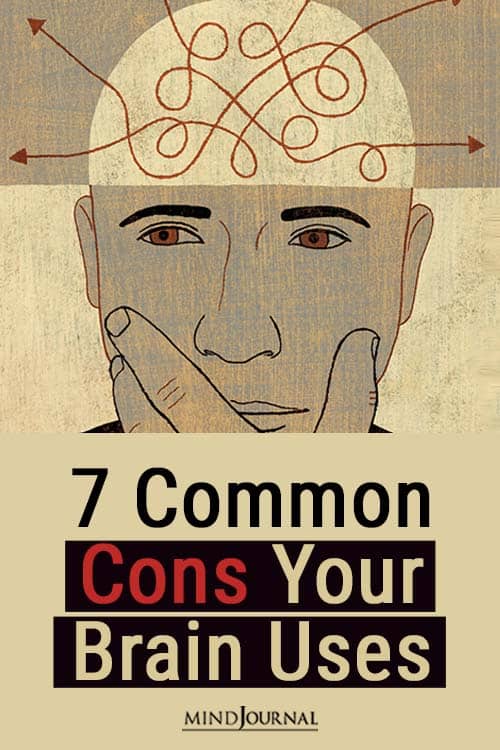
You might not know this, but there are a few tricks and cons that your brain uses at times to make you think things that are not the truth. And the quicker you understand this, the better it will be for your peace of mind.

Your brain is a liar. It makes assumptions not rooted in fact, draw conclusions that are more about fear than any kind of logical argument, and has insights often manipulated by the media and other compelling stories. Researchers have known for years that memories are not a good source of information.1 

Why? Because your brain is an unreliable narrator. It doesnโ€™t understand truth as we often define itโ€”aligning with fact or reality. Instead, it functions on personal truth: facts and reality that sift through the filter of our personal biases and perceptions about the world. This โ€œtruthโ€ is also subject to the cognition errors we make daily.2

Often defined as Automatic Negative Thoughts, or A.N.T.s, the brain will frequently engage in a series of negative thoughts. These thoughts often lock you into a thinking pattern that creates stress and anxiety and prevents growth.3 One of the reasons this happens is the brainโ€™s need to maintain the status quo as a survival mechanism.

But in locking your thinking, you resist growth opportunities.4 I call this thinking โ€œcons.โ€ It is your brainโ€™s way of convincing you that partial or untrue statements are the truth. It is how your mind lies to you. Cognition errors, as they are also called in mental health circles, can deepen patterns of depression and make mood disorders more challenging to manage.

Related: 8 Mindset Shifts To Stop Repetitive Destructive Thoughts

Seven Common Cons

The following seven cons are some of the most typical ways your brain lies to you.3 Which ones can you see in yourself or your loved ones?

1. The Sky Is Falling Con.

In this con, you make a problem more significant than it is, often imagining that the absolute worst thing is about to occur.

2. The Black and White Con.

Here, you view everything as always great or always lousy. There is no in-between with a black and white con.

3. The Pessimistโ€™s Code.

I often see this con in cases of trauma or abuse. Here, your threat perception is hyper-aware that you only see the negative in any situation. There is no โ€œgoodโ€ from your perspective.

4. The Perfectionistโ€™s Mantra.

Many high-potential children and adults fall into this con. Here, you focus on what you consider your flaws and minimize any acknowledgment of your strengths.

5. The Negative Label.

The original โ€œANTโ€ term was developed with this con in mind. With this, you label yourself in harshly negative ways, focusing on small aspects of self that contribute to your negative narrative.
Break The Cons Your Brain Uses

6. The Fortune Teller.

In this con, you tell yourself what other people are thinking about youโ€”and always in the most negative of ways.

7. The Victimโ€™s Rant.

This is a common con in children. Here, you blame other people for everything that happens, always keeping yourself as the victim.

Each of these cons shares a common goalโ€”to keep you from growing or experiencing something different. Fortunately, there are things you can do and teach your children to do that can help move past these cons together.

Related: 7 Negative Mindsets That Undercut Your Mental Strength and Resilience

Here Are 4 Things You Can Do To Counter The Cons Your Brain Uses

1. Acknowledge and accept that your thoughts arenโ€™t always correct. 

Learn to discern them and adjust as needed.

2. Practice witnessing your thoughts to recognize when your brain may be trying to con you. 

The more you witness, the more control you can begin to gain over your thoughts.

3. Think intentionally. 

When you recognize the con, immediately quiet your thoughts and correct the errors. Reframe your thoughts from the negative con to something more growth-oriented.

By actively engaging in self-compassion, you will be able to practice reframing your brainโ€™s cons.

Related: 15 Common Cognitive Distortions That Twist Your Thinking

It may be hard to initially learn to recognize when your brain is lying to you. Likewise, it can be tough to teach your children about the brainโ€™s cons. But taking the time to learn about your personal cons and practicing your reframing skills will allow you to help your children do the same.

References:

1. Loftus, E. (1996). Eyewitness Testimony. Cambridge, MA: Harvard University Press.
2. Fonseca, C. (2017). Letting Go: A Girlโ€™s Guide to Breaking Free of Stress and Anxiety. Waco, TX: Prufrock Press.
3. Amen, D. (2015). Change Your Brain, Change Your Life: The breakthrough Program for Conquering Anxiety, Depression, Obsessiveness, Lack of Focus, Anger, and Memory Problems (2nd ed). New York, NY: Harmony Books.
4. Fonseca, C. (2015). Raising the Shy Child: A Parentโ€™s Guide to Social Anxiety. Waco, TX: Prufrock Press.

Written By Christine Fonseca
Originally Appeared In Psychology Today
Your Brain Is Liar Pin

Published On:

Last updated on:

Christine Fonseca

Christine Fonseca is a licensed educational psychologist, critically acclaimed author, and a nationally recognized speaker on topics related to educational psychology, mental health, giftedness, and using storytelling to heal past wounds. Using her experience consulting and coaching educators and parents, Christine brings her expertise to Psychology Today, authoring the parenting blog Parenting for A New Generation. She has written self-help articles for Parents.com, Johnson & Johnson, Quiet Revolution, and Justine Magazine. Christineโ€™s critically acclaimed titles include Emotional Intensity in Gifted Students, The Caring Child, Letting Go: A Girlโ€™s Guide to Breaking Free of Stress and Anxiety, and the action-packed Young Adult series, the Solomon Experiments. Christine lives in Southern California with her husband and children.

Disclaimer: The informational content on The Minds Journal have been created and reviewed by qualified mental health professionals. They are intended solely for educational and self-awareness purposes and should not be used as a substitute for professional medical advice, diagnosis, or treatment. If you are experiencing emotional distress or have concerns about your mental health, please seek help from a licensed mental health professional or healthcare provider.

Leave a Comment

Today's Horoscope

Daily Horoscope 25 March 2026: Prediction for Zodiac Signs

Daily Horoscope 25 March, 2026: Prediction For Each Zodiac Sign

Today, the message is simple: stop running on autopilot.

Latest Quizzes

Image Personality Test: Which Woman Reveals Your True Self?

Which Woman Are You? A Personality Test That Reveals Your True Inner Nature

This personality test reveals your true self based on the woman you choose. Simple, fun, and surprisingly accurate!

Latest Quotes

The Hardest Pill to Swallow: When You Meant Little to Those Who Meant Everything to You

The Hardest Pill to Swallow: When You Meant Little to Those Who Meant Everything to You

The hardest pill to swallow is realizing you meant so little in a one sided relationship. That heartbreak hurts, humbles, and ultimately teaches you to stop overgiving and start choosing yourself.

Readers Blog

Caption This Image and Selected Wisepicks โ€“ 22 March 2026

Caption This Image and Selected Wisepicks โ€“ 22 March 2026

Ready to unleash your inner wordsmith? โœจ??โ˜บ๏ธ Nowโ€™s your chance to show off your wit, charm, or sheer genius in just one line! Whether itโ€™s laugh-out-loud funny or surprisingly deep, we want to hear it.Submit your funniest, wittiest, or most thought-provoking caption in the comments. Weโ€™ll pick 15+ winners to be featured on our website…

Latest Articles

You might not know this, but there are a few tricks and cons that your brain uses at times to make you think things that are not the truth. And the quicker you understand this, the better it will be for your peace of mind.

Your brain is a liar. It makes assumptions not rooted in fact, draw conclusions that are more about fear than any kind of logical argument, and has insights often manipulated by the media and other compelling stories. Researchers have known for years that memories are not a good source of information.1 

Why? Because your brain is an unreliable narrator. It doesnโ€™t understand truth as we often define itโ€”aligning with fact or reality. Instead, it functions on personal truth: facts and reality that sift through the filter of our personal biases and perceptions about the world. This โ€œtruthโ€ is also subject to the cognition errors we make daily.2

Often defined as Automatic Negative Thoughts, or A.N.T.s, the brain will frequently engage in a series of negative thoughts. These thoughts often lock you into a thinking pattern that creates stress and anxiety and prevents growth.3 One of the reasons this happens is the brainโ€™s need to maintain the status quo as a survival mechanism.

But in locking your thinking, you resist growth opportunities.4 I call this thinking โ€œcons.โ€ It is your brainโ€™s way of convincing you that partial or untrue statements are the truth. It is how your mind lies to you. Cognition errors, as they are also called in mental health circles, can deepen patterns of depression and make mood disorders more challenging to manage.

Related: 8 Mindset Shifts To Stop Repetitive Destructive Thoughts

Seven Common Cons

The following seven cons are some of the most typical ways your brain lies to you.3 Which ones can you see in yourself or your loved ones?

1. The Sky Is Falling Con.

In this con, you make a problem more significant than it is, often imagining that the absolute worst thing is about to occur.

2. The Black and White Con.

Here, you view everything as always great or always lousy. There is no in-between with a black and white con.

3. The Pessimistโ€™s Code.

I often see this con in cases of trauma or abuse. Here, your threat perception is hyper-aware that you only see the negative in any situation. There is no โ€œgoodโ€ from your perspective.

4. The Perfectionistโ€™s Mantra.

Many high-potential children and adults fall into this con. Here, you focus on what you consider your flaws and minimize any acknowledgment of your strengths.

5. The Negative Label.

The original โ€œANTโ€ term was developed with this con in mind. With this, you label yourself in harshly negative ways, focusing on small aspects of self that contribute to your negative narrative.

Break The Cons Your Brain Uses

6. The Fortune Teller.

In this con, you tell yourself what other people are thinking about youโ€”and always in the most negative of ways.

7. The Victimโ€™s Rant.

This is a common con in children. Here, you blame other people for everything that happens, always keeping yourself as the victim.

Each of these cons shares a common goalโ€”to keep you from growing or experiencing something different. Fortunately, there are things you can do and teach your children to do that can help move past these cons together.

Related: 7 Negative Mindsets That Undercut Your Mental Strength and Resilience

Here Are 4 Things You Can Do To Counter The Cons Your Brain Uses

1. Acknowledge and accept that your thoughts arenโ€™t always correct. 

Learn to discern them and adjust as needed.

2. Practice witnessing your thoughts to recognize when your brain may be trying to con you. 

The more you witness, the more control you can begin to gain over your thoughts.

3. Think intentionally. 

When you recognize the con, immediately quiet your thoughts and correct the errors. Reframe your thoughts from the negative con to something more growth-oriented.

By actively engaging in self-compassion, you will be able to practice reframing your brainโ€™s cons.

Related: 15 Common Cognitive Distortions That Twist Your Thinking

It may be hard to initially learn to recognize when your brain is lying to you. Likewise, it can be tough to teach your children about the brainโ€™s cons. But taking the time to learn about your personal cons and practicing your reframing skills will allow you to help your children do the same.

References:

1. Loftus, E. (1996). Eyewitness Testimony. Cambridge, MA: Harvard University Press.
2. Fonseca, C. (2017). Letting Go: A Girlโ€™s Guide to Breaking Free of Stress and Anxiety. Waco, TX: Prufrock Press.
3. Amen, D. (2015). Change Your Brain, Change Your Life: The breakthrough Program for Conquering Anxiety, Depression, Obsessiveness, Lack of Focus, Anger, and Memory Problems (2nd ed). New York, NY: Harmony Books.
4. Fonseca, C. (2015). Raising the Shy Child: A Parentโ€™s Guide to Social Anxiety. Waco, TX: Prufrock Press.

Written By Christine Fonseca
Originally Appeared In Psychology Today
Your Brain Is Liar Pin

Published On:

Last updated on:

Christine Fonseca

Christine Fonseca is a licensed educational psychologist, critically acclaimed author, and a nationally recognized speaker on topics related to educational psychology, mental health, giftedness, and using storytelling to heal past wounds. Using her experience consulting and coaching educators and parents, Christine brings her expertise to Psychology Today, authoring the parenting blog Parenting for A New Generation. She has written self-help articles for Parents.com, Johnson & Johnson, Quiet Revolution, and Justine Magazine. Christineโ€™s critically acclaimed titles include Emotional Intensity in Gifted Students, The Caring Child, Letting Go: A Girlโ€™s Guide to Breaking Free of Stress and Anxiety, and the action-packed Young Adult series, the Solomon Experiments. Christine lives in Southern California with her husband and children.

Leave a Comment

    Leave a Comment