

That uneasy feeling when your thoughts and actions clash? That’s cognitive dissonance at work. If you’ve been wondering what is cognitive dissonance and how to use cognitive dissonance for personal growth, this might be your gentle nudge to lean in rather than pull away.
Have you ever felt that uncomfortable tug in your mind when a belief you’ve held onto for years suddenly doesn’t seem so solid anymore?
Or maybe you’ve made a choice that doesn’t quite align with your values, and now there’s this inner tension you can’t shake?
This is cognitive dissonance. It is the friction between what we believe and what we experience. It can feel unsettling, like standing at the edge of a precipice, unsure whether to cling to the familiar or step into something new.
But what if I told you that this discomfort isn’t something to fear? What if, instead, it is a sacred invitation to expand?
Related: Why Facts Don’t Change People’s Minds: Cognitive Dissonance
What is Cognitive Dissonance?
Cognitive dissonance happens when we hold two conflicting beliefs, values, or attitudes at the same time, or when our actions don’t align with our beliefs.
The mind craves harmony, so when contradictions arise, it pushes us toward resolution. Sometimes this happens through denial, avoidance, or resistance.
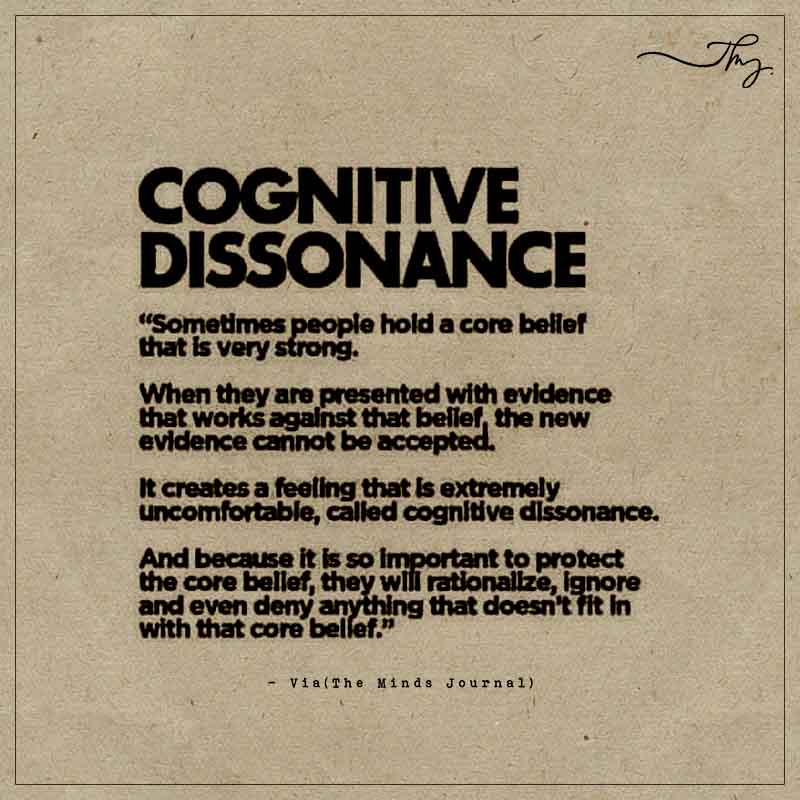
But here’s the thing. When we lean into that discomfort instead of running from it, we unlock incredible opportunities for self-awareness and growth.
Dissonance as a Spiritual Teacher
Many of us are conditioned to avoid discomfort, especially when it threatens the foundation of what we “know” to be true. But truth, real, deep, soul-aligned truth, has a way of cracking us open.
Cognitive dissonance is often a sign that something within us is ready to evolve. It is the friction that polishes the rough edges of our consciousness.
It calls us to examine old beliefs, ask new questions, and make choices that are more in alignment with our highest selves.
Rather than resisting it, we can welcome cognitive dissonance as a messenger. What is it trying to reveal? Where is it asking us to soften, to listen, to expand?
How to Use Cognitive Dissonance for Growth
1. Pause and Breathe
When you notice that inner conflict arising, instead of reacting immediately, take a deep breath. Let yourself feel the discomfort without judgment.
2. Get Curious
Ask yourself what this tension is trying to teach you. What old belief might no longer be serving you? Where are you being called to grow?
3. Hold Compassion for Yourself
Changing beliefs can feel like grieving an old version of ourselves. It is okay to feel tender in the process. Be gentle as you navigate new understandings.
4. Stay Open
Growth requires an open heart and mind. It is okay not to have all the answers right away. Sometimes, just allowing the possibility of a new perspective is enough.
5. Align Your Actions with Your Truth
As you integrate new insights, make conscious choices that reflect your expanded awareness. Living in alignment with your truth will dissolve the tension and bring a deep sense of peace.
Related: Soul Alignment: How It Helps In Recovery From Codependency
Your Discomfort is a Portal
If you find yourself feeling stretched, pulled, or uncertain, know that you are on the edge of something powerful. Growth isn’t always easy, but it is always worth it.
Every moment of tension is an invitation to step into a more authentic, more liberated version of yourself.
So, the next time cognitive dissonance arises, don’t push it away. Sit with it. Listen to it. Let it guide you toward deeper truth and greater alignment.
Your soul is always calling you forward. Trust in the unfolding.
Love & Blessings
Kelly
Written By Kelly Bramblett
Originally Appeared On Kelly Bramblett


Leave a Comment