Why Is It So Hard to Leave? The Truth About Trauma Bonding

Author : Jackie Faber

Why Is It So Hard to Leave? The Truth About Trauma Bonding

Why is it so hard to leave a relationship, even when you know it’s breaking you? The answer often lies in trauma bonding in narcissistic relationships, a painful cycle that keeps you tied to the very person causing harm.

To understand freedom, you must first ask what is trauma bonding and how it shapes your emotions.

There’s a reason you keep going back, even when every part of you knows the relationship is hurting you. You’ve promised yourself you’d leave, maybe more than once, but something keeps bringing you back.

If it feels like you’re juggling between wanting to be with them and feeling like you’re losing a piece of yourself, there’s a name for what you’re going through. It’s called trauma bonding, often born in narcissistic relationships. 

Knowing what trauma bonding is gives you the first step towards freedom. I’ll explain what it is, how to spot it, and tips to start your healing journey right here. 

Let’s start by getting to know what exactly trauma bonding is! 

Related: What Is Trauma Bonding and How It Keeps You Stuck In Abusive Relationships

What Trauma Bonding Feels Like?

A person who abuses or manipulates you can create a strong emotional bond, often referred to as ‘Trauma Bonding’. It doesn’t just affect your feelings; it also affects your body.

When someone is mean or abusive, then suddenly kind or loving, your brain gets confused. Your body starts to connect the hurt with moments of comfort, which creates a cycle that’s hard to break.

Over time, this can shut down your ability to think clearly or feel safe.

If you are uncertain whether or not you’re in a trauma bond, here are some key signs to look out for:  

  • You keep returning to someone who strategically hurt you
  • You feel emotionally dependent on them
  • You blame yourself for the abuse or arguments
  • You hold onto the good memories and ignore the pain
  • You feel anxious or panicked at the thought of leaving
  • You make excuses for their behavior to others
  • You constantly hope they’ll change, despite repeated patterns

Understanding that these feelings are part of a trauma bond, not a reflection of your strength or intelligence, is the first step toward healing.

Why Is It So Hard To Leave?

People often ask, “Why don’t you just leave?” But if you’re trauma-bonded, leaving can feel impossible.

This is because your brain has been conditioned to associate the relationship with both danger and safety. The cycle of emotional abuse triggers survival responses like fear, shame, and guilt.

You may worry about:

  • Being alone
  • Losing your identity
  • Feeling like no one else will love you
  • Leaving behind the shared history you built together

In relationships with narcissists, these fears are often put in you on purpose. A narcissist will always show that you are not good enough, while also acting like they’re the only one who can love you or make you feel valued.
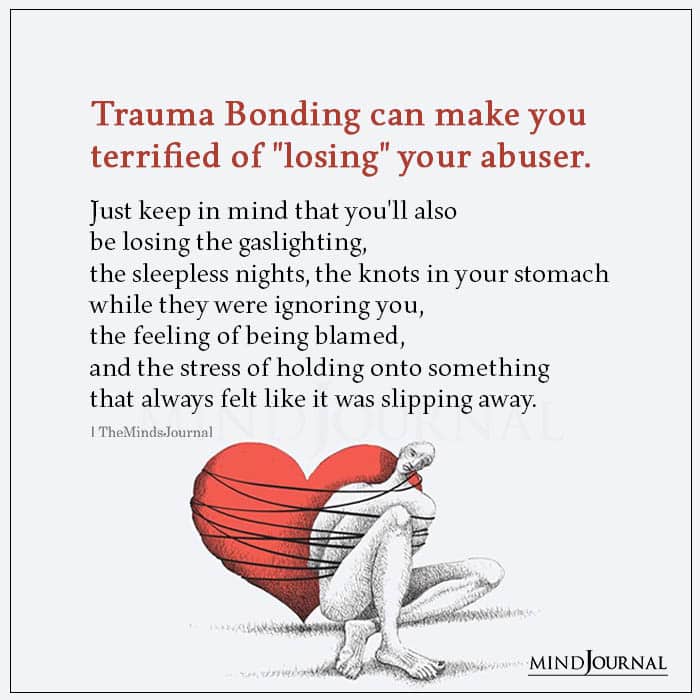
Why is it so hard to leave? Trauma bonding and narcissistic abuse

Understanding Trauma Bonding With Narcissistic Abuse

Love bombing, gaslighting, blame-shifting, and emotionally withdrawing are all forms of manipulation that fall under narcissistic abuse.

Such inconsistency deepens the trauma bond between couples since they experience doubt regarding their reality, which drives them to intensify more on their partner for emotional survival.

That is why trauma-informed support is essential. No amount of determination can help break free from a trauma bond.

You require proper knowledge of your condition, nervous system regulation, as well as empathetic direction that allows you to feel safe enough that you can see the reality without delusion. 

Support Options to Help You Heal

Healing from a trauma bond isn’t about being strong overnight. It’s about feeling safe enough to come back to yourself. At Finding Authenticity, I offer multiple ways to support women who are healing from trauma bonds and narcissistic abuse:

Narcissistic Abuse Healing Coaching: I help you gently uncover the patterns that are keeping you stuck. You don’t need to have all the answers; we take it one step at a time, together, in an environment where you are truly seen and heard.

Spiritual Coaching: So many women have lost touch with their inner voice. My education on abuse helps you reconnect with your intuition, the part of you that always knew something was wrong.

Toxic Relationship Courses: If one-on-one feels too much right now, my courses give you tools—boundaries, emotional safety, and confidence—so you can feel stronger, even if you’re still in the relationship.

Online Trauma Healing in Ontario: You don’t need to walk into a therapist’s office to start healing. I offer online support, allowing you to start wherever you are, emotionally and physically.

Whether you join my toxic relationship recovery online course, work with me as your relationship recovery coach, or simply start by reading and reflecting, I truly get it

Final Words

Trauma bonding doesn’t mean you’re weak. It means your brain and body did their best to survive something painful. But now, it’s time to shift from surviving to healing.

And for that, you don’t need a perfect plan. You just need a safe place to start reconnecting with yourself.

Related: 8 Emotional Scars That Point To Trauma From Narcissistic Abuse

Whether you join me as your relationship recovery coach or need a trauma-informed toxic relationship course to guide you step by step, I’m here to support your healing from narcissistic abuse in a way that feels safe and real.

And always remember, you are not crazy. You are not alone. And you are not beyond toxic relationship recovery!

If you’re ready to heal, grow, and reconnect with your true self, I’m here to support you. Explore coaching, courses, and transformational programs designed to help you break free from old patterns, heal trauma, and step into your personal power.

Visit findingauthenticity.ca to learn more and find the right path for your healing journey.

You don’t have to do this alone.

Get your free trauma bond recovery guide here.

Wanna chat? Book a 15 min clarity call with me!

Follow my socials: TikTokYouTube, Instagram, or Facebook.


Written By Jackie Faber
Originally Appeared On Finding Authenticity
trauma bonding

Published On:

Last updated on:

Jackie Faber

Jackie is a certified trauma-informed coach trained in energy and identity-based transformation. Her work blends emotional tools, nervous system support, and energetic alignment to help you break free of old loops — so change isn’t just temporary. It sticks, and it feels like you.

Disclaimer: The informational content on The Minds Journal have been created and reviewed by qualified mental health professionals. They are intended solely for educational and self-awareness purposes and should not be used as a substitute for professional medical advice, diagnosis, or treatment. If you are experiencing emotional distress or have concerns about your mental health, please seek help from a licensed mental health professional or healthcare provider.

Leave a Comment

Today's Horoscope

Daily Horoscope 25 March 2026: Prediction for Zodiac Signs

Daily Horoscope 25 March, 2026: Prediction For Each Zodiac Sign

Today, the message is simple: stop running on autopilot.

Latest Quizzes

Image Personality Test: Which Woman Reveals Your True Self?

Which Woman Are You? A Personality Test That Reveals Your True Inner Nature

This personality test reveals your true self based on the woman you choose. Simple, fun, and surprisingly accurate!

Latest Quotes

Manipulative Tactics in Relationships: Gaslighting, Love Bombing, and Emotional Control

Manipulative Tactics in Relationships: Gaslighting, Love Bombing, and Emotional Control

Manipulative tactics in relationships often start subtly—gaslighting, love bombing, guilt trips, or mixed signals. Once you recognize these emotional manipulation patterns, you can protect your mental health and step away from toxic dynamics.

Readers Blog

Caption This Image and Selected Wisepicks – 22 March 2026

Caption This Image and Selected Wisepicks – 22 March 2026

Ready to unleash your inner wordsmith? ✨??☺️ Now’s your chance to show off your wit, charm, or sheer genius in just one line! Whether it’s laugh-out-loud funny or surprisingly deep, we want to hear it.Submit your funniest, wittiest, or most thought-provoking caption in the comments. We’ll pick 15+ winners to be featured on our website…

Latest Articles

Why Is It So Hard to Leave? The Truth About Trauma Bonding

Why is it so hard to leave a relationship, even when you know it’s breaking you? The answer often lies in trauma bonding in narcissistic relationships, a painful cycle that keeps you tied to the very person causing harm.

To understand freedom, you must first ask what is trauma bonding and how it shapes your emotions.

There’s a reason you keep going back, even when every part of you knows the relationship is hurting you. You’ve promised yourself you’d leave, maybe more than once, but something keeps bringing you back.

If it feels like you’re juggling between wanting to be with them and feeling like you’re losing a piece of yourself, there’s a name for what you’re going through. It’s called trauma bonding, often born in narcissistic relationships. 

Knowing what trauma bonding is gives you the first step towards freedom. I’ll explain what it is, how to spot it, and tips to start your healing journey right here. 

Let’s start by getting to know what exactly trauma bonding is! 

Related: What Is Trauma Bonding and How It Keeps You Stuck In Abusive Relationships

What Trauma Bonding Feels Like?

A person who abuses or manipulates you can create a strong emotional bond, often referred to as ‘Trauma Bonding’. It doesn’t just affect your feelings; it also affects your body.

When someone is mean or abusive, then suddenly kind or loving, your brain gets confused. Your body starts to connect the hurt with moments of comfort, which creates a cycle that’s hard to break.

Over time, this can shut down your ability to think clearly or feel safe.

If you are uncertain whether or not you’re in a trauma bond, here are some key signs to look out for:  

  • You keep returning to someone who strategically hurt you
  • You feel emotionally dependent on them
  • You blame yourself for the abuse or arguments
  • You hold onto the good memories and ignore the pain
  • You feel anxious or panicked at the thought of leaving
  • You make excuses for their behavior to others
  • You constantly hope they’ll change, despite repeated patterns

Understanding that these feelings are part of a trauma bond, not a reflection of your strength or intelligence, is the first step toward healing.

Why Is It So Hard To Leave?

People often ask, “Why don’t you just leave?” But if you’re trauma-bonded, leaving can feel impossible.

This is because your brain has been conditioned to associate the relationship with both danger and safety. The cycle of emotional abuse triggers survival responses like fear, shame, and guilt.

You may worry about:

  • Being alone
  • Losing your identity
  • Feeling like no one else will love you
  • Leaving behind the shared history you built together

In relationships with narcissists, these fears are often put in you on purpose. A narcissist will always show that you are not good enough, while also acting like they’re the only one who can love you or make you feel valued.

Why is it so hard to leave? Trauma bonding and narcissistic abuse

Understanding Trauma Bonding With Narcissistic Abuse

Love bombing, gaslighting, blame-shifting, and emotionally withdrawing are all forms of manipulation that fall under narcissistic abuse.

Such inconsistency deepens the trauma bond between couples since they experience doubt regarding their reality, which drives them to intensify more on their partner for emotional survival.

That is why trauma-informed support is essential. No amount of determination can help break free from a trauma bond.

You require proper knowledge of your condition, nervous system regulation, as well as empathetic direction that allows you to feel safe enough that you can see the reality without delusion. 

Support Options to Help You Heal

Healing from a trauma bond isn’t about being strong overnight. It’s about feeling safe enough to come back to yourself. At Finding Authenticity, I offer multiple ways to support women who are healing from trauma bonds and narcissistic abuse:

Narcissistic Abuse Healing Coaching: I help you gently uncover the patterns that are keeping you stuck. You don’t need to have all the answers; we take it one step at a time, together, in an environment where you are truly seen and heard.

Spiritual Coaching: So many women have lost touch with their inner voice. My education on abuse helps you reconnect with your intuition, the part of you that always knew something was wrong.

Toxic Relationship Courses: If one-on-one feels too much right now, my courses give you tools—boundaries, emotional safety, and confidence—so you can feel stronger, even if you’re still in the relationship.

Online Trauma Healing in Ontario: You don’t need to walk into a therapist’s office to start healing. I offer online support, allowing you to start wherever you are, emotionally and physically.

Whether you join my toxic relationship recovery online course, work with me as your relationship recovery coach, or simply start by reading and reflecting, I truly get it

Final Words

Trauma bonding doesn’t mean you’re weak. It means your brain and body did their best to survive something painful. But now, it’s time to shift from surviving to healing.

And for that, you don’t need a perfect plan. You just need a safe place to start reconnecting with yourself.

Related: 8 Emotional Scars That Point To Trauma From Narcissistic Abuse

Whether you join me as your relationship recovery coach or need a trauma-informed toxic relationship course to guide you step by step, I’m here to support your healing from narcissistic abuse in a way that feels safe and real.

And always remember, you are not crazy. You are not alone. And you are not beyond toxic relationship recovery!

If you’re ready to heal, grow, and reconnect with your true self, I’m here to support you. Explore coaching, courses, and transformational programs designed to help you break free from old patterns, heal trauma, and step into your personal power.

Visit findingauthenticity.ca to learn more and find the right path for your healing journey.

You don’t have to do this alone.

Get your free trauma bond recovery guide here.

Wanna chat? Book a 15 min clarity call with me!

Follow my socials: TikTokYouTube, Instagram, or Facebook.


Written By Jackie Faber
Originally Appeared On Finding Authenticity
trauma bonding

Published On:

Last updated on:

Jackie Faber

Jackie is a certified trauma-informed coach trained in energy and identity-based transformation. Her work blends emotional tools, nervous system support, and energetic alignment to help you break free of old loops — so change isn’t just temporary. It sticks, and it feels like you.

Leave a Comment

    Leave a Comment