
What You Notice First in Someone Isn’t Random—Take This Quiz to Reveal Your Core Wound

Author : Clara Belle

What Is My Core Wound Quiz? 10 Signs That Expose It!

What if the first thing you notice in someone isn’t about them at all? It might feel like a random detail at first. Just a smile, the way they speak, or even their confidence. But your mind doesn’t pick these things up by accident. What stands out to you first can often reveal something much deeper within you. 

Take this “what is my core wound quiz” to understand the hidden emotional pattern that shapes how you see others, relationships, and even yourself.

Before you jump into this personality test, let’s understand what a core wound really is, and why something as simple as your first impression can reveal more than you think.

Core Wound Meaning
what is my core wound quiz

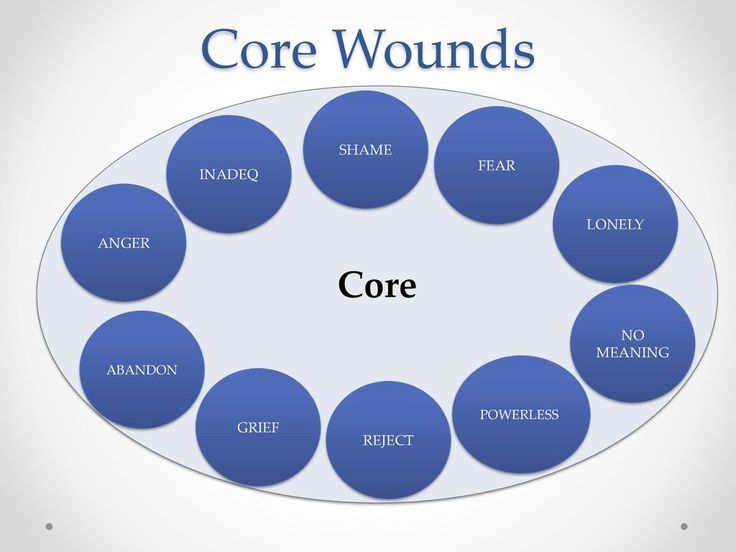
A core wound is like a deep-seated emotional injury connected to multiple factors. For instance, when you have felt abandoned or rejected, or a sense of unworthiness, or when you lacked safety. 

It gets formed at a very early age in life. Childhood experiences of trauma and unmet needs can often make you develop a fundamentally limiting belief about yourself.

Then it quietly begins to shape how you perceive people, react in relationships and even interpret further emotional experiences. 

What is My Core Wound Quiz: 10 Things That You Notice First in Someone Can Be Your Own Personality Test

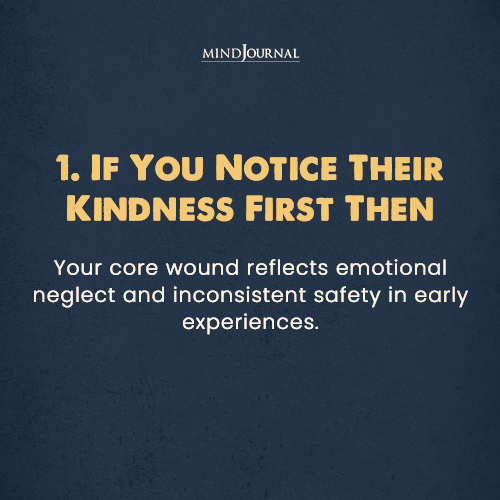
1. If You Notice Their Kindness First Then…
The first thing that you pick up from someone’s nature is how warm and soft they are emotionally. 

You get drawn by their caring gestures and the sense of emotional safety that they can create. 

This “What is My Core Wound Quiz” then reflects your hidden pain centering around emotional neglect or inconsistency from your childhood or early experiences. 

As you grow up, it manifests in the way that your mind is now always scanning for safety that was not guaranteed earlier.

2. If You Notice Their Confidence First Then…
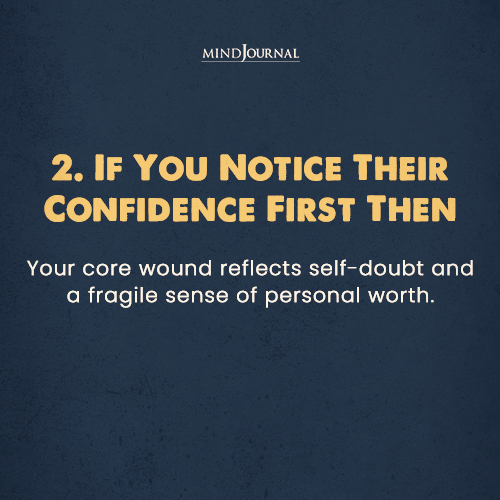
If confidence is the first thing that you notice in a person, you feel drawn to them because they seem secure and expressive to you.

You admire their ability to be self-assured. But this may point towards you feeling a sense of inadequacy within yourself. 

It further lays bare your inner wound around self-worth that continuously makes you question it.

Read More Here: Quick Tips to Build a Foundation for Confidence

3. If You Notice Their Looks or Appearance First Then…
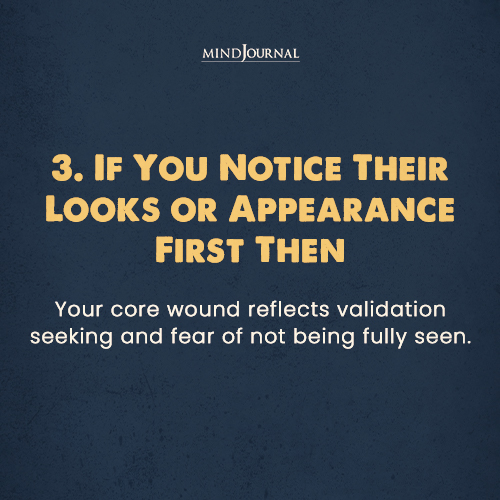
You become highly aware of how someone tends to physically present themselves generally. Hence, their looks or appearance are what first catch your eye! 

You truly “see” them, and can even identify what they don’t want you to “see”. This happens mostly because being “seen” or “not seen” has shaped how you perceive or value yourself now. 

What gets connected to this can reveal your inner wound around validation or external approval.

4. If You Notice Their Depth or Intelligence First Then…
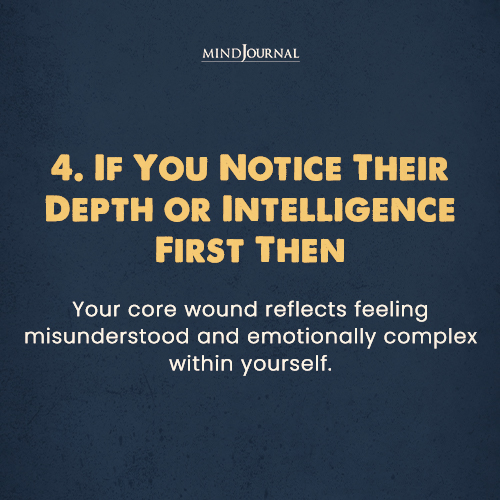
The first thing that you feel drawn to in a person is the way they think, speak, or express their ideas. It is mainly because you are looking for someone with a good level of emotional awareness and intelligence. 

You want to see if they can “get it” without you having to overexplain or overanalyze and simplify your feelings and thoughts when you’re about to let them in. 

It might be thatbe so that you see yourself as someone complex and hence want to ensure they can handle it when you let them into your world. 

This feeling grows from the experiences of being unseen or misunderstood.

5. If You Notice Their Red Flags First Then…
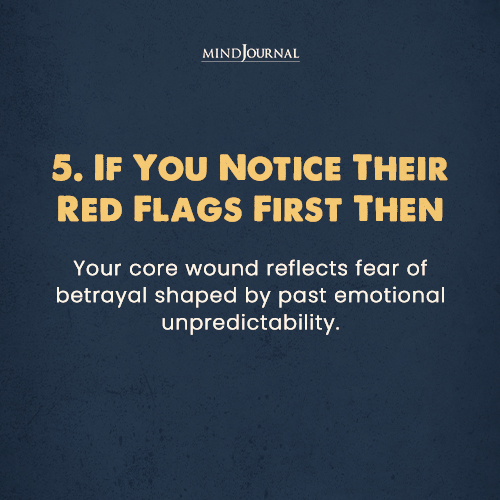
You keep noticing first the red flags in the behavior of someone, such as small inconsistencies, unreliability, tone shifts or such subtle signs of warning. 

This resulting hint from the “What is My Core Wound Quiz” may reveal a fear of betrayal or abandonment. It is common in those who could not trust their environment during childhood and saw emotional unpredictability growing up. 

This awareness now isn’t random. It is your brain’s way of protecting you.

Read More Here: 6 Heavy Effects of Childhood Emotional Neglect That You Still Feel Decades Later

6. If You Notice How They Treat You First, Specifically Then…
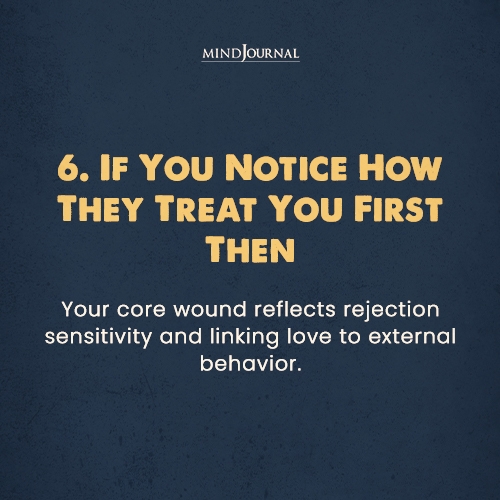
You tend to notice and become hyper-aware of how someone else treats you specifically. More often than not, it is based on a perceived sense of what you think about how they behave. 

Their tone, attention, replies, or emotional shift towards you carry more importance to you than they do from their side. 

This may reflect a rejection wound because you are afraid they could abandon you if you fail to spot meanings behind the built-up signs of them treating you. Your focus, thus, is actually not on them. It becomes about what their behavior means about you.

7. If You Notice Their Mood Shifts First Then…
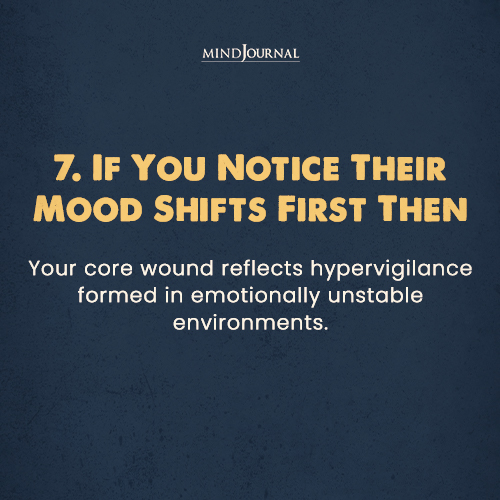
You quickly tend to notice or observe even the most subtle emotional changes. It might be so that while growing up, you had to constantly walk on eggshells. 

This often reveals an inner wound around instability that your brain had to survive. 

Scanning the entire room and everyone’s moods first was what kept you safe, and you got adapted to it. You’ve now learned to stay alert to avoid emotional disruption.

8. If You Notice Their Energy and Effort First Then…
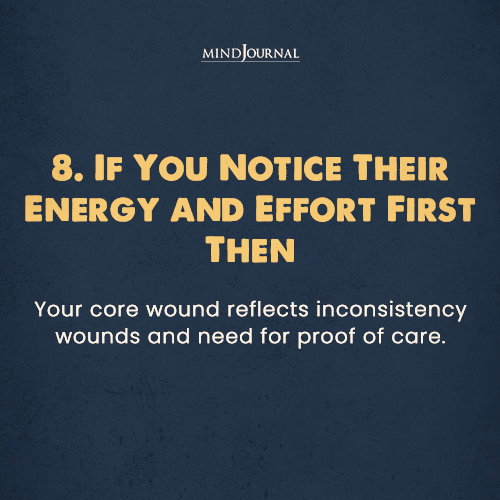
You’re drawn to how someone “feels” rather than what they say or do. You pay attention to that because to you, their consistency, replies, and how much they show up, get revealed through that.

You believe it cannot be hidden or pretended from their side. And believe that instinctive urge to be genuine.

This may point to a wound around inconsistency or being taken for granted in your earlier experiences. Effort, when revealed through the energy of the person in front of you, feels like proof that they actually care for you.

9. If You Notice How Comfortable They Are With You First Then…
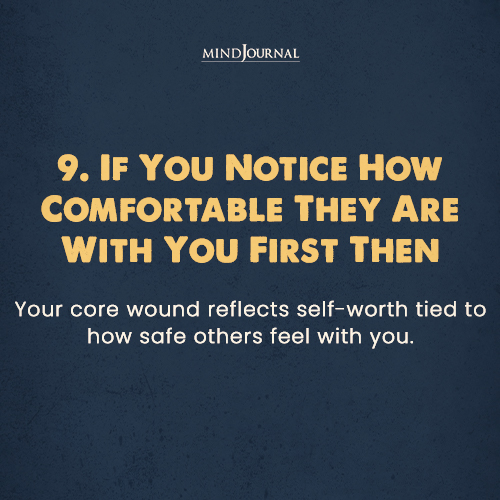
Does the answer to “what is my core wound quiz” reveal that you’re focused first on whether someone opens up, relaxes, or holds back around you? You then also notice how much they do that with you, particularly. 

You might also secretly compare how much they feel that level of comfort around others. It is because their comfort can feel like a reflection of your worth.

This way, you may be covering up an “I am bad” wounded voice by desperately proving your own goodness. It originally stems from a rejection wound or the constant feeling of being made to feel that you’re not enough while growing up.

10. If You Notice Their Boundaries First Then…
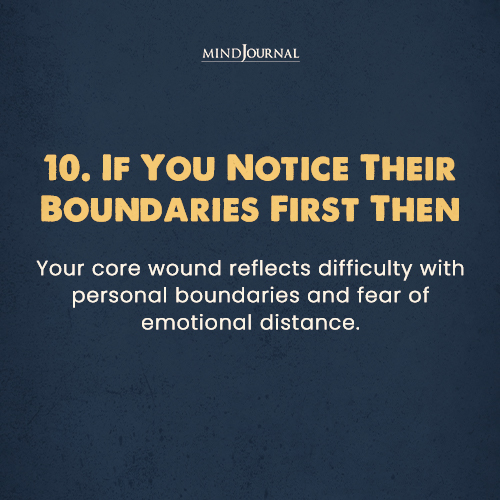
You try to notice their boundaries first to become aware of how much space they take, what they allow, and what they don’t.

This may reveal to you an inner wound around control or your own lack of personal boundaries.

If you feel guilty while setting your own boundaries, it might feel strange to you when someone else does that easily because you’re unfamiliar with it. Hence, you may be trying to understand where you stand before you step in.

So, What Is Your Core Wound?

The things you notice first often tell less about the one you are trying to observe and bring to the forefront more about you. 

When you find out the responses to “what is my core wound quiz”, it could be what you lacked, or learned to prioritize, or even had to become aware of.

Ask yourself, what do you consistently notice first in people, without trying? That instinctive focus is rarely sudden. 

It’s built on your memory, your pattern, your self-protection instincts. These are not your flaws, but your adaptations that have been working quietly in the background. Understanding them doesn’t label you. It helps you understand more about yourself.


Frequently Asked Questions

1. What are the five most common core wounds?

These are the core wounds centred around betrayal, rejection, injustice, abandonment and humiliation. These childhood trauma wounds often lead to a continuous feeling of being scared to be left alone and rejected, and end up developing trust issues as you grow up.

2. How do I know what my core wound is?

You can understand your core wounds by noticing what triggers you repeatedly and what you seek from others, whether that’s validation, reassurance or consistency. Sometimes, what you fear the most in relationships can also reveal your underlying wounds.


core wound, core wound meaning

Published On:

Last updated on:

Clara Belle

I'm Clara Belle, pursuing my graduation in English. My love for reading has taken me to different worlds of how people think and love and function. I find mental health and its matters really interesting. My writings explore my interests further. I write about relationships, personality types, mental health, and book reviews. Hope I could present something new to you today!

Disclaimer: The informational content on The Minds Journal have been created and reviewed by qualified mental health professionals. They are intended solely for educational and self-awareness purposes and should not be used as a substitute for professional medical advice, diagnosis, or treatment. If you are experiencing emotional distress or have concerns about your mental health, please seek help from a licensed mental health professional or healthcare provider.

Leave a Comment

Today's Horoscope

Weekly Horoscope 26 April To 2 May 2026

Weekly Horoscope 26 April To 2 May 2026

The stars are aligning differently this week, bringing emotional clarity, unexpected shifts in love, and powerful inner growth. Check your zodiac below!

Latest Quizzes

What Is My Core Wound Quiz? 10 Signs That Expose It!

What You Notice First in Someone Isn’t Random—Take This Quiz to Reveal Your Core Wound

What you notice first in others may quietly mirror your own needs that go unseen and unmet. Take this simple quiz to help you uncover the core wounds hidden beneath that actually shape you.

Latest Quotes

Human Psychology Facts: How These Cognitive Biases Quietly Shape Your Life

Human Psychology Facts: How These Cognitive Biases Quietly Shape Your Life

Human psychology facts show how your brain quietly edits reality. From the Pratfall Effect to the Halo Effect, these cognitive biases influence who you like, what you notice, and how confident you feel.

Readers Blog

Caption This Image and Selected Wisepicks – 26 April 2026

Caption This Image and Selected Wisepicks – 26 April 2026

Ready to unleash your inner wordsmith? ✨??☺️ Now’s your chance to show off your wit, charm, or sheer genius in just one line! Whether it’s laugh-out-loud funny or surprisingly deep, we want to hear it.Submit your funniest, wittiest, or most thought-provoking caption in the comments. We’ll pick 15+ winners to be featured on our website…

Latest Articles

What Is My Core Wound Quiz? 10 Signs That Expose It!

What if the first thing you notice in someone isn’t about them at all? It might feel like a random detail at first. Just a smile, the way they speak, or even their confidence. But your mind doesn’t pick these things up by accident. What stands out to you first can often reveal something much deeper within you. 

Take this “what is my core wound quiz” to understand the hidden emotional pattern that shapes how you see others, relationships, and even yourself.

Before you jump into this personality test, let’s understand what a core wound really is, and why something as simple as your first impression can reveal more than you think.

Core Wound Meaning

what is my core wound quiz

A core wound is like a deep-seated emotional injury connected to multiple factors. For instance, when you have felt abandoned or rejected, or a sense of unworthiness, or when you lacked safety. 

It gets formed at a very early age in life. Childhood experiences of trauma and unmet needs can often make you develop a fundamentally limiting belief about yourself.

Then it quietly begins to shape how you perceive people, react in relationships and even interpret further emotional experiences. 

What is My Core Wound Quiz: 10 Things That You Notice First in Someone Can Be Your Own Personality Test

1. If You Notice Their Kindness First Then…

The first thing that you pick up from someone’s nature is how warm and soft they are emotionally. 

You get drawn by their caring gestures and the sense of emotional safety that they can create. 

This “What is My Core Wound Quiz” then reflects your hidden pain centering around emotional neglect or inconsistency from your childhood or early experiences. 

As you grow up, it manifests in the way that your mind is now always scanning for safety that was not guaranteed earlier.

2. If You Notice Their Confidence First Then…

If confidence is the first thing that you notice in a person, you feel drawn to them because they seem secure and expressive to you.

You admire their ability to be self-assured. But this may point towards you feeling a sense of inadequacy within yourself. 

It further lays bare your inner wound around self-worth that continuously makes you question it.

Read More Here: Quick Tips to Build a Foundation for Confidence

3. If You Notice Their Looks or Appearance First Then…

You become highly aware of how someone tends to physically present themselves generally. Hence, their looks or appearance are what first catch your eye! 

You truly “see” them, and can even identify what they don’t want you to “see”. This happens mostly because being “seen” or “not seen” has shaped how you perceive or value yourself now. 

What gets connected to this can reveal your inner wound around validation or external approval.

4. If You Notice Their Depth or Intelligence First Then…

The first thing that you feel drawn to in a person is the way they think, speak, or express their ideas. It is mainly because you are looking for someone with a good level of emotional awareness and intelligence. 

You want to see if they can “get it” without you having to overexplain or overanalyze and simplify your feelings and thoughts when you’re about to let them in. 

It might be thatbe so that you see yourself as someone complex and hence want to ensure they can handle it when you let them into your world. 

This feeling grows from the experiences of being unseen or misunderstood.

5. If You Notice Their Red Flags First Then…

You keep noticing first the red flags in the behavior of someone, such as small inconsistencies, unreliability, tone shifts or such subtle signs of warning. 

This resulting hint from the “What is My Core Wound Quiz” may reveal a fear of betrayal or abandonment. It is common in those who could not trust their environment during childhood and saw emotional unpredictability growing up. 

This awareness now isn’t random. It is your brain’s way of protecting you.

Read More Here: 6 Heavy Effects of Childhood Emotional Neglect That You Still Feel Decades Later

6. If You Notice How They Treat You First, Specifically Then…

You tend to notice and become hyper-aware of how someone else treats you specifically. More often than not, it is based on a perceived sense of what you think about how they behave. 

Their tone, attention, replies, or emotional shift towards you carry more importance to you than they do from their side. 

This may reflect a rejection wound because you are afraid they could abandon you if you fail to spot meanings behind the built-up signs of them treating you. Your focus, thus, is actually not on them. It becomes about what their behavior means about you.

7. If You Notice Their Mood Shifts First Then…

You quickly tend to notice or observe even the most subtle emotional changes. It might be so that while growing up, you had to constantly walk on eggshells. 

This often reveals an inner wound around instability that your brain had to survive. 

Scanning the entire room and everyone’s moods first was what kept you safe, and you got adapted to it. You’ve now learned to stay alert to avoid emotional disruption.

8. If You Notice Their Energy and Effort First Then…

You’re drawn to how someone “feels” rather than what they say or do. You pay attention to that because to you, their consistency, replies, and how much they show up, get revealed through that.

You believe it cannot be hidden or pretended from their side. And believe that instinctive urge to be genuine.

This may point to a wound around inconsistency or being taken for granted in your earlier experiences. Effort, when revealed through the energy of the person in front of you, feels like proof that they actually care for you.

9. If You Notice How Comfortable They Are With You First Then…

Does the answer to “what is my core wound quiz” reveal that you’re focused first on whether someone opens up, relaxes, or holds back around you? You then also notice how much they do that with you, particularly. 

You might also secretly compare how much they feel that level of comfort around others. It is because their comfort can feel like a reflection of your worth.

This way, you may be covering up an “I am bad” wounded voice by desperately proving your own goodness. It originally stems from a rejection wound or the constant feeling of being made to feel that you’re not enough while growing up.

10. If You Notice Their Boundaries First Then…

You try to notice their boundaries first to become aware of how much space they take, what they allow, and what they don’t.

This may reveal to you an inner wound around control or your own lack of personal boundaries.

If you feel guilty while setting your own boundaries, it might feel strange to you when someone else does that easily because you’re unfamiliar with it. Hence, you may be trying to understand where you stand before you step in.

So, What Is Your Core Wound?

The things you notice first often tell less about the one you are trying to observe and bring to the forefront more about you. 

When you find out the responses to “what is my core wound quiz”, it could be what you lacked, or learned to prioritize, or even had to become aware of.

Ask yourself, what do you consistently notice first in people, without trying? That instinctive focus is rarely sudden. 

It’s built on your memory, your pattern, your self-protection instincts. These are not your flaws, but your adaptations that have been working quietly in the background. Understanding them doesn’t label you. It helps you understand more about yourself.


Frequently Asked Questions

1. What are the five most common core wounds?

These are the core wounds centred around betrayal, rejection, injustice, abandonment and humiliation. These childhood trauma wounds often lead to a continuous feeling of being scared to be left alone and rejected, and end up developing trust issues as you grow up.

2. How do I know what my core wound is?

You can understand your core wounds by noticing what triggers you repeatedly and what you seek from others, whether that’s validation, reassurance or consistency. Sometimes, what you fear the most in relationships can also reveal your underlying wounds.

core wound, core wound meaning

Published On:

Last updated on:

Clara Belle

I'm Clara Belle, pursuing my graduation in English. My love for reading has taken me to different worlds of how people think and love and function. I find mental health and its matters really interesting. My writings explore my interests further. I write about relationships, personality types, mental health, and book reviews. Hope I could present something new to you today!

Leave a Comment

    Leave a Comment