Toxic Children: 4 Signs and How To Deal

Author : Arthur McRiddle

It’s not necessary that adults will be toxic every time. Sometimes kids can adopt toxic characteristics too. Toxic children are disruptive in nature and are rude to their parents and others around them. They usually have temper problems and bad attitudes and show a complete disregard for any kind of rules.


Toxic Children – An Overview

There are times when children often rebel at their homes. They do not want to listen to their parents or respect their opinions or rules in the house. Rebelling is a normal part of growing up and most children upon reaching adolescence exhibit this behavior which can be a completely normal process of growing up.

However, when these rebellions start to get more frequent and more intense, it becomes a cause of worry for parents.


Toxic children no longer start respecting the established rules and even disrespect the people around them. This can lead to serious problems arising for the whole family, especially for the children themselves.

Parents in turn get overwhelmed and exhausted dealing with their children. They dread having to face their child and the environment of the home turns hostile. A vicious cycle ensues when the parents try to gain back control and the child gets more defensive and rebellious in nature.

This creates a breach in the nature of the parent-child relationship and can start to create serious problems for the child at a later stage in their lives. Dealing with toxic children can be one of the most irritating, confusing, heartbreaking, and humiliating challenges individuals have to face as parents.


Related: How Parents Can Cause Mental Health Problems In Their Children

How Do You Recognize A Toxic Child?

It can be easy to confuse the signs of toxic children with that of normal adolescents exhibiting age-appropriate behavior, which can be completely natural. However, there are some differences between the two which can be found out if examined closely.

Some of the warning signs of toxic behavior in children are:

1. Challenging the parents

When your child starts to challenge you or your decisions and tries to engage you in a hostile or aggressive game, it can be a warning sign of a toxic child. If you find your child always challenging or questioning your rules, how insignificant it might be, you know you have a problem at hand!

2. Breaking rules

Often, an adolescent will break rules set by their parents or in schools, now and then. However, when this becomes more and more frequent, and the child shows no sign of remorse, it can be a sign of a toxic child. The child shows a complete disregard for punishments and continues to break rules as a way of challenging the parents.

3. Ordering their parents and throwing tantrums

When a child starts ordering one or both parents and exerts a nature of command over simple activities like deciding the mealtime, bedtime, or screen time allowed, just for the reason of not making him/her angry, it can be a red alert to watch out for.


4. Lack of empathy and manipulation

If your child is exhibiting capricious attitudes or tries to manipulate others for their own benefit, it can be a warning sign for you. Toxic children try to emotionally manipulate and blackmail other people, especially their parents for their own selfish gains. They show a complete lack of empathy and partake in unscrupulous activities. Lack of empathy can be a warning sign for toxic children.

Related: 13 Signs Of A Toxic Parent

Why Do Children Exhibit Toxic Behavior?

A 2019 study found out that toxic children who become stubborn and indulge in risky behavior, often do so as a result of the relationship with their parents. They start exhibiting behavior as a direct result of their parenting.

Most often, these children have been pampered and spoiled by their parents. They have no self-limits and the parents in turn remain helpless and cannot control or admonish their child. Other reasons can be due to the parents being too strict on the child or engaging in toxic parenting which can directly lead to the child becoming toxic.

Some of the reasons why children become toxic are:

1. Style of parenting

Although how harsh it might sound, your parenting style has a lot to do with the way your child develops his/her attitudes, beliefs, and personality. Your personal characteristics, your choices, and your decisions for your child might have created hardships for them without you intending it. Thus, the anger towards you might be due to previous hurt or emotional injuries.
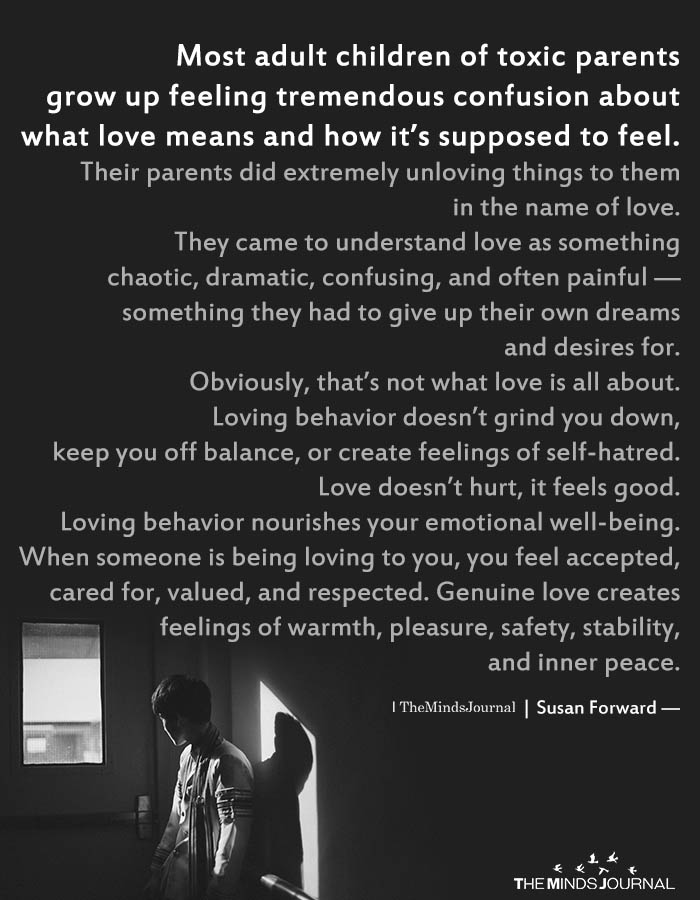
Most Adult Children Of Toxic Parents Grow Up Feeling Tremendous Confusion

2. Mental health

Children who have been diagnosed with mental health conditions can become toxic. This is because certain mental health issues affect the way we think, communicate and perceive others. In this situation, the parents usually face extreme stress on ensuring the well-being of their child.


3. Substance abuse

If you or your child indulge in substance abuse of any form, it can have a profound and lasting impact on your relationship. Substances can ramp up our emotions, impair our communication abilities and increase our tendency to blame others.

4. External influences

It can be possible that your child’s behavior is being influenced by some other person in their life, maybe a friend, classmate or even close family member. It can be possible that these external characters might have influenced your child to see you in a negative light.

5. History of abuse

If you or your spouse spoke to each other in an insulting or abusive way, it can be possible that your child picked up those behavior traits from there. A 2017 study found out that children who were exposed to abuse were more likely to replicate those behaviors with others in their life.

Related: 8 Ways To Slow Down and Connect With Your Children At Home

toxic children

How To Deal With A Toxic Child

It can be overwhelming, to say the least for parents, when dealing with toxic children. You have invested precious amounts of time into your child and are constantly motivated by love to do more and care for them throughout your lives. Thus, in these situations, it is important for you to not lose control. The first and foremost step would be to identify a toxic child.


Most parents do want to easily agree that they are dealing with a toxic child and often brush off this behavior as being age-appropriate in front of others.

However, once you have recognized the toxic traits in your child, you can consider trying the following tips.

1. Learn to set boundaries for your child

In order to allow your child to recognize the rules present, you must learn to set healthy boundaries for them. One way to do this would be by setting limits, and rewarding them whenever they meet your expectations.

However, you must take care not to reward them too often as this can lead to bribe-induced behavior, where the child will only obey you in return for the reward. They have to learn that being good does not necessarily need external motivation and there is joy in the action of self-control itself.

2. Endeavor to communicate more

Often toxic behavior can be a result of suppressed emotions. Good and effective communication with your children will allow them to trust you and confide in you. This way you can understand the root causes of their toxic behavior. Communication is the key in bridging any gaps in the parent-child relationship.

3. Acknowledge that your parenting style might not have been perfect

Parenting is a learning process and there is no one way to ideally go about it. Thus, it can be possible that your parenting style had some shortcomings which led to your child developing negative traits in them.


When you accept such a possibility, you can pave the way for a healthier parenting style in the future. You can try to be their friend and guide them in taking important decisions and listen to what they have to say, instead of commanding them or forcing your decisions onto them.

Related: How Toxic Family Dynamics Can Cause C-PTSD In Emotionally Intense Children

toxic children

Final Thoughts

Trying to communicate with a disrespectful child can be exhausting and can leave you feeling hurt, guilty or angry. However, it is important that you do not lose control over yourself and stay calm during any upsetting encounter with your child. You should also set boundaries for yourself and your child in a healthy manner so that you do not have to experience constant abuse to preserve your relationship. 


signs a child is toxic pin
signs a child is toxic and how to deal pin
toxic children signs pin
toxic children pin


Published On:

Last updated on:

Arthur McRiddle

Hi there! I am Arthur! I am passionate about writing and believe that words have the power to change. I most certainly believe that the pen is mightier than the sword. I value good meaningful conversations which have depth in them and which makes me think and ponder about life. All things supernatural and paranormal intrigue me. Thanks for stopping by!

Disclaimer: The informational content on The Minds Journal have been created and reviewed by qualified mental health professionals. They are intended solely for educational and self-awareness purposes and should not be used as a substitute for professional medical advice, diagnosis, or treatment. If you are experiencing emotional distress or have concerns about your mental health, please seek help from a licensed mental health professional or healthcare provider.

Leave a Comment

Today's Horoscope

Your Daily Horoscope For 4 April, 2026: Free Predictions

Daily Horoscope 4 April, 2026: Prediction For Each Zodiac Sign

Look at your daily prediction and see what the stars have in store for your love life and your future!

Latest Quizzes

How Many Circles Do You See? A Simple Test of Thinking Style

How Many Circles Do You See? Your Answer Might Reveal Narcissistic Traits! 

Take a closer look at this simple image and discover what your circle count reveals about your thinking style, perception, and attention in this fun and engaging visual test.

Latest Quotes

Real Signs Your Body Is Actually in Good Health: How to Know You’re Truly Well

Real Signs Your Body Is Actually in Good Health: How to Know You’re Truly Well

Real signs your body is healthy don’t always show up on lab reports. From good sleep and clear skin to regular digestion and a stable mood, your body is constantly sending quiet signals of wellness.

Readers Blog

Caption This Image and Selected Wisepicks – 5 April 2026

Caption This Image and Selected Wisepicks – 5 April 2026

Ready to unleash your inner wordsmith? ✨??☺️ Now’s your chance to show off your wit, charm, or sheer genius in just one line! Whether it’s laugh-out-loud funny or surprisingly deep, we want to hear it.Submit your funniest, wittiest, or most thought-provoking caption in the comments. We’ll pick 15+ winners to be featured on our website…

Latest Articles

It’s not necessary that adults will be toxic every time. Sometimes kids can adopt toxic characteristics too. Toxic children are disruptive in nature and are rude to their parents and others around them. They usually have temper problems and bad attitudes and show a complete disregard for any kind of rules.


Toxic Children – An Overview

There are times when children often rebel at their homes. They do not want to listen to their parents or respect their opinions or rules in the house. Rebelling is a normal part of growing up and most children upon reaching adolescence exhibit this behavior which can be a completely normal process of growing up.

However, when these rebellions start to get more frequent and more intense, it becomes a cause of worry for parents.


Toxic children no longer start respecting the established rules and even disrespect the people around them. This can lead to serious problems arising for the whole family, especially for the children themselves.

Parents in turn get overwhelmed and exhausted dealing with their children. They dread having to face their child and the environment of the home turns hostile. A vicious cycle ensues when the parents try to gain back control and the child gets more defensive and rebellious in nature.

This creates a breach in the nature of the parent-child relationship and can start to create serious problems for the child at a later stage in their lives. Dealing with toxic children can be one of the most irritating, confusing, heartbreaking, and humiliating challenges individuals have to face as parents.


Related: How Parents Can Cause Mental Health Problems In Their Children

How Do You Recognize A Toxic Child?

It can be easy to confuse the signs of toxic children with that of normal adolescents exhibiting age-appropriate behavior, which can be completely natural. However, there are some differences between the two which can be found out if examined closely.

Some of the warning signs of toxic behavior in children are:

1. Challenging the parents

When your child starts to challenge you or your decisions and tries to engage you in a hostile or aggressive game, it can be a warning sign of a toxic child. If you find your child always challenging or questioning your rules, how insignificant it might be, you know you have a problem at hand!

2. Breaking rules

Often, an adolescent will break rules set by their parents or in schools, now and then. However, when this becomes more and more frequent, and the child shows no sign of remorse, it can be a sign of a toxic child. The child shows a complete disregard for punishments and continues to break rules as a way of challenging the parents.

3. Ordering their parents and throwing tantrums

When a child starts ordering one or both parents and exerts a nature of command over simple activities like deciding the mealtime, bedtime, or screen time allowed, just for the reason of not making him/her angry, it can be a red alert to watch out for.


4. Lack of empathy and manipulation

If your child is exhibiting capricious attitudes or tries to manipulate others for their own benefit, it can be a warning sign for you. Toxic children try to emotionally manipulate and blackmail other people, especially their parents for their own selfish gains. They show a complete lack of empathy and partake in unscrupulous activities. Lack of empathy can be a warning sign for toxic children.

Related: 13 Signs Of A Toxic Parent

Why Do Children Exhibit Toxic Behavior?

A 2019 study found out that toxic children who become stubborn and indulge in risky behavior, often do so as a result of the relationship with their parents. They start exhibiting behavior as a direct result of their parenting.

Most often, these children have been pampered and spoiled by their parents. They have no self-limits and the parents in turn remain helpless and cannot control or admonish their child. Other reasons can be due to the parents being too strict on the child or engaging in toxic parenting which can directly lead to the child becoming toxic.

Some of the reasons why children become toxic are:

1. Style of parenting

Although how harsh it might sound, your parenting style has a lot to do with the way your child develops his/her attitudes, beliefs, and personality. Your personal characteristics, your choices, and your decisions for your child might have created hardships for them without you intending it. Thus, the anger towards you might be due to previous hurt or emotional injuries.

Most Adult Children Of Toxic Parents Grow Up Feeling Tremendous Confusion

2. Mental health

Children who have been diagnosed with mental health conditions can become toxic. This is because certain mental health issues affect the way we think, communicate and perceive others. In this situation, the parents usually face extreme stress on ensuring the well-being of their child.


3. Substance abuse

If you or your child indulge in substance abuse of any form, it can have a profound and lasting impact on your relationship. Substances can ramp up our emotions, impair our communication abilities and increase our tendency to blame others.

4. External influences

It can be possible that your child’s behavior is being influenced by some other person in their life, maybe a friend, classmate or even close family member. It can be possible that these external characters might have influenced your child to see you in a negative light.

5. History of abuse

If you or your spouse spoke to each other in an insulting or abusive way, it can be possible that your child picked up those behavior traits from there. A 2017 study found out that children who were exposed to abuse were more likely to replicate those behaviors with others in their life.

Related: 8 Ways To Slow Down and Connect With Your Children At Home

toxic children

How To Deal With A Toxic Child

It can be overwhelming, to say the least for parents, when dealing with toxic children. You have invested precious amounts of time into your child and are constantly motivated by love to do more and care for them throughout your lives. Thus, in these situations, it is important for you to not lose control. The first and foremost step would be to identify a toxic child.


Most parents do want to easily agree that they are dealing with a toxic child and often brush off this behavior as being age-appropriate in front of others.

However, once you have recognized the toxic traits in your child, you can consider trying the following tips.

1. Learn to set boundaries for your child

In order to allow your child to recognize the rules present, you must learn to set healthy boundaries for them. One way to do this would be by setting limits, and rewarding them whenever they meet your expectations.

However, you must take care not to reward them too often as this can lead to bribe-induced behavior, where the child will only obey you in return for the reward. They have to learn that being good does not necessarily need external motivation and there is joy in the action of self-control itself.

2. Endeavor to communicate more

Often toxic behavior can be a result of suppressed emotions. Good and effective communication with your children will allow them to trust you and confide in you. This way you can understand the root causes of their toxic behavior. Communication is the key in bridging any gaps in the parent-child relationship.

3. Acknowledge that your parenting style might not have been perfect

Parenting is a learning process and there is no one way to ideally go about it. Thus, it can be possible that your parenting style had some shortcomings which led to your child developing negative traits in them.


When you accept such a possibility, you can pave the way for a healthier parenting style in the future. You can try to be their friend and guide them in taking important decisions and listen to what they have to say, instead of commanding them or forcing your decisions onto them.

Related: How Toxic Family Dynamics Can Cause C-PTSD In Emotionally Intense Children

toxic children

Final Thoughts

Trying to communicate with a disrespectful child can be exhausting and can leave you feeling hurt, guilty or angry. However, it is important that you do not lose control over yourself and stay calm during any upsetting encounter with your child. You should also set boundaries for yourself and your child in a healthy manner so that you do not have to experience constant abuse to preserve your relationship. 


signs a child is toxic pin
signs a child is toxic and how to deal pin
toxic children signs pin
toxic children pin


Published On:

Last updated on:

Arthur McRiddle

Hi there! I am Arthur! I am passionate about writing and believe that words have the power to change. I most certainly believe that the pen is mightier than the sword. I value good meaningful conversations which have depth in them and which makes me think and ponder about life. All things supernatural and paranormal intrigue me. Thanks for stopping by!

Leave a Comment

    Leave a Comment