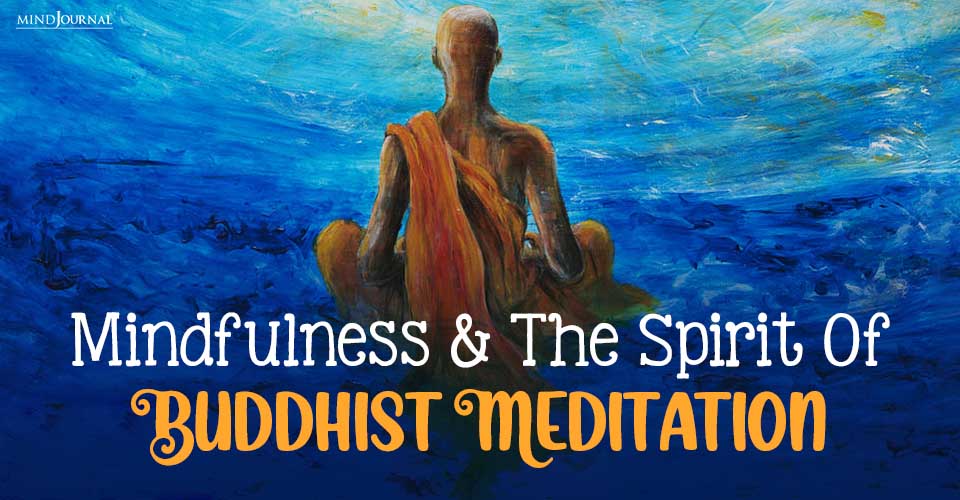
Mindfulness And The Spirit of Buddhist Meditation

Author : Finn Janning PhD, Writer & Philosopher

Mindfulness And The Spirit of Buddhist Meditation

Ever felt overwhelmed by your thoughts and emotions? What if you could train your mind to stay present, calm, and balanced? Learn more about Buddhist meditation below!

How mindfulness can help cultivate self-awareness and emotional regulation.

In recent years, mindfulness meditation, rooted in Buddhist traditions, has gained widespread interest in psychology and beyond. Amid a performance-driven culture, where achievement often outweighs presence, mindfulness offers a collective yearning for balance.

buddhist meditation
mindfulness meditation

Many turn to meditation for relief from stress, depression, and the narcissistic tendencies fostered by relentless striving. Its transformative potential inspires us to delve deeper into its practice.

Sarah Shawโ€™s The Spirit of Buddhist Meditation illuminates this ancient practice, reminding us of its capacity to foster tranquility and balance.

Shaw writes, โ€œWhen the mind is restless, it is time to develop the factor of awakening that is tranquility, the factor of awakening that is concentration, and the factor of awakening that is equanimity.โ€ Mindfulness becomes a refuge, offering clarity amid lifeโ€™s chaos.

The implications for psychologists are profound. Meditation can help clients cultivate self-awareness and emotional regulation, but mindfulness demands consistent effort. Shaw stresses it is no quick fix; it requires diligence and practice.

Read More Here: A Buddhist Story About The Virtue Of Patience And Mental Peace

Distinguishing Authenticity from Appropriation

Shawโ€™s work is vital in an age where mindfulness risks commodification. Separating authentic Buddhist practices from diluted, New Age adaptations is challenging for newcomers. Shawโ€™s focus on Buddhismโ€™s experiential roots makes The Spirit of Buddhist Meditation a valuable resource for those seeking authentic understanding.

For psychologists, this distinction is crucial. Mindfulness, stripped of its ethical and philosophical foundations, risks becoming a superficial tool. Instead, its transformative power lies in integrating these roots into therapeutic practices, enriching both clientsโ€™ experiences and the therapeutic process.

Shaw emphasizes the role of texts in preserving Buddhist practices, portraying Buddhism as pragmaticโ€”rooted in experience rather than belief. This aligns with psychology, which also values actionable techniques over theoretical dogma. Therapists, like meditation teachers, encourage clients to adopt practices as tools for cultivating well-being.

Shaw provides detailed instructions on meditation, such as mindful breathing. She writes: โ€œYou breathe in and out all day and night, but you are never mindful of it. Now you are going to do just this.โ€ These reminders show how mindfulness can transform mundane actions into meaningful practices.

Psychologists can draw parallels between these techniques and therapeutic methods like mindfulness-based stress reduction (MBSR). Anchoring clients in the present, mindfulness reduces emotional reactivity and fosters resilience.

The Challenges of Repetition

Shawโ€™s exploration of Buddhist texts highlights the repetitive nature of oral traditions. While modern readers may find this tedious, Shaw suggests it cultivates awareness by encouraging attention to subtle variations.

Therapists may see this repetition mirrored in their work, where clients revisit core issues from different angles. Just as Buddhist texts invite practitioners to engage deeply, therapy involves exploring recurring themes to promote growth.

Mindfulness is often framed as a stress-reduction tool, but it might also be situated within Buddhismโ€™s spiritual aims. The ultimate goalโ€”liberation from existenceโ€™s cycle (Nibbรกna)โ€”is achieved by relinquishing attachments and transcending self-centeredness.

For psychologists, this broader perspective enriches their work. While clients may initially seek mindfulness to address anxiety or depression, its transformative potential fosters deeper personal growth, helping them develop equanimity and a sense of interconnectedness.

Shawโ€™s reflections on interconnectedness resonate with psychological theories emphasizing relationality, such as systemic therapy. Meditation invites practitioners to recognize their interdependence with others, nurturing empathy and compassion.

Practical Applications for Psychologists

The Spirit of Buddhist Meditation is both a theoretical exploration and a practical guide. Its instructions on breathing, posture, and the eightfold path offer tools psychologists can integrate into their work, equipping clients with mindfulness techniques.

Shawโ€™s emphasis on impermanence aligns with approaches like acceptance and commitment therapy (ACT), which encourages observing thoughts without entanglement. These parallels show how mindfulness-based interventions can support clientsโ€™ emotional and psychological growth.

Additionally, Shawโ€™s reflections on existential themes, such as death and infinite consciousness, invite therapists to engage clients in discussions about meaning, loss, and transformation. While challenging, these topics can deepen therapeutic relationships.

Bridging Philosophy and Practice

Shaw bridges the philosophical and the practical, drawing on Buddhist writings to show how meditation cultivates mindfulness and balance. For psychologists, this integration offers a framework for understanding how ancient practices inform contemporary therapy.

Though rooted in Buddhist philosophy, I argue that Shawโ€™s teachings are universally relevant. By encouraging presence and interconnectedness, mindfulness counters modern lifeโ€™s disconnection and alienation.

Read More Here: Meditation As A Spiritual Practice: Spiritual Meditation Meaning And Benefits

For psychologists, this book underscores mindfulnessโ€™s potentialโ€”not just as a stress management tool but as a practice for profound personal and relational growth. As Shaw writes, โ€œIf we cannot control our minds, it will be impossible to control our actions and speech.โ€ This reminder highlights mindfulnessโ€™s essential role in fostering balance and compassion.

References
Shaw, S. (2014).The Spirit of Buddhist Meditation. Yale University Press.

Share your thoughts on buddhist traditions of mindfulness meditation in the comments below!


Written by Finn Janning, PhD, Writer & Philosopher
Originally appeared on Psychology Today
mindfulness meditation

Published On:

Last updated on:

Disclaimer: The informational content on The Minds Journal have been created and reviewed by qualified mental health professionals. They are intended solely for educational and self-awareness purposes and should not be used as a substitute for professional medical advice, diagnosis, or treatment. If you are experiencing emotional distress or have concerns about your mental health, please seek help from a licensed mental health professional or healthcare provider.

Leave a Comment

Today's Horoscope

Daily Horoscope 17 March 2026: Prediction for Zodiac Signs

Daily Horoscope 17 March, 2026: Prediction for Each Zodiac Sign

Today carries a calm, thoughtful kind of energy that may not be obvious at first.

Latest Quizzes

Interesting Finger Personality Test: 4 Finger Lines

Finger Personality Test: Join Your Fingers And Reveal A Hidden Personality Secret!

Look closely at your finger lines. Which pattern do you see? This personality test might surprise you!

Latest Quotes

8 Clear Signs a Man Is Not Serious About You

8 Clear Signs a Man Is Not Serious About You

If you are confused about his intentions, paying attention to the signs he is not serious about you can save you time, energy, and heartbreak. Here are eight clear red flags that show heโ€™s not truly invested.

Readers Blog

Caption This Image and Selected Wisepicks โ€“ 15 March 2026

Caption This Image and Selected Wisepicks โ€“ 15 March 2026

Ready to unleash your inner wordsmith? โœจ??โ˜บ๏ธ Nowโ€™s your chance to show off your wit, charm, or sheer genius in just one line! Whether itโ€™s laugh-out-loud funny or surprisingly deep, we want to hear it.Submit your funniest, wittiest, or most thought-provoking caption in the comments. Weโ€™ll pick 15+ winners to be featured on our website…

Latest Articles

Mindfulness And The Spirit of Buddhist Meditation

Ever felt overwhelmed by your thoughts and emotions? What if you could train your mind to stay present, calm, and balanced? Learn more about Buddhist meditation below!

How mindfulness can help cultivate self-awareness and emotional regulation.

In recent years, mindfulness meditation, rooted in Buddhist traditions, has gained widespread interest in psychology and beyond. Amid a performance-driven culture, where achievement often outweighs presence, mindfulness offers a collective yearning for balance.

buddhist meditation
mindfulness meditation

Many turn to meditation for relief from stress, depression, and the narcissistic tendencies fostered by relentless striving. Its transformative potential inspires us to delve deeper into its practice.

Sarah Shawโ€™s The Spirit of Buddhist Meditation illuminates this ancient practice, reminding us of its capacity to foster tranquility and balance.

Shaw writes, โ€œWhen the mind is restless, it is time to develop the factor of awakening that is tranquility, the factor of awakening that is concentration, and the factor of awakening that is equanimity.โ€ Mindfulness becomes a refuge, offering clarity amid lifeโ€™s chaos.

The implications for psychologists are profound. Meditation can help clients cultivate self-awareness and emotional regulation, but mindfulness demands consistent effort. Shaw stresses it is no quick fix; it requires diligence and practice.

Read More Here: A Buddhist Story About The Virtue Of Patience And Mental Peace

Distinguishing Authenticity from Appropriation

Shawโ€™s work is vital in an age where mindfulness risks commodification. Separating authentic Buddhist practices from diluted, New Age adaptations is challenging for newcomers. Shawโ€™s focus on Buddhismโ€™s experiential roots makes The Spirit of Buddhist Meditation a valuable resource for those seeking authentic understanding.

For psychologists, this distinction is crucial. Mindfulness, stripped of its ethical and philosophical foundations, risks becoming a superficial tool. Instead, its transformative power lies in integrating these roots into therapeutic practices, enriching both clientsโ€™ experiences and the therapeutic process.

Shaw emphasizes the role of texts in preserving Buddhist practices, portraying Buddhism as pragmaticโ€”rooted in experience rather than belief. This aligns with psychology, which also values actionable techniques over theoretical dogma. Therapists, like meditation teachers, encourage clients to adopt practices as tools for cultivating well-being.

Shaw provides detailed instructions on meditation, such as mindful breathing. She writes: โ€œYou breathe in and out all day and night, but you are never mindful of it. Now you are going to do just this.โ€ These reminders show how mindfulness can transform mundane actions into meaningful practices.

Psychologists can draw parallels between these techniques and therapeutic methods like mindfulness-based stress reduction (MBSR). Anchoring clients in the present, mindfulness reduces emotional reactivity and fosters resilience.

The Challenges of Repetition

Shawโ€™s exploration of Buddhist texts highlights the repetitive nature of oral traditions. While modern readers may find this tedious, Shaw suggests it cultivates awareness by encouraging attention to subtle variations.

Therapists may see this repetition mirrored in their work, where clients revisit core issues from different angles. Just as Buddhist texts invite practitioners to engage deeply, therapy involves exploring recurring themes to promote growth.

Mindfulness is often framed as a stress-reduction tool, but it might also be situated within Buddhismโ€™s spiritual aims. The ultimate goalโ€”liberation from existenceโ€™s cycle (Nibbรกna)โ€”is achieved by relinquishing attachments and transcending self-centeredness.

For psychologists, this broader perspective enriches their work. While clients may initially seek mindfulness to address anxiety or depression, its transformative potential fosters deeper personal growth, helping them develop equanimity and a sense of interconnectedness.

Shawโ€™s reflections on interconnectedness resonate with psychological theories emphasizing relationality, such as systemic therapy. Meditation invites practitioners to recognize their interdependence with others, nurturing empathy and compassion.

Practical Applications for Psychologists

The Spirit of Buddhist Meditation is both a theoretical exploration and a practical guide. Its instructions on breathing, posture, and the eightfold path offer tools psychologists can integrate into their work, equipping clients with mindfulness techniques.

Shawโ€™s emphasis on impermanence aligns with approaches like acceptance and commitment therapy (ACT), which encourages observing thoughts without entanglement. These parallels show how mindfulness-based interventions can support clientsโ€™ emotional and psychological growth.

Additionally, Shawโ€™s reflections on existential themes, such as death and infinite consciousness, invite therapists to engage clients in discussions about meaning, loss, and transformation. While challenging, these topics can deepen therapeutic relationships.

Bridging Philosophy and Practice

Shaw bridges the philosophical and the practical, drawing on Buddhist writings to show how meditation cultivates mindfulness and balance. For psychologists, this integration offers a framework for understanding how ancient practices inform contemporary therapy.

Though rooted in Buddhist philosophy, I argue that Shawโ€™s teachings are universally relevant. By encouraging presence and interconnectedness, mindfulness counters modern lifeโ€™s disconnection and alienation.

Read More Here: Meditation As A Spiritual Practice: Spiritual Meditation Meaning And Benefits

For psychologists, this book underscores mindfulnessโ€™s potentialโ€”not just as a stress management tool but as a practice for profound personal and relational growth. As Shaw writes, โ€œIf we cannot control our minds, it will be impossible to control our actions and speech.โ€ This reminder highlights mindfulnessโ€™s essential role in fostering balance and compassion.

References
Shaw, S. (2014).The Spirit of Buddhist Meditation. Yale University Press.

Share your thoughts on buddhist traditions of mindfulness meditation in the comments below!


Written by Finn Janning, PhD, Writer & Philosopher
Originally appeared on Psychology Today
mindfulness meditation

Published On:

Last updated on:

Finn Janning PhD, Writer & Philosopher

Leave a Comment

    Leave a Comment