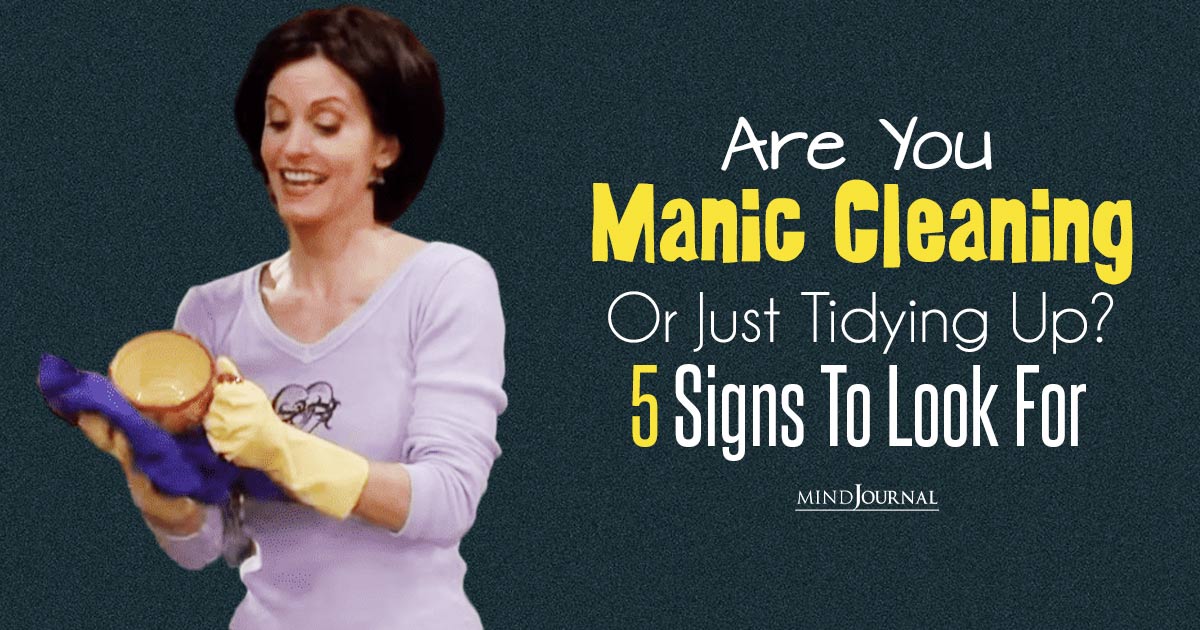
Are You ‘Manic Cleaning’ Or Just Tidying Up? 5 Signs To Look For

Author : Daisy Simon

Have you ever been tidying your house and thought, “Am I manic cleaning?” Many people have been misusing this term so much that it’s become a viral trend.


But before we get into what is manic cleaning, let’s learn about mania. According to Dr. Aron Tendler, a psychiatrist and Chief Medical Officer, “mania” usually refers to bipolar disorder which causes unpredictable shifts in mood, energy, and functioning. Real mania lasts for seven days or more and affects behavior as well as mood and cognition.

And What Is Manic Cleaning Episode?

manic cleaning

Now let’s talk about your sudden motivation to clean the whole house in one day.
Manic cleaning episodes are these intense bursts of goal-directed activity that is most likely several hours of intense cleaning rather than an extended episode lasting days, weeks, or months like true mania. These bursts don’t cause distress or dysfunction either.


If you spend a full week just scrubbing your countertops then maybe it’s okay to use that word. But for the most part, if this high energy riot doesn’t last around a week and doesn’t mess up your life, chances are you’re just keeping things neat!

Manic cleaning episodes, or excessive cleaning behavior, could be a sign of stress, anxiety, and obsessive-compulsive tendencies. Here’s five signs and symptoms to look out for.

Related: Why Is Spring Cleaning Important? 10 Surprising Health Benefits Of Decluttering Your Life


5 Signs of Manic Cleaning To Look Out For

1. Intense and Uncontrollable Cleaning Urges

When someone experiences manic cleaning they may have an unmanageable urge to clean that’s tough for them to resist. This goes beyond the normal act of tidying up and often includes repetitive or unnecessary tasks.

2. Neglect of Other Responsibilities

A sign that someone has started manic cleaning is when other essential responsibilities go ignored or untouched. If someone is constantly spending hours on end cleaning at the expense of their work, relationships, or self-care – it might be time to intervene.

3. Perfectionism in Cleaning

Someone who exhibits manic cleaning behaviors often strives for an utterly spotless environment. They will spend way too much time on each task, repeating actions until they feel it’s perfect.


4. Irritability or Anxiety if Unable to Clean

People with manic cleaning tendencies will become anxious or irritable if they aren’t able to give in to their rituals. This can be a sign that there is a dependency on cleanliness as a coping mechanism for underlying stressors.

5. Excessive Use of Cleaning Products

Those who partake in manic cleaning often use excessive amounts of supplies which pose great risks if used excessively such as chemicals like bleach or ammonia. This kind of behavior isn’t just wasteful but can also lead to serious health risks over time.

It is worth noting that these signs do not indicate a specific mental health condition. If someone is experiencing significant distress or impairment in daily functioning due to these cleaning behaviors, they should seek professional help.

Related: 5 Ways Home Cleaning Can Help Destress

Next time you feel a surge of energy that makes you want to clean and organize everything, remember that it might just be healthy, not manic. Keep the cleanliness light-hearted and fun without making light of serious mental health conditions.

Disclaimer: This article is for informational purposes only and is not intended as a substitute for professional mental health advice, diagnosis, or treatment. While we strive for accuracy, we do not guarantee the completeness or reliability of the information provided. Readers should always seek guidance from a qualified mental health professional for any concerns regarding their mental well-being.


manic cleaning


Published On:

Last updated on:

Daisy Simon

I’m Daisy Simon, member of the Editorial Team at Minds Journal, who loves exploring the cultural zeitgeist through cinema, and pop culture. I hold a degree in Sociology and I write on topics like lifestyle, relationships, feminism, mental health, and how they all connect to the world we live in today. My goal is to spark honest conversations that people can relate to and help us better understand the challenges and ideas shaping our generation.

Disclaimer: The informational content on The Minds Journal have been created and reviewed by qualified mental health professionals. They are intended solely for educational and self-awareness purposes and should not be used as a substitute for professional medical advice, diagnosis, or treatment. If you are experiencing emotional distress or have concerns about your mental health, please seek help from a licensed mental health professional or healthcare provider.

Leave a Comment

Today's Horoscope

Weekly Horoscope 21 March to 28 March 2026

Weekly Horoscope 21 March to 28 March 2026

Ready to see what this week will bring for your zodiac sign? Check out your weekly horoscope below!

Latest Quizzes

Free Vase Personality Test: 3 Options; Choose A Vase

Vase Personality Test: Your First Pick Reveals Your Main Character Trait

Take a moment, look closely, and pick an object that represents you.

Latest Quotes

We’re Not Antisocial: We’re Craving True Belonging, Not Shallow Interactions

We’re Not Antisocial: We’re Craving True Belonging, Not Shallow Interactions

We’re not antisocial; we’re just tired of shallow interactions. When you’re craving belonging, small talk feels empty, and your mind longs for deeper, authentic connection that truly sees you.

Readers Blog

Caption This Image and Selected Wisepicks – 22 March 2026

Caption This Image and Selected Wisepicks – 22 March 2026

Ready to unleash your inner wordsmith? ✨??☺️ Now’s your chance to show off your wit, charm, or sheer genius in just one line! Whether it’s laugh-out-loud funny or surprisingly deep, we want to hear it.Submit your funniest, wittiest, or most thought-provoking caption in the comments. We’ll pick 15+ winners to be featured on our website…

Latest Articles

Have you ever been tidying your house and thought, “Am I manic cleaning?” Many people have been misusing this term so much that it’s become a viral trend.


But before we get into what is manic cleaning, let’s learn about mania. According to Dr. Aron Tendler, a psychiatrist and Chief Medical Officer, “mania” usually refers to bipolar disorder which causes unpredictable shifts in mood, energy, and functioning. Real mania lasts for seven days or more and affects behavior as well as mood and cognition.

And What Is Manic Cleaning Episode?

manic cleaning

Now let’s talk about your sudden motivation to clean the whole house in one day.
Manic cleaning episodes are these intense bursts of goal-directed activity that is most likely several hours of intense cleaning rather than an extended episode lasting days, weeks, or months like true mania. These bursts don’t cause distress or dysfunction either.


If you spend a full week just scrubbing your countertops then maybe it’s okay to use that word. But for the most part, if this high energy riot doesn’t last around a week and doesn’t mess up your life, chances are you’re just keeping things neat!

Manic cleaning episodes, or excessive cleaning behavior, could be a sign of stress, anxiety, and obsessive-compulsive tendencies. Here’s five signs and symptoms to look out for.

Related: Why Is Spring Cleaning Important? 10 Surprising Health Benefits Of Decluttering Your Life


5 Signs of Manic Cleaning To Look Out For

1. Intense and Uncontrollable Cleaning Urges

When someone experiences manic cleaning they may have an unmanageable urge to clean that’s tough for them to resist. This goes beyond the normal act of tidying up and often includes repetitive or unnecessary tasks.

2. Neglect of Other Responsibilities

A sign that someone has started manic cleaning is when other essential responsibilities go ignored or untouched. If someone is constantly spending hours on end cleaning at the expense of their work, relationships, or self-care – it might be time to intervene.

3. Perfectionism in Cleaning

Someone who exhibits manic cleaning behaviors often strives for an utterly spotless environment. They will spend way too much time on each task, repeating actions until they feel it’s perfect.


4. Irritability or Anxiety if Unable to Clean

People with manic cleaning tendencies will become anxious or irritable if they aren’t able to give in to their rituals. This can be a sign that there is a dependency on cleanliness as a coping mechanism for underlying stressors.

5. Excessive Use of Cleaning Products

Those who partake in manic cleaning often use excessive amounts of supplies which pose great risks if used excessively such as chemicals like bleach or ammonia. This kind of behavior isn’t just wasteful but can also lead to serious health risks over time.

It is worth noting that these signs do not indicate a specific mental health condition. If someone is experiencing significant distress or impairment in daily functioning due to these cleaning behaviors, they should seek professional help.

Related: 5 Ways Home Cleaning Can Help Destress

Next time you feel a surge of energy that makes you want to clean and organize everything, remember that it might just be healthy, not manic. Keep the cleanliness light-hearted and fun without making light of serious mental health conditions.

Disclaimer: This article is for informational purposes only and is not intended as a substitute for professional mental health advice, diagnosis, or treatment. While we strive for accuracy, we do not guarantee the completeness or reliability of the information provided. Readers should always seek guidance from a qualified mental health professional for any concerns regarding their mental well-being.


manic cleaning


Published On:

Last updated on:

Daisy Simon

I’m Daisy Simon, member of the Editorial Team at Minds Journal, who loves exploring the cultural zeitgeist through cinema, and pop culture. I hold a degree in Sociology and I write on topics like lifestyle, relationships, feminism, mental health, and how they all connect to the world we live in today. My goal is to spark honest conversations that people can relate to and help us better understand the challenges and ideas shaping our generation.

Leave a Comment

    Leave a Comment