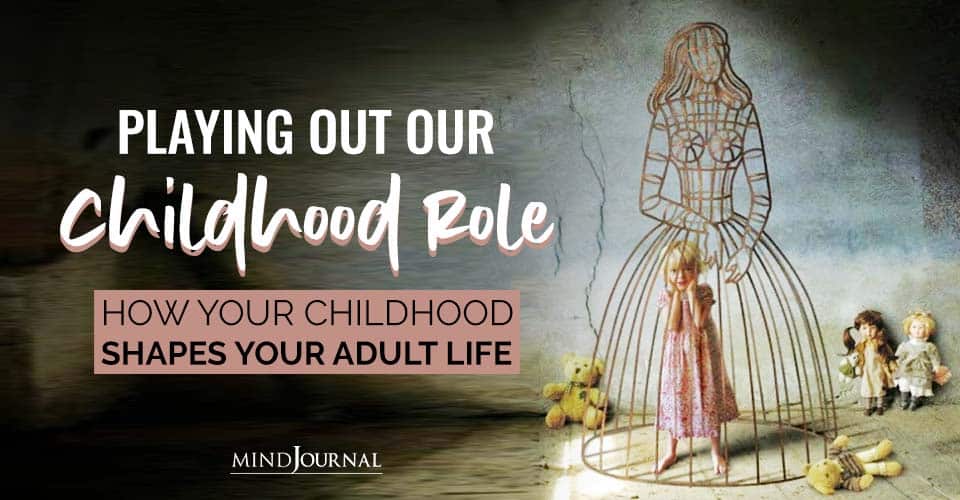
Playing Out Our Childhood Role: How Your Childhood Shapes Your Adult Life

Author : Linda and Charlie Bloom

The way we are raised, our family values and our childhood roles and experiences create a huge impact on our future lives and relationships.

โ€œIf we are to understand the underlying issues in our marriage, we need a working knowledge of the dramatic structure of the family we each grew up in particularly the roles we assumed and how we came to occupy them.โ€ ~ Augustus Napier in The Fragile Bond

The roles that Dr Napier refers to have to do with the functions that were assigned to us in our families, usually by our parents when we were very young, sometimes even before we were born.

Itโ€™s important to realize that we didnโ€™t choose these roles ourselves and that we were given ongoing feedback that was designed to ensure that we performed in accordance with the responsibilities that were inherent in them.

The roles were designed to support the principles and values that governed the (both spoken and unspoken) โ€œrulesโ€ and requirements of the family. Through a system of punishment and reward, we were all taught to honour the family code by adhering to behaviours and attitudes that were specifically designed for us personally.

Here are some examples of childhood roles that get played in families:

1. The peacemakerโ€™s job is responsible for keeping the peace by being an intermediary, a go-between, and mediator, to pacify those who are irritable or angry in the family.

2. The parental child is a miniaturized adult. Parental kids are not only drafted into the practical aspects of running a household but usually assume responsibility for the parenting of younger siblings and/or under-functioning parents. They grow up acutely aware of othersโ€™ needs, usually to the exclusion of their own.

Related: The Lifelong Effects of Childhood Neglect By Parents

3. The marital child fills the vacancy left by the physically or emotionally absent parent. They become a surrogate spouse attempting to fill their parentโ€™s needs for friendship, companionship, and emotional support. In extreme cases, their relationship can become sexualized.

4. The helper acts as an assistant to the parent who may be physically or emotionally overwhelmed. As a result of all the helping they do, they are missing out on many of the playful aspects of childhood.

5. The dependent child is held in an extended and exaggerated child-like position, taught by their parents to feel helpless and weak.

Related: Are You Raising An Overprotected Child?

6. The abandoned or invisible child is physically abandoned by one or both of his parents. Or they may be physically present but not able to connect to the child in a way that builds a trusting, secure bond.

7. The unwanted child believes perhaps correctly that they are the result of an unplanned pregnancy and not wanted.

8. The criticized child canโ€™t seem to do anything right. Frequently, one parent is angry with the other and that anger is misdirected at the child or the criticism could arise from feeling jealous of the spouseโ€™s love.

9. The betrayed child may have confidentiality violated when they confided something personal to a parent only to have their private conversation revealed to other family members, or a parent may favor a sibling. The betrayed child frequently experiences difficulty in trusting that others are dependable.

10. The clownโ€™s job is to keep things at home light and funny by making jokes and distracting others (usually one or both parents) from feelings of sadness, depression, or grief.

11. The hero makes good grades, excels at sports, gets elected to student council and in obvious ways is a credit to the family. There is, however, a serious downside to this type of childhood roles that involves feelings of loneliness, guilt, insecurity, all of which are intensified by the obligation to rescue the rest of the family from painful feelings that they are unable or unwilling to face. The hero often feels that she can never do enough to be truly loved.

12. The rebel is a rule breaker. She is generally defiant and uncooperative. She wonโ€™t clean up her room, and wonโ€™t do her homework. She may skip school, get pregnant, and drive too fast, and is sometimes called the black sheep. She sacrifices her own happiness in order to take the heat off the parentsโ€™ troubled relationship.

These and other family roles that are played out in most families become so solidly reinforced in childhood that they are integrated into our identity and cemented into our sense of who we are.

Consequently. They not only get played out in our adult relationships, but we develop a strong attachment to embodying them since we feel that we ARE our roles and fear that if we fail to honour them in adulthood that we will experience the same consequences that we feared as children (abandonment, punishment, domination, etc).

Consider the situation of Victor and Georgia, who had no awareness of the patterns they dragged into their marriage and the destructive force that those persisting roles had on their relationship.

Victor was a parental child. His father was an alcoholic who was frequently out of work, frequently fired from jobs because of absences related to his. In trying to relieve his motherโ€™s distress, Victor took after school jobs to bring in money for the family. He also became a strong emotional support to his mom.

Related: Effects of Growing Up as an Unloved Child and How To Heal

Victorโ€™s wife Georgia was the youngest in her family, and because her parents had such an empty relationship with each other, Georgia became the object of their affection. They babied her and did not encourage her maturity or independence because of their own needs to hold on to her. She had no time to herself and after leaving her family went straight into her marriage with Victor. Due to her familyโ€™s need to have Georgia be tied to them through an extreme dependence, Georgia thought of herself as helpless and weak.

In their early years together Victor liked being held as superman and having things his way. Georgia enjoyed being taken care of and pampered. But over time, his delight eroded giving way to feeling overly responsible and burdened. The sexual attraction faded because he felt he was more of a father to Georgia than a loving husband. Victorโ€™s attempts to talk about the dilemma and change the pattern were ineffective. The unconscious continuation of the over-functioning husband and the under-functioning child-like wife took their family down and they finally divorced.

Related: How Your Family Shapes You And Your Adult Relationships

The over-functioning husband with the under-functioning wife is only one of an array of patterns imported from our original families that can become a destructive force.

Other examples are the under-functioning husband with an over-functioning wife. The adult who had been the clown in his family of origin can drive his wife nuts making jokes every time she brings up a serious subject she wants to discuss. Those who were literally abandoned or emotionally abandoned are constantly vigilant, on edge, expecting that itโ€™s only a matter of time before they are left again.

Those who were peacemakers in their original family may become anger-phobic and attempt to smooth out differences before a healthy interchange can take place. The child who was a rebel can bring her contrary stance into the marriage and be so busy proving that โ€œno one will control meโ€ battling over the most trivial of issues.

These are only a few examples of the powerful corrosive force old patterns can have until they are brought out in the open. The huge advantage of bringing the childhood roles up to the conscious mind is that we then can see more clearly that as adults, we have maturity, power, and sophistication to make wiser choices. And thatโ€™s what can make all the difference.

Weโ€™re giving away 3 e-books absolutely free of charge. The Ten Biggest Things Weโ€™ve Learned Since We Got Married, Your Guide to Great Sex, and An End to Arguing.

To receive them just click here:

https://app.robly.com/subscribe?a=2ec85ee30b32f83a0cf2b18b108f3a0d


Written by Linda and Carlie Bloom
Originally appeared in Psychology Today

How Your Childhood Shapes Your Adult Life pin

Published On:

Last updated on:

Linda and Charlie Bloom

Linda Bloom, LCSW and Charlie Bloom, MSW have been trained as psychotherapists and relationship counselors and have worked with individuals, couples, groups, and organizations since 1975. They have lectured and taught at universities and learning institutes throughout the USA, including the Esalen Institute, the Kripalu Center for Yoga and Health, 1440 Multiversity, and many others.ย  They have taught seminars in many countries throughout the world. They have co-authored four books,ย 101 Things I Wish I Knew When I Got Married: Simple Lessons to Make Love Last, Secrets of Great Marriages: Real Truth From Real Couples About Lasting Love, Happily Ever Afterย And 39 Other Myths About Love,ย andย That Which Doesnโ€™t Kill Us: How One Couple Became Stronger at the Broken Places.ย They have been married since 1972 and are the parents of two adult children and three grandsons. Linda and Charlie live in Santa Cruz, California. Their website isย www.bloomwork.com

Disclaimer: The informational content on The Minds Journal have been created and reviewed by qualified mental health professionals. They are intended solely for educational and self-awareness purposes and should not be used as a substitute for professional medical advice, diagnosis, or treatment. If you are experiencing emotional distress or have concerns about your mental health, please seek help from a licensed mental health professional or healthcare provider.

Leave a Comment

Today's Horoscope

Weekly Horoscope PART one

Weekly Horoscope 15 March to 21 March 2026

Read your zodiac signโ€™s prediction to understand the energy surrounding you and how to make the most of the days ahead!

Latest Quizzes

Interesting Finger Personality Test: 4 Finger Lines

Finger Personality Test: Join Your Fingers And Reveal A Hidden Personality Secret!

Look closely at your finger lines. Which pattern do you see? This personality test might surprise you!

Latest Quotes

How Men Show Love Through Actions (Male Psychology in Relationships)

How Men Show Love Through Actions (Male Psychology in Relationships)

Male psychology in relationships shows that men express love through presence, protection, and peace more than poetry. Decode his actions so you can see how deeply he actually cares.

Readers Blog

Caption This Image and Selected Wisepicks โ€“ 15 March 2026

Caption This Image and Selected Wisepicks โ€“ 15 March 2026

Ready to unleash your inner wordsmith? โœจ??โ˜บ๏ธ Nowโ€™s your chance to show off your wit, charm, or sheer genius in just one line! Whether itโ€™s laugh-out-loud funny or surprisingly deep, we want to hear it.Submit your funniest, wittiest, or most thought-provoking caption in the comments. Weโ€™ll pick 15+ winners to be featured on our website…

Latest Articles

The way we are raised, our family values and our childhood roles and experiences create a huge impact on our future lives and relationships.

โ€œIf we are to understand the underlying issues in our marriage, we need a working knowledge of the dramatic structure of the family we each grew up in particularly the roles we assumed and how we came to occupy them.โ€ ~ Augustus Napier in The Fragile Bond

The roles that Dr Napier refers to have to do with the functions that were assigned to us in our families, usually by our parents when we were very young, sometimes even before we were born.

Itโ€™s important to realize that we didnโ€™t choose these roles ourselves and that we were given ongoing feedback that was designed to ensure that we performed in accordance with the responsibilities that were inherent in them.

The roles were designed to support the principles and values that governed the (both spoken and unspoken) โ€œrulesโ€ and requirements of the family. Through a system of punishment and reward, we were all taught to honour the family code by adhering to behaviours and attitudes that were specifically designed for us personally.

Here are some examples of childhood roles that get played in families:

1. The peacemakerโ€™s job is responsible for keeping the peace by being an intermediary, a go-between, and mediator, to pacify those who are irritable or angry in the family.

2. The parental child is a miniaturized adult. Parental kids are not only drafted into the practical aspects of running a household but usually assume responsibility for the parenting of younger siblings and/or under-functioning parents. They grow up acutely aware of othersโ€™ needs, usually to the exclusion of their own.

Related: The Lifelong Effects of Childhood Neglect By Parents

3. The marital child fills the vacancy left by the physically or emotionally absent parent. They become a surrogate spouse attempting to fill their parentโ€™s needs for friendship, companionship, and emotional support. In extreme cases, their relationship can become sexualized.

4. The helper acts as an assistant to the parent who may be physically or emotionally overwhelmed. As a result of all the helping they do, they are missing out on many of the playful aspects of childhood.

5. The dependent child is held in an extended and exaggerated child-like position, taught by their parents to feel helpless and weak.

Related: Are You Raising An Overprotected Child?

6. The abandoned or invisible child is physically abandoned by one or both of his parents. Or they may be physically present but not able to connect to the child in a way that builds a trusting, secure bond.

7. The unwanted child believes perhaps correctly that they are the result of an unplanned pregnancy and not wanted.

8. The criticized child canโ€™t seem to do anything right. Frequently, one parent is angry with the other and that anger is misdirected at the child or the criticism could arise from feeling jealous of the spouseโ€™s love.

9. The betrayed child may have confidentiality violated when they confided something personal to a parent only to have their private conversation revealed to other family members, or a parent may favor a sibling. The betrayed child frequently experiences difficulty in trusting that others are dependable.

10. The clownโ€™s job is to keep things at home light and funny by making jokes and distracting others (usually one or both parents) from feelings of sadness, depression, or grief.

11. The hero makes good grades, excels at sports, gets elected to student council and in obvious ways is a credit to the family. There is, however, a serious downside to this type of childhood roles that involves feelings of loneliness, guilt, insecurity, all of which are intensified by the obligation to rescue the rest of the family from painful feelings that they are unable or unwilling to face. The hero often feels that she can never do enough to be truly loved.

12. The rebel is a rule breaker. She is generally defiant and uncooperative. She wonโ€™t clean up her room, and wonโ€™t do her homework. She may skip school, get pregnant, and drive too fast, and is sometimes called the black sheep. She sacrifices her own happiness in order to take the heat off the parentsโ€™ troubled relationship.

These and other family roles that are played out in most families become so solidly reinforced in childhood that they are integrated into our identity and cemented into our sense of who we are.

Consequently. They not only get played out in our adult relationships, but we develop a strong attachment to embodying them since we feel that we ARE our roles and fear that if we fail to honour them in adulthood that we will experience the same consequences that we feared as children (abandonment, punishment, domination, etc).

Consider the situation of Victor and Georgia, who had no awareness of the patterns they dragged into their marriage and the destructive force that those persisting roles had on their relationship.

Victor was a parental child. His father was an alcoholic who was frequently out of work, frequently fired from jobs because of absences related to his. In trying to relieve his motherโ€™s distress, Victor took after school jobs to bring in money for the family. He also became a strong emotional support to his mom.

Related: Effects of Growing Up as an Unloved Child and How To Heal

Victorโ€™s wife Georgia was the youngest in her family, and because her parents had such an empty relationship with each other, Georgia became the object of their affection. They babied her and did not encourage her maturity or independence because of their own needs to hold on to her. She had no time to herself and after leaving her family went straight into her marriage with Victor. Due to her familyโ€™s need to have Georgia be tied to them through an extreme dependence, Georgia thought of herself as helpless and weak.

In their early years together Victor liked being held as superman and having things his way. Georgia enjoyed being taken care of and pampered. But over time, his delight eroded giving way to feeling overly responsible and burdened. The sexual attraction faded because he felt he was more of a father to Georgia than a loving husband. Victorโ€™s attempts to talk about the dilemma and change the pattern were ineffective. The unconscious continuation of the over-functioning husband and the under-functioning child-like wife took their family down and they finally divorced.

Related: How Your Family Shapes You And Your Adult Relationships

The over-functioning husband with the under-functioning wife is only one of an array of patterns imported from our original families that can become a destructive force.

Other examples are the under-functioning husband with an over-functioning wife. The adult who had been the clown in his family of origin can drive his wife nuts making jokes every time she brings up a serious subject she wants to discuss. Those who were literally abandoned or emotionally abandoned are constantly vigilant, on edge, expecting that itโ€™s only a matter of time before they are left again.

Those who were peacemakers in their original family may become anger-phobic and attempt to smooth out differences before a healthy interchange can take place. The child who was a rebel can bring her contrary stance into the marriage and be so busy proving that โ€œno one will control meโ€ battling over the most trivial of issues.

These are only a few examples of the powerful corrosive force old patterns can have until they are brought out in the open. The huge advantage of bringing the childhood roles up to the conscious mind is that we then can see more clearly that as adults, we have maturity, power, and sophistication to make wiser choices. And thatโ€™s what can make all the difference.

Weโ€™re giving away 3 e-books absolutely free of charge. The Ten Biggest Things Weโ€™ve Learned Since We Got Married, Your Guide to Great Sex, and An End to Arguing.

To receive them just click here:

https://app.robly.com/subscribe?a=2ec85ee30b32f83a0cf2b18b108f3a0d


Written by Linda and Carlie Bloom
Originally appeared in Psychology Today
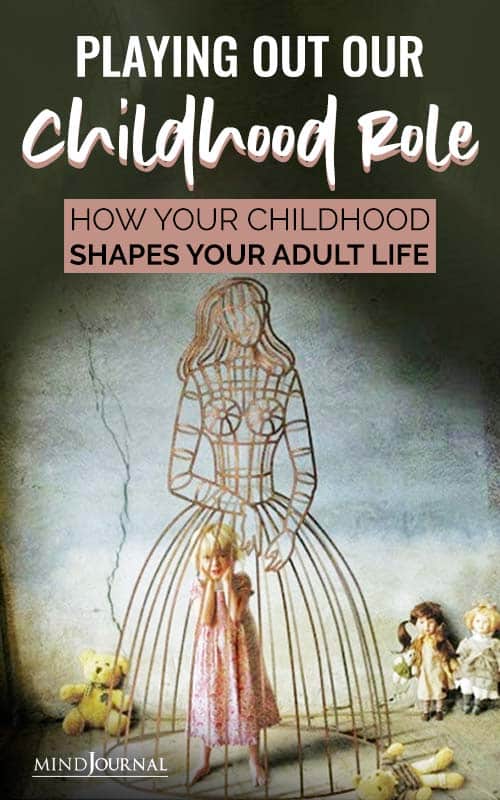
How Your Childhood Shapes Your Adult Life pin

Published On:

Last updated on:

Linda and Charlie Bloom

Linda Bloom, LCSW and Charlie Bloom, MSW have been trained as psychotherapists and relationship counselors and have worked with individuals, couples, groups, and organizations since 1975. They have lectured and taught at universities and learning institutes throughout the USA, including the Esalen Institute, the Kripalu Center for Yoga and Health, 1440 Multiversity, and many others.ย  They have taught seminars in many countries throughout the world. They have co-authored four books,ย 101 Things I Wish I Knew When I Got Married: Simple Lessons to Make Love Last, Secrets of Great Marriages: Real Truth From Real Couples About Lasting Love, Happily Ever Afterย And 39 Other Myths About Love,ย andย That Which Doesnโ€™t Kill Us: How One Couple Became Stronger at the Broken Places.ย They have been married since 1972 and are the parents of two adult children and three grandsons. Linda and Charlie live in Santa Cruz, California. Their website isย www.bloomwork.com

Leave a Comment

    Leave a Comment