
How To Feel More Authentically Confident

Author : Michelle McQuaid

Let’s face it, when it comes to feeling authentically confident at work sometimes we have it, and … sometimes we don’t. Yet we all want it for ourselves, especially in those moments when we hesitate, hold ourselves back or dim ourselves down when it matters most.


Unfortunately, it seems that many of us misunderstand what it takes to feel authentically confident at work, believing we’d need to act like assertive jerks who insist our opinions be heard, dismiss other people’s ideas or demand we get what we’re worth. Instead, researchers suggest that confidence is simply the ability to turn our thoughts into action. And this is why when it comes to our careers, studies are finding that confidence is more important than competence.

So just what does it take to feel more authentically confident at work?


Why Is Feeling Authentically Confident So Hard?

After years of lagging in the confidence stakes, I can’t help but wonder if women are beginning to find a unique and effective approach to feeling more confident at work.
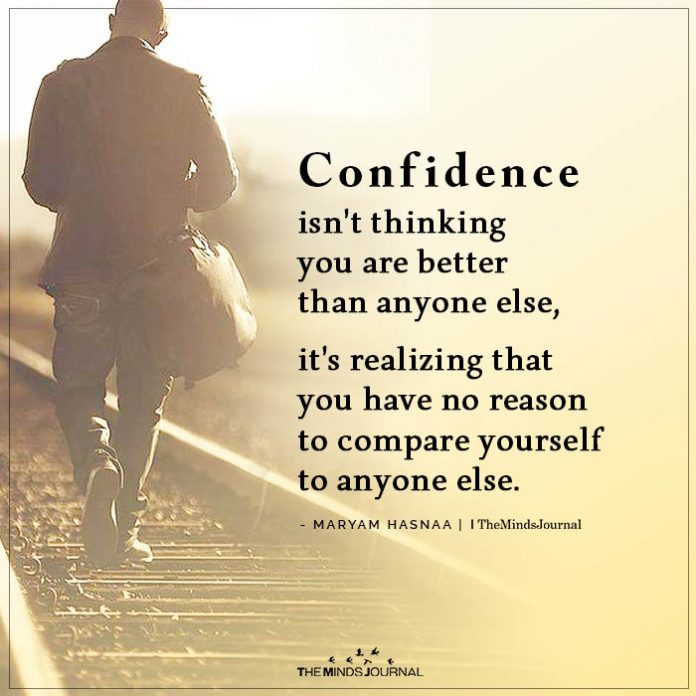
confidence

You see while there is no doubt that both men and women experience feelings of self-doubt, researchers have found women generally suffer a greater lack of confidence at work causing them to ask for pay rises four times less frequently, negotiate salaries of 30% less and not put themselves forward for promotions unless they meet 100% of the qualifications necessary for a job.

But why do women struggle so much with confidence? In this episode of Chelle McQuaid TV, I’ll share what the latest science has discovered about the female brain and how women and men can use this to their advantage when it comes to feeling more authentically confident at work.


Related: 29 Proven Ways To Build Your Self-Confidence

Can Developing Your Strengths Improve Your Confidence?

While studies suggest that the male and female brains are largely the same, it appears there are some small but important differences when it comes to confidence. For example:

  • Researchers estimate that at any one time the female brain has 30% more neurons firing particularly in the thinking and feeling parts of our brain causing us to ruminate and go over and over things.
  • There’s also a small part of the human brain called the cingulate gyrus, often referred to by researchers as the worry wart because that’s what it does – it helps us to weigh options and recognize errors – and it’s larger in the female brain.
  • Finally, of course, women generally experience higher levels of estrogen, which drives us to avoid conflict and risk, and lower levels of testosterone, which helps fuel risk-taking and winning.

Is it any wonder we feel less confident!

But while this neurological and hormonal cocktail, and our experiences at school, at home and in society may cause us to hesitate be it for fear of failure, a desire to do it perfectly or the need to be liked, researchers also report that a large part of confidence actually comes down to the choices we make each day as we’re going about our jobs.

And when it comes down to turning our thoughts into action, the best-selling authors of The Confidence Code Katty Kay and Claire Shipman suggest authenticity may be the linchpin choice. By making a virtue out of our differences instead of trying to hide, erase or change them, we allow confidence to emanate from our core.

Perhaps this is why in a recent study I conducted with the VIA Institute across 1,000 randomly selected American employees representative of the US working population, we found that 68% of women now believed that building on their strengths – rather than fixing their weaknesses – is the key to their success at work.


As a result 58% of women, compared to 53% of men, now reported being able to name their top five strengths – the things they’re good at and actually enjoy doing. And 52% of women, compared to 46% of men say they have the opportunity to do what they do best each day at work.

Having taught thousands of people how to put their strengths to work, I have to say my personal experience echoes the data. While both women and men benefit from developing their strengths, women embrace this change much faster as it seems to finally give them permission to feel authentically confident about the unique value that they bring.

Related: This Optical Illusion Test Reveals Your Secret Strengths And Weaknesses

Given researchers have found that the knowledge and use of our strengths is significantly associated with feeling more confident, perhaps it’s no surprise that for the women who use their strengths at work each day, 76% believe they are making a difference and that what they do is appreciated and 69% describe themselves as flourishing over the last six months.

If you’re keen to feel more authentically confident at work then head on over to www.strengthschallenge.com for a free step-by-step guide to discovering your strengths and a busy-proof approach to start using them to turn your thoughts into action in just 11 minutes each day.


Written by:  Michelle McQuaid 
Originally appeared on Michellemcquaid.com
Republished with permission.

Feel More Authentically Confident pin


Published On:

Last updated on:

Michelle McQuaid

Dr. Michelle McQuaid is a best-selling author, workplace wellbeing teacher and playful change activator. With more than a decade of senior leadership experience in large organizations around the world, she’s passionate about translating cutting-edge research from positive psychology and neuroscience, into practical strategies for health, happiness, and business success. An honorary fellow at the University of Melbourne’s Graduate School of Education, she blogs for Psychology Today, hosts the top-rated weekly podcast Making Positive Psychology Work, and her work has been featured in Forbes, the Harvard Business Review, the Wall Street Journal, Boss Magazine, The Age and more. She holds a Masters in Applied Positive Psychology from the University of Pennsylvania and has completed a PhD in Appreciative Inquiry under the supervision of David Cooperrider. Michelle lives to help people discover their strengths, move beyond their fears, and finally discover what it truly takes to flourish with confidence.

Disclaimer: The informational content on The Minds Journal have been created and reviewed by qualified mental health professionals. They are intended solely for educational and self-awareness purposes and should not be used as a substitute for professional medical advice, diagnosis, or treatment. If you are experiencing emotional distress or have concerns about your mental health, please seek help from a licensed mental health professional or healthcare provider.

Leave a Comment

Today's Horoscope

Your Daily Horoscope For 4 April, 2026: Free Predictions

Daily Horoscope 4 April, 2026: Prediction For Each Zodiac Sign

Look at your daily prediction and see what the stars have in store for your love life and your future!

Latest Quizzes

How Many Circles Do You See? A Simple Test of Thinking Style

How Many Circles Do You See? Your Answer Might Reveal Narcissistic Traits! 

Take a closer look at this simple image and discover what your circle count reveals about your thinking style, perception, and attention in this fun and engaging visual test.

Latest Quotes

Real Signs Your Body Is Actually in Good Health: How to Know You’re Truly Well

Real Signs Your Body Is Actually in Good Health: How to Know You’re Truly Well

Real signs your body is healthy don’t always show up on lab reports. From good sleep and clear skin to regular digestion and a stable mood, your body is constantly sending quiet signals of wellness.

Readers Blog

Caption This Image and Selected Wisepicks – 5 April 2026

Caption This Image and Selected Wisepicks – 5 April 2026

Ready to unleash your inner wordsmith? ✨??☺️ Now’s your chance to show off your wit, charm, or sheer genius in just one line! Whether it’s laugh-out-loud funny or surprisingly deep, we want to hear it.Submit your funniest, wittiest, or most thought-provoking caption in the comments. We’ll pick 15+ winners to be featured on our website…

Latest Articles

Let’s face it, when it comes to feeling authentically confident at work sometimes we have it, and … sometimes we don’t. Yet we all want it for ourselves, especially in those moments when we hesitate, hold ourselves back or dim ourselves down when it matters most.


Unfortunately, it seems that many of us misunderstand what it takes to feel authentically confident at work, believing we’d need to act like assertive jerks who insist our opinions be heard, dismiss other people’s ideas or demand we get what we’re worth. Instead, researchers suggest that confidence is simply the ability to turn our thoughts into action. And this is why when it comes to our careers, studies are finding that confidence is more important than competence.

So just what does it take to feel more authentically confident at work?


Why Is Feeling Authentically Confident So Hard?

After years of lagging in the confidence stakes, I can’t help but wonder if women are beginning to find a unique and effective approach to feeling more confident at work.

confidence

You see while there is no doubt that both men and women experience feelings of self-doubt, researchers have found women generally suffer a greater lack of confidence at work causing them to ask for pay rises four times less frequently, negotiate salaries of 30% less and not put themselves forward for promotions unless they meet 100% of the qualifications necessary for a job.

But why do women struggle so much with confidence? In this episode of Chelle McQuaid TV, I’ll share what the latest science has discovered about the female brain and how women and men can use this to their advantage when it comes to feeling more authentically confident at work.


Related: 29 Proven Ways To Build Your Self-Confidence

Can Developing Your Strengths Improve Your Confidence?

While studies suggest that the male and female brains are largely the same, it appears there are some small but important differences when it comes to confidence. For example:

  • Researchers estimate that at any one time the female brain has 30% more neurons firing particularly in the thinking and feeling parts of our brain causing us to ruminate and go over and over things.
  • There’s also a small part of the human brain called the cingulate gyrus, often referred to by researchers as the worry wart because that’s what it does – it helps us to weigh options and recognize errors – and it’s larger in the female brain.
  • Finally, of course, women generally experience higher levels of estrogen, which drives us to avoid conflict and risk, and lower levels of testosterone, which helps fuel risk-taking and winning.

Is it any wonder we feel less confident!

But while this neurological and hormonal cocktail, and our experiences at school, at home and in society may cause us to hesitate be it for fear of failure, a desire to do it perfectly or the need to be liked, researchers also report that a large part of confidence actually comes down to the choices we make each day as we’re going about our jobs.

And when it comes down to turning our thoughts into action, the best-selling authors of The Confidence Code Katty Kay and Claire Shipman suggest authenticity may be the linchpin choice. By making a virtue out of our differences instead of trying to hide, erase or change them, we allow confidence to emanate from our core.

Perhaps this is why in a recent study I conducted with the VIA Institute across 1,000 randomly selected American employees representative of the US working population, we found that 68% of women now believed that building on their strengths – rather than fixing their weaknesses – is the key to their success at work.


As a result 58% of women, compared to 53% of men, now reported being able to name their top five strengths – the things they’re good at and actually enjoy doing. And 52% of women, compared to 46% of men say they have the opportunity to do what they do best each day at work.

Having taught thousands of people how to put their strengths to work, I have to say my personal experience echoes the data. While both women and men benefit from developing their strengths, women embrace this change much faster as it seems to finally give them permission to feel authentically confident about the unique value that they bring.

Related: This Optical Illusion Test Reveals Your Secret Strengths And Weaknesses

Given researchers have found that the knowledge and use of our strengths is significantly associated with feeling more confident, perhaps it’s no surprise that for the women who use their strengths at work each day, 76% believe they are making a difference and that what they do is appreciated and 69% describe themselves as flourishing over the last six months.

If you’re keen to feel more authentically confident at work then head on over to www.strengthschallenge.com for a free step-by-step guide to discovering your strengths and a busy-proof approach to start using them to turn your thoughts into action in just 11 minutes each day.


Written by:  Michelle McQuaid 
Originally appeared on Michellemcquaid.com
Republished with permission.

Feel More Authentically Confident pin


Published On:

Last updated on:

Michelle McQuaid

Dr. Michelle McQuaid is a best-selling author, workplace wellbeing teacher and playful change activator. With more than a decade of senior leadership experience in large organizations around the world, she’s passionate about translating cutting-edge research from positive psychology and neuroscience, into practical strategies for health, happiness, and business success. An honorary fellow at the University of Melbourne’s Graduate School of Education, she blogs for Psychology Today, hosts the top-rated weekly podcast Making Positive Psychology Work, and her work has been featured in Forbes, the Harvard Business Review, the Wall Street Journal, Boss Magazine, The Age and more. She holds a Masters in Applied Positive Psychology from the University of Pennsylvania and has completed a PhD in Appreciative Inquiry under the supervision of David Cooperrider. Michelle lives to help people discover their strengths, move beyond their fears, and finally discover what it truly takes to flourish with confidence.

Leave a Comment

    Leave a Comment