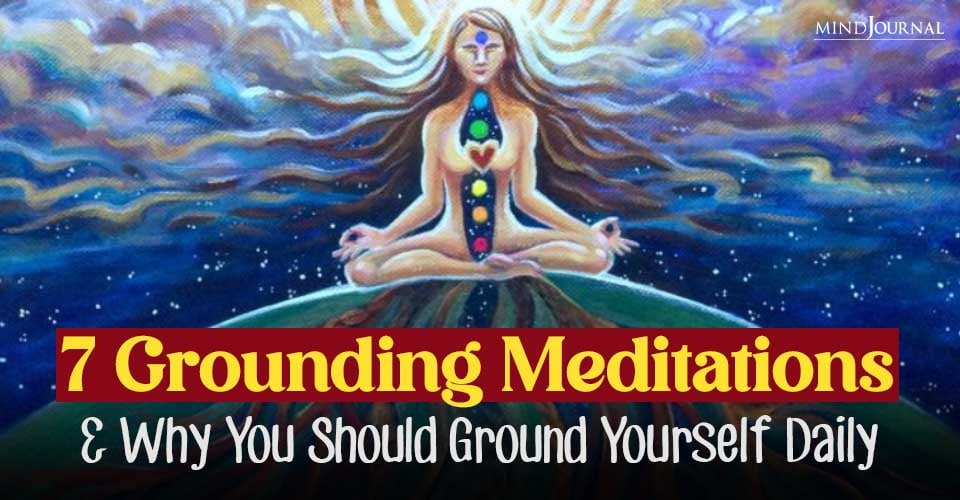
7 Grounding Meditations & Why You Should Ground Yourself Daily

Author : Eleanor Finch

Grounding Meditations to Feel Instantly Calm and Centered

Life can get overwhelming, and it’s easy to feel scattered or stuck in your thoughts. In moments like these grounding meditations are what can help you feel more clear-headed.

Grounding meditations are simple practices that help you feel more connected to the present moment and steady in your body and mind. Practicing grounding techniques helps bring your focus back to what’s happening right now and helps you feel calm and centered. These meditations often use your senses—what you see, hear, feel, or even smell and taste—to anchor you to the here and now.

grounding meditations
7 Grounding Meditations & Why You Should Ground Yourself Daily

And the best part is that anyone can do grounding meditations – you don’t need any special tools or experience to start. All it takes is a few minutes of your time and a willingness to pause and reconnect with yourself.

Now that you have a brief idea, let’s take a closer look at what grounding meditations are and some easy grounding techniques to help you find inner peace.

Read More: What Is Self Reflection? 9 Helpful Tips To Understand Yourself Better

What is Grounding Meditation?

Grounding meditation is an effective way to feel stable, present, and connected to your surroundings. It helps restore balance to your mind and body, particularly during stressful or chaotic times. By focusing on the present moment, this practice enables you to release tension and find a sense of calm and security.

To practice grounding meditation, you can explore techniques such as deep breathing, visualization, or engaging your senses. For instance, you might concentrate on the sensation of the ground beneath your feet, the sound of birds chirping, or the rhythm of your breath. These approaches help redirect your attention from worries and distractions, anchoring you in the “here and now.”

Read More: What Is Self Reflection? 9 Helpful Tips To Understand Yourself Better

Here’s how you can incorporate grounding meditation into your daily routine:

7 Grounding Meditation Techniques

1. Earth Breathing Meditation

Earth breathing meditation is one of the simplest grounding meditations. It helps you feel calm and connected to the earth. To practice this meditation for grounding, find a quiet place, preferably outdoors on grass or soil. Sit comfortably with your feet flat on the ground. Close your eyes and take a deep breath in, imagining you are pulling energy from the earth into your body. As you exhale, visualize releasing any stress or tension into the ground.

Focus on your breath, repeating this process for 5-10 minutes. This grounding technique can calm your mind and balance your energy. Practicing such grounding exercises regularly is a great way to learn how to ground yourself and stay centered throughout the day. It’s simple, soothing, and connects you to nature.

2. Body Scan Meditation

Body scan meditation is a powerful grounding meditation that helps you connect with your body and the present moment. To practice this meditation for grounding, lie down or sit comfortably in a quiet place. Close your eyes and take a few deep breaths to relax.

Begin by focusing on the top of your head, and slowly bring your attention down through your body. Notice any sensations, tension, or discomfort as you move through each area—your forehead, neck, shoulders, chest, arms, abdomen, legs, and feet.

If you feel tension, take a deep breath and imagine releasing it. This grounding technique helps you become aware of your physical state and calms your mind. Regular grounding exercises like this teach you how to ground yourself, improving your sense of balance and relaxation. Spend 5-15 minutes daily for the best results.

3. Walking Meditation (Earthing)

Walking meditation, also known as earthing, is a simple and effective grounding meditation that connects you to the earth. To practice this meditation for grounding, walk barefoot on grass, sand, or soil. Start by standing still, taking a few deep breaths, and feeling the ground beneath your feet.

As you begin walking slowly, focus on each step. Feel the texture of the ground, the coolness, or warmth beneath your soles. Breathe deeply and match your steps to your breathing rhythm. Let your mind stay in the present moment, noticing the sensations in your body and the environment around you.

This grounding technique not only calms your mind but also balances your energy by reconnecting you with nature. Walking meditation is one of the easiest grounding exercises to learn how to ground yourself and it promotes peace and mindfulness in your daily life.

4. Visualization of Roots

The visualization of roots is a powerful grounding meditation that helps you feel stable and connected to the earth. To practice this meditation for grounding, sit or stand in a comfortable position with your feet flat on the ground. Close your eyes and take a few deep breaths.

Imagine roots growing from the soles of your feet, reaching deep into the earth. Visualize these roots spreading wide and anchoring you securely to the ground. Feel the earth’s energy flowing up through the roots into your body, bringing strength and balance.

As you exhale, imagine releasing stress and negativity down through the roots into the earth. This grounding technique is a soothing way to connect with nature and restore inner calm. Regular practice of such grounding exercises teaches you how to ground yourself and stay centered in any situation.

5. Stone Meditation

Stone meditation is a simple and effective grounding meditation that uses the stability of a stone to help you feel calm and centered. To practice this meditation for grounding, find a small, smooth stone. Hold it in your hand or place it in your lap while sitting comfortably.

Close your eyes and take a few deep breaths. Focus on the texture, weight, and coolness of the stone. Imagine its energy flowing into you, grounding you like the stone is rooted deep into the earth.

If your mind wanders, gently bring your focus back to the stone and your breath. This grounding technique is especially useful during stressful moments, providing a tangible connection to the earth. Regular grounding exercises like this help you learn how to ground yourself and stay present in daily life.

6. Root Chakra Meditation

Root chakra meditation is a focused grounding meditation that strengthens your connection to the earth and enhances your sense of stability. The Root Chakra, located at the base of the spine, is associated with grounding and security.

To practice this meditation for grounding, sit comfortably with your back straight and your feet flat on the floor. Close your eyes and take deep breaths. Visualize a vibrant red light at the base of your spine, glowing warmly. Imagine this light spreading downward, connecting you to the earth like roots.

As you breathe, silently repeat affirmations like, “I am grounded” or “I am safe.” Feel the energy of the earth rising to support and balance you. This grounding technique is powerful for reducing anxiety and enhancing stability. Incorporate it into your daily routine to learn how to ground yourself effectively.

7. Breathing with Nature

Breathing with nature is a refreshing grounding meditation that connects you to the natural world while calming your mind. To practice this meditation for grounding, find a quiet outdoor spot—under a tree, near water, or in a garden. Sit comfortably and take a few deep breaths.

As you inhale, imagine drawing in fresh energy from the air around you. Visualize it filling your body with calmness and strength. As you exhale, release any tension or negativity into the environment, where nature can transform it.

You can sync your breath with natural rhythms, like the rustling leaves or the sound of waves, to deepen your connection. This grounding technique enhances your sense of peace and harmony. Practicing such grounding exercises is a simple way to learn how to ground yourself and restore balance in your life.

Why You Should Ground Yourself Daily

Mental Health Benefits

  • Reduces anxiety and stress.
  • Improves focus and mental clarity.
  • Enhances emotional stability.


Physical Benefits

  • Decreases inflammation and promotes healing.
  • Improves sleep quality.
  • Balances energy levels and reduces fatigue.


Spiritual Benefits

  • Strengthens connection to nature and the universe.
  • Enhances mindfulness and inner peace.
  • Aligns and balances your energy for a sense of purpose.


Wrapping Up

Grounding meditations have delivered proven benefits for centuries, and now it is your turn to maximize their potential for a better and more peaceful life. Give these methods a go and share your experiences in the comments below!

Read More: Guided Meditation: An Easy Mindset Hack To Attract Love

meditation for grounding

Published On:

Last updated on:

Disclaimer: The informational content on The Minds Journal have been created and reviewed by qualified mental health professionals. They are intended solely for educational and self-awareness purposes and should not be used as a substitute for professional medical advice, diagnosis, or treatment. If you are experiencing emotional distress or have concerns about your mental health, please seek help from a licensed mental health professional or healthcare provider.

Leave a Comment

Today's Horoscope

Weekly Horoscope 5 April to 11 April 2026

Weekly Horoscope 5 April to 11 April 2026

Something shifts, something becomes clear, and something you ignored refuses to stay hidden. Read more about your zodiac sign and pay attention to what feels different.

Latest Quizzes

Can You Find The Easter Eggs? 10 Hidden Eggs: Look Carefully

No One Can Complete This Easter Egg Hunt Without Missing One—Can You? Take This Quiz Now!

There are 10 hidden eggs in this picture. You have 15 seconds. Can you complete this Easter Egg Hunt without missing one?

Latest Quotes

Real Signs Your Body Is Actually in Good Health: How to Know You’re Truly Well

Real Signs Your Body Is Actually in Good Health: How to Know You’re Truly Well

Real signs your body is healthy don’t always show up on lab reports. From good sleep and clear skin to regular digestion and a stable mood, your body is constantly sending quiet signals of wellness.

Readers Blog

Caption This Image and Selected Wisepicks – 5 April 2026

Caption This Image and Selected Wisepicks – 5 April 2026

Ready to unleash your inner wordsmith? ✨??☺️ Now’s your chance to show off your wit, charm, or sheer genius in just one line! Whether it’s laugh-out-loud funny or surprisingly deep, we want to hear it.Submit your funniest, wittiest, or most thought-provoking caption in the comments. We’ll pick 15+ winners to be featured on our website…

Latest Articles

Grounding Meditations to Feel Instantly Calm and Centered

Life can get overwhelming, and it’s easy to feel scattered or stuck in your thoughts. In moments like these grounding meditations are what can help you feel more clear-headed.

Grounding meditations are simple practices that help you feel more connected to the present moment and steady in your body and mind. Practicing grounding techniques helps bring your focus back to what’s happening right now and helps you feel calm and centered. These meditations often use your senses—what you see, hear, feel, or even smell and taste—to anchor you to the here and now.

grounding meditations
7 Grounding Meditations & Why You Should Ground Yourself Daily

And the best part is that anyone can do grounding meditations – you don’t need any special tools or experience to start. All it takes is a few minutes of your time and a willingness to pause and reconnect with yourself.

Now that you have a brief idea, let’s take a closer look at what grounding meditations are and some easy grounding techniques to help you find inner peace.

Read More: What Is Self Reflection? 9 Helpful Tips To Understand Yourself Better

What is Grounding Meditation?

Grounding meditation is an effective way to feel stable, present, and connected to your surroundings. It helps restore balance to your mind and body, particularly during stressful or chaotic times. By focusing on the present moment, this practice enables you to release tension and find a sense of calm and security.

To practice grounding meditation, you can explore techniques such as deep breathing, visualization, or engaging your senses. For instance, you might concentrate on the sensation of the ground beneath your feet, the sound of birds chirping, or the rhythm of your breath. These approaches help redirect your attention from worries and distractions, anchoring you in the “here and now.”

Read More: What Is Self Reflection? 9 Helpful Tips To Understand Yourself Better

Here’s how you can incorporate grounding meditation into your daily routine:

7 Grounding Meditation Techniques

1. Earth Breathing Meditation

Earth breathing meditation is one of the simplest grounding meditations. It helps you feel calm and connected to the earth. To practice this meditation for grounding, find a quiet place, preferably outdoors on grass or soil. Sit comfortably with your feet flat on the ground. Close your eyes and take a deep breath in, imagining you are pulling energy from the earth into your body. As you exhale, visualize releasing any stress or tension into the ground.

Focus on your breath, repeating this process for 5-10 minutes. This grounding technique can calm your mind and balance your energy. Practicing such grounding exercises regularly is a great way to learn how to ground yourself and stay centered throughout the day. It’s simple, soothing, and connects you to nature.

2. Body Scan Meditation

Body scan meditation is a powerful grounding meditation that helps you connect with your body and the present moment. To practice this meditation for grounding, lie down or sit comfortably in a quiet place. Close your eyes and take a few deep breaths to relax.

Begin by focusing on the top of your head, and slowly bring your attention down through your body. Notice any sensations, tension, or discomfort as you move through each area—your forehead, neck, shoulders, chest, arms, abdomen, legs, and feet.

If you feel tension, take a deep breath and imagine releasing it. This grounding technique helps you become aware of your physical state and calms your mind. Regular grounding exercises like this teach you how to ground yourself, improving your sense of balance and relaxation. Spend 5-15 minutes daily for the best results.

3. Walking Meditation (Earthing)

Walking meditation, also known as earthing, is a simple and effective grounding meditation that connects you to the earth. To practice this meditation for grounding, walk barefoot on grass, sand, or soil. Start by standing still, taking a few deep breaths, and feeling the ground beneath your feet.

As you begin walking slowly, focus on each step. Feel the texture of the ground, the coolness, or warmth beneath your soles. Breathe deeply and match your steps to your breathing rhythm. Let your mind stay in the present moment, noticing the sensations in your body and the environment around you.

This grounding technique not only calms your mind but also balances your energy by reconnecting you with nature. Walking meditation is one of the easiest grounding exercises to learn how to ground yourself and it promotes peace and mindfulness in your daily life.

4. Visualization of Roots

The visualization of roots is a powerful grounding meditation that helps you feel stable and connected to the earth. To practice this meditation for grounding, sit or stand in a comfortable position with your feet flat on the ground. Close your eyes and take a few deep breaths.

Imagine roots growing from the soles of your feet, reaching deep into the earth. Visualize these roots spreading wide and anchoring you securely to the ground. Feel the earth’s energy flowing up through the roots into your body, bringing strength and balance.

As you exhale, imagine releasing stress and negativity down through the roots into the earth. This grounding technique is a soothing way to connect with nature and restore inner calm. Regular practice of such grounding exercises teaches you how to ground yourself and stay centered in any situation.

5. Stone Meditation

Stone meditation is a simple and effective grounding meditation that uses the stability of a stone to help you feel calm and centered. To practice this meditation for grounding, find a small, smooth stone. Hold it in your hand or place it in your lap while sitting comfortably.

Close your eyes and take a few deep breaths. Focus on the texture, weight, and coolness of the stone. Imagine its energy flowing into you, grounding you like the stone is rooted deep into the earth.

If your mind wanders, gently bring your focus back to the stone and your breath. This grounding technique is especially useful during stressful moments, providing a tangible connection to the earth. Regular grounding exercises like this help you learn how to ground yourself and stay present in daily life.

6. Root Chakra Meditation

Root chakra meditation is a focused grounding meditation that strengthens your connection to the earth and enhances your sense of stability. The Root Chakra, located at the base of the spine, is associated with grounding and security.

To practice this meditation for grounding, sit comfortably with your back straight and your feet flat on the floor. Close your eyes and take deep breaths. Visualize a vibrant red light at the base of your spine, glowing warmly. Imagine this light spreading downward, connecting you to the earth like roots.

As you breathe, silently repeat affirmations like, “I am grounded” or “I am safe.” Feel the energy of the earth rising to support and balance you. This grounding technique is powerful for reducing anxiety and enhancing stability. Incorporate it into your daily routine to learn how to ground yourself effectively.

7. Breathing with Nature

Breathing with nature is a refreshing grounding meditation that connects you to the natural world while calming your mind. To practice this meditation for grounding, find a quiet outdoor spot—under a tree, near water, or in a garden. Sit comfortably and take a few deep breaths.

As you inhale, imagine drawing in fresh energy from the air around you. Visualize it filling your body with calmness and strength. As you exhale, release any tension or negativity into the environment, where nature can transform it.

You can sync your breath with natural rhythms, like the rustling leaves or the sound of waves, to deepen your connection. This grounding technique enhances your sense of peace and harmony. Practicing such grounding exercises is a simple way to learn how to ground yourself and restore balance in your life.

Why You Should Ground Yourself Daily

Mental Health Benefits

  • Reduces anxiety and stress.
  • Improves focus and mental clarity.
  • Enhances emotional stability.


Physical Benefits

  • Decreases inflammation and promotes healing.
  • Improves sleep quality.
  • Balances energy levels and reduces fatigue.


Spiritual Benefits

  • Strengthens connection to nature and the universe.
  • Enhances mindfulness and inner peace.
  • Aligns and balances your energy for a sense of purpose.


Wrapping Up

Grounding meditations have delivered proven benefits for centuries, and now it is your turn to maximize their potential for a better and more peaceful life. Give these methods a go and share your experiences in the comments below!

Read More: Guided Meditation: An Easy Mindset Hack To Attract Love

meditation for grounding

Published On:

Last updated on:

Eleanor Finch

Leave a Comment

    Leave a Comment