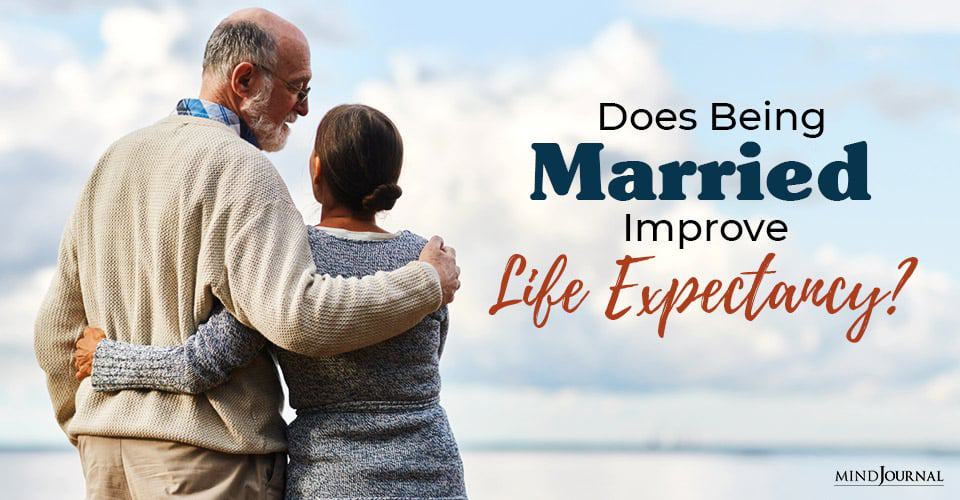
Does Being Married Improve Life Expectancy? And Why It’s OK to Be Single

Author : Mark Stibich, PhD FIDSA

Are you confused about whether to get married or not? Does being married improve life expectancy? Is it okay to be single?

When you grow old, who will take care of you? For many, that is a husband or wife. So does marriage improve life expectancy? Here’s what research shows.

Marriage was one of the first non-biological factors identified as improving life expectancy. The explanation given was that married people tend to take fewer risks with their health and have better mental and emotional health. Marriage also provides more social and material support, which means having someone to take you to the doctor or care for you when you are sick.

However, research shows that the difference between married people and single people, in terms of health, is narrowing.1 This could be because the definitions of marriage are changing, or that people have other outlets for care.

The Changing Face of Marriage and Life Expectancy

No one is saying that having a piece of paper that says “married” on it is going to improve your life expectancy. However, there is something about people who live in a marriage that improves life expectancy—or to be more precise, there was something about people who lived in marriage in the 70s that was found to improve life expectancy.

Now, people can be listed as “single never married” in census data, but be living with someone and be experiencing all the health benefits of marriage without having the marriage certificate. This complicates research on marriage and health.

Read Studies Reveal That Men Gain More From Marriage Than Women

Being Single Can Be Healthy

Research shows that people who are single, especially men, are living longer than ever before. In the past, men who were never married typically had the lowest life expectancy, but now the never married men are closing in on their currently married counterparts.

Experts believe the difference in life expectancy is becoming smaller because single men now have access to support and health resources that, in the past, only came because their wife took care of them.2
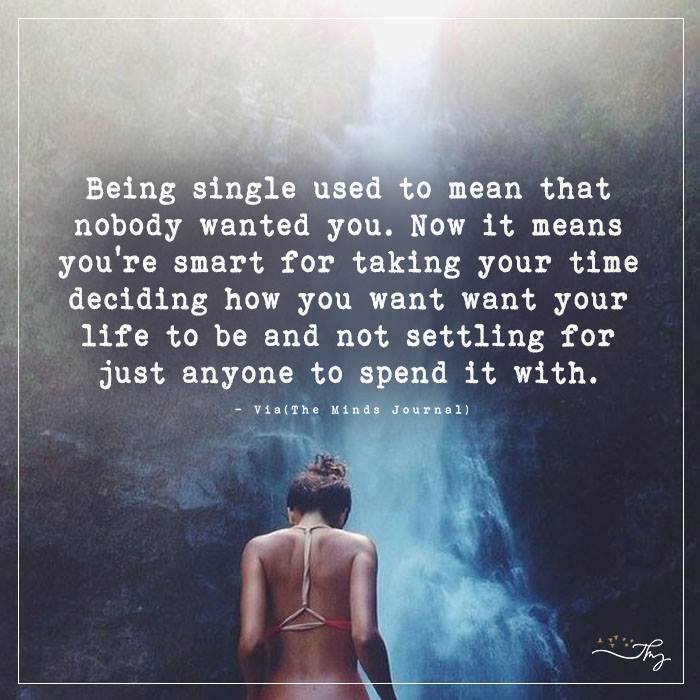
being single and not married

In other words, 40 years ago, married men had the advantage (over never married men) because they had their wives to make sure they went to the doctor and took care of themselves. Now, men are taking more responsibility for their own health and it is normal for a man to express concern about his health and take action.

Read Being Single Beats Being Married, Claims Psychologist

Why Being Widowed Hurts

Losing a spouse who you have lived with your entire life is devastating for husbands and wives alike. As a result, research shows that people who are widowed have slightly worse health than people who are married.3

This is an issue that has gotten worse in recent years: No one really knows why the experience of being widowed now is more detrimental to health than being widowed in the past, however it is possible that people had more of a community and extended family to help them out. Now, the widowed are more likely to be isolated.

So, coming to the question, does being married improve life expectancy –

Regardless of whether you’re single, married or widowed, there are things you can do on your own to improve your longevity outside of a relationship.


Article sources:

  1. Perelli-Harris B, Hoherz S, Addo F, et al. Do Marriage and Cohabitation Provide Benefits to Health in Mid-Life? The Role of Childhood Selection Mechanisms and Partnership Characteristics Across Countries. Popul Res Policy Rev. 2018;37(5):703-728.  doi:10.1007/s11113-018-9467-3
  2. Perelli-harris B, Hoherz S, Addo F, et al. Do Marriage and Cohabitation Provide Benefits to Health in Mid-Life? The Role of Childhood Selection Mechanisms and Partnership Characteristics Across Countries. Popul Res Policy Rev. 2018;37(5):703-728.  doi:10.1007/s11113-018-9467-3
  3. Sullivan AR, Fenelon A. Patterns of widowhood mortality. J Gerontol B Psychol Sci Soc Sci. 2014;69(1):53-62.  doi:10.1093/geronb/gbt079

Additional Reading


Written by: Mark Stibich, PhD
Originally appeared on: Verywellmind.com
Republished with permission.
Married Improve Life Expectancy pin

Published On:

Last updated on:

Mark Stibich, PhD FIDSA

Dr. Mark Stibich is a founder and Chief Scientific Officer for Xenex Healthcare Services, a company that uses a patented pulsed xenon disinfection system to make patient care areas safer by reducing the microbial contamination (from “superbugs” such as MRSA, VRE and C. diff.). Xenex has been featured in Forbes, CNN and other media outlets as well as in peer-reviewed scientific publications. Dr. Stibich specializes in creating efficient solutions for public health problems. He received his doctoral training from the Johns Hopkins School of Public Health and has been involved in multiple international research and intervention projects. He is an inventor on over 80 granted patents and a principal investigator on an NIH grant. Specialties: infection control, protocol design, UV disinfection, area disinfection, disinfection of public spaces, public health, business development

Disclaimer: The informational content on The Minds Journal have been created and reviewed by qualified mental health professionals. They are intended solely for educational and self-awareness purposes and should not be used as a substitute for professional medical advice, diagnosis, or treatment. If you are experiencing emotional distress or have concerns about your mental health, please seek help from a licensed mental health professional or healthcare provider.

Leave a Comment

Today's Horoscope

Daily Horoscope 3 April 2026: Prediction for Zodiac Signs

Daily Horoscope 3 April, 2026: Prediction For Each Zodiac Sign

You may find yourself noticing patterns, emotions, or even small wins you overlooked before.

Latest Quizzes

What Kind Of Karma Do You Have? 3 Markings Reveal Truths

3 Types of Karma Exist — Which One Were You Born With? Look for These Palm Signs

Spot an M, Y, or X on your palm? This hidden sign reveals your karma type!

Latest Quotes

Real Signs Your Body Is Actually in Good Health: How to Know You’re Truly Well

Real Signs Your Body Is Actually in Good Health: How to Know You’re Truly Well

Real signs your body is healthy don’t always show up on lab reports. From good sleep and clear skin to regular digestion and a stable mood, your body is constantly sending quiet signals of wellness.

Readers Blog

Caption This Image and Selected Wisepicks – 29 March 2026

Caption This Image and Selected Wisepicks – 29 March 2026

Ready to unleash your inner wordsmith? ✨??☺️ Now’s your chance to show off your wit, charm, or sheer genius in just one line! Whether it’s laugh-out-loud funny or surprisingly deep, we want to hear it.Submit your funniest, wittiest, or most thought-provoking caption in the comments. We’ll pick 15+ winners to be featured on our website…

Latest Articles

Are you confused about whether to get married or not? Does being married improve life expectancy? Is it okay to be single?

When you grow old, who will take care of you? For many, that is a husband or wife. So does marriage improve life expectancy? Here’s what research shows.

Marriage was one of the first non-biological factors identified as improving life expectancy. The explanation given was that married people tend to take fewer risks with their health and have better mental and emotional health. Marriage also provides more social and material support, which means having someone to take you to the doctor or care for you when you are sick.

However, research shows that the difference between married people and single people, in terms of health, is narrowing.1 This could be because the definitions of marriage are changing, or that people have other outlets for care.

The Changing Face of Marriage and Life Expectancy

No one is saying that having a piece of paper that says “married” on it is going to improve your life expectancy. However, there is something about people who live in a marriage that improves life expectancy—or to be more precise, there was something about people who lived in marriage in the 70s that was found to improve life expectancy.

Now, people can be listed as “single never married” in census data, but be living with someone and be experiencing all the health benefits of marriage without having the marriage certificate. This complicates research on marriage and health.

Read Studies Reveal That Men Gain More From Marriage Than Women

Being Single Can Be Healthy

Research shows that people who are single, especially men, are living longer than ever before. In the past, men who were never married typically had the lowest life expectancy, but now the never married men are closing in on their currently married counterparts.

Experts believe the difference in life expectancy is becoming smaller because single men now have access to support and health resources that, in the past, only came because their wife took care of them.2

being single and not married

In other words, 40 years ago, married men had the advantage (over never married men) because they had their wives to make sure they went to the doctor and took care of themselves. Now, men are taking more responsibility for their own health and it is normal for a man to express concern about his health and take action.

Read Being Single Beats Being Married, Claims Psychologist

Why Being Widowed Hurts

Losing a spouse who you have lived with your entire life is devastating for husbands and wives alike. As a result, research shows that people who are widowed have slightly worse health than people who are married.3

This is an issue that has gotten worse in recent years: No one really knows why the experience of being widowed now is more detrimental to health than being widowed in the past, however it is possible that people had more of a community and extended family to help them out. Now, the widowed are more likely to be isolated.

So, coming to the question, does being married improve life expectancy –

Regardless of whether you’re single, married or widowed, there are things you can do on your own to improve your longevity outside of a relationship.


Article sources:

  1. Perelli-Harris B, Hoherz S, Addo F, et al. Do Marriage and Cohabitation Provide Benefits to Health in Mid-Life? The Role of Childhood Selection Mechanisms and Partnership Characteristics Across Countries. Popul Res Policy Rev. 2018;37(5):703-728.  doi:10.1007/s11113-018-9467-3
  2. Perelli-harris B, Hoherz S, Addo F, et al. Do Marriage and Cohabitation Provide Benefits to Health in Mid-Life? The Role of Childhood Selection Mechanisms and Partnership Characteristics Across Countries. Popul Res Policy Rev. 2018;37(5):703-728.  doi:10.1007/s11113-018-9467-3
  3. Sullivan AR, Fenelon A. Patterns of widowhood mortality. J Gerontol B Psychol Sci Soc Sci. 2014;69(1):53-62.  doi:10.1093/geronb/gbt079

Additional Reading


Written by: Mark Stibich, PhD
Originally appeared on: Verywellmind.com
Republished with permission.
Married Improve Life Expectancy pin

Published On:

Last updated on:

Mark Stibich, PhD FIDSA

Dr. Mark Stibich is a founder and Chief Scientific Officer for Xenex Healthcare Services, a company that uses a patented pulsed xenon disinfection system to make patient care areas safer by reducing the microbial contamination (from “superbugs” such as MRSA, VRE and C. diff.). Xenex has been featured in Forbes, CNN and other media outlets as well as in peer-reviewed scientific publications. Dr. Stibich specializes in creating efficient solutions for public health problems. He received his doctoral training from the Johns Hopkins School of Public Health and has been involved in multiple international research and intervention projects. He is an inventor on over 80 granted patents and a principal investigator on an NIH grant. Specialties: infection control, protocol design, UV disinfection, area disinfection, disinfection of public spaces, public health, business development

Leave a Comment

    Leave a Comment