You Didn’t Overreact: 5 Hidden Signs of Abusive Relationship Checklist

Author : Mia Dolan

Am I Overreacting? 5 Signs of Abusive Relationship Checklist

Sometimes the hardest relationships to talk about are the ones that did not look toxic from the outside, leaving you searching for a signs of abusive relationship checklist just to validate what you went through.

Nothing was dramatic enough to make you leave immediately. 

There were no visible bruises. No single moment you can point to and say, “That was it.” But somehow, after loving them, you felt smaller. Less confident. More careful with your words.

You started doubting your own reactions and convincing yourself that maybe it was all in your head. Even now, a part of you still wonders if you overreact or if it was really that bad.

But people do not end up emotionally exhausted for no reason. Something in that relationship hurt you deeply, even if it is hard to explain out loud.

What Is Emotional Abuse? 

Have you ever felt deeply hurt by someone, but struggled to explain why?

The actual definition of what is emotional abuse, it is a pattern of words, behaviors, or silence used to control or diminish someone, and because there is nothing visible to point to, it can go on for years before anyone, including the person experiencing it, calls it what it is. 

For example, with the dismissive partner, you arrive home feeling anxious and try to discuss something that bothered you. Your partner snaps, ‘Can you not turn everything about yourself for once?‘ This leaves you asking yourself, ‘Am I in an abusive relationship, or am I just overreacting?’ You instantly fall silent, questioning whether it was selfish of you to speak up at all.

Or with a guilt-tripping parent, like when you inform your mother that you are unable to attend a family dinner. Rather than showing understanding, she states, ‘After all I’ve done for you, this is how you treat me.’ You spend the rest of the day burdened by intense guilt, realizing that these relationship red flags are the exact reason you are always walking on eggshells around them.

Emotional abuse isn’t always loud or dramatic. The truest signs of an abusive relationship is the subtle, ongoing wear of your identity- and that makes it even more harmful.

If you have ever asked yourself, “Am I in an abusive relationship, or am I just imagining things?” consider how these hidden relationship red flags show up in everyday life:

Related: Uncovering The Truth: 60+ Powerful Questions About Emotional Abuse To Recognize The Signs

5 Hidden Signs of Abusive Relationship Checklist 

Here are five indicators that your experience was emotional abuse- even if it didn’t seem “bad enough” to label it as such.

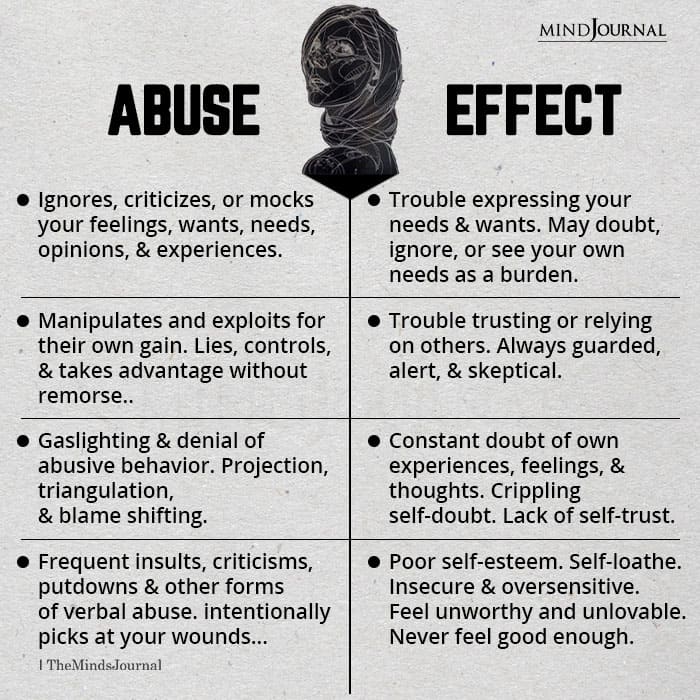
1. They made you feel “too sensitive” for having basic emotions

Any time you voiced your hurt, sadness or frustration you were thrown back that you’re being overly dramatic. “You’re too dramatic.” “Can’t you take a joke?”

Eventually, you stopped expressing your feelings completely because you were taught that you were just too sensitive and that your emotions were the issue.

Let me tell you they weren’t. Your feelings were real. They just didn’t want to be responsible for creating them. 
2. Apologies never came- or never felt genuine

Whenever something went downhill, the discussion consistently turned out with you apologizing.

Or even if they did apologize, it was accompanied by conditions like “I’m sorry you felt that way”  which truly isn’t an apology.

Genuine accountability was uncommon, and the pattern kept on repeating. You were burdened with a guilt that was never yours to bear.

 3. You were constantly walking on eggshells around them

You learnt ways to figure out their emotional state before speaking. You adjusted your remarks, edited yourself, and prepared for replies.

You were aware of which subjects to stay away from, which days were safe, and which version would appear when. It is draining to live that way, constantly on guard and cautious.

Moreover, no one ought to have to put in that much effort in order to feel secure in a relationship with someone they love.

4. You started doubting your own memory of events

“That never happened.” “You’re imagining stuff.” “I never said that.”

You may have been the victim of gaslighting, a type of emotional abuse in which someone manipulates you into questioning your own reality, if you find yourself questioning your own memory of conversations and occurrences on a regular basis.

It is one of the cruelest things a person can do to another, and it is confusing.

5. You felt completely alone even when they were right there

Severe loneliness is a common side sign of emotional abuse.

The sort that results from being emotionally abandoned, unnoticed, and unheard by the person who was meant to be your safe space- not the kind that comes from being physically alone.

Your gut feeling and instinct were telling you something important if you felt more alone in that relationship than you did outside of it. 

Related- 10 Lasting Effects Of Emotional Abuse That Inflict Deep Trauma

Why Emotional Abuse Is So Hard to Name 

In contrast to physical abuse, emotional abuse does not leave any visible signs. When trying to define what is emotional abuse, you have to look at the invisible damage.

It occurs gradually and silently, diminishing your confidence, your sense of identity, and altering your view of reality.

When you finally realise that something was wrong, you have already invested months or years believing and trying to convince yourself it was all your fault.

If you checked off multiple points on this signs of abusive relationship checklist, please know that your lingering confusion is not a personal flaw.

It is actually one of the clearest signs of an abusive relationship that your experience was genuine, and it was not acceptable.

You Are Not Too Sensitive. You Were Not Overreacting

Understanding what emotional abuse is among the toughest challenges, as it frequently originates from those we care about and love, and it never really makes itself pretty obvious.

The simple act of reading this, asking these questions, and trying to relate to your experience? It requires bravery.

You did not overreact. You are not damaged. You are not dramatic. You truly deserved better and still do.

Healing begins as soon as you cease to doubt the reality of your pain. It was. And so are you.


Frequently Asked Questions

What is emotional abuse in a relationship?

Emotionally abusive relationships do not always include physical violence, but psychological abuse can be a precursor to physical harm in a relationship

Why are these signs considered “hidden” if they cause emotional distress?

Hidden signs—often referred to as subtle abuse or covert control—are easily missed because they don’t involve physical violence and are frequently masked as “love,” “concern,” or “normal relationship hurdles.”

I checked off a few items on the list. Does this mean my relationship is definitely abusive?

Not necessarily, but it is a significant red flag that warrants closer attention. Healthy relationships can occasionally experience poor communication, insecurity, or a bad argument.


am I in an abusive relationship

Published On:

Last updated on:

Mia Dolan

I'm Mia Dolan, a mass media graduate with a deep curiosity for people and the stories that connect us. I find inspiration in cinema, travelling to new places, social media, and the quiet art of understanding human nature. Here on The Minds Journal, through my writing, I explore spirituality, personalities, and the little truths that make us who we are- because I believe everyone deserves to feel a little less alone.

Disclaimer: The informational content on The Minds Journal have been created and reviewed by qualified mental health professionals. They are intended solely for educational and self-awareness purposes and should not be used as a substitute for professional medical advice, diagnosis, or treatment. If you are experiencing emotional distress or have concerns about your mental health, please seek help from a licensed mental health professional or healthcare provider.

Leave a Comment

Today's Horoscope

Daily Horoscope 5 June 2026: Prediction for Zodiac Signs

Daily Horoscope 5 June, 2026: Prediction For Each Zodiac Sign

Today is all about choosing growth without abandoning yourself in the process.

Latest Quizzes

Latest Quotes

Gut Feelings You Should Never Ignore: When Your Body Knows Before Your Mind

Gut Feelings You Should Never Ignore: When Your Body Knows Before Your Mind

Gut feelings you should never ignore rarely shout; they whisper through your body. From chest heaviness to sudden unease, your intuition often senses what your mind hasn’t caught up to yet.

Readers Blog

Caption This Image and Selected Wisepicks – 7 June 2026

Caption This Image and Selected Wisepicks – 7 June 2026

Ready to unleash your inner wordsmith? ✨??☺️ Now’s your chance to show off your wit, charm, or sheer genius in just one line! Whether it’s laugh-out-loud funny or surprisingly deep, we want to hear it.Submit your funniest, wittiest, or most thought-provoking caption in the comments. We’ll pick 15+ winners to be featured on our website…

Latest Articles

Am I Overreacting? 5 Signs of Abusive Relationship Checklist

Sometimes the hardest relationships to talk about are the ones that did not look toxic from the outside, leaving you searching for a signs of abusive relationship checklist just to validate what you went through.

Nothing was dramatic enough to make you leave immediately. 

There were no visible bruises. No single moment you can point to and say, “That was it.” But somehow, after loving them, you felt smaller. Less confident. More careful with your words.

You started doubting your own reactions and convincing yourself that maybe it was all in your head. Even now, a part of you still wonders if you overreact or if it was really that bad.

But people do not end up emotionally exhausted for no reason. Something in that relationship hurt you deeply, even if it is hard to explain out loud.

What Is Emotional Abuse? 

Have you ever felt deeply hurt by someone, but struggled to explain why?

The actual definition of what is emotional abuse, it is a pattern of words, behaviors, or silence used to control or diminish someone, and because there is nothing visible to point to, it can go on for years before anyone, including the person experiencing it, calls it what it is. 

For example, with the dismissive partner, you arrive home feeling anxious and try to discuss something that bothered you. Your partner snaps, ‘Can you not turn everything about yourself for once?‘ This leaves you asking yourself, ‘Am I in an abusive relationship, or am I just overreacting?’ You instantly fall silent, questioning whether it was selfish of you to speak up at all.

Or with a guilt-tripping parent, like when you inform your mother that you are unable to attend a family dinner. Rather than showing understanding, she states, ‘After all I’ve done for you, this is how you treat me.’ You spend the rest of the day burdened by intense guilt, realizing that these relationship red flags are the exact reason you are always walking on eggshells around them.

Emotional abuse isn’t always loud or dramatic. The truest signs of an abusive relationship is the subtle, ongoing wear of your identity- and that makes it even more harmful.

If you have ever asked yourself, “Am I in an abusive relationship, or am I just imagining things?” consider how these hidden relationship red flags show up in everyday life:

Related: Uncovering The Truth: 60+ Powerful Questions About Emotional Abuse To Recognize The Signs

5 Hidden Signs of Abusive Relationship Checklist 

Here are five indicators that your experience was emotional abuse- even if it didn’t seem “bad enough” to label it as such.

1. They made you feel “too sensitive” for having basic emotions

Any time you voiced your hurt, sadness or frustration you were thrown back that you’re being overly dramatic. “You’re too dramatic.” “Can’t you take a joke?”

Eventually, you stopped expressing your feelings completely because you were taught that you were just too sensitive and that your emotions were the issue.

Let me tell you they weren’t. Your feelings were real. They just didn’t want to be responsible for creating them. 

2. Apologies never came- or never felt genuine

Whenever something went downhill, the discussion consistently turned out with you apologizing.

Or even if they did apologize, it was accompanied by conditions like “I’m sorry you felt that way”  which truly isn’t an apology.

Genuine accountability was uncommon, and the pattern kept on repeating. You were burdened with a guilt that was never yours to bear.

 3. You were constantly walking on eggshells around them

You learnt ways to figure out their emotional state before speaking. You adjusted your remarks, edited yourself, and prepared for replies.

You were aware of which subjects to stay away from, which days were safe, and which version would appear when. It is draining to live that way, constantly on guard and cautious.

Moreover, no one ought to have to put in that much effort in order to feel secure in a relationship with someone they love.

4. You started doubting your own memory of events

“That never happened.” “You’re imagining stuff.” “I never said that.”

You may have been the victim of gaslighting, a type of emotional abuse in which someone manipulates you into questioning your own reality, if you find yourself questioning your own memory of conversations and occurrences on a regular basis.

It is one of the cruelest things a person can do to another, and it is confusing.

5. You felt completely alone even when they were right there

Severe loneliness is a common side sign of emotional abuse.

The sort that results from being emotionally abandoned, unnoticed, and unheard by the person who was meant to be your safe space- not the kind that comes from being physically alone.

Your gut feeling and instinct were telling you something important if you felt more alone in that relationship than you did outside of it. 

Related- 10 Lasting Effects Of Emotional Abuse That Inflict Deep Trauma

Why Emotional Abuse Is So Hard to Name 

In contrast to physical abuse, emotional abuse does not leave any visible signs. When trying to define what is emotional abuse, you have to look at the invisible damage.

It occurs gradually and silently, diminishing your confidence, your sense of identity, and altering your view of reality.

When you finally realise that something was wrong, you have already invested months or years believing and trying to convince yourself it was all your fault.

If you checked off multiple points on this signs of abusive relationship checklist, please know that your lingering confusion is not a personal flaw.

It is actually one of the clearest signs of an abusive relationship that your experience was genuine, and it was not acceptable.

You Are Not Too Sensitive. You Were Not Overreacting

Understanding what emotional abuse is among the toughest challenges, as it frequently originates from those we care about and love, and it never really makes itself pretty obvious.

The simple act of reading this, asking these questions, and trying to relate to your experience? It requires bravery.

You did not overreact. You are not damaged. You are not dramatic. You truly deserved better and still do.

Healing begins as soon as you cease to doubt the reality of your pain. It was. And so are you.


Frequently Asked Questions

What is emotional abuse in a relationship?

Emotionally abusive relationships do not always include physical violence, but psychological abuse can be a precursor to physical harm in a relationship

Why are these signs considered “hidden” if they cause emotional distress?

Hidden signs—often referred to as subtle abuse or covert control—are easily missed because they don’t involve physical violence and are frequently masked as “love,” “concern,” or “normal relationship hurdles.”

I checked off a few items on the list. Does this mean my relationship is definitely abusive?

Not necessarily, but it is a significant red flag that warrants closer attention. Healthy relationships can occasionally experience poor communication, insecurity, or a bad argument.


am I in an abusive relationship

Published On:

Last updated on:

Mia Dolan

I'm Mia Dolan, a mass media graduate with a deep curiosity for people and the stories that connect us. I find inspiration in cinema, travelling to new places, social media, and the quiet art of understanding human nature. Here on The Minds Journal, through my writing, I explore spirituality, personalities, and the little truths that make us who we are- because I believe everyone deserves to feel a little less alone.

Leave a Comment

Leave a Comment