4 Powerful Exercises To Help Fix A Toxic Relationship

Author : Kyle Benson

Are you and your partner looking for ways to fix a toxic relationship? Below are 4 ways how you can heal a toxic relationship.

So, are you willing to save the relationship and make it healthy?

Love is a dance of connection and disconnection. There are times when you feel compelled by your lover and other times when you feel the need for alone time.

Some of us need more connection, others need more independence. Sometimes these differences lead to a toxic relationship.

There are only two roads to making a toxic relationship not so toxic:

Road One leads to breaking up and finding a more secure partner.
Road Two leads to seeing the problems in the relationship as a slingshot for growth.

Even though both of you fall on opposite ends of the spectrum, the relationship can work. But the only way it can work is if partners are able to see problems in the relationship as a catalyst to understand and respect each otherโ€™s differences. If they donโ€™t, holding hands quickly turns into pointing fingers.

If your partnerโ€™s idea of closeness makes you feel like youโ€™re suffocating, or if you feel like your partner ignores you (intentionally) in little ways throughout the day, the best thing you can do for your relationship is to talk about it.

By examining the moments of disconnection and irritants in the relationship, both partners will gain profound insight into each other so they can begin learning how to give each other what they need.

How To Fix A Toxic Relationship? 4 Powerful Exercises For Making A Toxic Relationship Healthy

Exercise 1: Talk About It

If one of you is feeling ignored or overwhelmed by your partnerโ€™s needs, then use the exercise below to understand each other better.
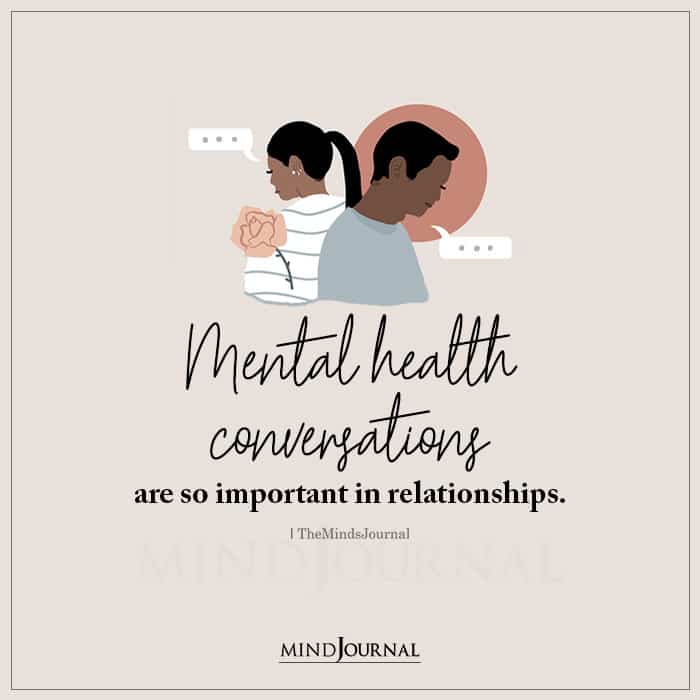
fix a toxic relationship

Answers: There are no right or wrong answers here. Each answer depends on your reality. The goal of the exercise is for both partners to understand each other.

The only way to do that is to recognize one vital element that makes relationships last. That vital element isโ€ฆ

Both Points of View Are Valid. When partners believe there is only one truth, they fight for their own position. That belief is a dead-end.

There is only one assumption that will make the conversation about disconnection or too much closeness beneficial: that in every fight, there are always two points of view, and both are valid.

Once your partner and you accept that idea, itโ€™s no longer necessary to argue for your own position. Now you can focus on understanding your partnerโ€™s position and work together to find a mutual solution.

Read How To Navigate The Stages of Love and Build A Healthy Relationship

There are always two sides to every conflict. Once you understand and acknowledge this, youโ€™ll quickly find that reconnecting comes naturally.

Instructions: Think of the last argument you had. Rate the following feelings on a scale from 1(100% felt that way) to 5 (0% felt that way).

During our fight I felt:

  • Defensive
  • Sad
  • Misunderstood
  • Hurt
  • Criticized
  • Neglected
  • Like leaving
  • Like my opinions donโ€™t matter
  • Worried
  • Lonely

Next: Explore what triggered those feelings:
Rate what triggered those feelings on a scale from 1(100% felt that way) to 5 (0% felt that way).

  • I felt unimportant to my partner
  • I felt cold toward my partner
  • I felt rejected
  • I felt overwhelmed by demands
  • I felt excluded
  • I didnโ€™t feel attraction
  • I didnโ€™t feel affection
  • My sense of dignity was compromised
  • I couldnโ€™t get my partnerโ€™s attention
  • My partner was dominating

Exercise 2: Revisit The Past

Now that weโ€™ve identified your emotional reaction, itโ€™s time to get in a time machine and revisit your past. We may repeat unhealed patterns from our past relationships in our present ones. See if you can find a relationship between earlier traumas or behavior and your current reaction.

Note: If youโ€™ve been sexually harassed, raped, or experienced any other trauma your partner is unaware of, now is the time to bring it up. In my work with others, Iโ€™ve found that sharing our deepest pain with our partners truly helps them understand us. It also gives them the ability to gently work with us on the traumas so we can begin to heal together.

Read 5 Healthy Relationship Boundaries That Keep the Romance Alive

The following list will help guide you.

When I (or my partner) turned away, it reminded me of:

  • An earlier relationship
  • Past traumas or hard times Iโ€™ve had
  • The way my family treated me growing up
  • My deepest fears and insecurities
  • Unaccomplished dreams I have
  • Events I have not emotionally dealt with yet
  • Ways other people have treated me
  • Things I always believed about myself
  • Nightmares that keep me up at night

Take time to discuss each otherโ€™s answers. Ask open-ended questions so you can understand each other better. This isnโ€™t about who feels worse or who is more right. Itโ€™s about taking time to truly understand each otherโ€™s insecurities and deepest fears.

fix a toxic relationship

When your partner tells you something that shocks you or surprises you, say, โ€œtell me more about that.โ€ Youโ€™ll learn more in one answer by truly listening then you will in years of trying to guess why your partner does what they do.

Exercise 3: Write It Out

Now write out a short summary of your point of view in the disagreement, followed by your partnerโ€™s point of view.

If you did the exercise right, youโ€™ll quickly see that your views of what happened and why they happened in the way they did are not matters of โ€œfact.โ€

All of us are complicated people whose emotional reactions are determined by a lifetime of perceptions, thoughts, feelings, and memories.

Exercise 4: Whatโ€™s Your Role?

Itโ€™s our natural setting to blame distance and loneliness as our partnerโ€™s fault. But no one is to blame.

To break the pattern that is causing the emotional roller coaster in the relationship, both partners need to take responsibility for the problem. Both need to admit playing some role.

To help you, read the list below and rate things that may have contributed to your feelings of needing more affection or more space.

Note: Do not try this if you are still upset. When our emotions are tense, fighting becomes nonsense.

When partners try to resolve a conflict when they are upset, they are more likely to say regrettable words that will harm the relationship. Taking a 20-minute break and focusing on the positives of your relationship will do wonders for coming together to solve the problem.
fix a toxic relationship

Step 1: Use the list below to take some ownership of your contribution. Rate the following on a scale from 1 (100% felt that way) to 5 (0% felt that way).

  • Iโ€™ve felt highly sensitive lately
  • I havenโ€™t expressed a lot of appreciation toward my partner lately
  • Iโ€™ve felt very stressed and irritable
  • Iโ€™ve been extremely critical lately
  • I havenโ€™t shared much of what has been going on in my life lately
  • I feel depressed
  • I may have a chip on my shoulder
  • I havenโ€™t been very affectionate lately
  • I havenโ€™t focused on being a good listener lately

Step 2: Now write out how you contributed to this problem.

I can now see that my contribution to this problem wasโ€ฆ

Step 3: Now take a minute to write out some ways you can change the situation in the future.

When an event like this happens in the future, I can make it better byโ€ฆ

Step 4: Offer your partner one tip so they can avoid this problem with you.

To avoid this problem in the future, my partner couldโ€ฆ

The more you work through the exercise, the more you will turn towards each other when the relationship hits a rough patch. Instead of using conflict to push each other away, you can use it to bring you closer.

The emotional bond in your relationship will deepen and youโ€™ll cultivate a profound friendship that can handle any problem the world throws at you.

That doesnโ€™t mean youโ€™ll never have arguments again. You will. It just means those arguments will no longer undercut the relationship.

These four exercises will teach you a lot about your partner and yourself. Itโ€™s going to take courage to stay vulnerable and open when you are frustrated, hurt, or angry.

When a couple seeks safety in the hideout of withdrawal or in the blame of the other for not getting close, it is not loved that has failed; it is they who have failed love.

Read 10 Signs of a Healthy Relationship

When you both love each other genuinely and see a future with each other then never give up.

Yes, things might be bad sometimes but that does not mean they canโ€™t be resolved. If you follow the above-mentioned pointers, you will successfully be able to make your toxic relationship into a less toxic one.

IF you want to know more about how you can make your toxic relationship into a less toxic one, then check out this video below:


This article was originally published on KyleBenson.net.
For more ideas on how to use conflict as a catalyst for closeness signup for my Passionate Relationship Toolkit here and gain exclusive access to the Conflict Blueprint.
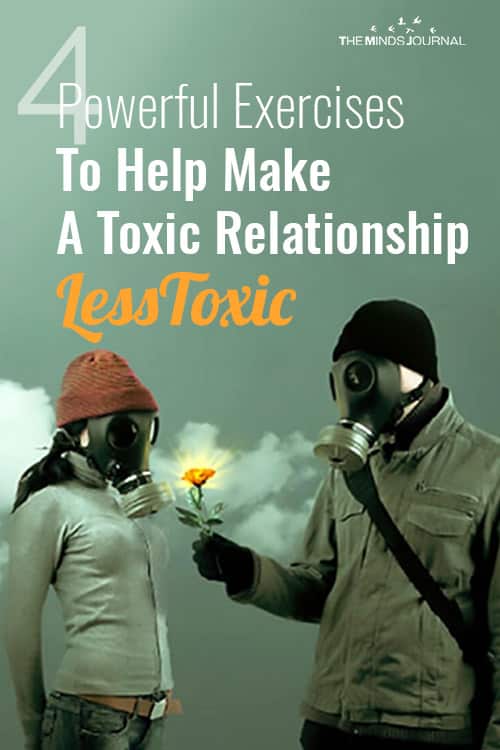
4 Powerful Exercises That Help To Fix A Toxic Relationship

Published On:

Last updated on:

Kyle Benson

Kyle Benson, a relationship nerd and certified sex therapist, combines Emotionally Focused Therapy, the Gottman Method, and Sex Therapy to help partners establish secure-functioning relationships. He simplifies complex relationship research into practical, actionable guidance, enabling lovers to strengthen their bond. You can join his community of over 30,000 subscribers by signing up for his newsletter here.

Disclaimer: The informational content on The Minds Journal have been created and reviewed by qualified mental health professionals. They are intended solely for educational and self-awareness purposes and should not be used as a substitute for professional medical advice, diagnosis, or treatment. If you are experiencing emotional distress or have concerns about your mental health, please seek help from a licensed mental health professional or healthcare provider.

Leave a Comment

Today's Horoscope

Weekly Horoscope PART one

Weekly Horoscope 15 March to 21 March 2026

Read your zodiac signโ€™s prediction to understand the energy surrounding you and how to make the most of the days ahead!

Latest Quizzes

Interesting Finger Personality Test: 4 Finger Lines

Finger Personality Test: Join Your Fingers And Reveal A Hidden Personality Secret!

Look closely at your finger lines. Which pattern do you see? This personality test might surprise you!

Latest Quotes

How Men Show Love Through Actions (Male Psychology in Relationships)

How Men Show Love Through Actions (Male Psychology in Relationships)

Male psychology in relationships shows that men express love through presence, protection, and peace more than poetry. Decode his actions so you can see how deeply he actually cares.

Readers Blog

Caption This Image and Selected Wisepicks โ€“ 15 March 2026

Caption This Image and Selected Wisepicks โ€“ 15 March 2026

Ready to unleash your inner wordsmith? โœจ??โ˜บ๏ธ Nowโ€™s your chance to show off your wit, charm, or sheer genius in just one line! Whether itโ€™s laugh-out-loud funny or surprisingly deep, we want to hear it.Submit your funniest, wittiest, or most thought-provoking caption in the comments. Weโ€™ll pick 15+ winners to be featured on our website…

Latest Articles

Are you and your partner looking for ways to fix a toxic relationship? Below are 4 ways how you can heal a toxic relationship.

So, are you willing to save the relationship and make it healthy?

Love is a dance of connection and disconnection. There are times when you feel compelled by your lover and other times when you feel the need for alone time.

Some of us need more connection, others need more independence. Sometimes these differences lead to a toxic relationship.

There are only two roads to making a toxic relationship not so toxic:

Road One leads to breaking up and finding a more secure partner.
Road Two leads to seeing the problems in the relationship as a slingshot for growth.

Even though both of you fall on opposite ends of the spectrum, the relationship can work. But the only way it can work is if partners are able to see problems in the relationship as a catalyst to understand and respect each otherโ€™s differences. If they donโ€™t, holding hands quickly turns into pointing fingers.

If your partnerโ€™s idea of closeness makes you feel like youโ€™re suffocating, or if you feel like your partner ignores you (intentionally) in little ways throughout the day, the best thing you can do for your relationship is to talk about it.

By examining the moments of disconnection and irritants in the relationship, both partners will gain profound insight into each other so they can begin learning how to give each other what they need.

How To Fix A Toxic Relationship? 4 Powerful Exercises For Making A Toxic Relationship Healthy

Exercise 1: Talk About It

If one of you is feeling ignored or overwhelmed by your partnerโ€™s needs, then use the exercise below to understand each other better.

fix a toxic relationship

Answers: There are no right or wrong answers here. Each answer depends on your reality. The goal of the exercise is for both partners to understand each other.

The only way to do that is to recognize one vital element that makes relationships last. That vital element isโ€ฆ

Both Points of View Are Valid. When partners believe there is only one truth, they fight for their own position. That belief is a dead-end.

There is only one assumption that will make the conversation about disconnection or too much closeness beneficial: that in every fight, there are always two points of view, and both are valid.

Once your partner and you accept that idea, itโ€™s no longer necessary to argue for your own position. Now you can focus on understanding your partnerโ€™s position and work together to find a mutual solution.

Read How To Navigate The Stages of Love and Build A Healthy Relationship

There are always two sides to every conflict. Once you understand and acknowledge this, youโ€™ll quickly find that reconnecting comes naturally.

Instructions: Think of the last argument you had. Rate the following feelings on a scale from 1(100% felt that way) to 5 (0% felt that way).

During our fight I felt:

  • Defensive
  • Sad
  • Misunderstood
  • Hurt
  • Criticized
  • Neglected
  • Like leaving
  • Like my opinions donโ€™t matter
  • Worried
  • Lonely

Next: Explore what triggered those feelings:
Rate what triggered those feelings on a scale from 1(100% felt that way) to 5 (0% felt that way).

  • I felt unimportant to my partner
  • I felt cold toward my partner
  • I felt rejected
  • I felt overwhelmed by demands
  • I felt excluded
  • I didnโ€™t feel attraction
  • I didnโ€™t feel affection
  • My sense of dignity was compromised
  • I couldnโ€™t get my partnerโ€™s attention
  • My partner was dominating

Exercise 2: Revisit The Past

Now that weโ€™ve identified your emotional reaction, itโ€™s time to get in a time machine and revisit your past. We may repeat unhealed patterns from our past relationships in our present ones. See if you can find a relationship between earlier traumas or behavior and your current reaction.

Note: If youโ€™ve been sexually harassed, raped, or experienced any other trauma your partner is unaware of, now is the time to bring it up. In my work with others, Iโ€™ve found that sharing our deepest pain with our partners truly helps them understand us. It also gives them the ability to gently work with us on the traumas so we can begin to heal together.

Read 5 Healthy Relationship Boundaries That Keep the Romance Alive

The following list will help guide you.

When I (or my partner) turned away, it reminded me of:

  • An earlier relationship
  • Past traumas or hard times Iโ€™ve had
  • The way my family treated me growing up
  • My deepest fears and insecurities
  • Unaccomplished dreams I have
  • Events I have not emotionally dealt with yet
  • Ways other people have treated me
  • Things I always believed about myself
  • Nightmares that keep me up at night

Take time to discuss each otherโ€™s answers. Ask open-ended questions so you can understand each other better. This isnโ€™t about who feels worse or who is more right. Itโ€™s about taking time to truly understand each otherโ€™s insecurities and deepest fears.

fix a toxic relationship

When your partner tells you something that shocks you or surprises you, say, โ€œtell me more about that.โ€ Youโ€™ll learn more in one answer by truly listening then you will in years of trying to guess why your partner does what they do.

Exercise 3: Write It Out

Now write out a short summary of your point of view in the disagreement, followed by your partnerโ€™s point of view.

If you did the exercise right, youโ€™ll quickly see that your views of what happened and why they happened in the way they did are not matters of โ€œfact.โ€

All of us are complicated people whose emotional reactions are determined by a lifetime of perceptions, thoughts, feelings, and memories.

Exercise 4: Whatโ€™s Your Role?

Itโ€™s our natural setting to blame distance and loneliness as our partnerโ€™s fault. But no one is to blame.

To break the pattern that is causing the emotional roller coaster in the relationship, both partners need to take responsibility for the problem. Both need to admit playing some role.

To help you, read the list below and rate things that may have contributed to your feelings of needing more affection or more space.

Note: Do not try this if you are still upset. When our emotions are tense, fighting becomes nonsense.

When partners try to resolve a conflict when they are upset, they are more likely to say regrettable words that will harm the relationship. Taking a 20-minute break and focusing on the positives of your relationship will do wonders for coming together to solve the problem.

fix a toxic relationship

Step 1: Use the list below to take some ownership of your contribution. Rate the following on a scale from 1 (100% felt that way) to 5 (0% felt that way).

  • Iโ€™ve felt highly sensitive lately
  • I havenโ€™t expressed a lot of appreciation toward my partner lately
  • Iโ€™ve felt very stressed and irritable
  • Iโ€™ve been extremely critical lately
  • I havenโ€™t shared much of what has been going on in my life lately
  • I feel depressed
  • I may have a chip on my shoulder
  • I havenโ€™t been very affectionate lately
  • I havenโ€™t focused on being a good listener lately

Step 2: Now write out how you contributed to this problem.

I can now see that my contribution to this problem wasโ€ฆ

Step 3: Now take a minute to write out some ways you can change the situation in the future.

When an event like this happens in the future, I can make it better byโ€ฆ

Step 4: Offer your partner one tip so they can avoid this problem with you.

To avoid this problem in the future, my partner couldโ€ฆ

The more you work through the exercise, the more you will turn towards each other when the relationship hits a rough patch. Instead of using conflict to push each other away, you can use it to bring you closer.

The emotional bond in your relationship will deepen and youโ€™ll cultivate a profound friendship that can handle any problem the world throws at you.

That doesnโ€™t mean youโ€™ll never have arguments again. You will. It just means those arguments will no longer undercut the relationship.

These four exercises will teach you a lot about your partner and yourself. Itโ€™s going to take courage to stay vulnerable and open when you are frustrated, hurt, or angry.

When a couple seeks safety in the hideout of withdrawal or in the blame of the other for not getting close, it is not loved that has failed; it is they who have failed love.

Read 10 Signs of a Healthy Relationship

When you both love each other genuinely and see a future with each other then never give up.

Yes, things might be bad sometimes but that does not mean they canโ€™t be resolved. If you follow the above-mentioned pointers, you will successfully be able to make your toxic relationship into a less toxic one.

IF you want to know more about how you can make your toxic relationship into a less toxic one, then check out this video below:


This article was originally published on KyleBenson.net.
For more ideas on how to use conflict as a catalyst for closeness signup for my Passionate Relationship Toolkit here and gain exclusive access to the Conflict Blueprint.
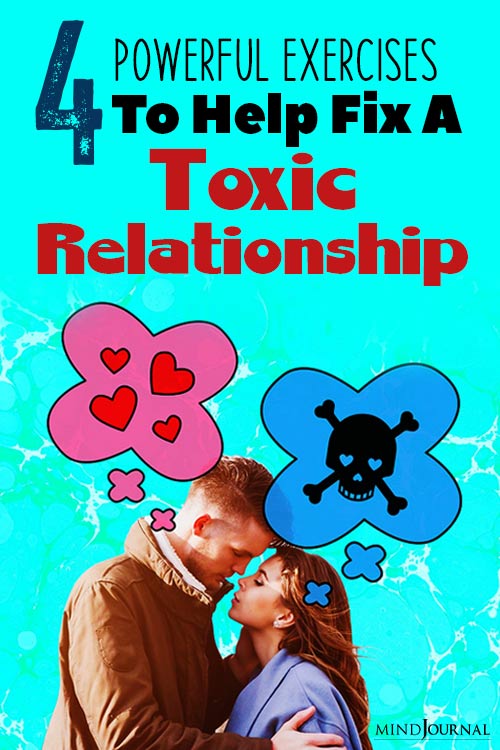
4 Powerful Exercises That Help To Fix A Toxic Relationship

Published On:

Last updated on:

Kyle Benson

Kyle Benson, a relationship nerd and certified sex therapist, combines Emotionally Focused Therapy, the Gottman Method, and Sex Therapy to help partners establish secure-functioning relationships. He simplifies complex relationship research into practical, actionable guidance, enabling lovers to strengthen their bond. You can join his community of over 30,000 subscribers by signing up for his newsletter here.

Leave a Comment

    Leave a Comment