What is Counterfactual Thinking And How It Shapes Your Perception

Author : Mark Garcia

Do you often find yourself lost in deep thoughts about what could have been? Imagining alternatives, different outcomes and reflecting about your choices?  If so, then  youโ€™ve engaged in the cognitive process called counterfactual thinking. But what is counterfactual thinking?

It is a psychological exercise that enables us to think about and imagine multiple alternative realities, different decisions, and how our choices may impact us. 

Let us explore more about counterfactual thinking psychology, examples of counterfactual thinking and types of counterfactual thinking and other aspects of counterfactual thought.

What is Counterfactual Thinking?

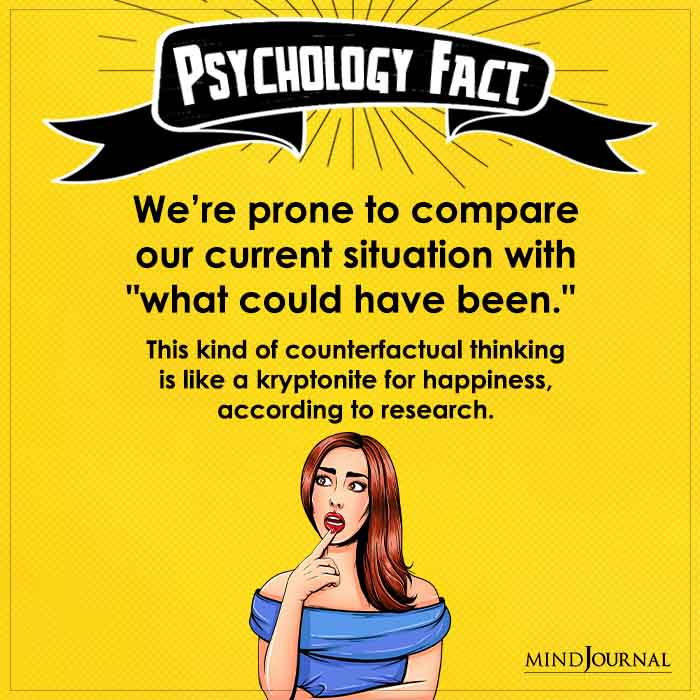
Counterfactual thinking involves mentally simulating alternative scenarios or outcomes that differ from what actually happened. 
what is counterfactual thinking

This means imagining โ€œwhat ifโ€ situations and exploring how different choices or circumstances might lead to different results. It is like rewriting history mentally, where we can see how things would have been if something else had been changed.

Related: What Is Counterfactual Thinking: The Psychological Forces and Life-Altering Impact of โ€˜What Ifs

Understanding Counterfactual Thought

So what is counterfactual thinking? It is a kind of thinking that allows us to imagine different possibilities and consider how things could have turned out differently if some factors had been altered.

When people engage in counterfactual thinking they are creating โ€œwhat ifโ€ situations in their minds and trying to figure out what would have happened if they made other choices or were in different circumstances. 

Most often these imagined situations refer to the past, showing how various decisions could have resulted into todayโ€™s reality or even future situation.

Letโ€™s take an example of someone who applied for a job but wasnโ€™t given an opportunity. In this case, counterfactual thinking might involve reflections on what would have taken place if only he had performed better during an interview or possessed additional relevant experience. 

They might think โ€œIf I had prepared more thoroughly, could I have impressed the interviewer enough for him/her to hire me?โ€

In this example, counterfactual thinking enables one to mentally explore alternative ways that he/she would have taken and evaluate the impact of different choices. By considering these โ€œwhat ifโ€ questions, individuals might understand some of the factors that contributed to their job application outcome. 

This kind of thinking helps people in reflecting about their actions and making better decisions next time.

However, counterfactual thinking is not limited to negative experiences or regrets; it can also be applied in positive situations too. For example, when someone gets promoted at work they might wonder how things would have been if they had done something differently. 

They may ask themselves, โ€œWhat if I hadnโ€™t taken on that extra project? Would I still have been recognized for my performance?โ€

In this case, counterfactual thinking allows one to reflect upon what led to his/her accomplishment so that you can identify strategies or actions that are likely to work again in future endeavors.

Overall, counterfactual thinking is a cognitive process that enables us to think about other ways in which things could have turned out and assess how different choices and circumstances shape our lives. 

By doing so we can get useful insights into complexities of life, learn from experiences and make informed decisions.

Related: 10 Ways To Develop Logical Thinking Skills

What is Counterfactual Thinking Psychology?

Counterfactual thinking is a concept in psychology that has been widely studied by psychologists seeking to understand the underlying cognitive processes as well as the effect it has on our emotions, judgments, and decision making capacities. 

It helps us gain insight on how our minds work and how we make sense of our surroundings. One major aspect of counterfactual thinking is the emotional component.

When we engage in counterfactual thinking, we often feel emotions such as regret, guilt, satisfaction or relief. These emotional responses come about when one compares what actually happened with what could have happened leading to evaluation of different possibilities.

Examples of Counterfactual Thinking

To better understand what is counterfactual thinking, letโ€™s look at some common examples:

You may think โ€œIf only I had left the house a little earlier, I would have caught that trainโ€ after missing a train by just seconds.

When reflecting on a failed relationship you might say to yourself โ€œWhat if I had been more attentive? Could we have had a different outcome?โ€

Watching a tense sports match, you might imagine, โ€œIf the goalkeeper had dived the other way, the opposing team wouldnโ€™t have scored the winning goal.โ€

These examples illustrate how counterfactual thinking allows us to consider alternative possibilities and assess their potential outcomes.

what is counterfactual thinking

Types of Counterfactual Thinking

Counterfactual thinking is typically categorized into two main types: upward and downward counterfactuals.

1. Upward Counterfactuals

Upward counterfactuals involve imagining better outcomes than what actually occurred. They focus mainly on โ€œwhat ifโ€ scenarios that could have resulted in positive or preferable outcomes. 

For example โ€œIf I had studied harder, I might have aced the exam.โ€

Related: How To Stop Overthinking At Night

2. Downward Counterfactuals

On the other hand, downward counterfactuals involve imagining worse outcomes than those which actually took place. They often lead to feelings of relief or gratitude as they show how things couldโ€™ve been worse. 

For instance โ€œIf I hadnโ€™t slowed down, I could have been in a serious car accident.โ€

Both upward and downward counterfactuals serve different purposes. While upward counterfactuals can motivate us to work harder and achieve better results, downward counterfactuals offer consolation by making us realize how lucky we are compared to what could have happened.

Benefits and Limitations of Counterfactual Thinking

Knowing what is counterfactual thinking helps you realize that there are several advantages associated with counterfactual thinking. It helps us learn from past mistakes, make informed decisions, and understand the cause-effect relationships better. 

By examining alternative scenarios, we get insights into what causes success or failure. This enables us to act differently in future leading to improved problem solving ability.

However, this kind of thinking also has its drawbacks. It may result in rumination or excessive regret which might interfere with moving on. 

One should find a balance between learning from the past and accepting what cannot be undone. This way, it becomes possible for us to use it constructively without falling into an unproductive thought cycle.

Takeaway

So what is counterfactual thinking? Counterfactual thinking is an interesting mental process that affects our emotions when making judgments or decisions. 

By engaging in this type of thought process, we can gain valuable insight about life complexities and understand why certain things happen the way they do in our lives.

Related: How Rigid Thinking And Rumination Undermines Your Health And Life


Frequently Asked Questions (FAQs):

What is an example of counterfactual thinking?

An example of counterfactual thinking can be โ€œIf only I had taken a different route, I wouldnโ€™t be late.โ€

Is counterfactual thinking good or bad?

Counterfactual thinking can be either adaptive or maladaptive. It affects learning, motivation and emotional well-being.

What are the negative effects of counterfactual thinking?

Regret, stress and reduced satisfaction are some negative outcomes of counterfactual thinking which affect mental health and decision making.

counterfactual thought

Published On:

Last updated on:

Mark Garcia

Hi, I am Mark Garcia, your dedicated In-House Family Expert at Mind Family. With over a decade in family therapy and counseling, I specialize in creating evidence-based, personalized strategies to enhance family dynamics. My mission is to empower families with the tools and insights needed for harmonious living. Through practical advice and empathetic support, I guide families toward understanding and resolving their unique challenges. Letโ€™s navigate the journey of family life together, fostering stronger bonds and lasting happiness.

Disclaimer: The informational content on The Minds Journal have been created and reviewed by qualified mental health professionals. They are intended solely for educational and self-awareness purposes and should not be used as a substitute for professional medical advice, diagnosis, or treatment. If you are experiencing emotional distress or have concerns about your mental health, please seek help from a licensed mental health professional or healthcare provider.

Leave a Comment

Today's Horoscope

Your Daily Horoscope For 4 April, 2026: Free Predictions

Daily Horoscope 4 April, 2026: Prediction For Each Zodiac Sign

Look at your daily prediction and see what the stars have in store for your love life and your future!

Latest Quizzes

How Many Circles Do You See? A Simple Test of Thinking Style

How Many Circles Do You See? Your Answer Might Reveal Narcissistic Traits!ย 

Take a closer look at this simple image and discover what your circle count reveals about your thinking style, perception, and attention in this fun and engaging visual test.

Latest Quotes

Real Signs Your Body Is Actually in Good Health: How to Know Youโ€™re Truly Well

Real Signs Your Body Is Actually in Good Health: How to Know Youโ€™re Truly Well

Real signs your body is healthy donโ€™t always show up on lab reports. From good sleep and clear skin to regular digestion and a stable mood, your body is constantly sending quiet signals of wellness.

Readers Blog

Caption This Image and Selected Wisepicks โ€“ 5 April 2026

Caption This Image and Selected Wisepicks โ€“ 5 April 2026

Ready to unleash your inner wordsmith? โœจ??โ˜บ๏ธ Nowโ€™s your chance to show off your wit, charm, or sheer genius in just one line! Whether itโ€™s laugh-out-loud funny or surprisingly deep, we want to hear it.Submit your funniest, wittiest, or most thought-provoking caption in the comments. Weโ€™ll pick 15+ winners to be featured on our website…

Latest Articles

Do you often find yourself lost in deep thoughts about what could have been? Imagining alternatives, different outcomes and reflecting about your choices?  If so, then  youโ€™ve engaged in the cognitive process called counterfactual thinking. But what is counterfactual thinking?

It is a psychological exercise that enables us to think about and imagine multiple alternative realities, different decisions, and how our choices may impact us. 

Let us explore more about counterfactual thinking psychology, examples of counterfactual thinking and types of counterfactual thinking and other aspects of counterfactual thought.

What is Counterfactual Thinking?

Counterfactual thinking involves mentally simulating alternative scenarios or outcomes that differ from what actually happened. 

what is counterfactual thinking

This means imagining โ€œwhat ifโ€ situations and exploring how different choices or circumstances might lead to different results. It is like rewriting history mentally, where we can see how things would have been if something else had been changed.

Related: What Is Counterfactual Thinking: The Psychological Forces and Life-Altering Impact of โ€˜What Ifs

Understanding Counterfactual Thought

So what is counterfactual thinking? It is a kind of thinking that allows us to imagine different possibilities and consider how things could have turned out differently if some factors had been altered.

When people engage in counterfactual thinking they are creating โ€œwhat ifโ€ situations in their minds and trying to figure out what would have happened if they made other choices or were in different circumstances. 

Most often these imagined situations refer to the past, showing how various decisions could have resulted into todayโ€™s reality or even future situation.

Letโ€™s take an example of someone who applied for a job but wasnโ€™t given an opportunity. In this case, counterfactual thinking might involve reflections on what would have taken place if only he had performed better during an interview or possessed additional relevant experience. 

They might think โ€œIf I had prepared more thoroughly, could I have impressed the interviewer enough for him/her to hire me?โ€

In this example, counterfactual thinking enables one to mentally explore alternative ways that he/she would have taken and evaluate the impact of different choices. By considering these โ€œwhat ifโ€ questions, individuals might understand some of the factors that contributed to their job application outcome. 

This kind of thinking helps people in reflecting about their actions and making better decisions next time.

However, counterfactual thinking is not limited to negative experiences or regrets; it can also be applied in positive situations too. For example, when someone gets promoted at work they might wonder how things would have been if they had done something differently. 

They may ask themselves, โ€œWhat if I hadnโ€™t taken on that extra project? Would I still have been recognized for my performance?โ€

In this case, counterfactual thinking allows one to reflect upon what led to his/her accomplishment so that you can identify strategies or actions that are likely to work again in future endeavors.

Overall, counterfactual thinking is a cognitive process that enables us to think about other ways in which things could have turned out and assess how different choices and circumstances shape our lives. 

By doing so we can get useful insights into complexities of life, learn from experiences and make informed decisions.

Related: 10 Ways To Develop Logical Thinking Skills

What is Counterfactual Thinking Psychology?

Counterfactual thinking is a concept in psychology that has been widely studied by psychologists seeking to understand the underlying cognitive processes as well as the effect it has on our emotions, judgments, and decision making capacities. 

It helps us gain insight on how our minds work and how we make sense of our surroundings. One major aspect of counterfactual thinking is the emotional component.

When we engage in counterfactual thinking, we often feel emotions such as regret, guilt, satisfaction or relief. These emotional responses come about when one compares what actually happened with what could have happened leading to evaluation of different possibilities.

Examples of Counterfactual Thinking

To better understand what is counterfactual thinking, letโ€™s look at some common examples:

You may think โ€œIf only I had left the house a little earlier, I would have caught that trainโ€ after missing a train by just seconds.

When reflecting on a failed relationship you might say to yourself โ€œWhat if I had been more attentive? Could we have had a different outcome?โ€

Watching a tense sports match, you might imagine, โ€œIf the goalkeeper had dived the other way, the opposing team wouldnโ€™t have scored the winning goal.โ€

These examples illustrate how counterfactual thinking allows us to consider alternative possibilities and assess their potential outcomes.

what is counterfactual thinking

Types of Counterfactual Thinking

Counterfactual thinking is typically categorized into two main types: upward and downward counterfactuals.

1. Upward Counterfactuals

Upward counterfactuals involve imagining better outcomes than what actually occurred. They focus mainly on โ€œwhat ifโ€ scenarios that could have resulted in positive or preferable outcomes. 

For example โ€œIf I had studied harder, I might have aced the exam.โ€

Related: How To Stop Overthinking At Night

2. Downward Counterfactuals

On the other hand, downward counterfactuals involve imagining worse outcomes than those which actually took place. They often lead to feelings of relief or gratitude as they show how things couldโ€™ve been worse. 

For instance โ€œIf I hadnโ€™t slowed down, I could have been in a serious car accident.โ€

Both upward and downward counterfactuals serve different purposes. While upward counterfactuals can motivate us to work harder and achieve better results, downward counterfactuals offer consolation by making us realize how lucky we are compared to what could have happened.

Benefits and Limitations of Counterfactual Thinking

Knowing what is counterfactual thinking helps you realize that there are several advantages associated with counterfactual thinking. It helps us learn from past mistakes, make informed decisions, and understand the cause-effect relationships better. 

By examining alternative scenarios, we get insights into what causes success or failure. This enables us to act differently in future leading to improved problem solving ability.

However, this kind of thinking also has its drawbacks. It may result in rumination or excessive regret which might interfere with moving on. 

One should find a balance between learning from the past and accepting what cannot be undone. This way, it becomes possible for us to use it constructively without falling into an unproductive thought cycle.

Takeaway

So what is counterfactual thinking? Counterfactual thinking is an interesting mental process that affects our emotions when making judgments or decisions. 

By engaging in this type of thought process, we can gain valuable insight about life complexities and understand why certain things happen the way they do in our lives.

Related: How Rigid Thinking And Rumination Undermines Your Health And Life


Frequently Asked Questions (FAQs):

What is an example of counterfactual thinking?

An example of counterfactual thinking can be โ€œIf only I had taken a different route, I wouldnโ€™t be late.โ€

Is counterfactual thinking good or bad?

Counterfactual thinking can be either adaptive or maladaptive. It affects learning, motivation and emotional well-being.

What are the negative effects of counterfactual thinking?

Regret, stress and reduced satisfaction are some negative outcomes of counterfactual thinking which affect mental health and decision making.

counterfactual thought

Published On:

Last updated on:

Mark Garcia

Hi, I am Mark Garcia, your dedicated In-House Family Expert at Mind Family. With over a decade in family therapy and counseling, I specialize in creating evidence-based, personalized strategies to enhance family dynamics. My mission is to empower families with the tools and insights needed for harmonious living. Through practical advice and empathetic support, I guide families toward understanding and resolving their unique challenges. Letโ€™s navigate the journey of family life together, fostering stronger bonds and lasting happiness.

Leave a Comment

    Leave a Comment