30+ Truths About Diet Culture, Eating Disorders, And The Process of Healing

Author : Dr. Gia Marson

Diet culture impacts so many people all over the world, and unfortunately, much of itโ€™s impact is negative and harmful. If you are struggling with an eating disorder, then youโ€™ve come to the right place. These truths about diet culture will help you understand itโ€™s repercussions, and motivate you to live your life in a much healthier way.

If you are struggling with food or an eating disorder, these helpful points may offer you the nudge you need to change your relationship with food.

Related: Diving into Diet Culture Definition: 5 Startling Truths and Myths That Will Leave You Speechless!

30+ Truths About Diet Culture, Eating Disorders And Healing

1. Many people with eating disorders look healthy.

2. The good news is that the science of epigenetics tells us that having an eating disorder is not inevitable based on your genes alone.

3. Regardless of weight, positive body image predicts better health outcomes and protects against disordered eating.

4. Eating disorders in boys and men continue to be under-recognized, even though they experience higher mortality rates.

5. 1 death every 52 minutesโ€”thatโ€™s the average rate of mortality from eating disorders.

6. At least 9% of the U.S. population (or 28 million people) will have an eating disorder in their lifetime.

7. Binge eating disorder is the most common eating disorder by far.

8. Not having access to enough food can increase vulnerability to binge eating.

9. Historical, systemic, and individual trauma may negatively impact physical health, mental health, and eating habits.

10. Rigid eating can negatively impact the gut-brain connection.

11. Body dissatisfaction and a diet mentality are significant factors in maintaining eating disorders.

12. Body mass index (BMI) was developed by a mathematician based on his concept of โ€œthe average man.โ€ It was not created to consider differences across ethnic groups, race, gender, age, fitness levels, or the proportions of bone, muscle, and fat in the body.

13. Children, teenagers, and adults with eating disorders should be respected; they are not their illnesses. They have an illness. No one chooses to have an eating disorder, even if it started by a decision to diet and they are resistant to change.

14. Diet culture often interferes with the timely diagnosis and treatment of eating disorders.

15. Backwards (or no) weight checks may reduce the focus on weight, make weight more neutral, and place more attention on the healthy habits that promote recovery from an eating disorder.

Related: Beyond The Scale: Exploring Yo-Yo Dieting Meaning, Dangers And How To Stop

16. There are serious medical risks associated with all categories of eating disorders; eating disorders are potentially life-threatening illnesses.

17. Denying the seriousness of an eating disorder is a barrier to seeking help.

18. Recovery starts with calming your internal alarm system. That is why one key to recovery is eating the amount of food your body requires with enough structure, responsiveness, and predictability that your body, mind, and spirit are not operating from a place of scarcity or fear.

19. Unyielding self-criticism can contribute to dieting, emotional eating, or binge eating, and compassionate self-talk is associated with intuitive eating.

20. Families are not to be blamed when a child is diagnosed with an eating disorder. In fact, family members can be the greatest ally in a childโ€™s recovery.

21. Weight and health are not always correlated. If your health requires attention, focus on specifics such as reducing blood pressure, stress, or cholesterol, or increasing activity level, interpersonal connections, and sleep.

22. Many studies on happiness reveal that supportive relationships are key to holistic health. If you want to improve your relationship with food, fostering meaningful connections to people can help.

23. Believing that no one understands is a common barrier to seeking help for an eating disorder. However, healing from an eating disorder is difficult if you are experiencing feelings of isolation.
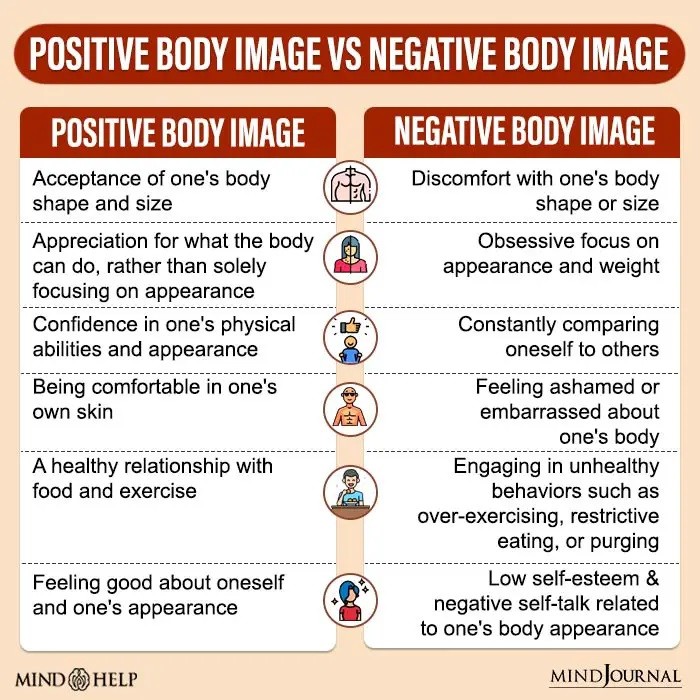
Truths about diet culture, eating disorders and body image

24. When nourishing yourself is no longer rooted in fear, you can begin to find freedom with food.

25. All foods can fit into a healthy lifestyle.

26. Bringing neutrality to foodsโ€”that is, ditching labels such as โ€œgoodโ€ and โ€œbadโ€โ€”can place your attention on developing a greater awareness of your preferences and needs.

Related: 8 Questions To Ask Before Going On A Diet

27. Disordered eating behaviors can be an attempt to find self-definition, meaning, or purpose. Instead of habitually restricting food or reaching for it, ask yourself, Who am I? Where do I really want to go in my life? What now?

28. Following strict eating and exercise rules, and anxiously body checking, will make it nearly impossible to move into a healthier phase of health and living.

29. With repeated exposure to a feared food, your mind and body usually stop responding to it as if it were a threat.

30. The need to adapt to big life events, even positive changes, can trigger a desire to exert control, react, avoid, or escape. Instead of relying on food or the denial of it to manage vulnerable times, it can be helpful to slow down, be attentive, make a responsive plan, act toward yourself with kindness, ask for support, and tolerate uncertainty.

31. Obsessively tracking macros, pacing, and counting crunches while ignoring preferences, hunger, or fatigue will impede recovery. Listen to your bodyโ€™s signals about hunger and fatigue instead.

32. Making your eating regular is the beginning of recovery from an eating disorder. The rest of the journey comes from values, inspiration, relationships, new habits, and more.

33. According to the nutrition standards for treating people with eating disorders, dietitians are encouraged to share the evidence of poor outcomes for intensive weight loss interventions when individuals are referred by health providers for weight loss.

34. Self-deception may interfere with recovery.

Related: Beyond Beauty Standards: 9 Ways To Improve Body Image

35. Adverse childhood experiences may play a role in relying on easy-to-access food.

36. Every personโ€™s recovery from an eating disorder is personal and unique.

Yes, I want to learn more about Intentional Living.


Written By Gia Marson 
Originally Appeared On Dr. Gia Marson
Published On:

Last updated on:

Dr. Gia Marson

Dr. Gia Marson is a licensed psychologist, consultant, meditation practitioner, and an integrative medicine health coach trained by Duke Integrative Medicine. She has spent the last two decades helping adolescents and adults reach their whole-health goals through her private practice in Malibu, CA, and by conducting trainings, teaching, and providing clinical supervision. For eight years, Marson served as the founding director of the University of California, Los Angeles (UCLA) Counseling and Psychological Services Eating Disorders Program, where she provided clinical services, taught an Intuitive Eating and Body Image class, and co-authored the programโ€™s first collaborative treatment manual. Currently, Marson is a clinical director for the Breaking the Chains Foundation, a nonprofit that uses art to change the conversation about binge eating disorders. She is also the founder and moderator of the newly launched Intentional Eating Community, an online village where members can take courses, watch exclusive webinars, participate in forums, meet health experts, and connect with peers. Her first book, The Binge Eating Prevention Workbook: An Eight-Week Individualized Program to Overcome Compulsive Eating and Make Peace with Food, was published in September 2020. Dr. Marson recently began an online Intentional Eating Community to support healthy eating.

Disclaimer: The informational content on The Minds Journal have been created and reviewed by qualified mental health professionals. They are intended solely for educational and self-awareness purposes and should not be used as a substitute for professional medical advice, diagnosis, or treatment. If you are experiencing emotional distress or have concerns about your mental health, please seek help from a licensed mental health professional or healthcare provider.

Leave a Comment

Today's Horoscope

Your Daily Horoscope For 4 April, 2026: Free Predictions

Daily Horoscope 4 April, 2026: Prediction For Each Zodiac Sign

Look at your daily prediction and see what the stars have in store for your love life and your future!

Latest Quizzes

How Many Circles Do You See? A Simple Test of Thinking Style

How Many Circles Do You See? Your Answer Might Reveal Narcissistic Traits!ย 

Take a closer look at this simple image and discover what your circle count reveals about your thinking style, perception, and attention in this fun and engaging visual test.

Latest Quotes

Real Signs Your Body Is Actually in Good Health: How to Know Youโ€™re Truly Well

Real Signs Your Body Is Actually in Good Health: How to Know Youโ€™re Truly Well

Real signs your body is healthy donโ€™t always show up on lab reports. From good sleep and clear skin to regular digestion and a stable mood, your body is constantly sending quiet signals of wellness.

Readers Blog

Caption This Image and Selected Wisepicks โ€“ 5 April 2026

Caption This Image and Selected Wisepicks โ€“ 5 April 2026

Ready to unleash your inner wordsmith? โœจ??โ˜บ๏ธ Nowโ€™s your chance to show off your wit, charm, or sheer genius in just one line! Whether itโ€™s laugh-out-loud funny or surprisingly deep, we want to hear it.Submit your funniest, wittiest, or most thought-provoking caption in the comments. Weโ€™ll pick 15+ winners to be featured on our website…

Latest Articles

Diet culture impacts so many people all over the world, and unfortunately, much of itโ€™s impact is negative and harmful. If you are struggling with an eating disorder, then youโ€™ve come to the right place. These truths about diet culture will help you understand itโ€™s repercussions, and motivate you to live your life in a much healthier way.

If you are struggling with food or an eating disorder, these helpful points may offer you the nudge you need to change your relationship with food.

Related: Diving into Diet Culture Definition: 5 Startling Truths and Myths That Will Leave You Speechless!

30+ Truths About Diet Culture, Eating Disorders And Healing

1. Many people with eating disorders look healthy.

2. The good news is that the science of epigenetics tells us that having an eating disorder is not inevitable based on your genes alone.

3. Regardless of weight, positive body image predicts better health outcomes and protects against disordered eating.

4. Eating disorders in boys and men continue to be under-recognized, even though they experience higher mortality rates.

5. 1 death every 52 minutesโ€”thatโ€™s the average rate of mortality from eating disorders.

6. At least 9% of the U.S. population (or 28 million people) will have an eating disorder in their lifetime.

7. Binge eating disorder is the most common eating disorder by far.

8. Not having access to enough food can increase vulnerability to binge eating.

9. Historical, systemic, and individual trauma may negatively impact physical health, mental health, and eating habits.

10. Rigid eating can negatively impact the gut-brain connection.

11. Body dissatisfaction and a diet mentality are significant factors in maintaining eating disorders.

12. Body mass index (BMI) was developed by a mathematician based on his concept of โ€œthe average man.โ€ It was not created to consider differences across ethnic groups, race, gender, age, fitness levels, or the proportions of bone, muscle, and fat in the body.

13. Children, teenagers, and adults with eating disorders should be respected; they are not their illnesses. They have an illness. No one chooses to have an eating disorder, even if it started by a decision to diet and they are resistant to change.

14. Diet culture often interferes with the timely diagnosis and treatment of eating disorders.

15. Backwards (or no) weight checks may reduce the focus on weight, make weight more neutral, and place more attention on the healthy habits that promote recovery from an eating disorder.

Related: Beyond The Scale: Exploring Yo-Yo Dieting Meaning, Dangers And How To Stop

16. There are serious medical risks associated with all categories of eating disorders; eating disorders are potentially life-threatening illnesses.

17. Denying the seriousness of an eating disorder is a barrier to seeking help.

18. Recovery starts with calming your internal alarm system. That is why one key to recovery is eating the amount of food your body requires with enough structure, responsiveness, and predictability that your body, mind, and spirit are not operating from a place of scarcity or fear.

19. Unyielding self-criticism can contribute to dieting, emotional eating, or binge eating, and compassionate self-talk is associated with intuitive eating.

20. Families are not to be blamed when a child is diagnosed with an eating disorder. In fact, family members can be the greatest ally in a childโ€™s recovery.

21. Weight and health are not always correlated. If your health requires attention, focus on specifics such as reducing blood pressure, stress, or cholesterol, or increasing activity level, interpersonal connections, and sleep.

22. Many studies on happiness reveal that supportive relationships are key to holistic health. If you want to improve your relationship with food, fostering meaningful connections to people can help.

23. Believing that no one understands is a common barrier to seeking help for an eating disorder. However, healing from an eating disorder is difficult if you are experiencing feelings of isolation.

Truths about diet culture, eating disorders and body image

24. When nourishing yourself is no longer rooted in fear, you can begin to find freedom with food.

25. All foods can fit into a healthy lifestyle.

26. Bringing neutrality to foodsโ€”that is, ditching labels such as โ€œgoodโ€ and โ€œbadโ€โ€”can place your attention on developing a greater awareness of your preferences and needs.

Related: 8 Questions To Ask Before Going On A Diet

27. Disordered eating behaviors can be an attempt to find self-definition, meaning, or purpose. Instead of habitually restricting food or reaching for it, ask yourself, Who am I? Where do I really want to go in my life? What now?

28. Following strict eating and exercise rules, and anxiously body checking, will make it nearly impossible to move into a healthier phase of health and living.

29. With repeated exposure to a feared food, your mind and body usually stop responding to it as if it were a threat.

30. The need to adapt to big life events, even positive changes, can trigger a desire to exert control, react, avoid, or escape. Instead of relying on food or the denial of it to manage vulnerable times, it can be helpful to slow down, be attentive, make a responsive plan, act toward yourself with kindness, ask for support, and tolerate uncertainty.

31. Obsessively tracking macros, pacing, and counting crunches while ignoring preferences, hunger, or fatigue will impede recovery. Listen to your bodyโ€™s signals about hunger and fatigue instead.

32. Making your eating regular is the beginning of recovery from an eating disorder. The rest of the journey comes from values, inspiration, relationships, new habits, and more.

33. According to the nutrition standards for treating people with eating disorders, dietitians are encouraged to share the evidence of poor outcomes for intensive weight loss interventions when individuals are referred by health providers for weight loss.

34. Self-deception may interfere with recovery.

Related: Beyond Beauty Standards: 9 Ways To Improve Body Image

35. Adverse childhood experiences may play a role in relying on easy-to-access food.

36. Every personโ€™s recovery from an eating disorder is personal and unique.

Yes, I want to learn more about Intentional Living.


Written By Gia Marson 
Originally Appeared On Dr. Gia Marson

Published On:

Last updated on:

Dr. Gia Marson

Dr. Gia Marson is a licensed psychologist, consultant, meditation practitioner, and an integrative medicine health coach trained by Duke Integrative Medicine. She has spent the last two decades helping adolescents and adults reach their whole-health goals through her private practice in Malibu, CA, and by conducting trainings, teaching, and providing clinical supervision. For eight years, Marson served as the founding director of the University of California, Los Angeles (UCLA) Counseling and Psychological Services Eating Disorders Program, where she provided clinical services, taught an Intuitive Eating and Body Image class, and co-authored the programโ€™s first collaborative treatment manual. Currently, Marson is a clinical director for the Breaking the Chains Foundation, a nonprofit that uses art to change the conversation about binge eating disorders. She is also the founder and moderator of the newly launched Intentional Eating Community, an online village where members can take courses, watch exclusive webinars, participate in forums, meet health experts, and connect with peers. Her first book, The Binge Eating Prevention Workbook: An Eight-Week Individualized Program to Overcome Compulsive Eating and Make Peace with Food, was published in September 2020. Dr. Marson recently began an online Intentional Eating Community to support healthy eating.

Leave a Comment

    Leave a Comment