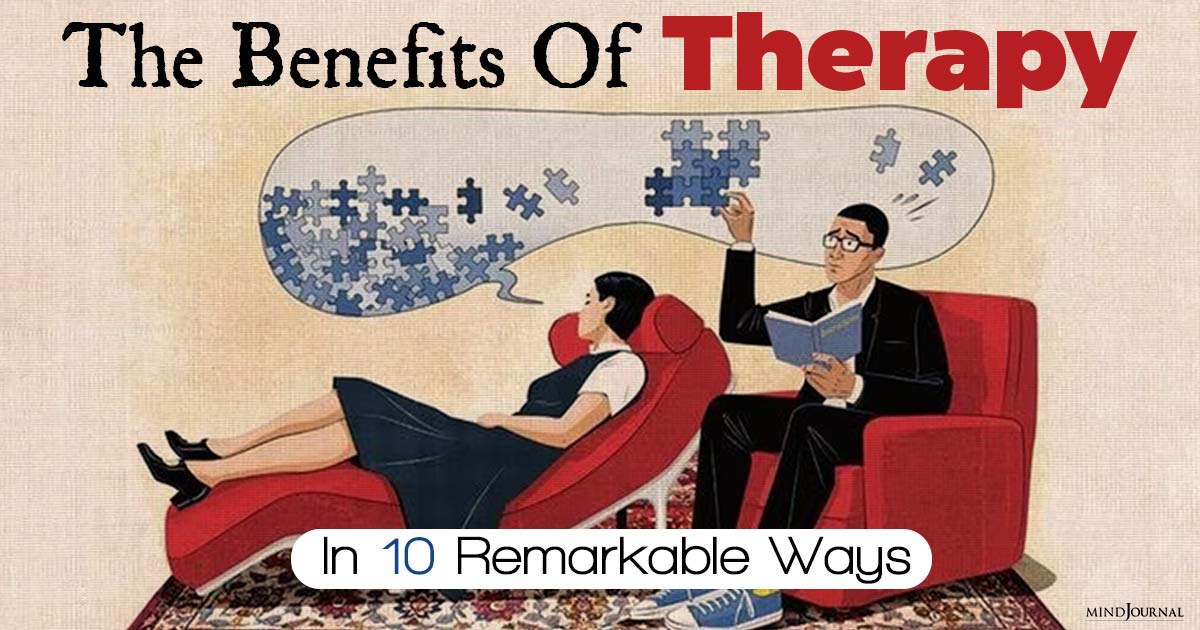
Letting Go And Thriving: The Surprising Benefits of Therapy

Author : Darlene Lancer, JD, LMFT

Discover a world beyond pain as we delve into the surprising benefits of therapy. Letting go becomes a gateway to thriving, revealing resilience, self-discovery, and lasting empowerment. Welcome to healing!

Letting go of someone we love is never easy. Letting go allows us more freedom in our lives and helps us stop controlling behavior. It might mean letting go of someone who is self-destructive, like an addict.

Fundamentally, we’re powerless over someone else. Letting go may feel unloving, but it actually allows us to love with compassion instead of manipulation. Letting go might prepare us to want to leave a relationship or get over someone who has hurt us or left us.

It can be extra hard for codependents to let go, especially if you have low self-esteem and tend to isolate, rather than seek the support of friends and family.

The Surprising Benefits of Therapy

10 Benefits of Therapy – Tips For Letting Go

In the process of letting go, in therapy, you learn some of the following unexpected things. You:

1. Discover your attachment style

Often we find that events in our childhood can either help or hinder how we attach and our ability to let go. If we’ve been emotionally abandoned, which is true for most codependents (even with an intact family), that trauma will influence our attachment style, the type of person we bond with, and whether we’re able to let go.

2. Uncover and heal your triggers

Our past experiences, especially with our parents, may leave wounds that get triggered in the present time. They can make it hard to let go. In therapy, we can uncover those triggers and heal the underlying wounds. This provides us greater freedom to respond, not react, detach, and let go.

Read more here: 21 Different Art Therapy Exercises For Different Emotions

3. Know the thrill of empowerment and autonomy

By getting support in therapy to take risks and act more independently, we’re able to set boundaries and take life-affirming actions. We feel exhilarated in finding our freedom and owning our power.

4. Learn to love and nurture yourself

By instruction and example in therapy, we learn how to nurture and love ourselves. This makes us less needy of others and also helps us manage the grief and fear associated with letting go. Get the Self-Love Meditation.

5. Build resilience, courage, and self-esteem

By having support, minimizing our fears, and trying out new behaviors in therapy, we gain the courage to try out new behaviors in our lives.

6. Feel liberation through forgiving yourself and others

When we’re in pain, it’s tempting to get stuck in self-blame, guilt, or shame, about past actions or inactions. In therapy, our assumptions and beliefs are challenged. We can experience empathy and forgiveness for ourselves.

Empathy for ourselves prepares us to forgive others. We realize that our anger and resentment hurt us above anyone else.

7. Accept the past and present which energizes action

We may be in denial and stuck in a current or past relationship. It also feeds trauma bonds that make it harder to leave abusive relationships. By forgiving ourselves and sharing and understanding our feelings, we release blocked energy and are able to be more present.

8. Change so as not to repeat painful patterns

In therapy, we can identify self-destructive repetitive patterns in our behavior and relationships so that we don’t repeat them. As a result, we behave and decide differently in the future.

9. Embrace impermanence and change

We learn that we cannot always control other people and reality to our liking. We realize that the one thing that is constant is change. All life is impermanent. By embracing that concept and accepting reality, we can live with more ease.

10. Enjoy living more open-hearted in the present

Once we’ve released painful emotions and let go of things we can’t control, we’re able to live with less fear, put our energy into creating the life we want, and open our hearts to what the present brings.

Letting Go…

Detaching starts with understanding, but it takes time for the heart to really accept that ultimately we’re powerless over others and that our efforts to change someone are unhelpful and possibly detrimental to us, the other person, and the relationship.

Read more about detaching and take a quiz to determine if you’re over-involved. Practice these techniques to help you let go. Join my mailing list to get “14 Tips for Letting Go.”

Read more here: What Should You Never Tell Your Therapist? 10 Things To Be Careful About During Therapy

© Darlene Lancer 2023

Remember, that therapy benefits extend far beyond the sessions, fostering lasting well-being and a renewed zest for life. So, take that step, let go, and embark on a path towards a brighter, more fulfilling future.


Written by: Darlene Lancer, JD, LMFT
Originally appeared on: whatiscodependency.com
benefits of therapy

Published On:

Last updated on:

Darlene Lancer, JD, LMFT

Darlene Lancer is a Licensed Marriage and Family Therapist and an expert author on relationships and codependency. She’s counseled individuals and couples for 30 years and coaches internationally. Her books and other online booksellers and her website.

Disclaimer: The informational content on The Minds Journal have been created and reviewed by qualified mental health professionals. They are intended solely for educational and self-awareness purposes and should not be used as a substitute for professional medical advice, diagnosis, or treatment. If you are experiencing emotional distress or have concerns about your mental health, please seek help from a licensed mental health professional or healthcare provider.

Leave a Comment

Today's Horoscope

Weekly Horoscope 5 April to 11 April 2026

Weekly Horoscope 5 April to 11 April 2026

Something shifts, something becomes clear, and something you ignored refuses to stay hidden. Read more about your zodiac sign and pay attention to what feels different.

Latest Quizzes

Can You Find The Easter Eggs? 10 Hidden Eggs: Look Carefully

No One Can Complete This Easter Egg Hunt Without Missing One—Can You? Take This Quiz Now!

There are 10 hidden eggs in this picture. You have 15 seconds. Can you complete this Easter Egg Hunt without missing one?

Latest Quotes

Real Signs Your Body Is Actually in Good Health: How to Know You’re Truly Well

Real Signs Your Body Is Actually in Good Health: How to Know You’re Truly Well

Real signs your body is healthy don’t always show up on lab reports. From good sleep and clear skin to regular digestion and a stable mood, your body is constantly sending quiet signals of wellness.

Readers Blog

Caption This Image and Selected Wisepicks – 5 April 2026

Caption This Image and Selected Wisepicks – 5 April 2026

Ready to unleash your inner wordsmith? ✨??☺️ Now’s your chance to show off your wit, charm, or sheer genius in just one line! Whether it’s laugh-out-loud funny or surprisingly deep, we want to hear it.Submit your funniest, wittiest, or most thought-provoking caption in the comments. We’ll pick 15+ winners to be featured on our website…

Latest Articles

Discover a world beyond pain as we delve into the surprising benefits of therapy. Letting go becomes a gateway to thriving, revealing resilience, self-discovery, and lasting empowerment. Welcome to healing!

Letting go of someone we love is never easy. Letting go allows us more freedom in our lives and helps us stop controlling behavior. It might mean letting go of someone who is self-destructive, like an addict.

Fundamentally, we’re powerless over someone else. Letting go may feel unloving, but it actually allows us to love with compassion instead of manipulation. Letting go might prepare us to want to leave a relationship or get over someone who has hurt us or left us.

It can be extra hard for codependents to let go, especially if you have low self-esteem and tend to isolate, rather than seek the support of friends and family.

The Surprising Benefits of Therapy

10 Benefits of Therapy – Tips For Letting Go

In the process of letting go, in therapy, you learn some of the following unexpected things. You:

1. Discover your attachment style

Often we find that events in our childhood can either help or hinder how we attach and our ability to let go. If we’ve been emotionally abandoned, which is true for most codependents (even with an intact family), that trauma will influence our attachment style, the type of person we bond with, and whether we’re able to let go.

2. Uncover and heal your triggers

Our past experiences, especially with our parents, may leave wounds that get triggered in the present time. They can make it hard to let go. In therapy, we can uncover those triggers and heal the underlying wounds. This provides us greater freedom to respond, not react, detach, and let go.

Read more here: 21 Different Art Therapy Exercises For Different Emotions

3. Know the thrill of empowerment and autonomy

By getting support in therapy to take risks and act more independently, we’re able to set boundaries and take life-affirming actions. We feel exhilarated in finding our freedom and owning our power.

4. Learn to love and nurture yourself

By instruction and example in therapy, we learn how to nurture and love ourselves. This makes us less needy of others and also helps us manage the grief and fear associated with letting go. Get the Self-Love Meditation.

5. Build resilience, courage, and self-esteem

By having support, minimizing our fears, and trying out new behaviors in therapy, we gain the courage to try out new behaviors in our lives.

6. Feel liberation through forgiving yourself and others

When we’re in pain, it’s tempting to get stuck in self-blame, guilt, or shame, about past actions or inactions. In therapy, our assumptions and beliefs are challenged. We can experience empathy and forgiveness for ourselves.

Empathy for ourselves prepares us to forgive others. We realize that our anger and resentment hurt us above anyone else.

7. Accept the past and present which energizes action

We may be in denial and stuck in a current or past relationship. It also feeds trauma bonds that make it harder to leave abusive relationships. By forgiving ourselves and sharing and understanding our feelings, we release blocked energy and are able to be more present.

8. Change so as not to repeat painful patterns

In therapy, we can identify self-destructive repetitive patterns in our behavior and relationships so that we don’t repeat them. As a result, we behave and decide differently in the future.

9. Embrace impermanence and change

We learn that we cannot always control other people and reality to our liking. We realize that the one thing that is constant is change. All life is impermanent. By embracing that concept and accepting reality, we can live with more ease.

10. Enjoy living more open-hearted in the present

Once we’ve released painful emotions and let go of things we can’t control, we’re able to live with less fear, put our energy into creating the life we want, and open our hearts to what the present brings.

Letting Go…

Detaching starts with understanding, but it takes time for the heart to really accept that ultimately we’re powerless over others and that our efforts to change someone are unhelpful and possibly detrimental to us, the other person, and the relationship.

Read more about detaching and take a quiz to determine if you’re over-involved. Practice these techniques to help you let go. Join my mailing list to get “14 Tips for Letting Go.”

Read more here: What Should You Never Tell Your Therapist? 10 Things To Be Careful About During Therapy

© Darlene Lancer 2023

Remember, that therapy benefits extend far beyond the sessions, fostering lasting well-being and a renewed zest for life. So, take that step, let go, and embark on a path towards a brighter, more fulfilling future.


Written by: Darlene Lancer, JD, LMFT
Originally appeared on: whatiscodependency.com
benefits of therapy

Published On:

Last updated on:

Darlene Lancer, JD, LMFT

Darlene Lancer is a Licensed Marriage and Family Therapist and an expert author on relationships and codependency. She’s counseled individuals and couples for 30 years and coaches internationally. Her books and other online booksellers and her website.

Leave a Comment

    Leave a Comment