

There’s a very specific kind of guilt that comes from recognizing the signs of procrastination in yourself while still feeling unable to stop. You wake up already thinking about the things you need to finish. And somehow the entire day feels already heavy – you can’t even “begin”.
But instead of starting, you freeze. You scroll for “just five minutes.” You wait for the right mood, the right energy, the right version of yourself to finally appear. And when night comes, the guilt hits harder than the task ever did.
There’s this deep-rooted fear that if you genuinely try to start and still fail, it will say something terrible about who you are. So, if you have been feeling this way, check out these barely talked about signs of procrastination that’re not only hindering your progress, but they’re stopping you from even making the “start”.
7 Hidden Signs of Procrastination No One Talks About
1. You Open The Task But Then Suddenly Need To Do Literally Everything Else First
The moment you decide to initiate working towards a particular task, your brain suddenly remembers every other unfinished chore and creates a sense of urgency for those to get fulfilled first.
But, even you know that it’s not needed at that moment, honestly. Moreover, you also get distracted by random notifications, thirst, hunger, the sudden urge to reorganize your entire setup, and checking out those thousands of unopened tabs online.
However, this distraction is not accidental – it’s your mind trying to escape the discomfort of beginning.
2. You Keep Waiting To “Feel Like Yourself Again” Before Starting
You tell yourself you’ll work once you feel motivated and mentally clear, in the “right mood” or “space”. You have this imagined idea that only then will you feel less overwhelmed, less tired, and less emotionally heavy and be able to completely dedicate yourself to “starting” your work.
This idea of being in the correct headspace to start and being unable to proceed is rooted in the feeling of “being frozen” due to procrastination perfectionism paralysis.
So, days pass, but you keep postponing your life while waiting for a version of yourself that would feel completely ready.
Read More Here: Is Procrastination A Sign Of Depression? 4 Vital Clues To Watch For
3. You Rehearse The Task In Your Head So Much That You Mentally Exhaust Yourself Before Starting
You continuously think about the task – while showering, eating, scrolling, lying in bed, even talking to people.
By the time you actually sit down to begin, your brain already feels drained. And, this is exactly what happens as a result of the procrastination perfectionism paralysis.
Even though technically, you haven’t done anything yet, your brain gets overwhelmed and crowded with wanting to deliver the perfect result, but only loses motivation at the possibility of the slightest mishap.
4. You Secretly Believe Your First Attempt Has To Be Impressive
You don’t just want to begin. You want to begin well, in fact, and approach the best version.
So if your brain cannot guarantee perfection immediately, it does not even let you take baby steps towards new beginnings.
It convinces you to wait instead from a perceived fear of failure. This is why perfectionism procrastination feels more like you’re being forcefully kept stuck rather than mere laziness.
5. You Avoid Looking At The Task Because Even Seeing It Stresses You Out
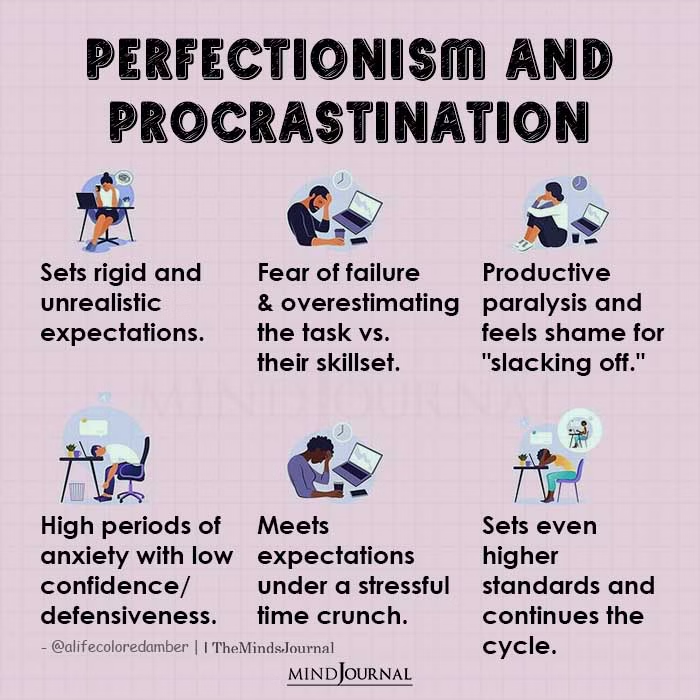
Procrastination perfectionism fear of failure form the perfect trio of hindering your progress and working in a loop.
That’s why, if you notice closely, you’ll realize how sometimes it is not essentially the work that you’re procrastinating.
It is the feeling associated with it. The burnout you get when you open the document, check the deadline, read the message, or see how much effort the task might require. These are what your brain has been trying to actively avoid.
6. You Secretly Need Last-Minute Panic To Function
Calm deadlines don’t really affect your brain, especially when there’s perfectionism procrastination ADHD. But the moment this urgency becomes real, suddenly you can focus for hours.
So over time, your nervous system accidentally becomes dependent on this cycle of end-of-moment stress, panic, and pressure to activate its motivation.
This is a trigger that highly contributes to perfectionism procrastination ADHD – the last-minute panic becomes the stimulatory thrill for your brain.
7. You Keep Consuming “Fix Your Life” Content Instead Of Fixing Your Life
You watch productivity reels and self-improvement videos to get a sense of motivation.
Even things like study vlogs and the morning routines of others tend to inspire you temporarily. But these do not last long.
And this does not happen because you are lazy, but because consuming improvement feels emotionally safer than risking failure through actual action.
Read More Here: Maladaptive Perfectionism: When High Standards Turn Into Self-Sabotage
How To Overcome Procrastination

There’s no straight one-step process of work that answers how to overcome procrastination. But it starts from the moment you become aware of how it’s impacting your daily life.
- The moment you think “I should start,” take a small step within the first 5 seconds of it – your brain can’t yet start negotiating excuses.
- Shrink the task until it feels almost too easy to avoid – to one paragraph, five minutes, just one slide.
- Stop waiting to feel motivated – remember, most people feel better after they begin, not before.
- Put your phone or things you know distract you, physically away for a while – not because you lack discipline, but because your brain needs fewer escape routes.
- Talk to yourself like someone who is trying to improve, not someone constantly being punished for struggling.
If you relate to the hidden signs of procrastination preventing your “start mode”, these simple actions can go a long way in helping. What do you think? Share your insights with us in the comments.
Frequently Asked Questions
1. Why do I procrastinate even when I genuinely want to succeed?
Procrastination is often emotional, not logical. Sometimes your brain avoids tasks connected to pressure because, besides procrastination perfectionism fear of failure or overwhelm can deeply affect you when you care so much about the outcome.
2. Can perfectionism cause procrastination?
Yes, the combination of procrastination perfectionism is extremely common. It is because when your brain believes the result must be impressive, completely flawless, or deeply meaningful, even the idea of simply “starting” can suddenly feel emotionally dangerous.
3. Why do I only become productive at the last minute?
Your brain may have become dependent on urgency and panic for focus, especially with perfectionism procrastination ADHD, where this serves as a stimulation. Over time, it is this stress that starts feeling like the only thing strong enough to overpower your avoidance.





Leave a Comment