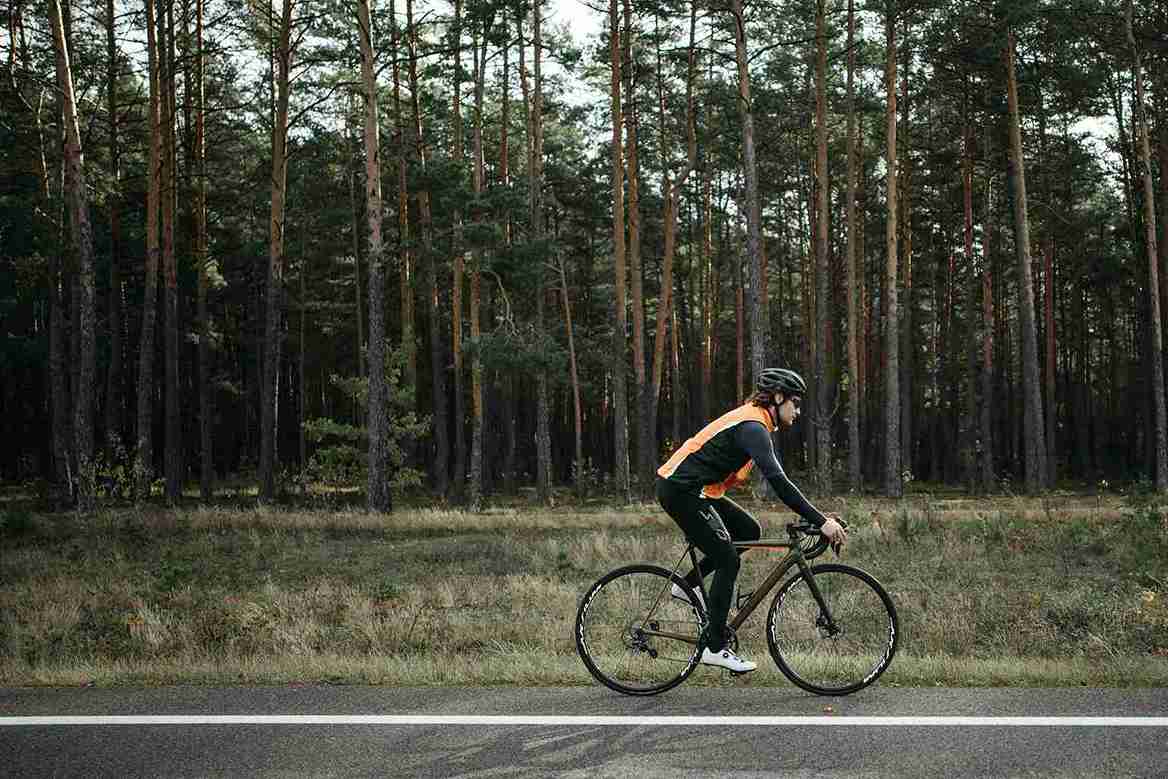
7 Ways To Overcome Cycling Anxiety After Injury

Author : Charlotte Smith

7 Ways To Overcome Cycling Anxiety After Injury

Struggling with anxiety after a cycling injury? The first step toward healing involves accepting it as a natural part of your protection system. It’s not weakness or a lack of toughness, and it’s certainly not a character flaw. Both fear and anxiety are a part of a healthy alarm system.

The trouble is, while this alarm system helps in the short term, if it keeps ringing and ringing and ringing, it starts to limit your life severely. If let to run rampant, it starts to control you instead of protect you, limiting where you go, how fast you ride, and sometimes whether you ride at all.

The good news is, you can retrain that response. And not by forcing yourself to “just get over it,” but by using concrete, trauma-informed steps that rebuild confidence gradually and realistically. Here’s how.

1. Acknowledge What Happened

You had an accident. Your body remembers impact and surprise, and now it scans harder for danger. That’s normal and healthy.

In fact, this is very common among athletes and there’s a term for it: kinesiophobia. So, no, you’re not the odd one out. It’s predictable biology.

2. Use Graded Exposure

Big comeback rides sound heroic. They can also backfire.

Instead, ride around the block. Then two blocks. Then a quiet loop you know well. Confidence tends to grow in small, almost boring steps, and that’s fine. Boring works.

3. Calm the Body First

An anxious body doesn’t listen to logic. So don’t try to convince yourself you’re fine with words. Use slow breathing instead.

Try this before a ride: inhale four seconds, exhale six, repeat for two minutes. Drop your shoulders, unclench your jaw. It sounds simple, but it works because it interrupts the stress response directly, “telling” your body that the threat level isn’t what it thinks is.

4. Create a Pre-Ride Safety Ritual

Uncertainty feeds anxiety. Predictability and routine lower it.

So, create a safety ritual: check tires, brakes, lights, route; same order every time. After a while the sequence itself becomes reassuring. You stop wondering if you forgot something, because you know you didn’t.

5. Avoid Catastrophizing  By Preparing for Emergencies

A lot of cycling anxiety comes from unanswered scenarios (What if something happens again? What if I don’t know what to do?). You reduce that stress when you know exactly what you would actually do in a bad scenario.

So, carry ID, set emergency contacts, learn local cycling rules, and understand what steps follow a crash. Even reading practical resources, like this one from a bicycle accident lawyer that explains how claims and rights work, can quiet that background fear because the unknown becomes known.

6. Ride With Other People Before Riding Fast or Far

Riding alone after an injury can feel intense. Riding with others often doesn’t happen because there’s a buffer: shared decision-making and a sense that you’re not managing risk alone.

And there’s a psychological effect, too. Watching other riders handle the same road conditions calmly gives your brain new reference points, which gradually replace the memory of the crash as the dominant one.

7. Reflect and Track Progress

Progress after injury rarely looks dramatic. Sometimes the win is simple: you rode without replaying the crash every five minutes or without reacting in panic at every sound behind you.

However little progress, write it down. Distance, comfort level, one thing that felt easier. Over time, your journal will show something important: confidence accumulates.

And then, one day you’ll notice something quietly surprising: you’re thinking about the ride itself again, not the accident.

Published On:

Last updated on:

Disclaimer: The informational content on The Minds Journal have been created and reviewed by qualified mental health professionals. They are intended solely for educational and self-awareness purposes and should not be used as a substitute for professional medical advice, diagnosis, or treatment. If you are experiencing emotional distress or have concerns about your mental health, please seek help from a licensed mental health professional or healthcare provider.

Leave a Comment

Today's Horoscope

Daily Horoscope 25 March 2026: Prediction for Zodiac Signs

Daily Horoscope 25 March, 2026: Prediction For Each Zodiac Sign

Today, the message is simple: stop running on autopilot.

Latest Quizzes

Image Personality Test: Which Woman Reveals Your True Self?

Which Woman Are You? A Personality Test That Reveals Your True Inner Nature

This personality test reveals your true self based on the woman you choose. Simple, fun, and surprisingly accurate!

Latest Quotes

The Hardest Pill to Swallow: When You Meant Little to Those Who Meant Everything to You

The Hardest Pill to Swallow: When You Meant Little to Those Who Meant Everything to You

The hardest pill to swallow is realizing you meant so little in a one sided relationship. That heartbreak hurts, humbles, and ultimately teaches you to stop overgiving and start choosing yourself.

Readers Blog

Caption This Image and Selected Wisepicks – 22 March 2026

Caption This Image and Selected Wisepicks – 22 March 2026

Ready to unleash your inner wordsmith? ✨??☺️ Now’s your chance to show off your wit, charm, or sheer genius in just one line! Whether it’s laugh-out-loud funny or surprisingly deep, we want to hear it.Submit your funniest, wittiest, or most thought-provoking caption in the comments. We’ll pick 15+ winners to be featured on our website…

Latest Articles

7 Ways To Overcome Cycling Anxiety After Injury

Struggling with anxiety after a cycling injury? The first step toward healing involves accepting it as a natural part of your protection system. It’s not weakness or a lack of toughness, and it’s certainly not a character flaw. Both fear and anxiety are a part of a healthy alarm system.

The trouble is, while this alarm system helps in the short term, if it keeps ringing and ringing and ringing, it starts to limit your life severely. If let to run rampant, it starts to control you instead of protect you, limiting where you go, how fast you ride, and sometimes whether you ride at all.

The good news is, you can retrain that response. And not by forcing yourself to “just get over it,” but by using concrete, trauma-informed steps that rebuild confidence gradually and realistically. Here’s how.

1. Acknowledge What Happened

You had an accident. Your body remembers impact and surprise, and now it scans harder for danger. That’s normal and healthy.

In fact, this is very common among athletes and there’s a term for it: kinesiophobia. So, no, you’re not the odd one out. It’s predictable biology.

2. Use Graded Exposure

Big comeback rides sound heroic. They can also backfire.

Instead, ride around the block. Then two blocks. Then a quiet loop you know well. Confidence tends to grow in small, almost boring steps, and that’s fine. Boring works.

3. Calm the Body First

An anxious body doesn’t listen to logic. So don’t try to convince yourself you’re fine with words. Use slow breathing instead.

Try this before a ride: inhale four seconds, exhale six, repeat for two minutes. Drop your shoulders, unclench your jaw. It sounds simple, but it works because it interrupts the stress response directly, “telling” your body that the threat level isn’t what it thinks is.

4. Create a Pre-Ride Safety Ritual

Uncertainty feeds anxiety. Predictability and routine lower it.

So, create a safety ritual: check tires, brakes, lights, route; same order every time. After a while the sequence itself becomes reassuring. You stop wondering if you forgot something, because you know you didn’t.

5. Avoid Catastrophizing  By Preparing for Emergencies

A lot of cycling anxiety comes from unanswered scenarios (What if something happens again? What if I don’t know what to do?). You reduce that stress when you know exactly what you would actually do in a bad scenario.

So, carry ID, set emergency contacts, learn local cycling rules, and understand what steps follow a crash. Even reading practical resources, like this one from a bicycle accident lawyer that explains how claims and rights work, can quiet that background fear because the unknown becomes known.

6. Ride With Other People Before Riding Fast or Far

Riding alone after an injury can feel intense. Riding with others often doesn’t happen because there’s a buffer: shared decision-making and a sense that you’re not managing risk alone.

And there’s a psychological effect, too. Watching other riders handle the same road conditions calmly gives your brain new reference points, which gradually replace the memory of the crash as the dominant one.

7. Reflect and Track Progress

Progress after injury rarely looks dramatic. Sometimes the win is simple: you rode without replaying the crash every five minutes or without reacting in panic at every sound behind you.

However little progress, write it down. Distance, comfort level, one thing that felt easier. Over time, your journal will show something important: confidence accumulates.

And then, one day you’ll notice something quietly surprising: you’re thinking about the ride itself again, not the accident.

Published On:

Last updated on:

Charlotte Smith

Leave a Comment

    Leave a Comment