6 Therapeutic Japanese Words With Deep Meaning

Author : Daisy Simon

Japan has figured out how to bring us tranquility. This country is full of therapeutic Japanese words with deep meanings that will make your soul feel at peace.

Living in a world that moves at the speed of light, it is so easy to get caught up in the chaos. Stress seems to be on every street corner and finding peace and serenity seems to be nothing more than a pipe dream.

These Japanese phrases with deep meaning gently remind us all to just slow down, take a deep breath, and find peace in the present moment. Each word carries its weight when it comes to finding harmony within oneself and achieving an unmatched sense of peace.

So let’s dive into six therapeutic Japanese words with deep meanings that can give you instant tranquility in this hectic world we live in!

6 Japanese Words With Deep Meanings That Bring Peace of Mind

1. Ikigai: “A reason for being”
japanese words with deep meaning

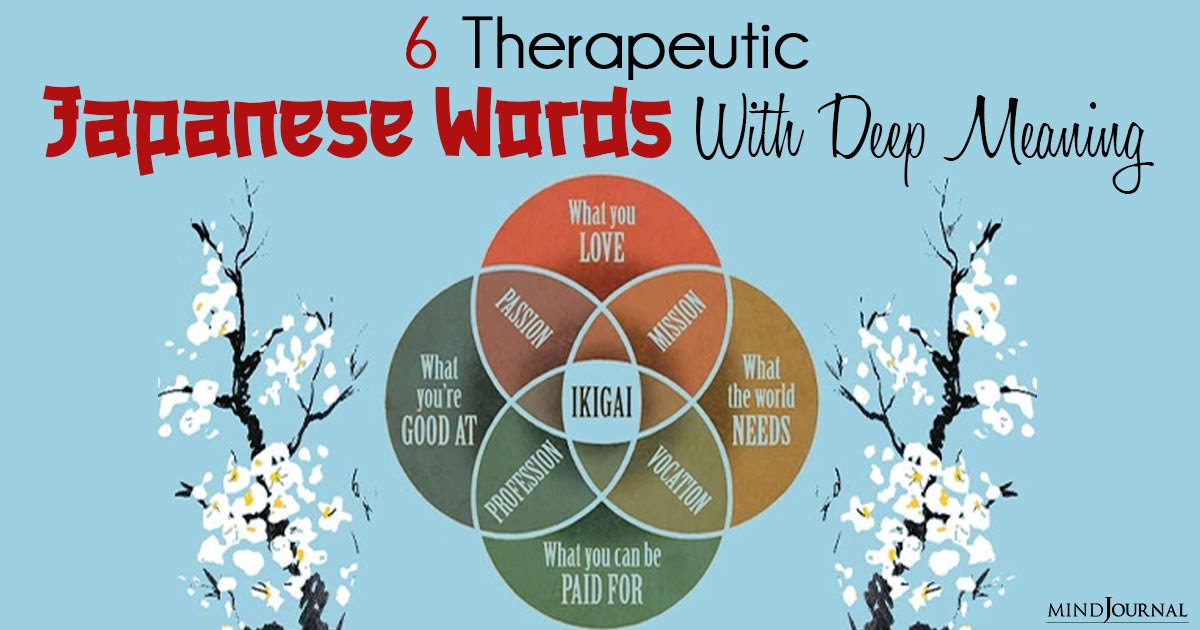
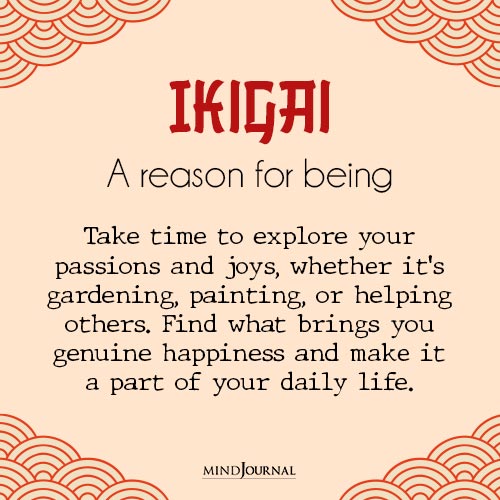
The Japanese practice of ikigai is a profound idea that reveals how to find purpose or meaning in anything.

Western concepts of life often stress big achievements or milestones, whereas ikigai roots itself in simple joys and passions that bring happiness.

For instance, one could find fulfillment by tending to their garden, pursuing creative endeavors, or offering assistance to others. By focusing on what brings genuine contentment and joy, you can lead a more balanced and fulfilling life.

Related: Ikigai: The Japanese Secret To A Long And Happy Life

2. Hibi Kore Kōjitsu: “Every day is a good day

japanese words with deep meaning

Each day possesses its value regardless of whether it is good or bad, Hibi Kore Kōjitsu reminds us of this Zen Buddhist phrase.

This concept discourages the “good” or “bad” labels, urging for an acceptance of the present moment with gratitude and equanimity instead.

By letting go of judgmental thoughts and embracing the highs and lows of everyday life, we forge resilience within ourselves that ultimately leads to inner peace. There is beauty and opportunity in everything if we only take the time to appreciate the present.

3. Wabi-Sabi: “Find beauty in imperfection

Wabi-sabi honors imperfections, impermanence and simplicity as beautiful — endearing even. Having deep roots within Japanese aesthetics and philosophy, this practice urges individuals everywhere to embrace irregularities and natural flaws found around art and elsewhere.

By acknowledging existence’s transient nature while relieving oneself from the desire for perfectionism, many find solace within imperfect situations or circumstances that would otherwise be mundane occurrences.

The goal is to foster appreciation towards authenticity while fostering tranquility through accepting time’s passing.

4. Shōkakkō: “Savoring little joys of life”
japanese words with deep meaning

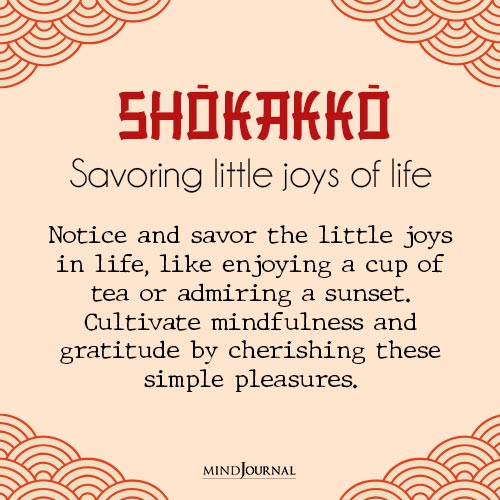
Haruki Murakami coined Shōkakkō as moments where true happiness pervades our daily life ever so briefly but surely. Whether it be a refreshing drink in the summer heat or belongings neatly arranged, these simple pleasures highlight life’s natural sweetness.

This practice teaches gratitude and mindfulness by helping us realize and cherish these moments, ultimately improving our well-being as a whole.

5. Kintsugi: “The art of broken things”

japanese words with deep meaning

The art of repairing pottery with gold or precious metals, Kintsugi embodies beauty in impermanence and resilience.

Rather than plastering over flaws or throwing away broken objects, this practice celebrates their history and the transformation that was undergone…

By embracing personal scars or imperfections, one can find great resilience within themselves and appreciate their own journey of healing and growth.

6. Wakei Seijaku: “Live a calmer, more joyful life

japanese words with deep meaning

With values aligned to harmony, respect, cleanliness and tranquility, Wakei Seijaku is evident within Japanese tea ceremonies.

Mutual respect for those around you as well as an emphasis on mindfulness while creating serene environments conducive for contemplation are key aspects in cultivating inner peace and balance.

Through practicing Wakei Seijaku we can form stronger connections with ourselves as well as others — deepening our connection to the world around us.

Related: 7 Must-Know Japanese Concepts To Inspire Your Daily Life

These Japanese words for peace will help you attain the philosophy of peaceful happiness. Share your favorite phrases in the comments below!

Published On:

Last updated on:

Daisy Simon

I’m Daisy Simon, member of the Editorial Team at Minds Journal, who loves exploring the cultural zeitgeist through cinema, and pop culture. I hold a degree in Sociology and I write on topics like lifestyle, relationships, feminism, mental health, and how they all connect to the world we live in today. My goal is to spark honest conversations that people can relate to and help us better understand the challenges and ideas shaping our generation.

Disclaimer: The informational content on The Minds Journal have been created and reviewed by qualified mental health professionals. They are intended solely for educational and self-awareness purposes and should not be used as a substitute for professional medical advice, diagnosis, or treatment. If you are experiencing emotional distress or have concerns about your mental health, please seek help from a licensed mental health professional or healthcare provider.

Leave a Comment

Today's Horoscope

Weekly Horoscope PART one

Weekly Horoscope 15 March to 21 March 2026

Read your zodiac sign’s prediction to understand the energy surrounding you and how to make the most of the days ahead!

Latest Quizzes

Interesting Finger Personality Test: 4 Finger Lines

Finger Personality Test: Join Your Fingers And Reveal A Hidden Personality Secret!

Look closely at your finger lines. Which pattern do you see? This personality test might surprise you!

Latest Quotes

How Men Show Love Through Actions (Male Psychology in Relationships)

How Men Show Love Through Actions (Male Psychology in Relationships)

Male psychology in relationships shows that men express love through presence, protection, and peace more than poetry. Decode his actions so you can see how deeply he actually cares.

Readers Blog

Caption This Image and Selected Wisepicks – 15 March 2026

Caption This Image and Selected Wisepicks – 15 March 2026

Ready to unleash your inner wordsmith? ✨??☺️ Now’s your chance to show off your wit, charm, or sheer genius in just one line! Whether it’s laugh-out-loud funny or surprisingly deep, we want to hear it.Submit your funniest, wittiest, or most thought-provoking caption in the comments. We’ll pick 15+ winners to be featured on our website…

Latest Articles

Japan has figured out how to bring us tranquility. This country is full of therapeutic Japanese words with deep meanings that will make your soul feel at peace.

Living in a world that moves at the speed of light, it is so easy to get caught up in the chaos. Stress seems to be on every street corner and finding peace and serenity seems to be nothing more than a pipe dream.

These Japanese phrases with deep meaning gently remind us all to just slow down, take a deep breath, and find peace in the present moment. Each word carries its weight when it comes to finding harmony within oneself and achieving an unmatched sense of peace.

So let’s dive into six therapeutic Japanese words with deep meanings that can give you instant tranquility in this hectic world we live in!

6 Japanese Words With Deep Meanings That Bring Peace of Mind

1. Ikigai: “A reason for being”

japanese words with deep meaning

The Japanese practice of ikigai is a profound idea that reveals how to find purpose or meaning in anything.

Western concepts of life often stress big achievements or milestones, whereas ikigai roots itself in simple joys and passions that bring happiness.

For instance, one could find fulfillment by tending to their garden, pursuing creative endeavors, or offering assistance to others. By focusing on what brings genuine contentment and joy, you can lead a more balanced and fulfilling life.

Related: Ikigai: The Japanese Secret To A Long And Happy Life

2. Hibi Kore Kōjitsu: “Every day is a good day

japanese words with deep meaning

Each day possesses its value regardless of whether it is good or bad, Hibi Kore Kōjitsu reminds us of this Zen Buddhist phrase.

This concept discourages the “good” or “bad” labels, urging for an acceptance of the present moment with gratitude and equanimity instead.

By letting go of judgmental thoughts and embracing the highs and lows of everyday life, we forge resilience within ourselves that ultimately leads to inner peace. There is beauty and opportunity in everything if we only take the time to appreciate the present.

3. Wabi-Sabi: “Find beauty in imperfection

Wabi-sabi honors imperfections, impermanence and simplicity as beautiful — endearing even. Having deep roots within Japanese aesthetics and philosophy, this practice urges individuals everywhere to embrace irregularities and natural flaws found around art and elsewhere.

By acknowledging existence’s transient nature while relieving oneself from the desire for perfectionism, many find solace within imperfect situations or circumstances that would otherwise be mundane occurrences.

The goal is to foster appreciation towards authenticity while fostering tranquility through accepting time’s passing.

4. Shōkakkō: “Savoring little joys of life”

japanese words with deep meaning

Haruki Murakami coined Shōkakkō as moments where true happiness pervades our daily life ever so briefly but surely. Whether it be a refreshing drink in the summer heat or belongings neatly arranged, these simple pleasures highlight life’s natural sweetness.

This practice teaches gratitude and mindfulness by helping us realize and cherish these moments, ultimately improving our well-being as a whole.

5. Kintsugi: “The art of broken things”

japanese words with deep meaning

The art of repairing pottery with gold or precious metals, Kintsugi embodies beauty in impermanence and resilience.

Rather than plastering over flaws or throwing away broken objects, this practice celebrates their history and the transformation that was undergone…

By embracing personal scars or imperfections, one can find great resilience within themselves and appreciate their own journey of healing and growth.

6. Wakei Seijaku: “Live a calmer, more joyful life

japanese words with deep meaning

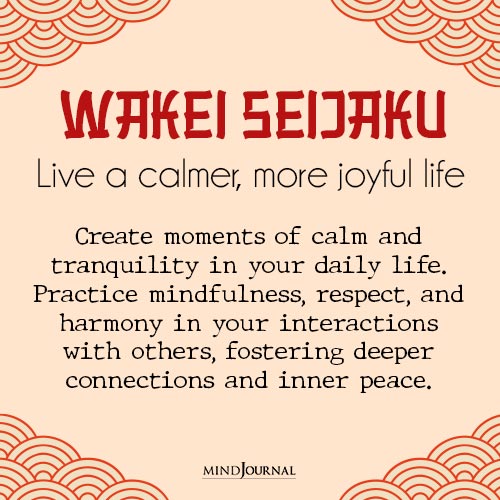
With values aligned to harmony, respect, cleanliness and tranquility, Wakei Seijaku is evident within Japanese tea ceremonies.

Mutual respect for those around you as well as an emphasis on mindfulness while creating serene environments conducive for contemplation are key aspects in cultivating inner peace and balance.

Through practicing Wakei Seijaku we can form stronger connections with ourselves as well as others — deepening our connection to the world around us.

Related: 7 Must-Know Japanese Concepts To Inspire Your Daily Life

These Japanese words for peace will help you attain the philosophy of peaceful happiness. Share your favorite phrases in the comments below!

Published On:

Last updated on:

Daisy Simon

I’m Daisy Simon, member of the Editorial Team at Minds Journal, who loves exploring the cultural zeitgeist through cinema, and pop culture. I hold a degree in Sociology and I write on topics like lifestyle, relationships, feminism, mental health, and how they all connect to the world we live in today. My goal is to spark honest conversations that people can relate to and help us better understand the challenges and ideas shaping our generation.

Leave a Comment

    Leave a Comment