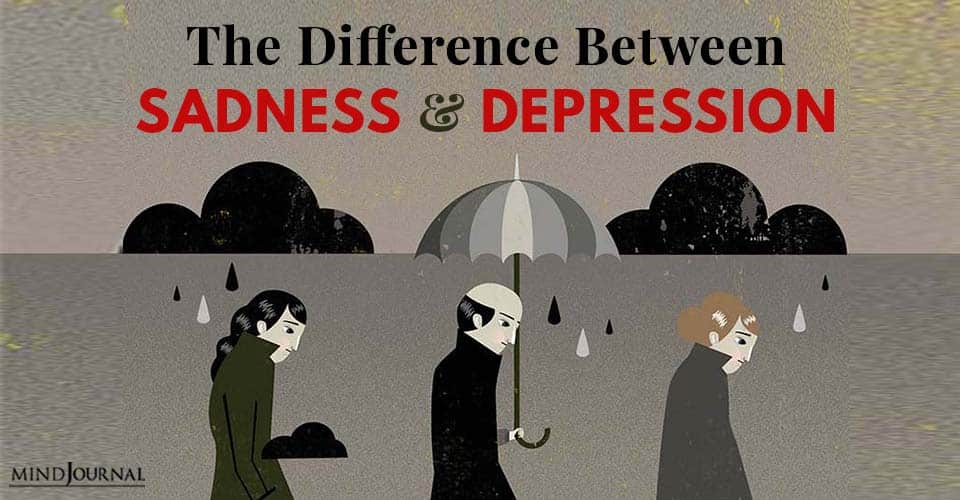
The Difference Between Sadness And Depression

Author : Kristen Fuller, M.D.

Getting depression and sadness mixed up is one of the worst things you can do while talking about the former. Understanding the difference between the two is absolutely crucial.

We often hear the term โ€œdepressionโ€ thrown around lightly in conversation. We may come home from a stressful day at work and tell our family at dinner that we are depressed. We may have received some bad news about a loved one and tell ourselves that we are depressed. And sure, we may be depressed, but often we are confusing sadness with depression.

Sadness is a symptom of depression, and because we associate these together, we often struggle to differentiate between these two common psychological states. 

This creates a significant problem.

The inability to differentiate between sadness and depression can lead us to neglect a severe psychological condition (depression) and overreact to a normal emotional state (sadness). If we overuse the term depression when we are describing our emotional state of sadness, we are simplifying a major mental health disorder.

Depression is a serious mental health disorder that has vast implications on our personal lives, professional lives, and society as a whole. As of 2017, 300 million people around the world have depression.

What is sadness?

Sadness is a normal emotion that is triggered by a specific adverse event or bad experience. In other words, we become sad about something specific. This emotional state dissipates after some time or after something good, replaces the hurtful event that triggered the initial sadness. Sadness is temporary. We may feel sad for a moment, an hour, or even a couple of days.

Every individual will experience sadness, probably more than once, in his/her lifetime. You may become sad because you ended a romantic relationship, or you did not do well on an exam, or you spent the night fighting with a friend. We can often find some relief from our sadness by crying, venting, or talking about our situation. 

Related: 5 Ways To Eliminate Sadness From Your Life

What is depression?

Depression is a mental health disorder, an abnormal mental and emotional state, which affects how we think and feel about everything. Depression leaks into every aspect of our life, and when we are depressed, we feel numb or sad about everything. Everything in our life is less enjoyable, less interesting, and less important. The things we once loved and were passionate about no longer bring us meaning or purpose.

Depression, unlike sadness, does not have to have a specific underlying trigger. Individuals are often depressed โ€œfor no specific reason.โ€ On the surface, they may seem like they have their life together. A great job, a loving family, a beautiful home, but in reality, they are hiding their emotions behind a mask.

They may be barely able to get out of bed in the morning. They may be struggling with their relationships. They may be lonely. They may no longer find satisfaction or purpose in their job. Depression makes us less patient and quick to anger. Unfortunately, many individuals assume that one can snap out of their depression. They misinterpret that depression is not a choice or a state of mind. Depression is a mental illness. 

Depression and sadness

Signs and symptoms of depression

To be formally diagnosed with major depressive disorder (MDD) an individual must experience a depressed mood or loss of interest or pleasure in almost all activities for at least two weeks as well as at least five other symptoms including the following: 

  • Change in sleep: Either difficulty falling asleep or sleeping too much.
  • A decrease in energy or feelings of fatigue daily.
  • Change in appetite or weight: Gaining weight, losing weight, overeating, or eating much less.
  • Feelings of guilt or worthlessness.
  • Difficulty concentrating.
  • Slow physical movements or unintentional purposeless movements that are noticeable by others.
  • Recurrent thoughts of suicide.

Sadness (depressed mood) is just one symptom of depression. 

Related: 10 Habits That Cause Low Self Esteem And Depression

Treating sadness versus treating depression

Sadness can be overcome within time. You can express your emotions, โ€œcry it outโ€, go out with friends, or spend time outdoors. Expressing sadness over the loss of a loved one may take some time, but you can still find happiness in other aspects of your life. Engage yourself more with these happy aspects. 

Depression is best treated with a combination of medications and psychotherapy. The most common medications used to treat depression are selective serotonin reuptake inhibitors (SSRIs). All medications, including SSRIs, come with side effects, and therefore it is essential to have a conversation with your healthcare professional before starting this treatment. 

Cognitive Behavioral Therapy is the mainstay psychotherapy approach in treating depression. Treatment for depression does not happen overnight; this is a process and can take some time, and different treatment approaches. Depression is a prevalent mental illness, and many treatments benefit most individuals.


Written By Kristen Fuller    
Originally Appeared in Psychology Today

Now that you know that sadness and depression are not necessarily the same, you will be able to understand what you are actually going through. Understanding the difference between these two is very important because this will help you go for the right recovery plan, and get better as soon as possible.

Published On:

Last updated on:

Kristen Fuller, M.D.

Kristen Fuller is a successful clinical writer in the mental health realm, a physician, and an author. Dr. Fuller enjoys writing about evidence-based topics in the cutting-edge world of mental health and addiction medicine and also contributes to medicine board education. Her passion lies in educating the public on the stigma associated with mental health and sharing the importance of finding your own happiness, regardless of your current situation or life path. Dr. Fuller spends her free time hiking, backpacking, skiing, camping, and paddle boarding with her dog in the Eastern Sierras, where she calls home.

Disclaimer: The informational content on The Minds Journal have been created and reviewed by qualified mental health professionals. They are intended solely for educational and self-awareness purposes and should not be used as a substitute for professional medical advice, diagnosis, or treatment. If you are experiencing emotional distress or have concerns about your mental health, please seek help from a licensed mental health professional or healthcare provider.

Leave a Comment

Today's Horoscope

Weekly Horoscope PART one

Weekly Horoscope 15 March to 21 March 2026

Read your zodiac signโ€™s prediction to understand the energy surrounding you and how to make the most of the days ahead!

Latest Quizzes

Interesting Finger Personality Test: 4 Finger Lines

Finger Personality Test: Join Your Fingers And Reveal A Hidden Personality Secret!

Look closely at your finger lines. Which pattern do you see? This personality test might surprise you!

Latest Quotes

How Men Show Love Through Actions (Male Psychology in Relationships)

How Men Show Love Through Actions (Male Psychology in Relationships)

Male psychology in relationships shows that men express love through presence, protection, and peace more than poetry. Decode his actions so you can see how deeply he actually cares.

Readers Blog

Caption This Image and Selected Wisepicks โ€“ 8 March 2026

Caption This Image and Selected Wisepicks โ€“ 8 March 2026

Provide a creative, relevant caption for the picture below and get selected and featured with your name and caption.  Selected Wisepicks We have selected 11 comments as Wisepicks from our Facebook, Facebook Group and Instagram as on 15 March 2026 Lou Angelique Heruela Listen to your inner child,not the angry voices in your mind. Bloom…

Latest Articles

Getting depression and sadness mixed up is one of the worst things you can do while talking about the former. Understanding the difference between the two is absolutely crucial.

We often hear the term โ€œdepressionโ€ thrown around lightly in conversation. We may come home from a stressful day at work and tell our family at dinner that we are depressed. We may have received some bad news about a loved one and tell ourselves that we are depressed. And sure, we may be depressed, but often we are confusing sadness with depression.

Sadness is a symptom of depression, and because we associate these together, we often struggle to differentiate between these two common psychological states. 

This creates a significant problem.

The inability to differentiate between sadness and depression can lead us to neglect a severe psychological condition (depression) and overreact to a normal emotional state (sadness). If we overuse the term depression when we are describing our emotional state of sadness, we are simplifying a major mental health disorder.

Depression is a serious mental health disorder that has vast implications on our personal lives, professional lives, and society as a whole. As of 2017, 300 million people around the world have depression.

What is sadness?

Sadness is a normal emotion that is triggered by a specific adverse event or bad experience. In other words, we become sad about something specific. This emotional state dissipates after some time or after something good, replaces the hurtful event that triggered the initial sadness. Sadness is temporary. We may feel sad for a moment, an hour, or even a couple of days.

Every individual will experience sadness, probably more than once, in his/her lifetime. You may become sad because you ended a romantic relationship, or you did not do well on an exam, or you spent the night fighting with a friend. We can often find some relief from our sadness by crying, venting, or talking about our situation. 

Related: 5 Ways To Eliminate Sadness From Your Life

What is depression?

Depression is a mental health disorder, an abnormal mental and emotional state, which affects how we think and feel about everything. Depression leaks into every aspect of our life, and when we are depressed, we feel numb or sad about everything. Everything in our life is less enjoyable, less interesting, and less important. The things we once loved and were passionate about no longer bring us meaning or purpose.

Depression, unlike sadness, does not have to have a specific underlying trigger. Individuals are often depressed โ€œfor no specific reason.โ€ On the surface, they may seem like they have their life together. A great job, a loving family, a beautiful home, but in reality, they are hiding their emotions behind a mask.

They may be barely able to get out of bed in the morning. They may be struggling with their relationships. They may be lonely. They may no longer find satisfaction or purpose in their job. Depression makes us less patient and quick to anger. Unfortunately, many individuals assume that one can snap out of their depression. They misinterpret that depression is not a choice or a state of mind. Depression is a mental illness. 

Depression and sadness

Signs and symptoms of depression

To be formally diagnosed with major depressive disorder (MDD) an individual must experience a depressed mood or loss of interest or pleasure in almost all activities for at least two weeks as well as at least five other symptoms including the following: 

  • Change in sleep: Either difficulty falling asleep or sleeping too much.
  • A decrease in energy or feelings of fatigue daily.
  • Change in appetite or weight: Gaining weight, losing weight, overeating, or eating much less.
  • Feelings of guilt or worthlessness.
  • Difficulty concentrating.
  • Slow physical movements or unintentional purposeless movements that are noticeable by others.
  • Recurrent thoughts of suicide.

Sadness (depressed mood) is just one symptom of depression. 

Related: 10 Habits That Cause Low Self Esteem And Depression

Treating sadness versus treating depression

Sadness can be overcome within time. You can express your emotions, โ€œcry it outโ€, go out with friends, or spend time outdoors. Expressing sadness over the loss of a loved one may take some time, but you can still find happiness in other aspects of your life. Engage yourself more with these happy aspects. 

Depression is best treated with a combination of medications and psychotherapy. The most common medications used to treat depression are selective serotonin reuptake inhibitors (SSRIs). All medications, including SSRIs, come with side effects, and therefore it is essential to have a conversation with your healthcare professional before starting this treatment. 

Cognitive Behavioral Therapy is the mainstay psychotherapy approach in treating depression. Treatment for depression does not happen overnight; this is a process and can take some time, and different treatment approaches. Depression is a prevalent mental illness, and many treatments benefit most individuals.


Written By Kristen Fuller    
Originally Appeared in Psychology Today

Now that you know that sadness and depression are not necessarily the same, you will be able to understand what you are actually going through. Understanding the difference between these two is very important because this will help you go for the right recovery plan, and get better as soon as possible.

Published On:

Last updated on:

Kristen Fuller, M.D.

Kristen Fuller is a successful clinical writer in the mental health realm, a physician, and an author. Dr. Fuller enjoys writing about evidence-based topics in the cutting-edge world of mental health and addiction medicine and also contributes to medicine board education. Her passion lies in educating the public on the stigma associated with mental health and sharing the importance of finding your own happiness, regardless of your current situation or life path. Dr. Fuller spends her free time hiking, backpacking, skiing, camping, and paddle boarding with her dog in the Eastern Sierras, where she calls home.

Leave a Comment

    Leave a Comment