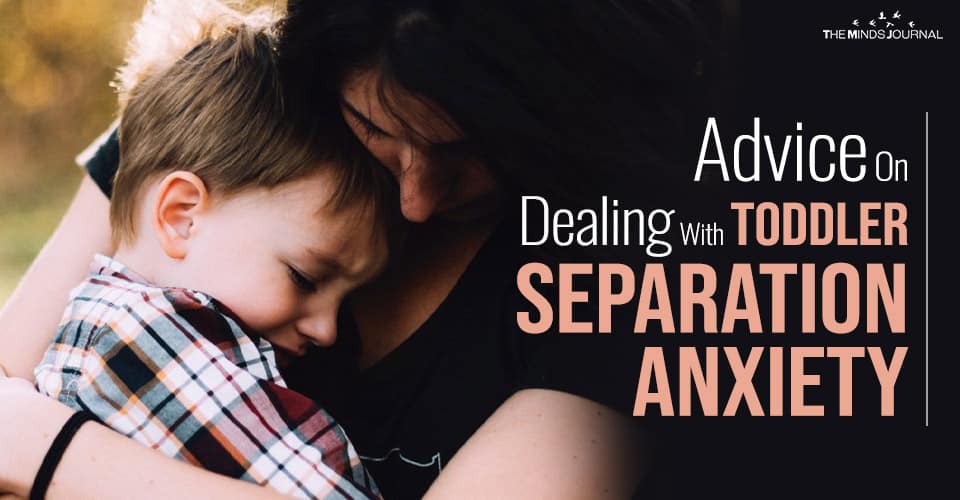
Advice On Dealing With Toddler Separation Anxiety

Author : Ryan Howard

Advice On Dealing With Toddler Separation Anxiety


Newborn babies are happy to get attention from just about anyone, even if they really like mom and dad the best. As kids get older though, they often form a stronger bond with their parents and may start crying whenever they sense they are about to be separated. In this article, I’ve detailed what toddler separation anxiety is, and offered up a few tips on how to deal with it.

Does Your Toddler Have Separation Anxiety?

Toddler separation anxiety can begin at any time between 8 months and 2 years of age. Essentially, you might notice that your toddler becomes extremely clingy, and begins to cry uncontrollably whenever you leave the house (or even the room for that matter).


Toddlers have a difficult time understanding the world, and also haven’t fully developed a sense of time. So, they often aren’t able to process the fact that you are leaving temporarily and will be coming back soon. Instead, they just know that someone they love if going away, and this causes a great deal of distress.

Read Anxiety In Children: 15 Calming Things You Can Say As A Parent

Helping Your Toddler With Separation Anxiety


Watching your child cry with despair whenever you have to part ways can be absolutely heartbreaking as a parent. It’s also not fun for your little one. So, finding ways to help your child cope with separation anxiety sooner rather than later is beneficial for everyone involved.

1. Form A Good Relationship With Your Childcare Provider

If you are going to be starting daycare or preschool, it can be a good idea to help your little one begin a relationship with their new care provider first. You can take your child to meet this person while you stay in the room so that they have a chance to start to form their own bond.

You should encourage your little one to play during these visits so they start making positive associations. Break out a few toys to help this process along. Maybe it means playing with an educational toddler activity table or mashing the keys on a small toddler piano. Not only are toys a great way to bond with a new care provider, but they also put your child in a great mood. If they’re having fun, they are less likely to get so upset when you leave.

2. Try Some Brief Separations

One of the best ways to help your toddler cope with separations is to start to reinforce the fact that you will always be reunited. It’s easiest for toddlers to grasp this concept if you keep separations brief in the beginning.

For example, you might take them to daycare or to a relative’s house and let them know you’ll be leaving for a short time. Say a quick goodbye, and then head out for a half an hour or so. By the time you get back, your little one will probably be having a fun time but they’ll still be happy to see you.

These short separations will help your toddler realize that parting ways aren’t such a big deal. That, in turn, will set the stage for spending longer periods of time apart.


Read 4 Most Common Symptoms Of Depression In Children

3. Create A Routine For Saying Goodbye

You never want to sneak away from your child. The surprise they will register once they realize you’re gone will make them very upset. It might also make them more clingy as they will constantly worry that you might disappear at any moment.

Instead, I suggest that you develop a goodbye routine so that your toddler knows then you’re going to leave. Your routine doesn’t need to be elaborate. In fact, it’s better if it’s something fairly simple. A quick hug and a peck on the cheek might just be perfect.

Is This Normal?

Separation anxiety is very common in young children, though it doesn’t always follow a linear path. Your child might not mind going to daycare every day until one day out of the blue when they really don’t want you to leave.

Often times, a change in routine can result in a change of behavior in your child. Maybe everything is going well until you take a family vacation. Then, all of a sudden, your little one can’t stand to be apart for even a few minutes.

Eventually, your child will outgrow separation anxiety. But, along the way, it’s often two steps forward and then one step back.

If you’re interested in reading more, check out this article on How To Deal With Separation Anxiety In Toddlers at Smart Parent Advice.


Dealing With Toddler Separation Anxiety pin


Published On:

Last updated on:

Ryan Howard

Ryan Howard runs Smart Parent Advice, a site that provides parenting advice for moms and dads. Ryan writes about all of the different ups and downs of parenting, provides solutions to common challenges, and reviews products that parents need to purchase for babies and toddlers.

Disclaimer: The informational content on The Minds Journal have been created and reviewed by qualified mental health professionals. They are intended solely for educational and self-awareness purposes and should not be used as a substitute for professional medical advice, diagnosis, or treatment. If you are experiencing emotional distress or have concerns about your mental health, please seek help from a licensed mental health professional or healthcare provider.

Leave a Comment

Today's Horoscope

Daily Horoscope 25 March 2026: Prediction for Zodiac Signs

Daily Horoscope 25 March, 2026: Prediction For Each Zodiac Sign

Today, the message is simple: stop running on autopilot.

Latest Quizzes

Image Personality Test: Which Woman Reveals Your True Self?

Which Woman Are You? A Personality Test That Reveals Your True Inner Nature

This personality test reveals your true self based on the woman you choose. Simple, fun, and surprisingly accurate!

Latest Quotes

The Hardest Pill to Swallow: When You Meant Little to Those Who Meant Everything to You

The Hardest Pill to Swallow: When You Meant Little to Those Who Meant Everything to You

The hardest pill to swallow is realizing you meant so little in a one sided relationship. That heartbreak hurts, humbles, and ultimately teaches you to stop overgiving and start choosing yourself.

Readers Blog

Caption This Image and Selected Wisepicks – 22 March 2026

Caption This Image and Selected Wisepicks – 22 March 2026

Ready to unleash your inner wordsmith? ✨??☺️ Now’s your chance to show off your wit, charm, or sheer genius in just one line! Whether it’s laugh-out-loud funny or surprisingly deep, we want to hear it.Submit your funniest, wittiest, or most thought-provoking caption in the comments. We’ll pick 15+ winners to be featured on our website…

Latest Articles

Advice On Dealing With Toddler Separation Anxiety


Newborn babies are happy to get attention from just about anyone, even if they really like mom and dad the best. As kids get older though, they often form a stronger bond with their parents and may start crying whenever they sense they are about to be separated. In this article, I’ve detailed what toddler separation anxiety is, and offered up a few tips on how to deal with it.

Does Your Toddler Have Separation Anxiety?

Toddler separation anxiety can begin at any time between 8 months and 2 years of age. Essentially, you might notice that your toddler becomes extremely clingy, and begins to cry uncontrollably whenever you leave the house (or even the room for that matter).


Toddlers have a difficult time understanding the world, and also haven’t fully developed a sense of time. So, they often aren’t able to process the fact that you are leaving temporarily and will be coming back soon. Instead, they just know that someone they love if going away, and this causes a great deal of distress.

Read Anxiety In Children: 15 Calming Things You Can Say As A Parent

Helping Your Toddler With Separation Anxiety


Watching your child cry with despair whenever you have to part ways can be absolutely heartbreaking as a parent. It’s also not fun for your little one. So, finding ways to help your child cope with separation anxiety sooner rather than later is beneficial for everyone involved.

1. Form A Good Relationship With Your Childcare Provider

If you are going to be starting daycare or preschool, it can be a good idea to help your little one begin a relationship with their new care provider first. You can take your child to meet this person while you stay in the room so that they have a chance to start to form their own bond.

You should encourage your little one to play during these visits so they start making positive associations. Break out a few toys to help this process along. Maybe it means playing with an educational toddler activity table or mashing the keys on a small toddler piano. Not only are toys a great way to bond with a new care provider, but they also put your child in a great mood. If they’re having fun, they are less likely to get so upset when you leave.

2. Try Some Brief Separations

One of the best ways to help your toddler cope with separations is to start to reinforce the fact that you will always be reunited. It’s easiest for toddlers to grasp this concept if you keep separations brief in the beginning.

For example, you might take them to daycare or to a relative’s house and let them know you’ll be leaving for a short time. Say a quick goodbye, and then head out for a half an hour or so. By the time you get back, your little one will probably be having a fun time but they’ll still be happy to see you.

These short separations will help your toddler realize that parting ways aren’t such a big deal. That, in turn, will set the stage for spending longer periods of time apart.


Read 4 Most Common Symptoms Of Depression In Children

3. Create A Routine For Saying Goodbye

You never want to sneak away from your child. The surprise they will register once they realize you’re gone will make them very upset. It might also make them more clingy as they will constantly worry that you might disappear at any moment.

Instead, I suggest that you develop a goodbye routine so that your toddler knows then you’re going to leave. Your routine doesn’t need to be elaborate. In fact, it’s better if it’s something fairly simple. A quick hug and a peck on the cheek might just be perfect.

Is This Normal?

Separation anxiety is very common in young children, though it doesn’t always follow a linear path. Your child might not mind going to daycare every day until one day out of the blue when they really don’t want you to leave.

Often times, a change in routine can result in a change of behavior in your child. Maybe everything is going well until you take a family vacation. Then, all of a sudden, your little one can’t stand to be apart for even a few minutes.

Eventually, your child will outgrow separation anxiety. But, along the way, it’s often two steps forward and then one step back.

If you’re interested in reading more, check out this article on How To Deal With Separation Anxiety In Toddlers at Smart Parent Advice.


Dealing With Toddler Separation Anxiety pin


Published On:

Last updated on:

Ryan Howard

Ryan Howard runs Smart Parent Advice, a site that provides parenting advice for moms and dads. Ryan writes about all of the different ups and downs of parenting, provides solutions to common challenges, and reviews products that parents need to purchase for babies and toddlers.

Leave a Comment

    Leave a Comment