

There is almost always one child who carries the blame, the shame, the rage, and the emotional violence, while another is protected, praised, and pedestal-placed. That child is known as the scapegoat child (the problem).
If you grew up constantly criticized, misunderstood, punished more harshly, or made to feel like “the problem,” this wasn’t because you were difficult. It was because a narcissistic parent needed someone to absorb everything they refused to face in themselves.
And because abuse isn’t random in a narcissistic family, it’s strategic, so let’s talk about the brutal truths behind why narcissistic parents choose one child to scapegoat, and how they intentionally destroy sibling bonds to keep control.

Read More Here: 8 Narcissistic Lying Patterns: What They Do Before They Lie (Once You See It, You Can’t Unsee It)
1. The Scapegoat Child Sees What the Narcissist Tries to Hide
The scapegoat child of narcissist is often the one who notices the cracks. You sense the manipulation. You feel the emotional inconsistencies. You respond to the parent’s behavior instead of blindly accepting it. That awareness alone makes you dangerous.
Narcissistic parents depend on illusion, the image of being loving, superior, or blameless. When one child quietly sees through that mask, even without saying much, it threatens their entire identity. Instead of reflecting inward, the narcissist attacks outward. They rewrite the story and label you as the problem.
This is why the scapegoat child is often described as “difficult” or “defiant,” while in reality, they are simply perceptive.
2. The Scapegoat Exists to Absorb the Parent’s Shame
Every narcissistic family needs a container for what the parent refuses to feel. That container becomes the scapegoat child.
When the narcissistic parent feels rage, envy, failure, or inadequacy, those emotions don’t disappear. They are displaced. Blame is projected onto one child so the parent can preserve their grand self-image.
If something goes wrong in the family, the scapegoat becomes the explanation. This dynamic is central to the scapegoat child in narcissistic family. You are punished not for what you do, but for what the parent cannot tolerate in themselves. Meanwhile, the golden child is used as proof that the narcissist is a “good parent,” reinforcing the illusion.
This is the psychological core of scapegoat child vs golden child dynamics.
3. ‘Favoritism’ Is A Tool To Control the Entire Family
In family dynamics, scapegoat child vs golden child are roles assigned by narcissistic parents. They don’t favor one child out of love, they do it for leverage.
By idealizing one child and devaluing another, they create imbalance and competition. The golden child learns that love is conditional and can be revoked. The scapegoat learns that safety is never guaranteed. Both children remain emotionally dependent on the parent’s approval.
To maintain control, narcissistic parents often sabotage sibling bonds entirely. They plant distrust, spread half-truths, and portray the scapegoat as unstable or ungrateful. This ensures siblings don’t compare realities or unite.
Breaking the sibling bond keeps the narcissist at the center of power.
Read More Here: Dysfunctional Family Roles: The 5 Child Roles In Dysfunctional Families
4. The Scapegoat Child Becomes the Emotional Dumping Ground
In a narcissistic household, the scapegoat child becomes the safest place for the parent’s worst behavior. Anger, criticism, silent treatment, and emotional neglect are directed toward the child who is expected to endure it.
The scapegoat is rarely comforted but often corrected. Their pain is minimized, their reactions scrutinized, and their boundaries punished. Over time, this trains the child to doubt their own emotions and internalize blame for everything that goes wrong.
This is why many scapegoat children grow up hyper-aware, self-critical, and emotionally exhausted. They weren’t born that way, they were conditioned to survive.
5. Narcissistic Parents Target the Child Who Is Hardest to Break
Here’s the truth that often comes last: narcissistic parents don’t choose the scapegoat because the child is weak. They choose them because the child is strong in ways the narcissist can’t control.
The scapegoat child of narcissists often possesses empathy, authenticity, emotional intelligence, or moral clarity. These traits expose the narcissist’s emotional emptiness. Rather than nurture those qualities, the narcissist tries to crush them.
Undermining your confidence, isolating you from siblings, and rewriting your identity is their way of neutralizing a threat. If they can convince you that you’re broken, you’ll never outgrow them.
Read More Here: Super Empath Vs Narcissist: 10 Ways Only A Super Empath Can Destroy A Narcissist
Being The Scapegoat Child Was Never A Reflection of Your Worth
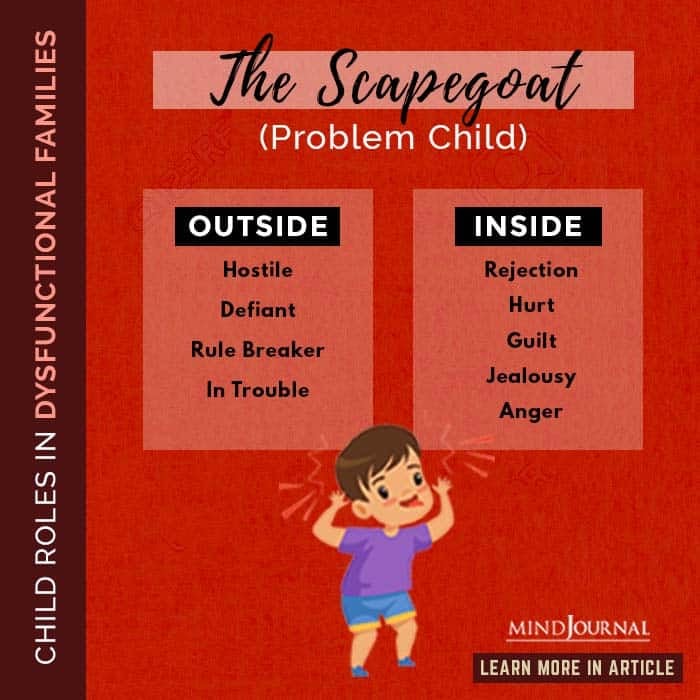
Being the scapegoat child was never about who you were, it was about what the narcissistic parent needed. You were assigned a role in a dysfunctional system that depended on denial and control.
The moment you understand this, the shame begins to loosen its grip. Healing doesn’t come from proving your goodness to people who profit from your pain. It comes from reclaiming your story, and stepping out of the role you were never meant to carry.
You weren’t targeted because you were flawed. They picked you because you were too real for a family built on illusion.


Leave a Comment